
What thermogenic evidence can—and cannot—show
Thermogenesis means heat production. Researchers may measure resting energy expenditure, diet-induced thermogenesis, respiratory exchange, fat oxidation, appetite, or body composition. A statistically detectable change over several hours can be scientifically interesting while adding too little energy use to change body fat visibly.
Fat oxidation is fuel use during the measurement window. Net fat loss depends on energy balance across days and weeks. The body can compensate through appetite, reduced movement, or tolerance. Therefore, give multi-week weight and fat-mass outcomes greater decision weight than an acute metabolic trace.
Ingredient-by-ingredient comparison
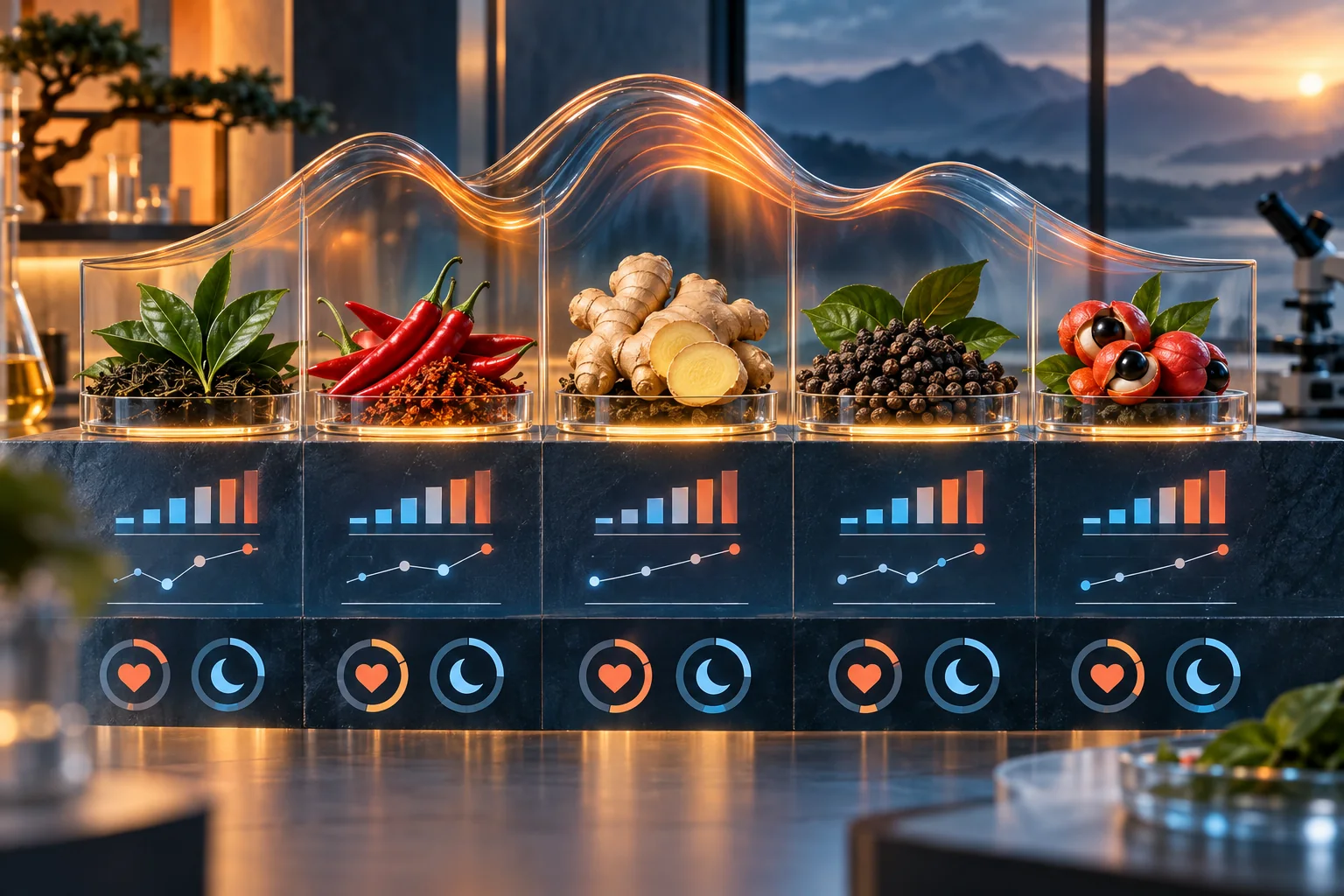
Use the same six columns for every ingredient
- Exact compound, source, extract, and standardization.
- Daily dose and timing used in people.
- Acute mechanism or multi-week body outcome.
- Absolute effect and uncertainty, not only statistical significance.
- Adverse events, withdrawals, contraindications, and interactions.
- Whether the sold product matches the tested material.
The practical trade-offs
Caffeine may make a workout feel easier or improve alertness, yet late use can shorten or fragment sleep. That cost can work against appetite control, recovery, and daily movement. Green tea extract should not be treated as concentrated brewed tea; catechin, EGCG, caffeine, fasting instructions, and liver-related cautions matter.
Capsaicinoids can cause burning or gastrointestinal symptoms. Bitter orange formulas frequently include other stimulants, so the combined exposure matters more than the front-label “ephedra-free” message. For newer thermogenic botanicals, a plausible receptor pathway or small acute study should lead to a lower-confidence rating until independent longer trials measure outcomes people care about.
The most evidence-aware choice may be the ingredient with the clearest modest effect and acceptable risk—or no thermogenic when the likely gain does not justify sleep, cardiovascular, gastrointestinal, or cost trade-offs.
A scorecard that prevents false winners
Score each candidate only after saving the current complete label and directions. Use five fields: disclosure, evidence match, safety fit, practical use, and cost per full day. Mark an item unknown when a fact cannot be verified; do not convert missing data into an average score. A product with fewer ingredients can outrank a crowded formula when its dose, purpose, and limitations are easier to establish.
Set disqualifiers before shopping. Examples include an undisclosed stimulant total, a proprietary blend containing a dose-sensitive ingredient, absent warnings, an unverifiable seller, or a claim of effortless rapid loss. Predefined rules reduce the temptation to excuse a problem after attractive marketing, testimonials, or a temporary discount appears.
Finally, separate category fit from effectiveness. “Caffeine-free,” “transparent,” and “thermogenic” describe different properties. None proves that a product produces meaningful or durable fat loss.
How to match a formula to human evidence
Start with the outcome: body weight, fat mass, waist, appetite, energy expenditure, or exercise performance. These endpoints are not interchangeable. Then match the ingredient species or chemical form, plant part, preparation, daily dose, population, and duration. Record the absolute effect, uncertainty, adverse events, dropout, funding, and whether another independent study reproduced it.
Mechanism evidence can explain why an ingredient is plausible, but a laboratory pathway or acute rise in heat production is not a weight-loss result. Ingredient trials support only the tested ingredient and exposure. A finished-product claim is strongest when the exact sold formula has an adequately controlled human trial. Combining several individually plausible ingredients does not create evidence for the combination.
Transparency makes this comparison possible; it does not make the result favorable. If a dose is hidden or an extract is not characterized, the correct evidence rating is “cannot determine.”
Safety and quality checks come before value
Calculate the maximum daily serving and total exposure from food, drinks, medicines, pre-workouts, and other supplements. Review cardiovascular, sleep, anxiety, gastrointestinal, liver, kidney, glucose, bleeding, and medicine-interaction concerns according to the actual ingredients. Pregnancy or breastfeeding, age under 18, surgery, an eating-disorder history, or a significant condition calls for individualized professional guidance rather than self-experimentation.
Prefer a traceable manufacturer, accessible contact details, lot and expiry information, and credible independent certification when relevant. Certification can support identity, contamination, or manufacturing checks within its scope; it does not prove weight loss. FDA marketing status is not pre-approval for effectiveness.
Stop use and seek urgent care for chest pain, fainting, severe shortness of breath, seizure, serious allergic symptoms, a sustained irregular heartbeat, or signs of liver injury such as jaundice and dark urine. A strong sensation is not evidence that a supplement is working.
Before-you-buy verification
Open the manufacturer page and the seller page side by side. Confirm that the product name, serving size, ingredient panel, directions, warnings, bottle count, refund terms, delivery limits, and seller identity agree. Save dated screenshots. Calculate days per container from the maximum schedule rather than the largest number printed on the front, then compare total delivered cost per usable day.
Do not use star ratings as efficacy evidence. Reviews can reveal practical questions—capsule size, taste, packaging, shipping, or recurring billing—but they cannot verify composition or causation. Treat countdown timers, “doctor recommended” language without a named basis, dramatic before-and-after images, and guaranteed results as reasons to slow down.
When the physical bottle arrives, compare it with the saved panel before opening. If an important amount, warning, seal, or formula has changed, ask the seller in writing and use the return policy rather than testing an uncertain product.
Where Fat Burn Active fits
Fat Burn Active combines multiple ingredients associated with thermogenic marketing. Each one should be assessed at its disclosed daily amount, then the complete product should be rated separately; ingredient evidence cannot be added together as product proof.
Fat Burn Active is relevant to Best Thermogenic Ingredients Compared because its official listing identifies standardized plant extracts, caffeine sources, vitamins, and zinc in one formula. First read our independent review. If the formula, stimulant profile, evidence limits, and warnings fit your situation, check the current formula and purchase options on the official Fat Burn Active website. We may receive a commission at no additional cost.
Frequently asked questions
What is the strongest thermogenic ingredient?
“Strongest” is not a useful health outcome. Greater acute stimulation may increase risk without meaningful long-term fat loss.
Does feeling hot mean fat is burning?
No. Heat and sweating do not measure net body-fat change.
Can thermogenic ingredients be stacked?
Stacking can increase total stimulant and interaction risk. Review the complete exposure rather than adding products independently.
Sources
Sources reviewed September 8, 2026. This article is general educational information, not medical advice, diagnosis, or treatment.