The short answer: predictability versus complexity
What the human evidence can actually answer
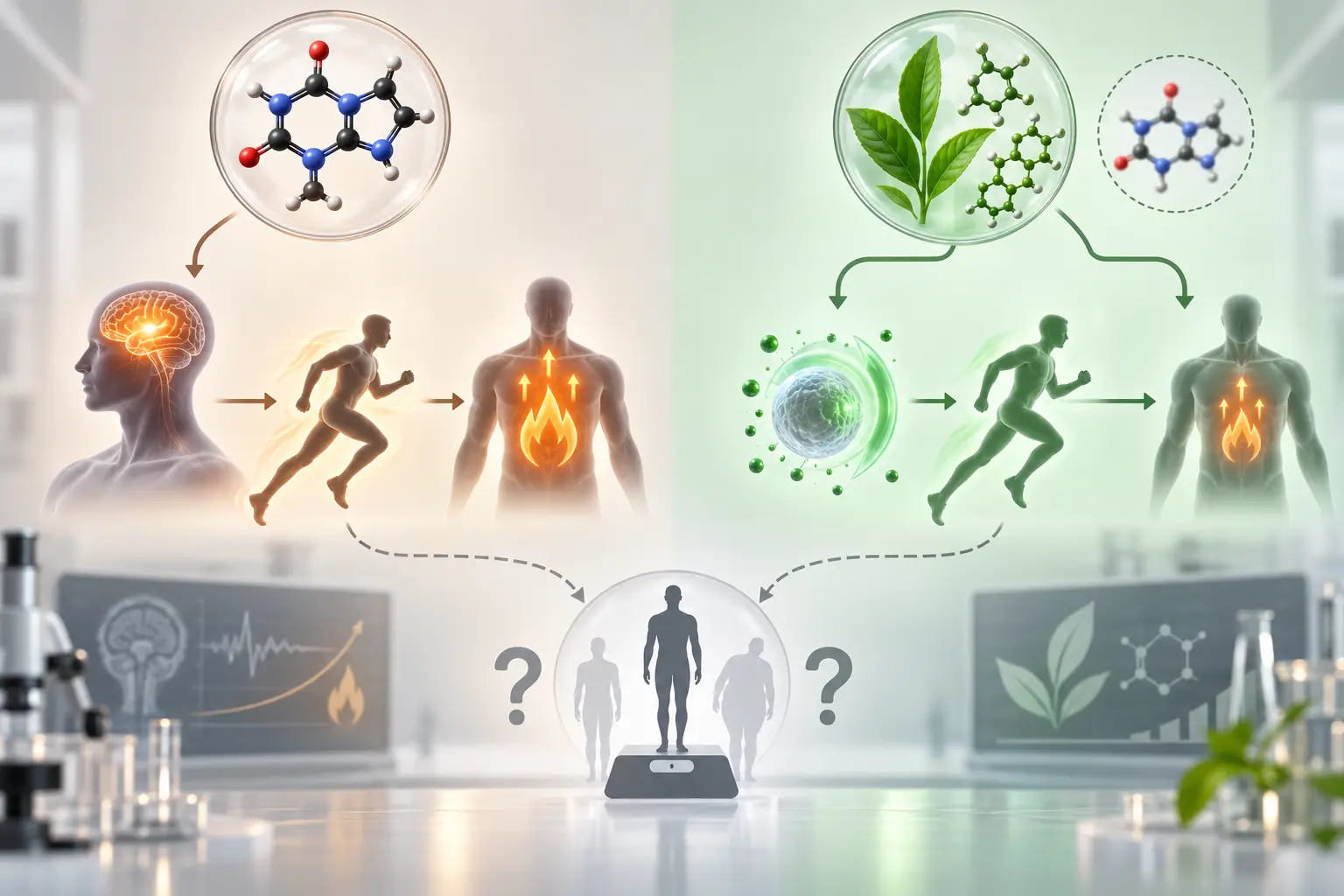
Caffeine can acutely increase alertness and may modestly change energy expenditure or fat oxidation. Those measurements do not show how much body fat will change over months. Habituation can reduce felt and physiological responses, while late use may impair sleep and undermine appetite control or activity the next day.
Green tea trials test unlike catechin and caffeine exposures. Reviews generally find small, inconsistent, or clinically modest effects on weight loss or maintenance. A positive result for a defined catechin–caffeine preparation cannot validate an extract that discloses only “green tea 500 mg.”
Run two different label calculations
For caffeine, add milligrams from anhydrous caffeine, coffee, tea, guarana, energy products, pre-workout, chocolate, and medicines. Record timing as well as total. For green tea, record extract mass, catechin percentage, EGCG yield, caffeine content, and whether the product is decaffeinated. EGCG standardization cannot be used to calculate caffeine.
Example: 200 mg green tea extract at 50% EGCG yields a stated 100 mg EGCG, but caffeine remains unknown unless separately disclosed. Comparing that bottle with 100 mg caffeine as though both numbers describe the same active exposure is invalid.
Who might prefer which option?
An adult seeking a measurable stimulant dose may find plain caffeine easier to audit, but only if cardiovascular risk, anxiety, sleep, pregnancy, medicines, and existing intake have been reviewed. Someone interested in a defined catechin preparation may consider green tea extract, yet concentrated extracts raise their own tolerability and liver-safety questions and still require a caffeine total.
If the goal is durable weight loss, neither is the foundation. Meal structure, an appropriate energy deficit, movement, resistance training, and sleep offer more leverage. The honest winner may be no supplement.
Use a five-field decision card
Write the job first: appetite support, alertness, workout readiness, or a small thermogenic effect. Then compare five fields: the exact intervention, outcome evidence, likely size of benefit, personal risk, and practical cost. A candidate cannot win a field when its dose or preparation is unknown. Mark it “not comparable” instead of awarding points for popularity.
Set a stopping rule before purchase. Examples include worse sleep, palpitations, persistent digestive symptoms, no measurable improvement in the intended behavior, or a label that differs from the saved version. Reassess after a defined period while keeping food, activity, and other stimulant exposure reasonably stable. This personal record cannot prove efficacy, but it prevents a changing routine from being credited to one capsule.
Compare the sold labels, not ingredient names
- Confirm serving size and maximum daily servings.
- Record chemical form or botanical species, plant part, extract ratio, and standardization.
- Calculate the active yield only when both extract mass and percentage are disclosed.
- Add caffeine and stimulant-like ingredients from every product, drink, food, and relevant medicine.
- Separate ingredient studies from research on the complete sold formula.
- Compare delivered cost per full day and the option of using neither.
A study match requires the same intervention, a comparable dose, a relevant population, and the outcome being claimed. Mechanism, warmth, alertness, appetite sensation, energy expenditure, body weight, and fat mass are different endpoints. Never convert a brief physiological signal into a guaranteed long-term result.
Safety can decide the comparison before efficacy
Review blood pressure, heart rhythm, anxiety, sleep, gastrointestinal health, liver or kidney disease, glucose management, pregnancy or breastfeeding, surgery, age, eating-disorder history, medicines, and other supplements. “Natural” does not mean interaction-free. A familiar food source does not establish that a concentrated extract is suitable.
Seek qualified medical or pharmacy advice when a condition or medicine makes the choice uncertain. Stop and obtain urgent care for chest pain, fainting, severe shortness of breath, serious allergic symptoms, seizure, or a sustained rapid or irregular heartbeat. Jitters, sweating, nausea, headache, insomnia, or bowel changes are adverse effects, not evidence of fat loss.
Where Fat Burn Active fits
Fat Burn Active contains direct caffeine, calculable caffeine from guarana, and green tea extract with unresolved caffeine. It belongs in the combined-exposure column, not the isolated-caffeine or isolated-green-tea column.
Fat Burn Active is optional; no supplement is required for fat loss. Its current formula must be judged as a combination, not as the winner of any isolated-ingredient comparison. Read our independent Fat Burn Active review, verify the current label and all-source caffeine, and compare the product with the option of using neither.
Use the Caffeine vs Green Tea Extract for Weight Loss criteria to assess Fat Burn Active rather than relying on a headline claim. Our formula evidence analysis explains the remaining uncertainty. If the product fits your needs, view current availability and ordering terms on the official website. We may earn a commission at no extra cost.
Worked comparison: two apparently equal labels
Label A provides 150 mg caffeine anhydrous once daily. Label B provides 500 mg green tea extract standardized to 50% catechins and 40% EGCG, but says nothing about caffeine. The labels are not comparable by their largest numbers. Label A provides a known stimulant exposure. Label B provides calculated catechin information while leaving stimulant exposure unresolved. Neither label shows that the finished product causes clinically meaningful weight loss.
The useful next step is to request total caffeine from all sources for Label B and identify human trials matching its extract and dose. Then compare sleep, existing caffeine, gastrointestinal tolerance, warnings, daily cost, and the outcome the buyer wants. If the intended outcome is simply more morning alertness, a transparent caffeine source may be easier to assess. If the goal is body-fat loss, both options still need realistic expectations.
Run a seven-day baseline before choosing
- Record every caffeine source and time.
- Record bedtime, estimated sleep opportunity, and morning alertness.
- Note hunger, planned exercise, and whether meals were skipped.
- Keep a weekly weight average rather than reacting to one day.
- Identify the exact problem a supplement is expected to improve.
This baseline often reveals that the decision is about late coffee, insufficient sleep, or an inconsistent meal schedule rather than selecting a more complicated extract. It also prevents existing caffeine exposure from disappearing when a new product is evaluated.
Frequently asked questions
Is green tea extract just caffeine?
No. It can provide catechins such as EGCG and may also contain caffeine.
Which burns more fat?
Available evidence does not support a universal clinically meaningful winner.
Can they be combined?
Combination increases the need to quantify all-source caffeine and review safety.
Sources
- NIH ODS: Weight-Loss Supplements
- FDA: How Much Caffeine Is Too Much?
- Cochrane review: Green tea for weight loss and maintenance
- EFSA: Green Tea Catechins Safety
Sources reviewed September 14, 2026. This article is general educational information, not medical advice, diagnosis, or treatment.