What “anhydrous” changes
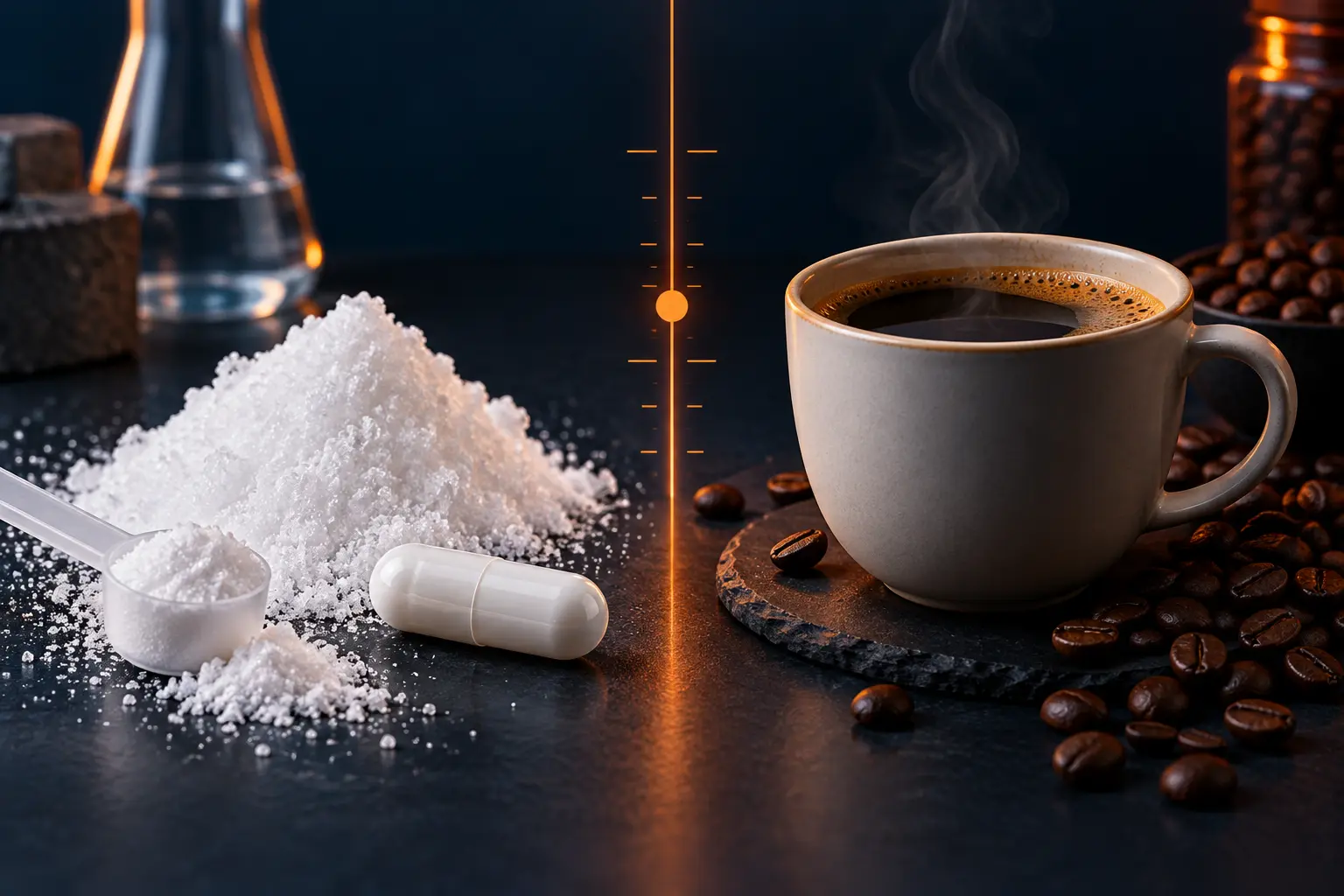
Anhydrous means without water. Manufacturers isolate and dry caffeine into a concentrated ingredient used in capsules, tablets, gums, energy products, and pre-workouts. Coffee delivers naturally occurring caffeine in a larger beverage volume alongside acids, polyphenols, and other compounds. “Natural caffeine” marketing does not create a different caffeine molecule that the body ignores.
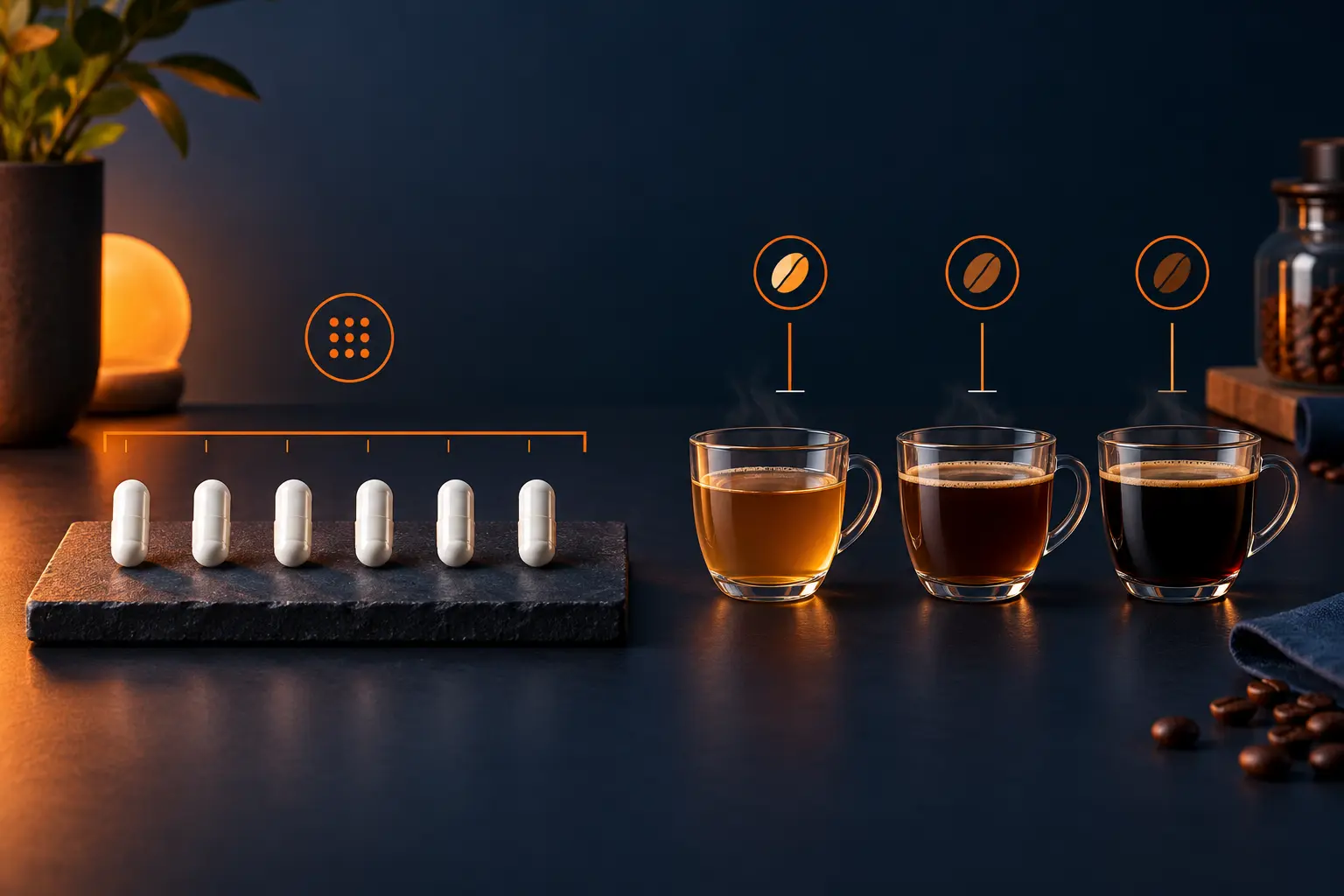
A supplement can supply a fixed labeled amount, while a home or café coffee can vary with bean, brewing, and cup size. Precision is useful only when the label is accurate and every serving is counted.
The differences that matter in practice
Do not promise a universal faster hit
Search results often claim that anhydrous caffeine is always absorbed faster than coffee. Real absorption depends on dose, formulation, food, gastric emptying, and how quickly the beverage is consumed. Studies comparing caffeine sources do not justify a universal minute-by-minute promise for every product.
For safety and decisions, the exact dose and timing usually matter more than a marketing claim about speed. A faster or stronger feeling can reflect concentration, expectation, or a larger dose. It does not establish greater calorie expenditure or fat loss.
Which is better for fat loss?
Neither form is a reliable fat-loss strategy on its own. Caffeine may acutely affect alertness, exercise performance, energy expenditure, or fat oxidation, and tolerance can reduce some responses with repeated use. A small physiological change does not guarantee a sustained calorie deficit, and coffee additions such as sugar, syrup, cream, or large milk portions can change energy intake.
The useful comparison is therefore not “natural versus synthetic.” It is whether a known, tolerable exposure supports a specific behavior without worsening sleep, anxiety, heart rate, blood pressure, appetite, or reliance.
Worked choice: early training versus all-day fatigue
An adult training early may compare a measured coffee with a clearly labeled caffeine dose for workout alertness. The outcome is training performance and tolerability, not scale weight. They should test one source, keep the dose modest, and avoid adding a fat burner automatically.
Someone using caffeine throughout the day to overcome chronic short sleep has a different problem. Switching coffee to anhydrous caffeine makes the dose easier to hide, not the sleep debt easier to solve. The better first action is earlier cutoff, adequate sleep opportunity, and medical review when persistent fatigue or sleep-apnea symptoms exist.
Separate exposure evidence from weight-loss evidence
Caffeine exposure answers how much stimulant reaches the day. It does not answer whether a product causes meaningful fat loss. Caffeine can affect alertness and may produce short-term changes in energy expenditure or fat oxidation, but acute measurements, ingredient trials, and trials of a finished multi-ingredient formula sit on different evidence levels. Do not transfer a finding from isolated caffeine to guarana, green tea extract, a caffeine–synephrine blend, or a branded bottle without matching the dose and formula.
The practical outcome also includes compensation. A stimulating product may improve one workout yet delay sleep, increase next-day hunger, or encourage stacking. Record the intended job, measurable benefit, adverse effects, timing, and cost. A strong sensation is an exposure clue—not proof that body fat is changing.
Plan a short, interpretable review rather than indefinite use. Keep food, other caffeine, sleep opportunity, and training reasonably stable; record the label and baseline before starting; then compare the outcome that motivated the purchase. Stop when adverse effects appear or the defined benefit does not. A personal record cannot prove causation or rule out uncommon harm, but it prevents a changing routine from being mistaken for product evidence.
Use a label-first decision sequence
- Photograph the complete label. Capture serving size, maximum servings, active and other ingredients, directions, and warnings.
- List every caffeine-bearing name. Include caffeine anhydrous, coffee and tea extracts, guarana, yerba mate, kola nut, cocoa, energy products, and medicines.
- Convert everything to milligrams of caffeine. An extract’s weight is not automatically its caffeine weight. Use only a disclosed caffeine amount or a calculation supported by both extract mass and standardization.
- Add by serving and by day. Include repeat servings and the time each source is used.
- Flag uncertainty. Do not replace an undisclosed value with an optimistic estimate.
- Review personal risk. Consider sleep, pregnancy, conditions, medicines, stimulant tolerance, and prior reactions.
The FDA says 400 mg per day is an amount not generally associated with negative effects for most adults. It is not a target, a guarantee of safety, or an appropriate limit for every person. A lower amount can cause adverse effects, especially when taken quickly or late. Reassess the total whenever a serving, product, medicine, or daily routine changes.
How this applies to Fat Burn Active
If Fat Burn Active contains caffeine anhydrous, compare its disclosed milligrams with the coffee you would otherwise drink. Do not treat the concentrated form or a stronger sensation as finished-product fat-loss evidence.
Fat Burn Active is relevant to Caffeine Anhydrous vs Coffee because its official listing identifies standardized plant extracts, caffeine sources, vitamins, and zinc in one formula. First read our independent review. If the formula, stimulant profile, evidence limits, and warnings fit your situation, check the current formula and purchase options on the official Fat Burn Active website. We may receive a commission at no additional cost.
When to stop rather than recalculate
Stop the product and seek urgent care for chest pain, fainting, severe shortness of breath, confusion, seizure, a sustained racing or irregular heartbeat, or a serious allergic reaction. Insomnia, tremor, anxiety, nausea, vomiting, headache, and palpitations are adverse effects, not evidence that the dose is effective. Do not induce vomiting or improvise treatment after a suspected overdose; contact local emergency or poison services.
People who are pregnant or breastfeeding, under 18, sensitive to stimulants, have an eating-disorder history, or manage cardiovascular, liver, kidney, endocrine, psychiatric, or sleep conditions need individualized advice. Ask a clinician or pharmacist to review stimulant medicines, decongestants, antidepressants, blood-pressure medicines, diabetes medicines, and concentrated botanicals. Never use bulk pure caffeine powder for home dosing.
Frequently asked questions
Is caffeine anhydrous stronger than coffee caffeine?
The dose and delivery context differ; milligram for milligram, caffeine remains the central stimulant.
Is coffee safer because it is natural?
Not automatically. Dose, timing, sensitivity, additions, conditions, and medicines matter.
Can I combine them?
Only after counting the combined exposure and reviewing personal risk; different forms still add together.
Sources
- FDA: Spilling the Beans on Caffeine
- ISSN Position Stand: Caffeine and Exercise Performance
- Mayo Clinic: Caffeine Content
- EFSA: Scientific Opinion on the Safety of Caffeine
Sources reviewed September 8, 2026. This article is general educational information, not medical advice, diagnosis, or treatment.