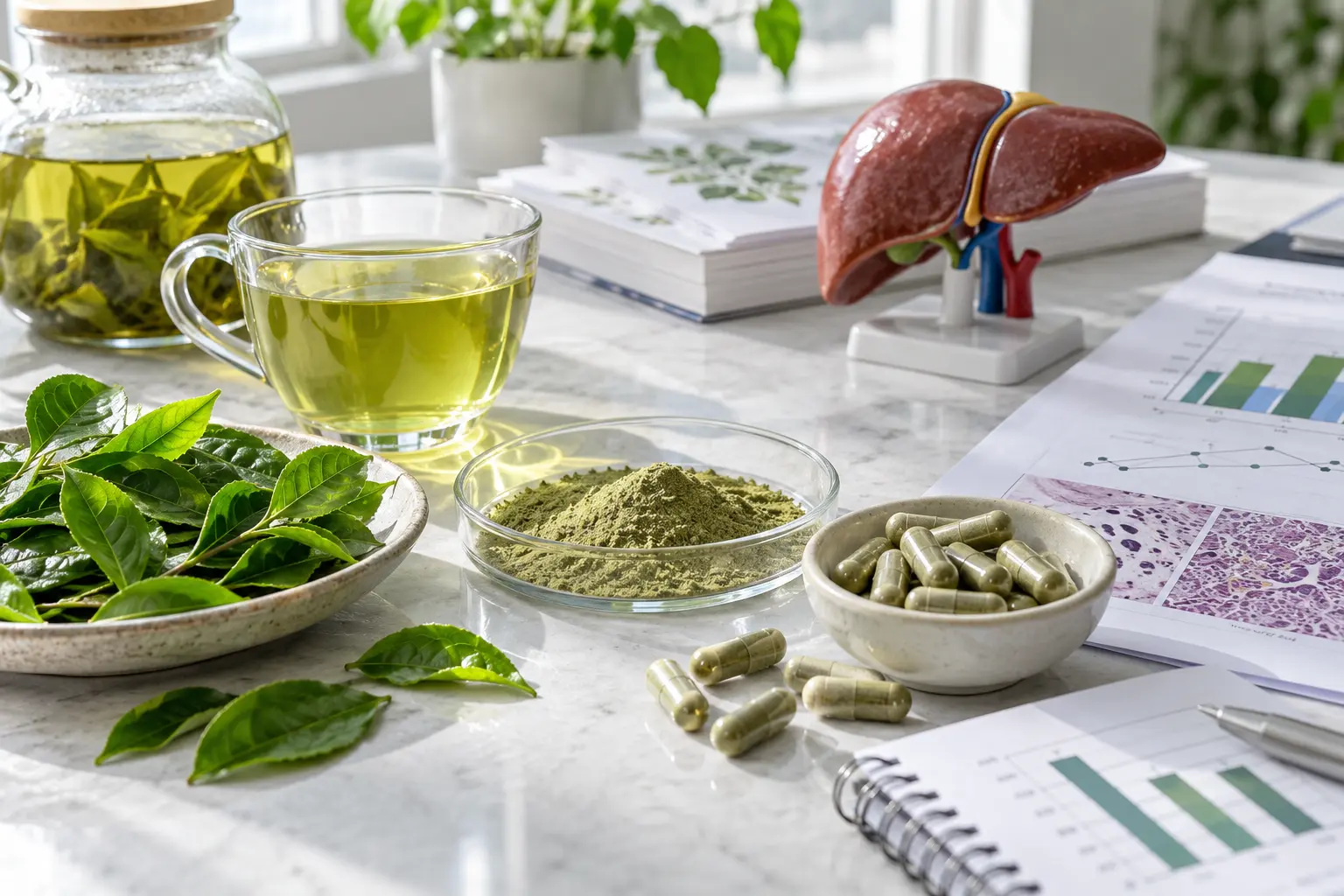
Brewed tea and extract are not interchangeable
Brewed green tea is a beverage with variable catechin and caffeine content. An extract concentrates selected compounds and can deliver a different exposure in a small serving. Labels may state extract milligrams, a catechin percentage, EGCG milligrams, caffeine, or only a plant name. Those descriptions do not answer the same question.
Record species, plant part, extraction details when available, extract mass, catechin or EGCG standardization, caffeine per serving, and maximum daily servings. A large extract number can still hide the amount of the compound used in research.
What weight research can support
Reviews of green-tea catechin and caffeine interventions have found modest, variable, or clinically uncertain average effects. Habitual caffeine use, ethnicity, formulation, diet, duration, and adherence may influence results. Acute changes in fat oxidation or expenditure are not the same as sustained fat-mass loss.
Ask whether the trial tested brewed tea, a defined extract, catechins with caffeine, catechins without caffeine, or a multi-ingredient blend. These are separate evidence objects. A statistically significant mean difference may still be too small to matter to an individual.
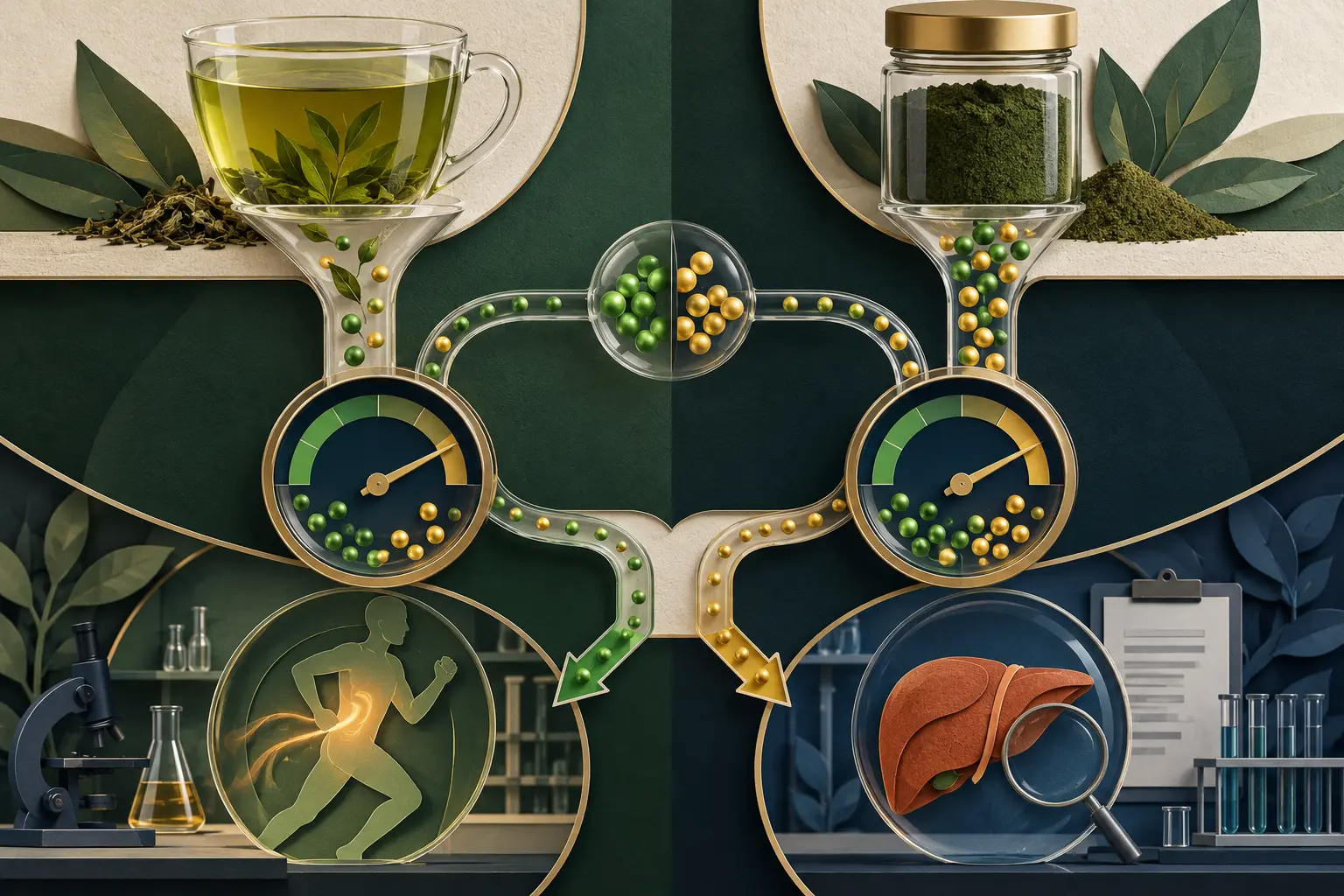
Concentration changes the safety question
Green tea as a beverage and concentrated extracts should not be treated as identical. Concentrated green tea extracts have been linked to liver injury in some people, and risk assessment considers dose and whether the product is taken with food. Product directions cannot replace evaluation of symptoms and medicines.
Stop and seek medical advice for jaundice, dark urine, unusual itching, severe abdominal pain, or persistent nausea. People with liver disease or medicines that affect the liver should obtain professional guidance before using concentrated extracts.
Example: a label that says only “green tea”
A thermogenic lists 500 mg green tea extract but gives no catechin, EGCG, or caffeine specification. A study used a standardized extract with defined exposures. The label cannot be matched simply because both say green tea.
The buyer asks for the missing specification and total caffeine. Without it, effectiveness and safety remain uncertain. Brewed tea may still be enjoyed as a beverage, but it should not be assigned the trial result or treated as a substitute for a prescribed treatment.
Define the job before judging the bottle
Write one sentence describing the intended job: for example, “reduce afternoon hunger without disturbing sleep” or “provide a measurable pre-training alertness effect.” Then define a metric, review date, and failure rule. A product cannot be evaluated coherently when the goal shifts among energy, appetite, sweating, and scale weight whenever one result is disappointing.
Keep the background plan stable enough to interpret. Use repeatable meals, an ordinary movement range, and weekly weight averages rather than reacting to one morning. Compare the product with the simplest realistic alternative, including no supplement. The relevant question is whether it adds a worthwhile benefit after cost, inconvenience, uncertainty, and adverse effects—not whether any ingredient has a plausible mechanism.
Before buying, save the dated label and seller terms. At review, compare the predefined outcome with baseline and note sleep, digestion, mood, pulse or blood pressure when relevant. Do not extend a failed trial because the container is unfinished, and do not raise the dose to rescue an unclear result.
Run a label-to-evidence audit
- Copy the complete label. Record serving size, maximum daily servings, every active amount, extract ratio or standardization, and all caffeine-containing botanicals.
- Calculate daily exposure. Multiply the serving amounts and add coffee, tea, energy drinks, pre-workout products, medicines, and other supplements.
- Match the evidence object. Mark whether research tested the identical finished product, the same ingredient form and dose, a different extract, or only a proposed mechanism.
- Choose the relevant outcome. Acute heat production, appetite ratings, oxidation, or alertness cannot substitute for multi-week body-weight, waist, or fat-mass outcomes.
- Include the downside. Record withdrawals, sleep, heart rate, blood pressure when appropriate, anxiety, digestion, interactions, cost, and uncertainty—not only the average benefit.
Reject a formula when the label prevents the central calculation. A proprietary-blend total does not reveal which ingredient matches a study, whether exposure is trivial, or whether several stimulants are being stacked. Transparency makes evaluation possible; it does not itself prove effectiveness.
Use a four-decision system
Reject when identity, dose, warnings, seller, or evidence is inadequate. Defer when you need a clinician or pharmacist to review medicines, blood pressure, liver risk, pregnancy, or another health issue. Prefer the simpler option when one quantified ingredient can perform the clearly defined job with fewer attribution problems. Test cautiously only when the formula is transparent, the expected benefit is modest, the risk is acceptable, and stopping rules are written first.
Build a baseline before testing. For two weeks, record sleep, hunger, digestion, usual caffeine, activity, weekly weight averages, and waist under repeatable conditions. Change no other major variable during a product trial. A personal before-and-after record cannot prove causation, but it can reveal whether the entire routine remains tolerable and whether the promised job is observable. Stop if adverse effects appear or the predefined benefit does not.
Where Fat Burn Active fits
Fat Burn Active includes green tea extract, but that ingredient's presence cannot validate the complete formula. The remaining total-caffeine and dose-matching gaps limit product-level conclusions.
Fat Burn Active is optional and is not required for fat loss. Its current information should be evaluated as one finished multi-ingredient formula: known amounts do not resolve every remaining exposure or evidence gap. Feeling warmer, stimulated, less hungry, or seeing a short-term water change does not demonstrate meaningful product-level fat loss.
Fat Burn Active is relevant to Green Tea-Based Fat Burners because its official listing identifies standardized plant extracts, caffeine sources, vitamins, and zinc in one formula. First read our independent review. If the formula, stimulant profile, evidence limits, and warnings fit your situation, check the current formula and purchase options on the official Fat Burn Active website. We may receive a commission at no additional cost.
When not to self-test
Ask a clinician or pharmacist before use if you are pregnant or breastfeeding, under 18, have an eating-disorder history, high blood pressure, heart-rhythm disease, anxiety, glaucoma, diabetes, liver, kidney, or gastrointestinal disease, or take prescription or over-the-counter medicines. Do not stack fat burners or combine one casually with pre-workout, decongestants, or high-caffeine drinks.
Stop use and seek appropriate care for chest pain, fainting, severe palpitations, breathing difficulty, a serious allergic reaction, jaundice, dark urine, severe abdominal pain, or persistent vomiting or diarrhea. A lower scale reading caused by dehydration or illness is not successful fat loss.
Frequently asked questions
Is green tea extract the same as tea?
No. Extracts can concentrate compounds and create different dose and safety questions.
Does EGCG prove weight loss?
No. The exact dose, formulation, comparison, duration, and outcome determine what evidence supports.
Can green tea extract affect the liver?
Concentrated extracts have been associated with liver injury in some people.
Sources
- NIH ODS: Dietary Supplements for Weight Loss
- NCCIH: Green Tea
- EFSA: Safety of green tea catechins
- Cochrane review: Green tea for weight loss and maintenance
Sources reviewed September 13, 2026. This article is general educational information, not medical advice, diagnosis, or treatment.