This guide concerns practical decisions about supplement use. It does not establish that a fat burner treats a medical condition or produces weight loss.
The ingredient name can sound like the result
A label may say “standardized to chlorogenic acids” and place a waistline claim immediately beneath it. That makes the compound and the outcome look interchangeable. They are not. A standardized extract tells you something about its composition, while a useful weight-management claim requires human evidence for an outcome that matters to the buyer. Coffee-derived compounds may differ across extracts and beverages, and a mixed capsule introduces other variables.
The green coffee bean extract guide covers the whole botanical product and its troubled marketing history. This page asks a narrower question: what does evidence about chlorogenic acid itself allow you to conclude?
Where chlorogenic acids come from
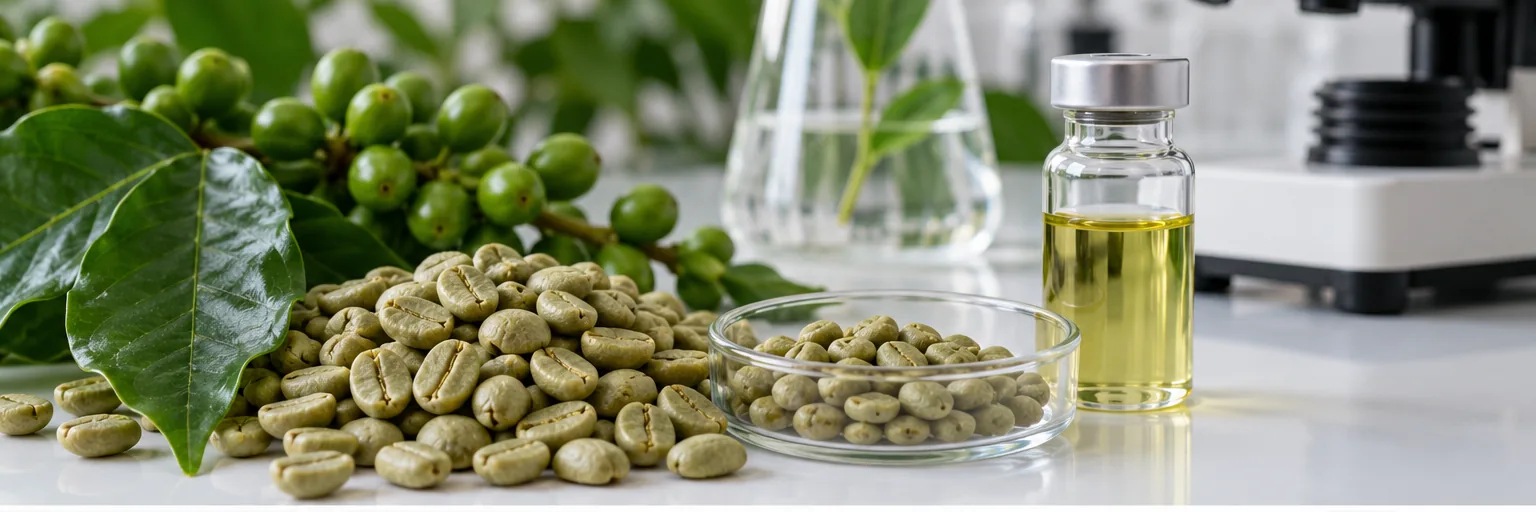
Green coffee beans contain more chlorogenic acid than roasted beans, according to NIH ODS. Coffee beverages, isolated preparations and standardized extracts are not the same dose. An extract label might show an ingredient weight and a percentage of chlorogenic acids. Multiplying them can estimate the stated compound amount, but only if both numbers are disclosed and the percentage refers to the same serving. Do not treat a proprietary blend total as the dose of this one compound.
Green coffee may also contain caffeine; decaffeinated versions exist. “Chlorogenic acid” on the front does not establish that the product is caffeine-free. Check the full panel and the daily caffeine guide if you use coffee or other stimulants.
What a human result actually measures
A randomized trial of coffee rich in chlorogenic acids reported changes in abdominal fat measures among overweight adults. That is evidence about a specific beverage and trial setting, not every extract capsule. Another trial may measure body weight rather than body fat or glucose absorption over a different period. Compare the population, intervention, comparator, dose, duration and outcome before treating a result as relevant to your purchase.
A 2023 systematic review focused on green coffee bean extract supplying substantial chlorogenic acid and pooled selected randomized trials. Pooling does not repair every limitation in small individual studies or show that any current retail formula matches them. The NIH ODS review describes the green coffee weight-loss evidence as limited and historically poor in methodological quality.

The gap between mechanism and sustained fat loss
Researchers have proposed effects on glucose metabolism or fat-related pathways. A plausible mechanism is not a measured long-term reduction in body fat. Changes in blood glucose response, a single exercise test or a short weight measurement are different endpoints. If an advertisement uses “supports metabolism,” ask what that means in an actual human trial and whether the size of the effect would matter outside the laboratory.
The fat oxidation versus fat loss guide separates immediate fuel use from accumulated body-fat change. The evidence guide helps rank ingredient research against finished-product trials.
Read the label as a testable claim
Suppose a capsule contains 400 mg green coffee extract standardized to 45% chlorogenic acids. The label would imply 180 mg of the specified compounds per serving if the statement is accurate and the percentages refer to that serving. It would not prove the capsule matches a particular trial: extraction, other constituents, caffeine content, dosing schedule and participant characteristics still matter. Avoid equating a larger percentage with a larger clinical benefit.
Ask for the exact Supplement Facts panel, not a sales diagram. Check independent quality documentation where available and separate ingredient identity from product efficacy. The label guide explains how to read serving size and amounts.
A comparison at the shopping stage
One listing cites a study of chlorogenic acid-enriched coffee. A second bottle lists a green coffee extract but hides chlorogenic acid amounts inside a blend. The first study cannot validate the second bottle, even if both use the same keyword. A third product provides a dose but combines caffeine with other botanicals. That combination introduces stimulant exposure and needs its own evidence and safety review.
The useful comparison is not which package has the greenest image. Record the tested material, measured outcome, current ingredient form and actual serving. If two columns do not match, describe the evidence as indirect. A marketing promise of effortless loss should remain unproven until the finished product is tested appropriately.
Where Fat Burn Active fits
If you are comparing weight-loss formulas rather than buying an isolated compound, the Fat Burn Active review
For a product that fits your preferences, there is still a separate safety question. Caffeine, medicines, blood-pressure concerns and tolerability matter. A supplement cannot replace a sustainable eating pattern. Treat a sales offer as a choice after the evidence review, not proof supplied by the review.
Make an evidence card before deciding
Write “compound, form, dose, study population, comparator, duration and outcome” in one row for each cited paper. Beneath it write the same fields for the current label. Mark anything missing as unknown rather than guessing. If the study tested a beverage, say beverage; if it tested a multi-ingredient blend, do not credit chlorogenic acid alone. If it measured a small short-term change, do not label that result lasting fat loss.
Finally, note the commercial consequence. Would the observed outcome be worth the price, repeated routine and uncertain safety for you? If not, a consistent food and activity plan may deliver the practical benefit you hoped the ingredient would provide. If you take medicines or have medical concerns, bring the exact label to a clinician or pharmacist before using it.
What a positive pooled number cannot tell you
Suppose a review reports an average difference between treatment and control. That number does not tell you whether each participant improved, whether the result persisted after stopping, or whether a product with another preparation would do the same. Look at how many trials were pooled, their size and quality, and whether some participants also changed their meals or activity. A statistically significant estimate can still be too small or too uncertain to justify a recurring purchase.
Do not discard all research because one famous green-coffee study had serious problems. Equally, do not use newer studies to revive that study as if its problems were fixed. Evaluate each source on its own design, and compare the best available evidence with the exact bottle. A helpful decision may be to set aside the supplement and choose a repeatable food habit instead.
Compare the whole formula before deciding
Check the current package, ingredients, serving directions, your other caffeine sources, and relevant health conditions. For an evidence-based starting point, read the full Fat Burn Active review. If this product still fits your circumstances, you can inspect its current offer. We may earn a commission if you buy through that link. Choosing no supplement is equally reasonable when the evidence or safety questions do not support a purchase.
Frequently asked questions
Is chlorogenic acid the same as green coffee extract?
No. It is a group of compounds within coffee and some extracts.
Does a higher percentage guarantee weight loss?
No. Concentration does not establish clinical efficacy.
Can a beverage trial validate a capsule?
Only indirectly; the dose, preparation and complete product may differ.
Sources
- NIH ODS: Green Coffee Bean Extract
- Randomized Trial: Chlorogenic Acid-Rich Coffee
- Systematic Review: Chlorogenic Acids
- Trial: Green Coffee Extract in Metabolic Syndrome
- FDA: Caffeine from All Sources
- FTC: Green Coffee Claims
Reviewed against the sources listed above. Educational information only; not medical advice.