
This guide concerns practical decisions about supplement use. It does not establish that a fat burner treats a medical condition or produces weight loss.
Two questions hidden in “burning fat”
During daily life, your body uses a changing mix of fuels. Fat oxidation describes part of that ongoing process, often measured in a laboratory through oxygen use and carbon dioxide output during rest or exercise. An increased rate in a particular hour is a measurable physiological outcome. Body-fat loss asks a different question: did stored fat decrease after the person’s intake, expenditure, and other changes played out over time? Marketing frequently jumps from the first answer to the second without measuring it.
A useful analogy is using money from a checking account during the day while new deposits also arrive. Looking only at withdrawals misses the net balance. The analogy has limits because human metabolism adapts and several tissues and fuels are involved, but it helps explain why “fat burned during this workout” is incomplete. For the distinct difference between body fat and the number on a scale, see fat loss versus weight loss.
What a laboratory session can show
A controlled experiment may compare exercise conditions, measure respiratory exchange, and report a higher proportion of energy from fat during one session. That result can be real within its protocol. It does not tell us whether participants ate more afterward, moved less later, or lost adipose tissue over several months. A session can improve fitness and still fail to produce the predicted weight change if the energy spent is replaced. Those are separate outcomes, and none makes exercise pointless.
In a 24-hour chamber study, researchers found that exercise performed while energy intake was replaced did not create a negative fat balance. The finding is specific to the studied conditions and does not mean exercise never helps weight management. It demonstrates a missing link in “fat-burning” advertisements: short-term substrate use cannot stand in for the whole-day balance, let alone the repeated pattern across weeks. Ask for the time frame and endpoint whenever you encounter a claim.
Why timing and intensity can mislead
A lower-intensity session may use a larger percentage of fat as fuel than a harder session, while the absolute energy used and the rest of the day differ. Likewise, an early fasted exercise test can show a particular oxidation response without proving superior long-term body-fat loss in free-living people. Do not interpret one favorable percentage as a recommendation to ignore enjoyment, fitness, recovery, or a program you can sustain. The comparison has to fit the outcome you seek.
Research on post-absorptive exercise has examined 24-hour oxidation under tightly controlled conditions. These experiments are useful for mechanism, but their small and specific samples should not be converted into a guarantee for the public. If breakfast timing helps you train consistently, that may be valuable; if it makes you dizzy or disrupts your day, a “fat-burning” percentage does not justify it. Sustainable body composition is assessed beyond a single morning session.
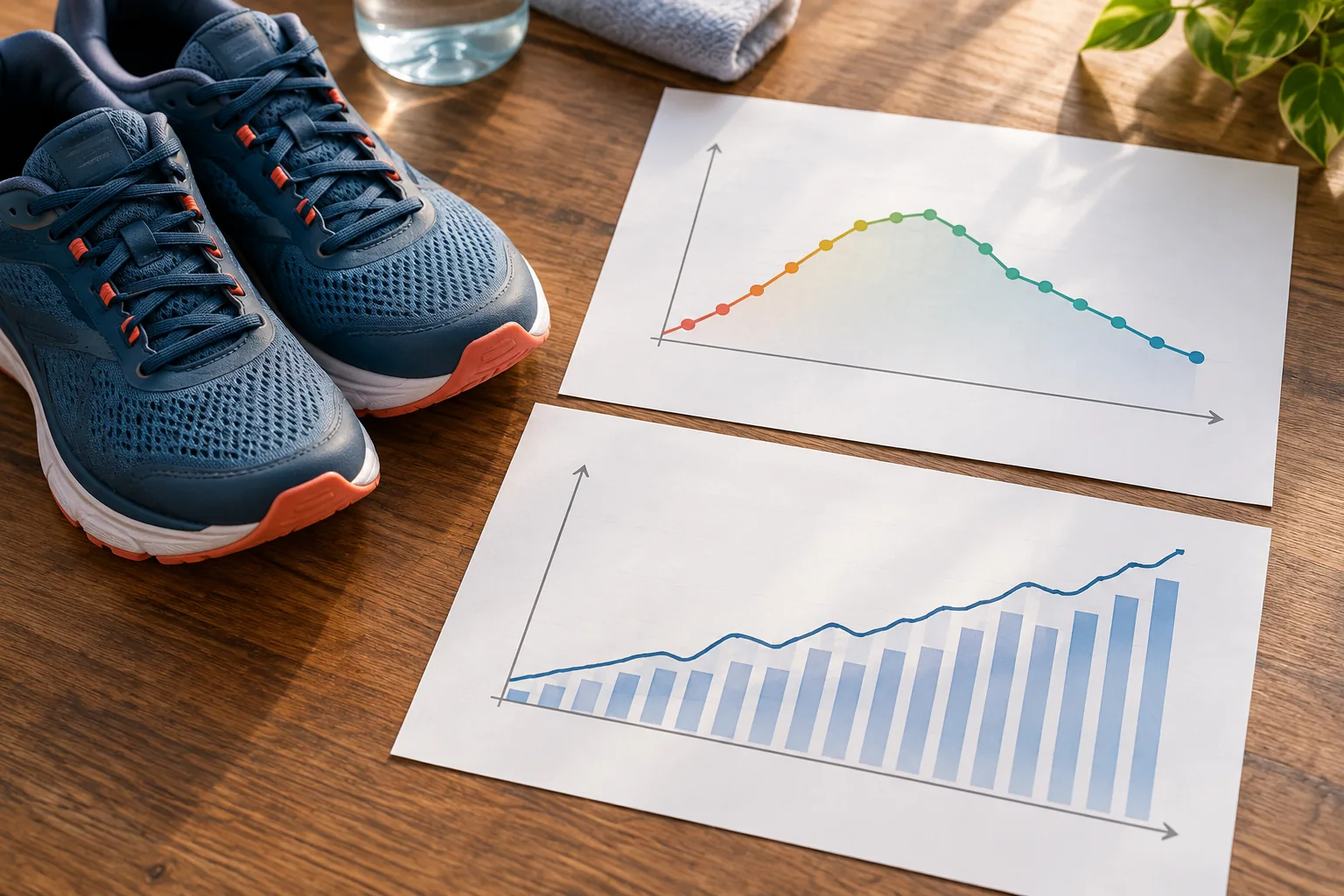
Focus on net change over repeated days
A persistent pattern in which expenditure exceeds intake can reduce stored tissue over time, although the body adapts and the rate may slow. NIDDK’s Body Weight Planner models changing energy needs rather than assuming a fixed calories-to-pounds conversion. Food quality, protein, activity, and sleep influence health, hunger, and whether the plan is maintainable. The energy-balance concept is not a demand to count every calorie perfectly or a claim that biology is simple.
Look at repeated behavior and a trend in relevant outcomes rather than an estimated number of grams oxidized in a workout. Body weight can shift with water, glycogen, gut contents, and other factors. Waist measurements or body-composition methods may add context, while each has limitations. If the trend and your experience are not improving after a reasonable period, revisit food intake, activity, or medical circumstances with appropriate support. The long-term energy-balance guide develops that time scale.
How to read a fat-burner claim
A supplement may cite a study showing increased thermogenesis or fat oxidation for several hours. Find the actual ingredient and dose, number of participants, comparator, and measured outcome. If the retail formula contains multiple ingredients, a finding for one component cannot establish the finished product’s effect. NIH ODS reports limited evidence for many weight-loss supplements and notes that mixtures are often not well studied. A manufacturer’s sentence about “burning more fat” may therefore describe a proposed mechanism rather than a result in buyers.
Fat Burn Active contains green tea extract, caffeine sources, and several botanicals. Even if a component affects an acute marker, ask whether the complete formula was tested for a useful fat-mass change. A claim about oxidation needs a bridge to sustained outcome. Check its ingredient-versus-formula evidence before attaching a conclusion to the product.
A practical decision without a metabolic test
Choose activity you can repeat and an eating pattern that is adequately nourishing and consistent with your circumstances. Consider how you will notice progress across weeks, not minutes. A walk or strength session can have benefits independent of what fraction of fuel comes from fat during that hour. Avoid chasing a device estimate or a “fat-burning zone” at the expense of a routine you like and can safely perform.
If a product is part of your decision, require outcome evidence that matches the promised result. Do not mistake sweating, immediate weight change, or a short laboratory fuel measurement for fat loss. The question to carry into a review is simple: what changed in stored body fat, in whom, over how long, against what comparison? An honest “not known” is useful information.
A quick test for a headline
When an advertisement says “burns more fat,” replace that phrase with the measured result. Was it a greater proportion of fat used during exercise or a smaller fat mass after months? Those measures need different studies. Ask whether eating after the test was observed. If the page never answers, keep the claim limited to the short-term measure reported. This wording test can prevent an appealing mechanism from becoming an unsupported personal prediction.
Choose the next useful step today
Check the current package, ingredients, serving directions, your other caffeine sources, and relevant health conditions. For an evidence-based starting point, read the full Fat Burn Active review. If this product still fits your circumstances, you can inspect its current offer. We may earn a commission if you buy through that link. Choosing no supplement is equally reasonable when the evidence or safety questions do not support a purchase.
Frequently asked questions
Is fat oxidation the same as losing body fat?
No. It is fuel use at a particular time; body-fat loss is a net tissue change over time.
Can exercise be useful without a high fat-oxidation percentage?
Yes. Fitness and health benefits do not depend on maximizing that one metabolic measure.
Does a supplement-induced oxidation change prove weight loss?
No. The finished formula needs relevant longer-term human outcome evidence.
Sources
- 24-hour Exercise and Fat Balance Study
- Review: Exercise and Fat Metabolism
- Exercise Timing and 24-hour Oxidation
- NIDDK: Body Weight Planner
- NIDDK: Eating and Activity
- NIH ODS: Weight-Loss Supplements
Reviewed against the sources listed above. Educational information only; not medical advice.