
This guide concerns practical decisions about supplement use. It does not establish that a fat burner treats a medical condition or produces weight loss.
Why the next morning can be startling
You eat a restaurant meal that is larger or saltier than usual, step on the scale the next morning, and see a sharp increase. It is tempting to assign every added ounce to body fat. Yet the scale weighs everything: food and fluid still inside the body, changes in water, and all tissues. It does not distinguish yesterday’s meal from an actual change in stored fat. A high-calorie meal may contribute some surplus; that possibility is different from claiming that the entire overnight jump is fat.
Carbohydrate intake can refill glycogen stores, which are stored with water. Research on glycogen repletion documents associated water changes, though an exact fixed ratio should not be used as a personal fat calculator. Saltier foods may also affect fluid balance. None of these mechanisms erases the meal’s energy; they explain why an immediate scale number is an unreliable estimate of new fat mass. See why weight fluctuates for the broader pattern.
A surplus is contextual, not a photograph
A meal’s size relative to your usual lunch does not identify your total energy balance for the day or week. You may have eaten less beforehand, walked more, or had a different appetite afterward. Equally, it is possible for one unusually large meal to add to a real surplus. The honest answer is neither “a feast has no effect” nor “the entire next-day gain is fat.” It is one event within a longer pattern and a noisy short-term measurement.
NIDDK’s Body Weight Planner reflects changing calorie needs and physiology over time rather than a rigid calories-per-pound shortcut. Avoid online arithmetic that declares a precise amount of instant fat from a restaurant receipt. Most menus do not provide exact intake for an individual meal, and even known energy intake cannot be read directly from a next-morning scale. The long-term energy-balance guide explores what repeated surpluses and deficits mean.
What actually moves on the scale
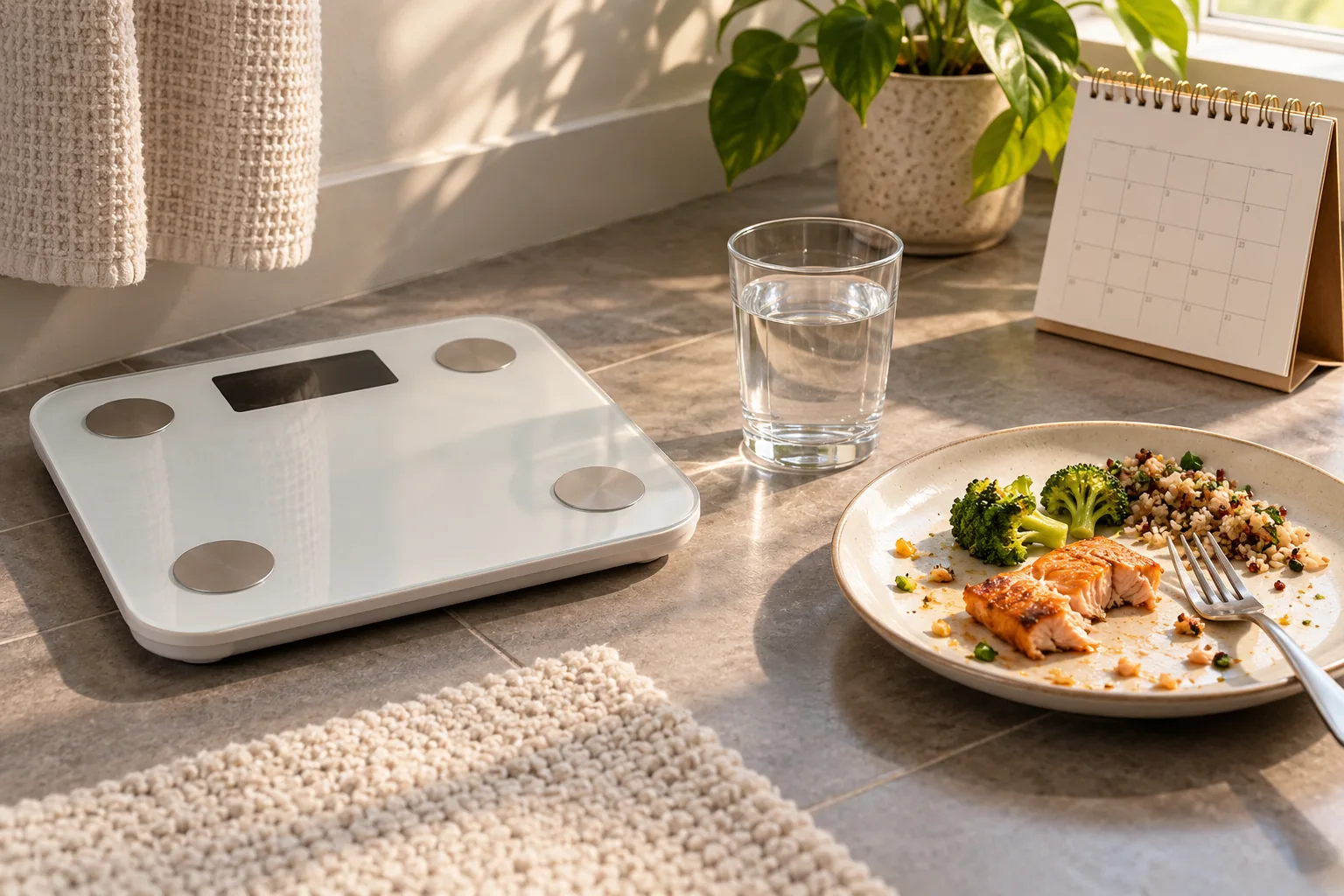
A large dinner can leave more material in the digestive tract the next morning. Fluid intake, sodium, carbohydrate-related glycogen, and bowel habits can all alter weight. People also vary in hormonal cycles, medicines, illness, and sleep. These factors do not all have equal effects for everyone, and the precise contribution of each cannot be inferred from the display. A single measurement is a poor basis for changing a diet dramatically.
If you choose to weigh, use similar conditions over multiple days or weeks and interpret the trend. A lower number after dehydration would be equally misleading as evidence of body-fat loss. If the scale is provoking strong distress, step back and speak with a qualified professional about a measurement method that supports your health. The point is to gather useful information, not to make every meal a verdict.
The response that avoids a rebound
After a bigger meal, return to your usual pattern: eat when appropriate, drink normally, and continue planned activity. There is no need to skip multiple meals, punish yourself with exercise, or use a laxative or “detox” to compensate. Those actions can create harm and make the next eating decision harder. If the meal left you comfortably full for longer, notice that and eat the next meal according to your needs rather than an inflexible schedule.
For recurring social meals, you can plan ahead without banning them. A restaurant choice, a shared dessert, or a satisfying breakfast may help you enjoy the occasion and maintain ordinary routines afterward. If repeated episodes feel out of control or provoke compensatory behavior, seek professional help; the issue deserves care beyond a simple calorie calculation. This article is about interpreting one meal and one weigh-in, not treating an eating disorder.
Look for a pattern over time
One weekend meal can coexist with an overall plan, but frequent large surpluses over weeks can affect body fat. The weekend energy-balance guide addresses that repeated pattern. To understand your own routine, compare several weeks of habits rather than trying to estimate exactly how many grams of fat a single meal created. Look at whether your meals are satisfying, your activity is repeatable, and your sleep supports the plan.
The CDC recommends gradual, steady weight loss rather than dramatic short-term targets. It does not mean every week must display a smooth decline. Normal water changes can mask progress for a while. If a sustained trend concerns you, review it with context and adjust the routine rather than overreacting to one restaurant night.
Where fat-burner marketing goes wrong
A supplement advertisement may suggest you can “erase” a meal by taking a capsule or intensifying fat oxidation. The outcome is not demonstrated by an ingredient mechanism or a short exercise study. NIH ODS notes limited evidence for many weight-loss products, and no supplement can retroactively turn a scale reading into a direct fat measurement. Fat Burn Active’s disclosed formula should be evaluated on its own evidence and safety, not sold as a cure for a dinner.
Read the complete product review if considering a purchase. The more immediate solution is to treat one meal as one meal, avoid punishment, and continue a plan that you can repeat. A calm response is often more useful than trying to make the scale display a particular number tomorrow.
Ask what the number actually measures
If a scale reads higher the next morning, write down what you know without guessing a fat quantity: meal timing, a different salt or carbohydrate intake, fluid, and whether the weigh-in conditions changed. You cannot calculate each component exactly at home. Waiting for several ordinary days of your usual pattern gives a clearer signal than escalating restrictions after one reading. This is especially useful after travel or celebrations, when sleep and schedule also differ. If weighing repeatedly increases anxiety, use less frequent monitoring or another approach with professional support.
Choose the next useful step today
Check the current package, ingredients, serving directions, your other caffeine sources, and relevant health conditions. For an evidence-based starting point, read the full Fat Burn Active review. If this product still fits your circumstances, you can inspect its current offer. We may earn a commission if you buy through that link. Choosing no supplement is equally reasonable when the evidence or safety questions do not support a purchase.
Frequently asked questions
Did I gain all the scale increase as fat overnight?
A scale cannot make that distinction. Food mass and changes in water and glycogen can alter weight quickly.
Can one large meal ever contribute to fat gain?
Yes, if it adds to an overall surplus; its exact contribution cannot be inferred from one next-day weight.
Should I skip meals the next day?
Return to ordinary eating according to hunger and your plan rather than using punishment or compensation.
Sources
- Glycogen-associated Water Study
- Glycogen and Weight-Fluctuation Review
- NIDDK: Body Weight Planner
- NIDDK: Eating and Activity
- CDC: Steps for Losing Weight
- NIH ODS: Weight-Loss Supplements
Reviewed against the sources listed above. Educational information only; not medical advice.