This guide concerns practical decisions about supplement use. It does not establish that a fat burner treats a medical condition or produces weight loss.
The claim sounds healthy; the liver question is different
A product sold as “natural metabolism support” may look harmless beside a cup of tea. But a concentrated extract, multiple ingredients and repeated daily servings can create exposures that ordinary food or drink does not. The liver processes many substances, and rare adverse reactions may not show up in a small short-term trial. That is why the safety question cannot be settled by an ingredient name on the front label.
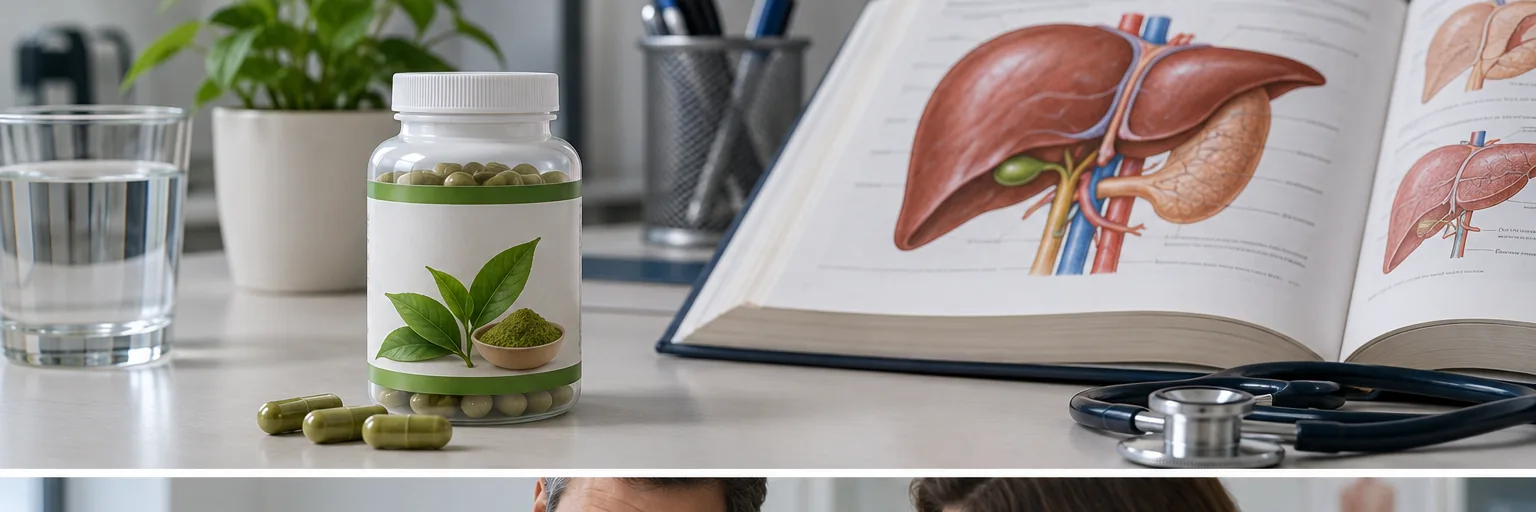
NCCIH reports uncommon liver injury among some users of green tea products, mainly extract tablets or capsules. This does not mean every cup of green tea or every formula causes injury. It does mean a buyer should distinguish the exact extract and dose from a general food association.
What the evidence actually establishes
The NIH Office of Dietary Supplements reviews weight-loss ingredients and notes that combinations make it difficult to identify which component accounts for an effect or adverse outcome. Case reports and surveillance can flag possible harm, but they do not provide a reliable personal probability for an untested finished formula. A clinical trial with no liver problems in a small group cannot prove zero risk in a broader market.
Ask what the cited study tested: beverage, single ingredient, branded extract or complete retail product? Then compare dose, duration and population. The evidence guide helps separate these levels. Do not treat a quality badge or a manufacturer assurance as a clinical liver-safety trial.
Look for possible warning signs and act
Yellow skin or eyes, dark urine, unusual fatigue, loss of appetite, nausea or pain in the upper abdomen may warrant medical assessment. These symptoms can have many causes, so do not diagnose yourself from a website. If you develop a concerning reaction while taking a supplement, stop the optional product and seek medical care or advice. For severe symptoms, seek urgent help.
Keep the bottle and a record of the dose and start date. Tell the clinician about alcohol use, medicines and other products without changing prescriptions on your own. FDA recommends reporting adverse events. A healthcare professional can decide whether liver testing or other evaluation is needed.

Check the label and your health context
List every ingredient and serving amount on the current package. Check whether it contains a concentrated green tea extract or a multi-ingredient blend with undisclosed amounts. Compare all supplements you take; two bottles may repeat an extract. FDA warns that dietary supplements can interact with medicines. If you already have liver disease, abnormal liver tests or a history of supplement-related injury, speak with your treating clinician before any weight-loss product.
The Supplement Facts guide shows what a label can reveal. It cannot reveal every risk, particularly when the formula or your medical circumstances are uncertain.
A common shopping scenario
Imagine a shopper drinks tea without difficulty and sees a capsule advertised as “green tea for fat burning.” The capsule also contains other botanicals. They infer that because the drink felt fine, the pill is safe. That inference skips concentration, serving size, combination effects and personal health history. They should identify the exact extract and amount, examine the evidence for the finished formula, and ask a clinician if relevant conditions or medicines are present.
If the seller cites a short study of an ingredient, note whether liver outcomes were monitored and whether participants match the current buyer. A study of calorie expenditure does not establish liver safety. The safest purchasing question is specific: what is known about this product at this dose in this person?
If you already have liver concerns
Do not use a supplement to manage liver disease or to speed weight loss during an unexplained illness. Ask a qualified clinician about underlying condition, medicines and a suitable weight-management plan. An online symptom list cannot replace evaluation. Keep routine nutrition and activity discussions separate from the supplement purchase. If your clinician requests tests or follow-up, complete that process before adding an optional product.
The general side-effects guide covers other reactions. Liver-related symptoms deserve an appropriately cautious response because they can be nonspecific at first. Waiting for certainty while continuing a suspect product is not a sound self-test.
Where Fat Burn Active fits
You can use the Fat Burn Active review to understand its ingredient claims and evidence limitations. It does not certify liver safety for you or replace review of the current package. A person with liver disease or concerning symptoms should prioritize medical advice rather than move from this page to a purchase.
For others considering a product, the decision still requires a complete label, realistic benefit expectation and tolerance for uncertainty. No supplement is necessary for effective weight-management basics. If a seller claims its formula is “liver safe,” ask for product-specific evidence rather than accepting a generic botanical claim.
Make an ingredient-to-outcome table
Write one row for each extract, the disclosed amount, the claim and its evidence. Add a column for health conditions and medicine questions. If the seller provides only a blend total, mark the individual dose as unknown. Ask whether the human trial reported meaningful body-weight outcomes over time and monitored adverse events. A colorful graphic with ingredients cannot replace these details.
If you notice symptoms after starting any product, do not continue simply to collect more “data.” Stop and seek appropriate care. Retain the package for the clinician and consider an FDA safety report. This is a more useful decision framework than assuming every botanical is harmless or every extract is dangerous.
Keep beverage and extract claims separate
A shopper may encounter a positive headline about drinking tea and assume that a concentrated extract offers the same benefit without downsides. Dose and preparation matter. Research about a beverage cannot directly establish the effect or safety of a capsule, and research on isolated extract cannot validate a new blend containing that extract. Write the actual ingredient form beside every cited claim.
If your medical history includes an abnormal test result, the uncertainty deserves a conversation with a clinician. Do not use an online liver “detox” claim as a reason to combine two products. The body does not need a retail cleanse to process ordinary weight loss, and an additional botanical can make the situation harder to evaluate. A clear ingredient list and modest claims are useful, but they cannot guarantee that an individual will not react.
Make a safer next decision
Review the current label and your personal circumstances with a qualified healthcare professional. The Fat Burn Active review provides general product context, but it does not establish individual safety. If you have symptoms or a relevant medical condition, prioritize care; a purchase is not the next step. This site may earn a commission from qualifying product links elsewhere.
Frequently asked questions
Is green tea drink the same as extract capsules?
No. Concentration, dose and combination with other ingredients can differ.
Can a normal small trial rule out liver harm?
No. Rare reactions may not appear in a short or small trial.
What if I notice yellow eyes or dark urine?
Stop the optional supplement and seek medical evaluation promptly.
Sources
- NCCIH: Green Tea Safety
- NCCIH: Weight-Loss Supplement Safety
- NIH ODS: Weight-Loss Supplements
- FDA: Dietary Supplements
- FDA: Medicine Interactions
- FDA: Report a Problem
Reviewed against the sources listed above. Educational information only; not medical advice.