Claim-by-claim audit
Where the wording outruns the evidence
The official page says declarations are backed by scientific research and presents testimonials and a satisfaction percentage. These elements do not identify an independent trial of the finished product, its methods, population, comparison group, outcome size, or adverse events. Ingredient citations cannot validate every formula-level promise.
Statements about hormones, circulation, respiratory function, lean mass, fat absorption, digestive juices, and spectacular body changes each require specific support. The broader the promise, the less appropriate it is to cite one ingredient mechanism as proof.

Grade every claim by evidence distance
Use four grades: verified product fact, plausible ingredient-level claim, unconfirmed finished-product claim, or contradicted/overstated wording. Add the exact source and date beside each grade. This prevents a genuine label fact from being used as proof of a clinical result and makes later updates easy when the formula or evidence changes.
Translate marketing words into a testable record
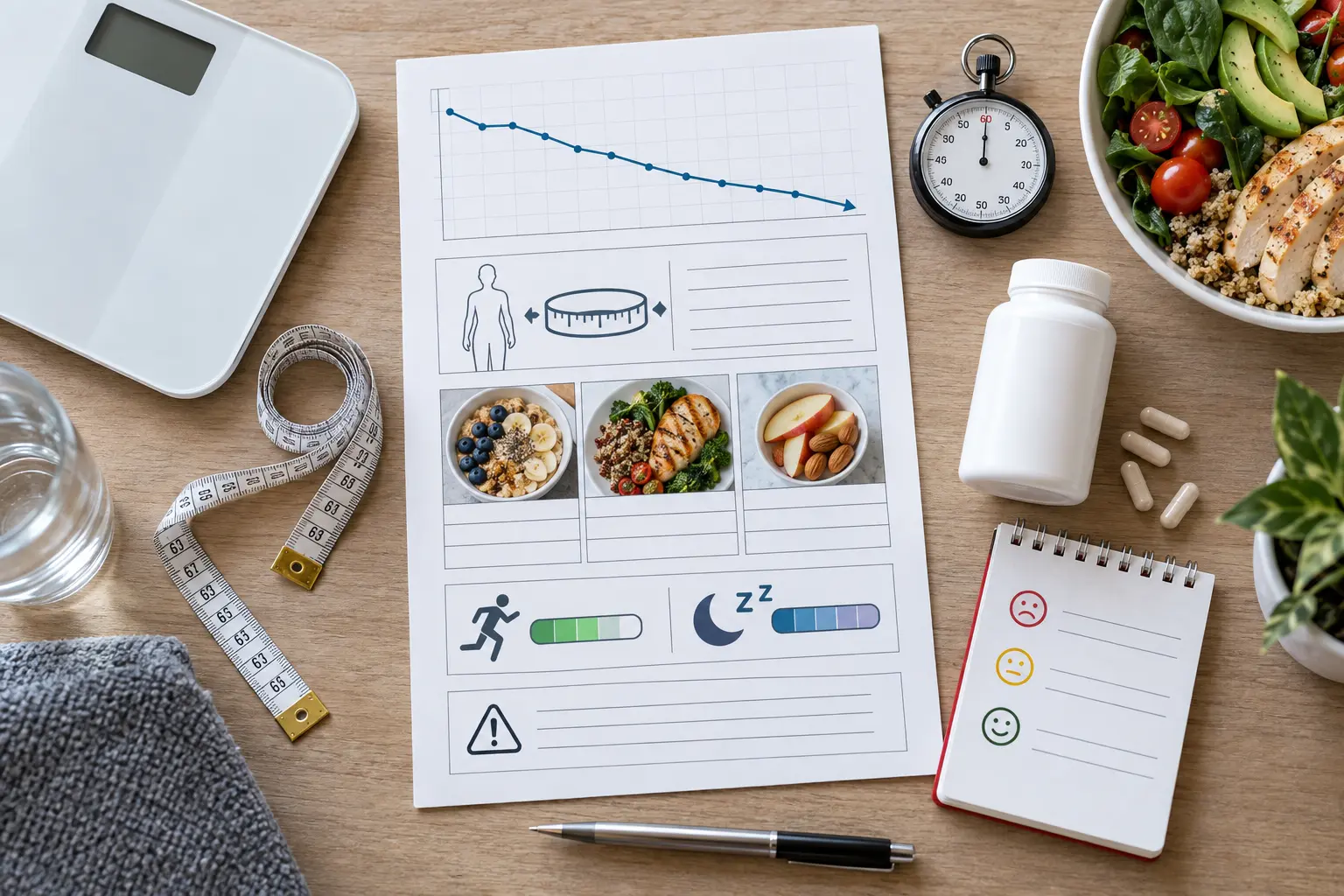
For fat loss, use standardized weekly-average weight, waist, and where appropriate body composition over a sufficient period. For appetite, track hunger timing, unplanned eating, and total intake. For performance, select a repeatable workout metric. For tolerability, record sleep, anxiety, pulse symptoms, digestion, headaches, and other adverse effects.
Do not change food, training, caffeine, and several supplements simultaneously. A personal log cannot prove the product caused an outcome, but it can prevent warmth or alertness from being mistaken for fat loss.
Worked example: “more energy” becomes “more fat loss”
A user feels more alert during the first week. The marketing pathway may imply that stimulation means greater performance, higher expenditure, and faster fat loss. Only the first observation has been made. Training output, total intake, sleep, body weight, waist, and adverse effects remain unmeasured.
If late stimulation reduces sleep and increases next-day hunger, the net result may conflict with the intended goal. The audit keeps each link separate and refuses to treat a noticeable sensation as the final outcome.
Use a dated verification worksheet
- Capture the product. Save the official page, complete delivered label, serving size, formula, warnings, seller, lot code, expiry, and purchase date.
- Separate evidence objects. Keep manufacturer claims, ingredient studies, combination studies, and finished-product trials in different columns.
- Calculate only what is supported. Multiply extract mass by standardization when both are stated, but label the result as a calculated specification rather than laboratory verification.
- Map each claim to an outcome. Thermogenesis, alertness, hunger, scale weight, fat mass, waist, and workout performance are different endpoints.
- Record uncertainty. An unknown dose, missing all-source caffeine figure, absent lot report, or lack of a finished-product trial should remain visible.
- Set a decision rule. Decide what evidence, safety conditions, and practical benefit would justify purchase or continued use.
Do not total several small ingredient effects into a product prediction unless the complete combination was studied. A mechanism can make a claim plausible, but only a relevant human outcome can show whether the effect is large and durable enough to matter. Testimonials and a strong first-dose sensation cannot close that gap.
Make the unresolved questions visible
Where the buying decision belongs
The claims audit does not say that no ingredient can have an effect. It says that the strongest product promises remain unverified without relevant finished-product evidence. Buyers should base the decision on the documented formula, realistic expectations, and safety—not slogans.
Fat Burn Active is optional. It cannot replace a sustainable calorie deficit, adequate nutrition, daily movement, resistance training, sleep, or medical care. A transparent formula permits better questions; it does not guarantee effectiveness or personal safety.
If the current bottle matches the verified formula, the warnings and stimulant exposure fit your situation, and you accept the evidence limits, confirm current availability, price, delivery, and return terms on the official website. We may receive a commission at no additional cost to you. Results are not guaranteed.
Run a decision-focused real-world check
Before adding the product, collect a stable baseline for at least one to two weeks when practical. Record morning weight under comparable conditions, a weekly waist measurement, ordinary caffeine sources, sleep timing, hunger pattern, training performance, and relevant symptoms. This baseline does not turn self-observation into a clinical trial; it prevents normal fluctuation from being credited to a new capsule.
Choose one primary outcome and one review date. Keep food structure, training, and other supplements reasonably consistent. Do not increase the serving to chase warmth, sweating, appetite suppression, or stimulation. Those sensations may appear quickly while the meaningful outcome remains unchanged. Use weekly averages rather than comparing the lightest day after starting with the heaviest day before starting.
At review, ask four questions: Did the intended outcome improve? Was the change large enough to matter? Did sleep, anxiety, digestion, pulse symptoms, cost, or routine complexity worsen? Could another change explain the result? Continue only when the benefit is defined, worthwhile, and not outweighed by harm. If the result is ambiguous, uncertainty is the result—not a reason to buy another bottle indefinitely.
Safety is a separate gate
The official page excludes children, pregnancy or breastfeeding, cardiovascular disease, and caffeine hypersensitivity, and warns against other caffeine or similar ingredients. Medicines, hypertension, arrhythmia, anxiety, sleep problems, liver disease, eating-disorder history, and planned surgery deserve individualized review with a clinician or pharmacist.
Stop use and seek appropriate care for chest pain, fainting, severe breathing difficulty, serious allergic symptoms, repeated vomiting, confusion, jaundice, or a sustained racing or irregular heartbeat. Insomnia, palpitations, tremor, anxiety, nausea, headache, and excessive sweating are adverse effects, not proof of fat burning.
Frequently asked questions
Are Fat Burn Active claims proven?
Some ingredients have relevant research, but we did not identify a trial verifying the strongest claims for the exact product.
Do testimonials count as clinical evidence?
No. They lack controlled comparison and cannot establish average benefit or safety.
Does feeling warm prove thermogenesis?
No. Sensation does not quantify expenditure or body-fat change.
Can early scale loss prove fat loss?
No. Water, glycogen, food, and bowel contents can change quickly.
Sources
- Fat Burn Active official claims
- FTC Health Products Compliance Guidance
- FTC: The Truth Behind Weight-Loss Ads
- NIH ODS: Weight-Loss Supplements
- FDA: Tainted Weight Loss Products
Sources reviewed September 16, 2026. This article is general educational information, not medical advice, diagnosis, or treatment.