Does sea moss cause weight loss?
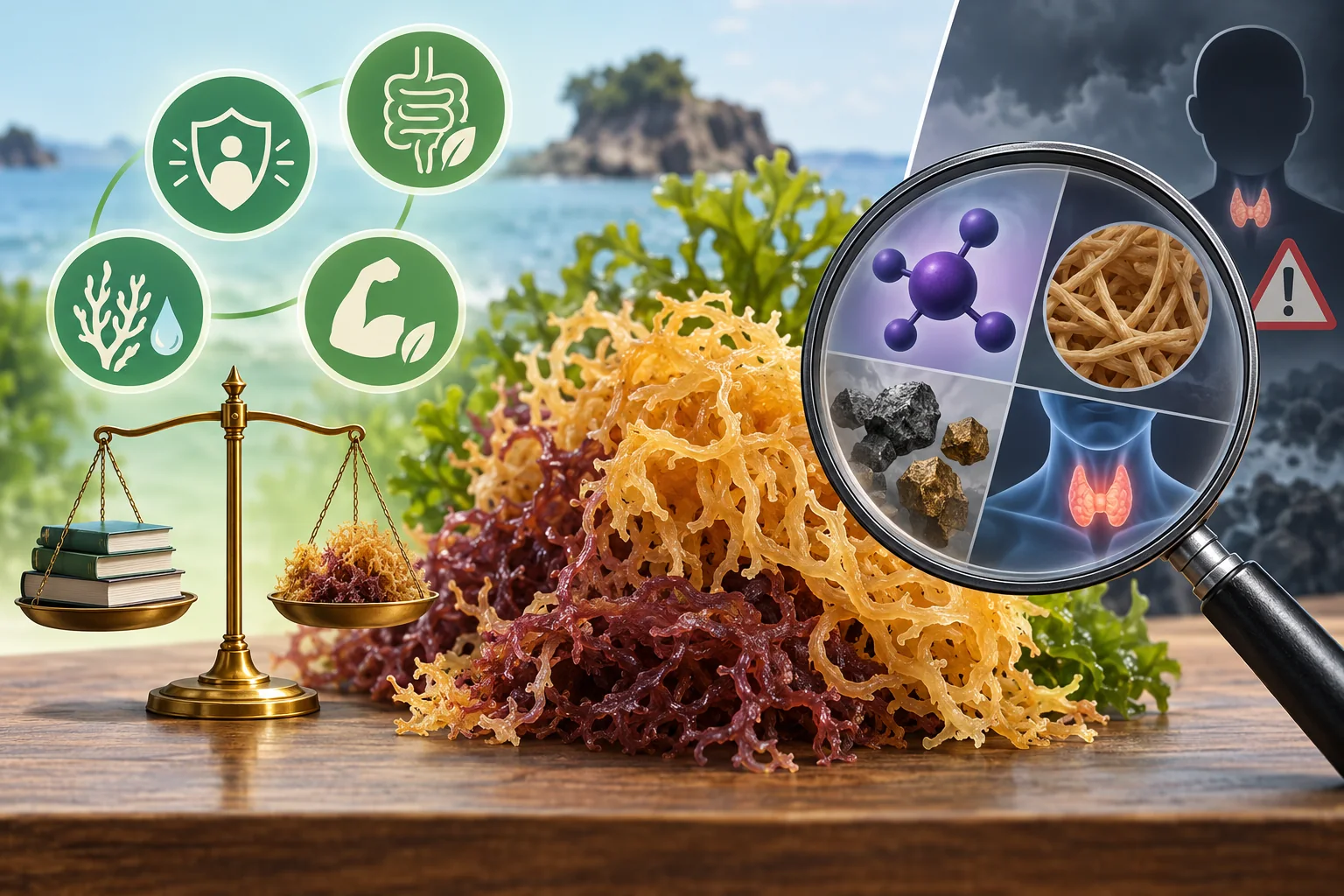
There are not robust human trials showing that sea moss gel, capsules, or gummies produce clinically meaningful weight loss. Claims often borrow from fiber, iodine, thyroid hormones, or laboratory research on related seaweeds. Those are not direct evidence for a retail sea moss product.
A gel may replace a more calorie-dense food in a recipe, but that is a food substitution effect. It does not show that sea moss independently burns fat or detoxifies the body.
Iodine is not a metabolism switch
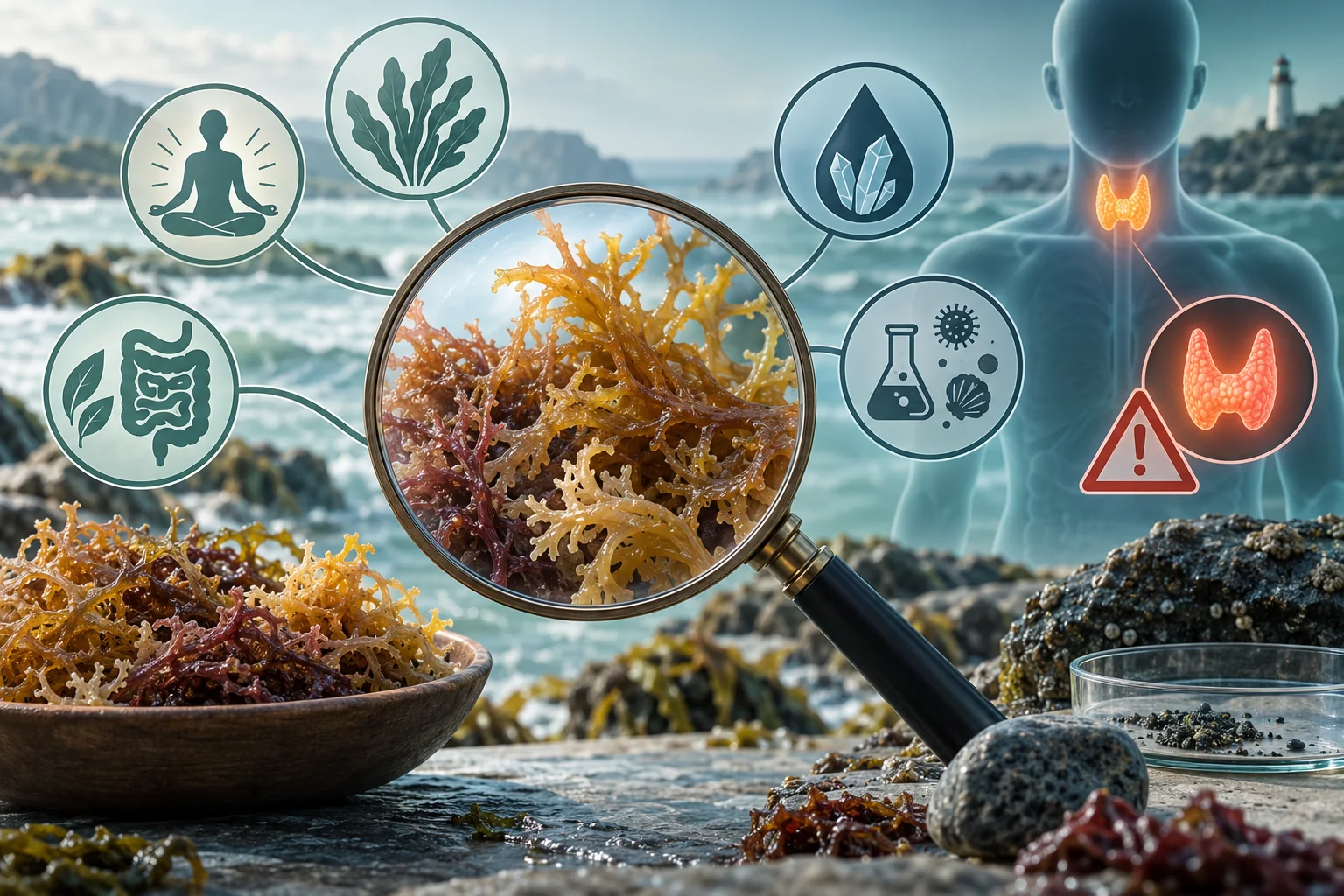
Seaweed iodine content can vary widely by species, source, processing, and serving. Iodine is required for thyroid hormone synthesis, but extra iodine does not accelerate metabolism safely when needs are met. Excess can disrupt thyroid function in susceptible people.
A label that omits iodine content leaves a major exposure unknown. People with thyroid disease, thyroid medicines, pregnancy, or iodine sensitivity should obtain individualized advice.
Contaminants and product identity
Seaweeds can accumulate arsenic and other heavy metals depending on species and environment. Quality testing should identify species, microbial quality, iodine, and relevant contaminants. “Wildcrafted” is not a testing result. Gummies may add sugars and provide a different dose from gels or powders.
Reject products promising detoxification, rapid loss, or thyroid boosting. Prefer traceable sourcing, batch testing, and a stated serving, while recognizing that purity does not prove weight-loss efficacy.
How to read the evidence
Start with randomized human trials and systematic reviews, then check whether participants, extract, dose, duration, and outcomes resemble the claim. Cell and animal work can explain plausibility but cannot establish consumer weight loss. Acute changes in glucose, cortisol, inflammation, fatigue, or oxidation are not interchangeable with sustained changes in body weight or fat mass.
Translate every result into an absolute difference from placebo. Statistical significance may describe an average too small to notice. Check confidence intervals, withdrawals, adverse events, funding, and whether weight was a primary outcome. Do not treat a favorable subgroup or within-group change as the main result.
Match the label to the study
Botanical names cover different species, plant parts, extraction solvents, ratios, and standardized compounds. A culinary food, tea, powder, concentrated extract, and proprietary blend are not equivalent exposures. Record the Latin name where available, extract standardization, active amount per full daily serving, capsule count, and all added ingredients.
A third-party identity test can improve confidence in contents, but it does not prove weight-loss efficacy. If the seller cites research on a different extract or hides the dose, the evidence match is incomplete. More ingredients can add uncertainty rather than value.
Safety and interactions belong in the decision
Natural origin does not prevent adverse effects, allergy, contamination, liver injury, thyroid effects, glucose changes, sedation, stimulation, or medicine interactions. Pregnancy, breastfeeding, surgery, liver or kidney disease, thyroid disease, diabetes, autoimmune conditions, and complex prescriptions require product-specific professional review.
Stop for significant symptoms and seek appropriate care. Do not combine several botanicals simply because each is sold for stress or metabolism. Bring the complete label to a pharmacist rather than relying on a retailer interaction checker.
A practical trial without self-deception
Define one reason for use and one measurable outcome. Save the label, dose, price per day, start date, weight trend, waist, appetite pattern, sleep, stress, training, and adverse effects. Keep diet and measurement conditions reasonably consistent. A warm sensation, calmer mood, or stronger flavor is not proof of fat loss.
Set a review date before buying. Do not raise the dose to rescue an unsupported promise or continue indefinitely because a mechanism sounds plausible. If the change is not meaningful, stopping is a rational outcome.
Where Fat Burn Active fits
Fat Burn Active is marketed as a multi-ingredient thermogenic with listed botanical extracts and caffeine sources. Research on this page’s single ingredient cannot prove that finished formula, particularly when the ingredient is absent or supplied in a different form. Likewise, thermogenic evidence cannot validate a separate adaptogen or seaweed product.
If comparing categories, decide whether you want a stimulant-based formula, a non-stimulant single ingredient, or no supplement. Then review total caffeine, exact doses, medicines, sleep, and finished-product evidence.
The buying decision
Skip products promising rapid loss, targeted belly-fat reduction, detoxification, or effortless metabolic repair. Prefer a short transparent ingredient list, realistic claims, traceable manufacturing, and evidence that matches the exact material. Compare monthly cost with food, sleep care, coaching, or medical treatment that may address the actual barrier.
A supplement should remain an optional adjunct to a sustainable calorie deficit, adequate protein and fiber, movement, resistance training, and sleep. It should not become the explanation for normal fluctuations or a reason to delay appropriate care.
Red flags that weaken a weight-management claim
Be cautious when a page uses biochemical vocabulary without reporting an absolute human result, cites only animal work, or treats a change in one biomarker as proof of fat loss. “Clinically studied” may refer to an ingredient rather than the product, a dose not present on the label, or a population unlike the buyer. Testimonials cannot control for diet, activity, medication, water weight, or selective reporting.
A credible explanation states who was studied, what exact material was used, what changed versus placebo, how large the difference was, and what adverse events occurred. Claims about detoxification, hormone balance, metabolism repair, or inflammation need defined measurements and time frames. Missing evidence should remain an uncertainty rather than being filled with a confident marketing conclusion.
Compare the supplement with real alternatives
Ask whether the same money and effort would produce more value through higher-protein meals, soluble-fiber foods, planned snacks, walking, resistance training, sleep care, stress support, or a consultation for a medical barrier. These options can influence several outcomes and have clearer ways to measure progress.
If you still choose a supplement, change one variable at a time. Starting several products, a new diet, and a new training plan together makes attribution nearly impossible. Keep expectations proportional to the evidence and never use the product to justify an aggressive calorie deficit. Sustainable behavior should remain the foundation even when a modest adjunct seems reasonable.
Before purchasing, calculate the cost for the full study-length period rather than the cheapest bottle. Include the complete daily serving and any companion product the instructions recommend. Compare that total with the likely absolute effect, not the percentage change used in advertising. A refund policy, influencer endorsement, or long ingredient list does not strengthen the underlying evidence. If meaningful progress already occurs through ordinary habits, do not automatically attribute it to the newest capsule.
If a thermogenic formula still fits after this review, read our independent Fat Burn Active review. Then, only if appropriate, verify the current official label and warnings. We may receive a commission.
Frequently asked questions
Is sea moss a good fiber supplement?
Amounts vary and may be lower than dedicated fiber products. Check quantified fiber per serving.
Can it boost thyroid function?
Extra iodine can harm as well as help; it is not a safe metabolism strategy without clinical context.
Does sea moss gel burn fat?
No direct evidence establishes a fat-burning effect.
What should testing include?
Species identity, iodine, microbial quality, and relevant heavy-metal contaminants.
Sources
- NIH ODS: Iodine Fact Sheet
- FDA: Metals and Your Food
- NCCIH: Using Dietary Supplements Wisely
- NIH ODS: Weight-Loss Supplements
- FDA: Dietary Supplement Questions and Answers
Sources reviewed September 18, 2026. Educational information only.