What a 10:1 ratio actually means
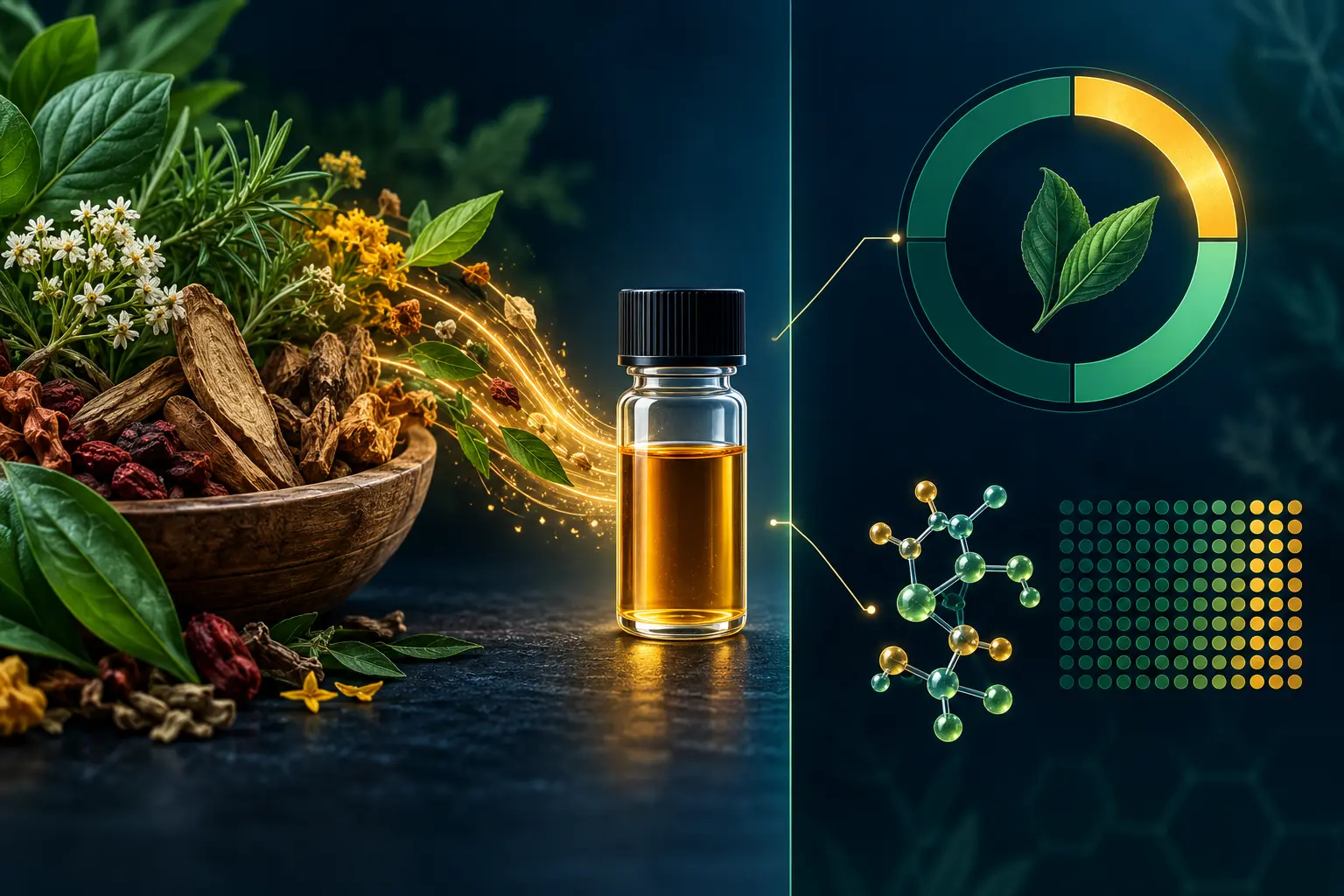
For a dry extract, a 10:1 native extract ratio generally means about ten units of dried starting botanical material were used to produce one unit of native extract. It describes manufacturing yield, not ten times the amount of every active compound.
Ratios may be presented as ranges because starting material and extractable matter vary. Finished extracts can also contain carriers, so the native extract ratio and the ratio of plant material to finished extract may differ. Without that distinction, two apparently equal ratios may not be comparable.
What a constituent percentage means
A percentage states the share of a named compound or compound group in the measured extract. Five hundred milligrams standardized to 20% of a constituent yields a calculated 100 mg per serving. The number applies only to the named constituent.
Total polyphenols, total catechins, and EGCG are nested but different measures. A total-group percentage cannot be treated as the percentage of one member. Caffeine also requires separate disclosure.
Worked comparison: the bigger ratio can deliver less
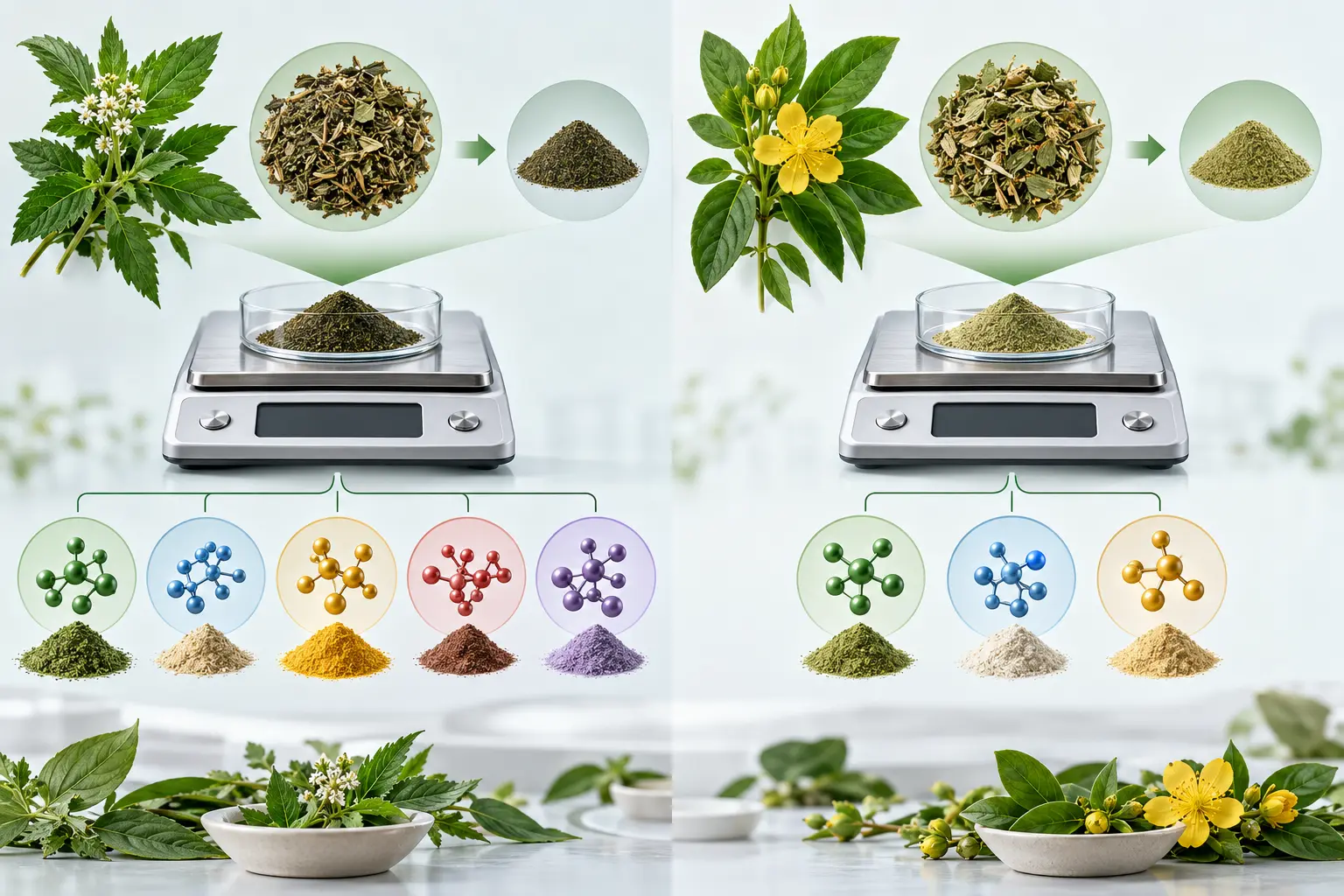
Product A supplies 300 mg of a 10:1 extract standardized to 5% compound X: 15 mg of X. Product B supplies 200 mg of a 4:1 extract standardized to 20% X: 40 mg of X. Product A uses the larger plant-to-extract ratio, while Product B discloses the larger X dose.
Neither wins automatically. The relevant human study may use a different extract matrix, and compound X may be a marker rather than the sole active. Safety, purity, solvent, excipients, and finished-product testing still matter.
Four calculations not to make
- Do not call a 20:1 extract twenty times clinically stronger.
- Do not treat raw-herb equivalent as the physical extract mass in the capsule.
- Do not assume a high percentage proves purity of the whole product.
- Do not combine ratio and percentage into an invented efficacy score.
When a retailer displays only a dramatic “equivalent” number, check the Supplement Facts panel and ask for the native extract amount and specification.
A label audit you can repeat in five minutes
- Photograph every panel. Capture the front, Supplement Facts, other ingredients, directions, warnings, lot, expiry, and company contact.
- Normalize to one serving. Write the number of capsules, scoops, drops, or gummies and the actual amount of each named ingredient.
- Calculate the maximum day. Multiply every per-serving amount by the largest number of servings permitted.
- Separate facts from claims. Ingredient identity and milligrams are label facts; “metabolism,” “detox,” and “clinically studied” require separate evidence.
- Match the research. Compare species, plant part, extract, active compound, dose, duration, population, and measured outcome.
- Mark every unknown. Do not silently replace a hidden or ambiguous value with zero.
Then add caffeine from coffee, tea, energy drinks, pre-workout, medicines, guarana, mate, kola, and tea or coffee extracts. Review allergens, sweeteners, excipients, and third-party certification separately. Certification may support identity or contamination testing; it does not prove weight loss.
Why label precision changes the evidence answer
Evidence is dose- and preparation-specific. A study of 300 mg of a standardized extract cannot validate 300 mg of raw powder, an undisclosed blend, or a different plant part. A mechanism, acute metabolic reading, ingredient trial, combination trial, and independent finished-product trial sit on different evidence levels. Moving between those levels requires proof, not a marketing adjective.
Start with the outcome the shopper actually wants. Alertness, sweating, appetite ratings, energy expenditure, scale weight, waist, and fat mass are different endpoints. Check absolute effect size, uncertainty, adverse events, dropout, funding, diet and activity instructions, and treatment length. A statistically significant laboratory change may not produce a visible or durable result.
Transparency does not prove effectiveness, but opacity blocks evaluation. When exact amounts, active yields, maximum servings, or all-source caffeine are unavailable, a responsible review must stop at uncertainty rather than award the formula an assumed dose.
Turn the audit into a buying decision
Save the dated label because formulas change. Recheck it before repurchasing and whenever the bottle, serving directions, or retailer image changes. A familiar product name does not guarantee an unchanged composition.
Compare like-for-like daily use, not front-label impressions. Build a small table with form, daily amount, active yield, caffeine, servings, days per container, daily cost, relevant human evidence, warnings, and unanswered questions. A lower headline price can cost more per usable day, while a larger milligram number may describe raw-herb equivalent rather than material physically present. If two products cannot be normalized to the same fields, record that comparison as unresolved instead of declaring a winner.
How this applies to Fat Burn Active
A standardization such as 40% EGCG or 22% caffeine is not an extract ratio. Without the extract mass, Fat Burn Active's constituent milligrams remain unknown.
Fat Burn Active is relevant to Extract Ratios vs Active-Compound Percentages because its official listing identifies standardized plant extracts, caffeine sources, vitamins, and zinc in one formula. First read our independent review. If the formula, stimulant profile, evidence limits, and warnings fit your situation, check the current formula and purchase options on the official Fat Burn Active website. We may receive a commission at no additional cost.
Safety is not solved by a compliant-looking panel
A label is the start of a safety review, not a guarantee. Stop use and seek urgent care for chest pain, fainting, severe shortness of breath, confusion, seizure, a sustained racing or irregular heartbeat, a serious allergic reaction, or signs of liver injury such as yellow skin or eyes and dark urine. Insomnia, anxiety, tremor, nausea, vomiting, diarrhea, headache, palpitations, or unusual mood changes are adverse effects—not signs that a dose is working.
Ask a clinician or pharmacist to review the actual label when pregnancy or breastfeeding, surgery, cardiovascular, liver, kidney, endocrine, psychiatric, or sleep conditions, or prescription medicines are involved. Do not combine stimulants or concentrated botanicals until the full exposure is known. Never stop prescribed treatment to make room for a supplement.
Frequently asked questions
Is 20:1 twice as strong as 10:1?
Not necessarily. Ratios describe material yield and do not establish active dose or clinical potency.
Can I calculate active milligrams from a ratio?
No. You need extract mass and the named constituent percentage or a direct milligram value.
What is raw-herb equivalent?
It estimates starting botanical material represented by an extract; it is not necessarily the mass inside the capsule.
Sources
- Understanding Plant-to-Extract Ratios
- NIH ODS: Botanical Supplement Background
- FDA Dietary Supplement Labeling Guide
- NIH Dietary Supplement Label Database
Sources reviewed September 8, 2026. This article is general educational information, not medical advice, diagnosis, or treatment.