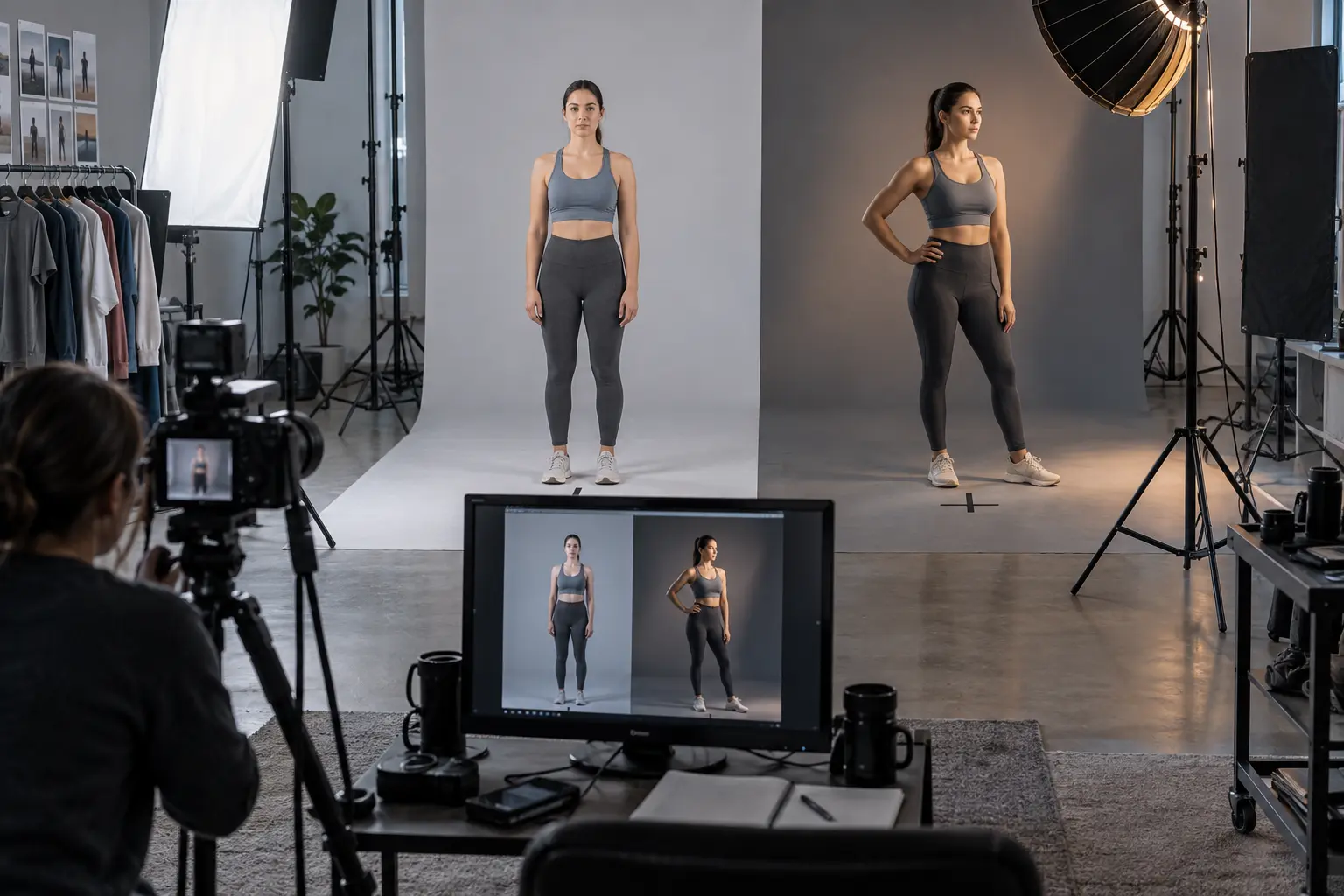
Why the format feels more convincing than it is
Humans respond strongly to faces, narratives, and visible contrast. A dramatic pair of photos is easier to remember than a modest average effect in a controlled study. Marketers select the most compelling story, while people with no change, side effects, or poor adherence are rarely pictured. This selection process creates survivorship bias.
Regression to the mean also matters: people often begin a program when weight, bloating, habits, or motivation are unusually poor, so some improvement may occur regardless of the featured product. The correct question is not “Did this person change?” but “How much additional change did the product cause compared with a suitable alternative?”
Run an image-condition audit
Compare camera height, distance, lens, crop, background, lighting direction, posture, abdominal tension, clothing, tan, hydration, meal timing, and menstrual-cycle timing. A wider lens, closer camera, overhead light, flexed posture, or different waistband can alter apparent shape without falsifying a pixel. Those differences still make the comparison unsuitable for measuring product effect.
Look for warped backgrounds, inconsistent shadows, repeated textures, blurred boundaries, and impossible proportions that may suggest editing or generative manipulation. Reverse-image search can reveal a photo reused for unrelated products. Absence of obvious editing, however, does not verify the story.
Verify identity, chronology, and consent
Find the original post or source rather than relying on a screenshot. Confirm that the same identifiable person published both images, that dates and sequence are plausible, and that the person consented to commercial use. Search distinctive phrases and images because stolen transformations are sometimes attached to products the subject never used.
Ask whether the testimonial predates the product launch, whether the packaging shown matches the claimed period, and whether the account has a history consistent with the story. Metadata can help when available, but social platforms often remove it. A brand-supplied date is a claim, not independent verification.

Reveal every co-intervention
Weight change rarely occurs in a vacuum. Record calorie intake, protein, fiber, alcohol, training, daily steps, sleep, coaching, medications, medical procedures, other supplements, illness, and the length of follow-up. If a testimonial combines a calorie deficit, structured exercise, and several products, it cannot isolate the advertised supplement.
Also ask what happened after the “after” photo. A short cut, dehydration strategy, or temporary peak condition may not represent maintainable weight management. The most useful evidence includes follow-up, adherence, adverse effects, and whether habits were sustainable.
Check payment and material connections
A free bottle, affiliate commission, discount, contest entry, employment relationship, coaching deal, or paid post can affect how an endorsement is interpreted. FTC guidance says material connections that consumers would not expect should be disclosed clearly and conspicuously. A buried hashtag, profile-page note, or ambiguous “partner” label may not communicate the relationship adequately.
Disclosure does not make a claim true; it lets you interpret motivation. Undisclosed compensation is a warning sign, but an unpaid personal story still cannot establish causation or typicality.
Ask for typical-results evidence
An exceptional result should not be presented as what buyers generally achieve unless the advertiser has adequate substantiation for that implication. Look for a clearly explained typical result, the number of users measured, inclusion and dropout rules, timeframe, and whether data were independently collected. “Results not typical” tells you the featured outcome may be unusual; it does not reveal what is typical.
Average weight alone is insufficient. Seek distribution, waist or body-composition methods, adverse events, and retention when available. Compare these data with controlled finished-product research rather than multiplying anecdotes.
Use a testimonial evidence scorecard
Give one point each only when identity is verifiable, dates are credible, image conditions are reasonably standardized, consent is clear, material connections are disclosed, co-interventions are described, the exact product and formula are identified, adverse effects are reported, follow-up is included, and typical-results evidence exists. The score is a discipline tool, not a scientific validation.
Any claim of effortless rapid loss, disease treatment, or guaranteed outcome should trigger a separate marketing and regulatory review. If a testimonial is the strongest evidence on the page, the evidence for product-specific effect is weak.
What progress photos can legitimately do
Standardized personal photos can help an individual track change alongside body weight trends, waist measurements, clothing fit, strength, and health markers. Use the same room, camera distance and height, lighting, clothing, posture, time of day, and interval. Store originals and avoid drawing conclusions from adjacent days.
That personal tracking use is different from using one person’s images to predict a supplement’s effect for thousands of customers. The first documents a journey; the second requires representative evidence and careful advertising context.
Safety and evidence still come first
Dietary supplements are not approved by FDA before marketing in the way drugs are. Read the complete current label and discuss it with a physician or pharmacist if you use prescription or over-the-counter medicines, have cardiovascular, liver, kidney, endocrine, psychiatric, sleep, or gastrointestinal conditions, are pregnant or breastfeeding, are under 18, or have surgery planned. Do not stop or change prescribed treatment to use a supplement.
Stop use and seek urgent care for chest pain, fainting, severe shortness of breath, seizure, confusion, a sustained fast or irregular heartbeat, a serious allergic reaction, or signs of liver injury such as yellow skin or eyes and dark urine. Insomnia, anxiety, tremor, palpitations, severe nausea, or unusual mood changes are adverse effects—not evidence that a fat burner is working.
Apply the same standard to Fat Burn Active
Fat Burn Active should be evaluated with the same rules as any other multi-ingredient weight-management supplement: use the current complete label, calculate the maximum daily exposure, identify stimulant sources, distinguish ingredient research from finished-product evidence, and review personal contraindications. The product name and marketing do not replace those checks.
If you want a practical example, read our independent Fat Burn Active review and the label checklist before buying. If the formula, evidence limits, safety profile, and seller terms remain acceptable, you can verify the current official label and purchase options. We may receive a commission at no extra cost to you.
Frequently asked questions
Can a real testimonial prove that a supplement worked?
No. It may describe an honest experience, but without a comparison it cannot isolate the supplement from diet, activity, time, medication, or other changes.
Does “results may vary” solve the problem?
No. It does not establish typical results or correct a misleading net impression by itself.
Are standardized photos useful?
Yes for personal progress tracking, especially when combined with consistent measurements, but they still do not establish product causation.
Keep a decision record
Save a small evidence file with dated screenshots, the full label, seller identity, support replies, the studies actually relied on, and your unresolved questions. Record why a claim was accepted, rejected, or left uncertain. This prevents a new advertisement, package redesign, or enthusiastic review from quietly replacing facts you already checked.
Revisit the record when the formula, dose, health status, medicines, caffeine intake, price, or seller changes. A buying decision is valid only for the version and circumstances reviewed. When a material fact cannot be verified, choosing a clearer product is a rational outcome—not a failure to finish the comparison.
Separate deal breakers from preferences before shopping. An undisclosed stimulant amount, a medicine interaction, a mismatched label, or an unverified seller can stop the decision. Flavor, capsule count, and delivery speed can be compared only after those gates are passed. This order prevents a discount or dramatic story from outweighing a safety-relevant unknown.
Sources
- FDA: Questions and Answers on Dietary Supplements
- FDA Dietary Supplement Labeling Guide
- FTC Health Products Compliance Guidance
- FTC: Disclosures 101
- NIH Dietary Supplement Label Database
Sources reviewed September 19, 2026. Educational information only; not medical advice.