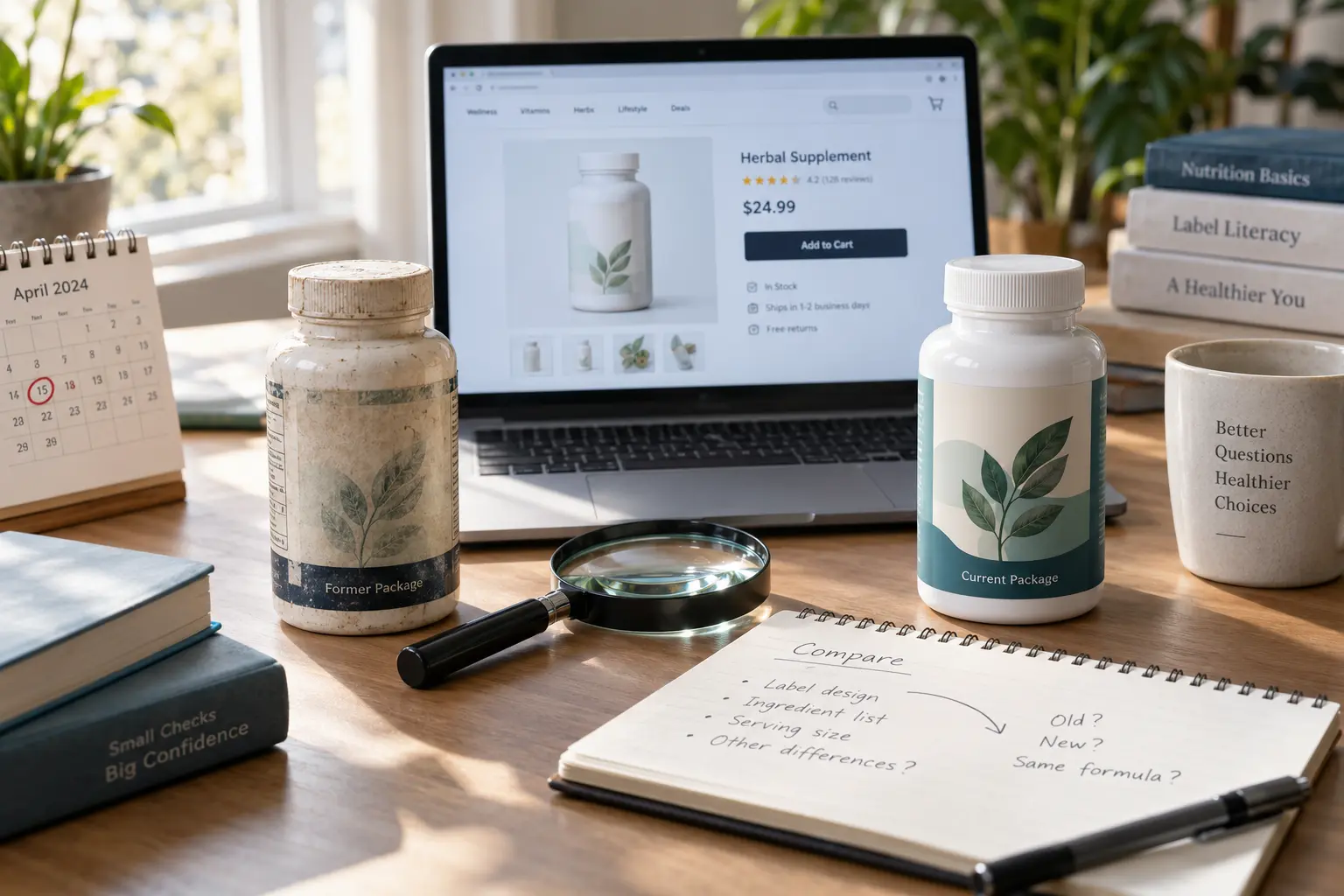
Why outdated labels remain online
A supplement can keep the same name while its capsule count, serving size, extract, flavor, warning, or “other ingredients” list changes. The manufacturer may update its own page first, while retailers continue using an older image set supplied by a distributor. A marketplace seller may also combine reviews and photos from several variations on one listing. Search results and image search add another layer because cached thumbnails can outlive the page that created them.
This matters beyond cosmetic packaging. If an earlier panel lists two capsules and the new panel lists three, the apparent ingredient dose, cost per day, and bottle duration all change. If guarana, green tea, or another caffeine source was added, a shopper using the old image may miscalculate stimulant exposure. A changed allergen, capsule material, or warning can matter even when the front design barely moves.
Start with a version-control check, not a visual guess
Open the manufacturer page and the seller page in separate tabs. Record the date you checked them, the exact product name, size, flavor, count, SKU or UPC when shown, and the seller of record. Then compare serving size, servings per container, every active ingredient, “other ingredients,” directions, warnings, company address, and front-label claims. A new color scheme alone proves nothing; a changed factual field identifies a different label version.
Do not assume the clearest image is newest. Look for an explicit “updated formula” notice, revision date, new package count, or matching current promotion. If a page offers several bottle sizes, make sure the facts panel belongs to the selected variation. Screenshots should include the URL and date so you can show support exactly which version you saw.
Use a three-source verification ladder
First inspect the current physical bottle if you already have it. The bottle shipped to you is the operative label for that unit, although damaged seals, missing lot information, or an unexpected seller still require investigation. Second check the manufacturer’s official product page and downloadable label, if available. Third use the retailer page as a sales record rather than the final authority.
For U.S. products, the NIH Dietary Supplement Label Database can provide useful historical label records, but database presence is not approval and a stored label is not necessarily the current retail version. Archived web pages can show when a formula changed. Use them to establish chronology, not to override a current bottle or written manufacturer confirmation.
Ask support questions that produce a usable answer
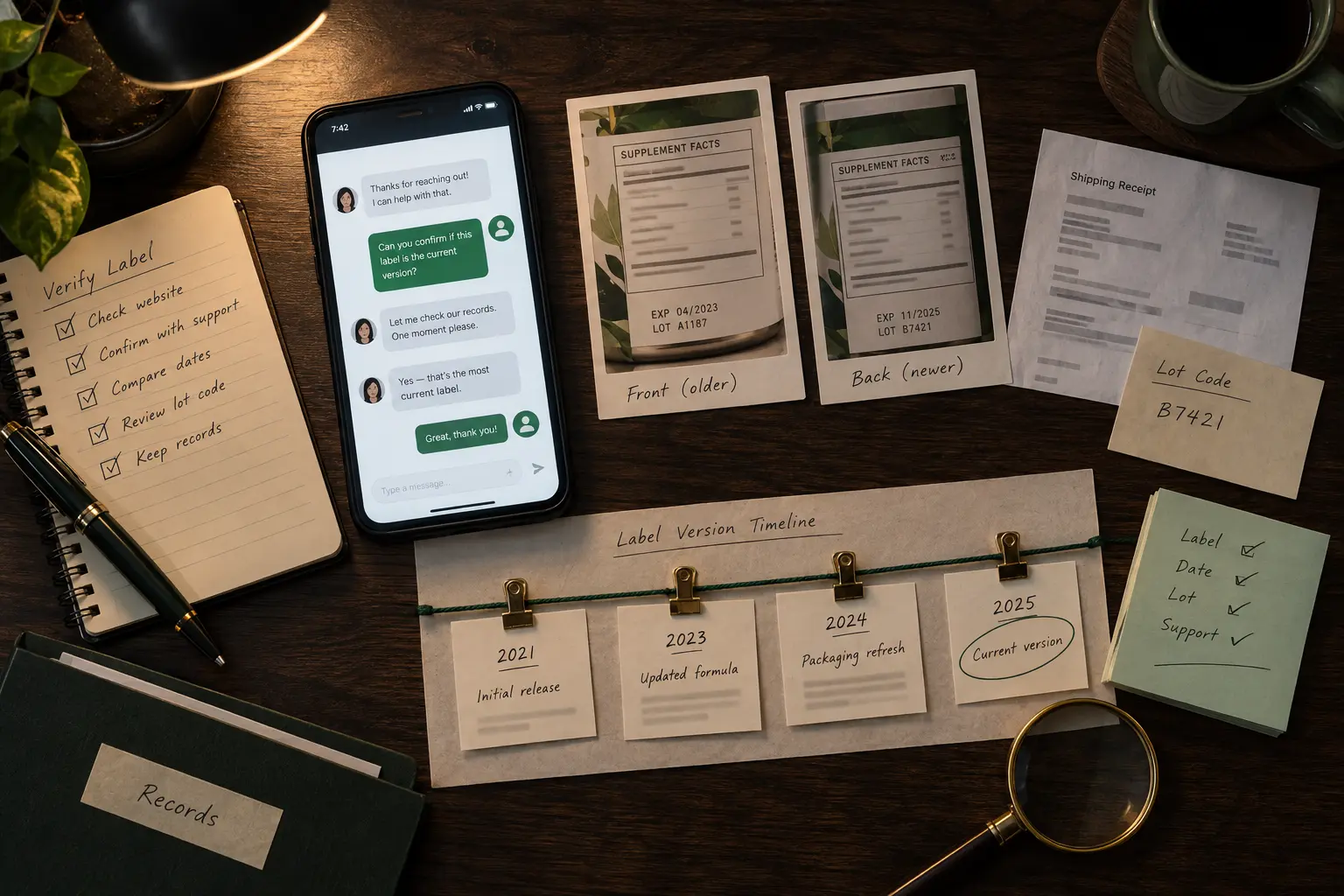
Avoid asking only “Is this current?” Attach the image or link and ask: “Does this panel match the formula you are shipping today in the United States?” Include the serving size and one or two fields that differ. Ask whether caffeine is declared from all sources, whether the extract standardization changed, and whether the answer applies to every lot or only newly produced stock.
Request a full, readable photo or PDF of the current Supplement Facts, other ingredients, directions, and warnings. Ask for the effective date or lot transition if old inventory remains in distribution. Save the reply with your receipt. A vague answer such as “ingredients may vary” does not resolve a safety-relevant discrepancy.
What to do when the bottle and web page disagree
Pause before using the product. Confirm that the item, size, and regional market match; labels legitimately differ across countries. Contact the manufacturer using the contact information on the bottle, not a phone number supplied only in a marketplace message. Give the lot and expiration details without posting them publicly. If the item appears counterfeit, tampered with, or materially different from what was advertised, use the seller’s return process and report the listing.
Never calculate a dose by mixing fields from two versions—for example, the serving size from the bottle and ingredient amounts from an old retailer image. One complete label must be evaluated as a unit.
A repeatable pre-purchase checklist
Save the front, facts panel, other ingredients, directions, warnings, seller name, price, and date. Check that capsule count and servings reconcile mathematically. Compare the daily maximum rather than only one serving. Search for recalls, FDA warnings, and the manufacturer’s contact details. For botanicals, compare plant part, extract ratio, and standardized active percentage; matching ingredient names can still describe different preparations.
Recheck at delivery and before every reorder. Return to the label review whenever the bottle design, capsule appearance, directions, or tolerance changes. This simple version-control habit is more reliable than trusting that a familiar product name always means a familiar formula.
Safety and evidence still come first
Dietary supplements are not approved by FDA before marketing in the way drugs are. Read the complete current label and discuss it with a physician or pharmacist if you use prescription or over-the-counter medicines, have cardiovascular, liver, kidney, endocrine, psychiatric, sleep, or gastrointestinal conditions, are pregnant or breastfeeding, are under 18, or have surgery planned. Do not stop or change prescribed treatment to use a supplement.
Stop use and seek urgent care for chest pain, fainting, severe shortness of breath, seizure, confusion, a sustained fast or irregular heartbeat, a serious allergic reaction, or signs of liver injury such as yellow skin or eyes and dark urine. Insomnia, anxiety, tremor, palpitations, severe nausea, or unusual mood changes are adverse effects—not evidence that a fat burner is working.
Apply the same standard to Fat Burn Active
Fat Burn Active should be evaluated with the same rules as any other multi-ingredient weight-management supplement: use the current complete label, calculate the maximum daily exposure, identify stimulant sources, distinguish ingredient research from finished-product evidence, and review personal contraindications. The product name and marketing do not replace those checks.
If you want a practical example, read our independent Fat Burn Active review and the label checklist before buying. If the formula, evidence limits, safety profile, and seller terms remain acceptable, you can verify the current official label and purchase options. We may receive a commission at no extra cost to you.
Frequently asked questions
Does a different bottle design mean the formula changed?
Not necessarily. Packaging can change without a formula change, and a formula can change with only minor visual differences. Compare the factual panels.
Is a retailer required to show the newest label image?
Listings should not mislead, but image update practices vary. Verify the version with the manufacturer and the bottle you receive.
Can an archived label prove what I bought?
It can document an older version, but your receipt, seller, lot, current bottle, and manufacturer confirmation are stronger evidence for the unit shipped.
Keep a decision record
Save a small evidence file with dated screenshots, the full label, seller identity, support replies, the studies actually relied on, and your unresolved questions. Record why a claim was accepted, rejected, or left uncertain. This prevents a new advertisement, package redesign, or enthusiastic review from quietly replacing facts you already checked.
Revisit the record when the formula, dose, health status, medicines, caffeine intake, price, or seller changes. A buying decision is valid only for the version and circumstances reviewed. When a material fact cannot be verified, choosing a clearer product is a rational outcome—not a failure to finish the comparison.
Separate deal breakers from preferences before shopping. An undisclosed stimulant amount, a medicine interaction, a mismatched label, or an unverified seller can stop the decision. Flavor, capsule count, and delivery speed can be compared only after those gates are passed. This order prevents a discount or dramatic story from outweighing a safety-relevant unknown.
Sources
- FDA: Questions and Answers on Dietary Supplements
- FDA Dietary Supplement Labeling Guide
- FTC Health Products Compliance Guidance
- FTC: Disclosures 101
- NIH Dietary Supplement Label Database
Sources reviewed September 19, 2026. Educational information only; not medical advice.