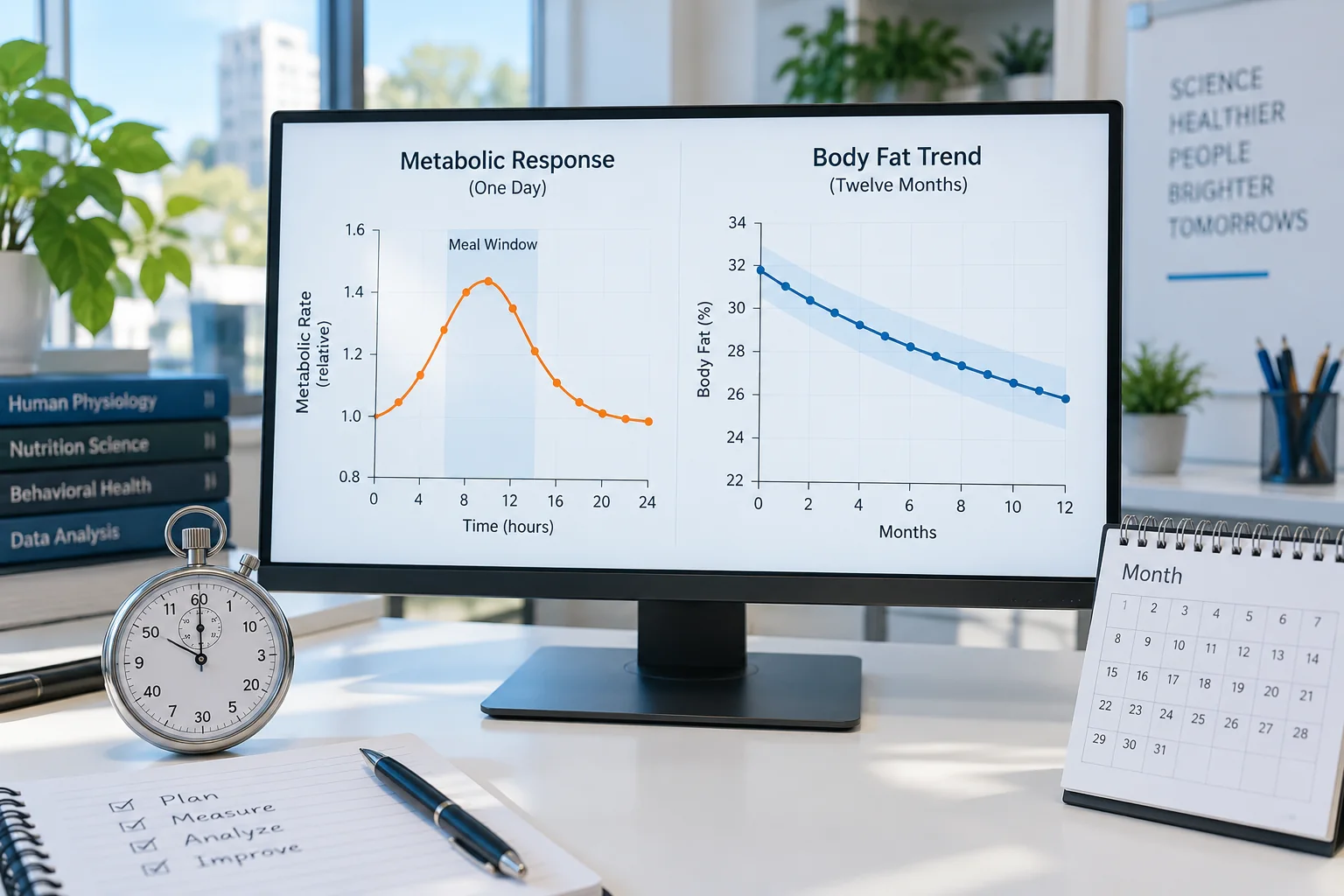
A response is not the same as an outcome
Acute experiments often measure hours after one serving: resting energy expenditure, respiratory exchange ratio, circulating metabolites, hunger ratings, heart rate, or food intake at one meal. These measurements can show that something happened. They do not show that the effect persists, accumulates, or outweighs compensation.
Long-term fat loss reflects energy balance across many days plus adaptation and behavior. A small temporary increase in expenditure can disappear with tolerance, reduced movement, greater hunger, poorer sleep, or inconsistent use. A lower appetite score today may not reduce weekly intake. A rise in fat oxidation may reflect fuel selection rather than loss of stored body fat.
Four common interpretation errors
- Thermogenesis equals fat loss. Heat production is a mechanism, not a measured change in fat mass.
- Fat oxidation equals body-fat reduction. Burning more fat during a test window can be offset by later intake and storage.
- Scale change equals fat change. Water, glycogen, sodium, food mass, and bowel contents can move quickly.
- One serving predicts months of use. Tolerance, adherence, behavior, and side effects can alter exposure.
Marketing often removes the time unit. “Increased calorie burn” sounds larger when the actual finding is a small laboratory difference over a few hours. Restore the unit, duration, comparator, and uncertainty before deciding what the result means.
What acute studies can tell you
A controlled crossover study can efficiently compare immediate responses within the same participants. It may reveal peak stimulant exposure, short-term blood pressure or heart-rate changes, appetite response, metabolic timing, or a biological mechanism worth testing further. Standardized meals and laboratory conditions reduce noise.
The same control reduces real-world relevance. Participants may be rested, fasted, caffeine-restricted, and observed for a single day. Repeated supplement use alongside ordinary coffee, variable sleep, meals, work, and training can produce a different experience. Acute safety data also cannot exclude uncommon or cumulative harms.
What a persuasive long-term study needs
Look for a relevant population, randomized comparison, matched lifestyle support, the marketed ingredient or formula, a prespecified primary outcome, adequate duration, retention, adherence, and complete adverse-event reporting. The key number is the between-group difference in weight or fat mass with its confidence interval—not whether one group changed from its own baseline.
Duration should fit the claim. A few weeks may show early direction but not durability. Longer follow-up can reveal plateau, dropout, tolerance, and whether a statistically detectable difference is worth the cost or side effects. No single duration is magic; the stronger question is whether the study lasted long enough for the promised outcome.
Translate outcomes across the correct timeline
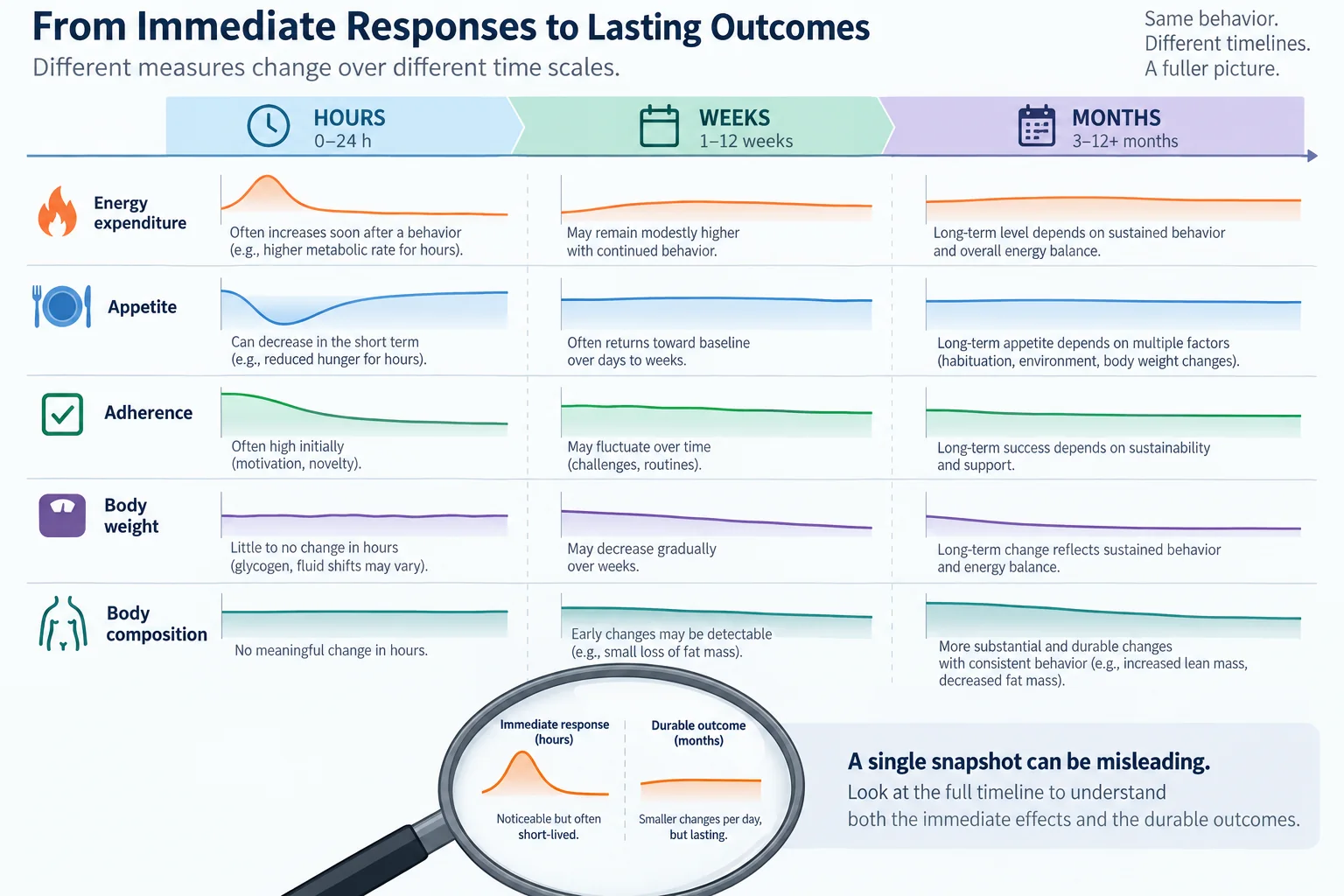
Create a timeline with columns for hours, weeks, and months. Put each reported outcome in the correct column. Then ask what remains missing between the observed result and the marketing claim. This “evidence distance” is often the most important fact in a supplement article.
Worked example: a short thermogenesis trial
Imagine a crossover study reports slightly higher energy expenditure for four hours after a capsule. The result may be statistically credible. To estimate long-term fat loss, however, you would need to know whether the effect repeats daily, whether tolerance develops, whether appetite or movement compensates, whether participants keep taking it, and whether the cumulative difference changes fat mass.
Multiplying the four-hour number by 365 assumes every missing step works perfectly. That is not evidence; it is a projection. Report the acute result as acute. Wait for long-term trials before converting it into expected kilograms or pounds.
Account for compensation, tolerance, and adherence
Bodies and behaviors respond to interventions. A stimulant may briefly raise expenditure while sleep disruption increases hunger or reduces next-day activity. Appetite suppression at breakfast can be followed by larger evening intake. A warm sensation can fade with repeated exposure. Even when a physiological effect persists, missed servings and discontinuation reduce the average real-world exposure.
Longer trials do not automatically solve every problem. Participants may receive intensive coaching that does not match normal use, and high dropout can leave an overly adherent group. Review whether the analysis includes everyone randomized, how missing weights were handled, and whether the supplement and control groups received identical lifestyle guidance. Look for outcomes after discontinuation when durability is part of the claim.
For personal tracking, do not use day-one stimulation, sweating, appetite, or scale movement as the success test. Define a relevant outcome and review window in advance, keep other changes reasonably stable, and use weekly averages. Self-tracking cannot prove causation, but it can prevent an immediate sensation from being mistaken for months of fat loss.
Match claim language to the measured endpoint
Use “temporarily increased energy expenditure” only when that is what the study measured. Use “reduced meal intake” for a controlled meal, not “controls appetite all day.” Reserve “supported fat loss” for a credible between-group change in fat mass or a closely relevant long-term outcome. Precise wording is not timid; it prevents the mechanism from swallowing the result.
This discipline also reveals the next research question. An acute response may justify a repeated-dose trial. A repeated physiological effect may justify a longer body-composition trial. Each rung should be tested rather than assumed.
Use the distinction when evaluating fat burners
Read our guide to why short-term metabolic studies can mislead buyers, then compare ingredient findings with the Fat Burn Active evidence review. The product page may describe mechanisms; mechanisms should not be mistaken for a guaranteed outcome.
The official Fat Burn Active page lists a multi-ingredient thermogenic formula, but the buying decision for Acute Effects vs Long-Term Fat Loss should follow the evidence check above. Compare our independent review, then, if the product remains a reasonable fit, verify the current label, directions, and purchase options. We may receive a commission at no additional cost.
Frequently asked questions
Does more fat oxidation mean more fat loss?
Not necessarily. It describes fuel use during a period, while fat loss depends on net storage and expenditure over time.
Can appetite fall without weight loss?
Yes. The effect may be small, temporary, offset later, or insufficient to change total intake.
How long should a fat-loss study last?
Long enough to measure the claimed outcome and reveal adherence, compensation, attrition, and uncertainty.
Are acute studies worthless?
No. They are useful for mechanisms and immediate responses when interpreted within their time scale.
Practical decision checkpoint
Before accepting a graph of increased fat oxidation, label its time axis. A result measured for several hours after one serving answers a different question from a change in body fat after months of use. Next ask whether food intake, activity, sleep, and adherence were measured during the longer period. The body can use more fat during one interval without ending the day in an energy deficit. When a sales page jumps from an acute laboratory marker to a weight-loss promise, look for a longer randomized trial of the actual finished formula.
Sources
- NIH ODS: Dietary Supplements for Weight Loss
- NIDDK: Body Weight Planner Research Background
- CONSORT reporting guideline
- ClinicalTrials.gov: Understanding Clinical Studies
- FTC Health Products Compliance Guidance
Sources reviewed September 18, 2026. This article provides general educational information and does not replace medical advice.