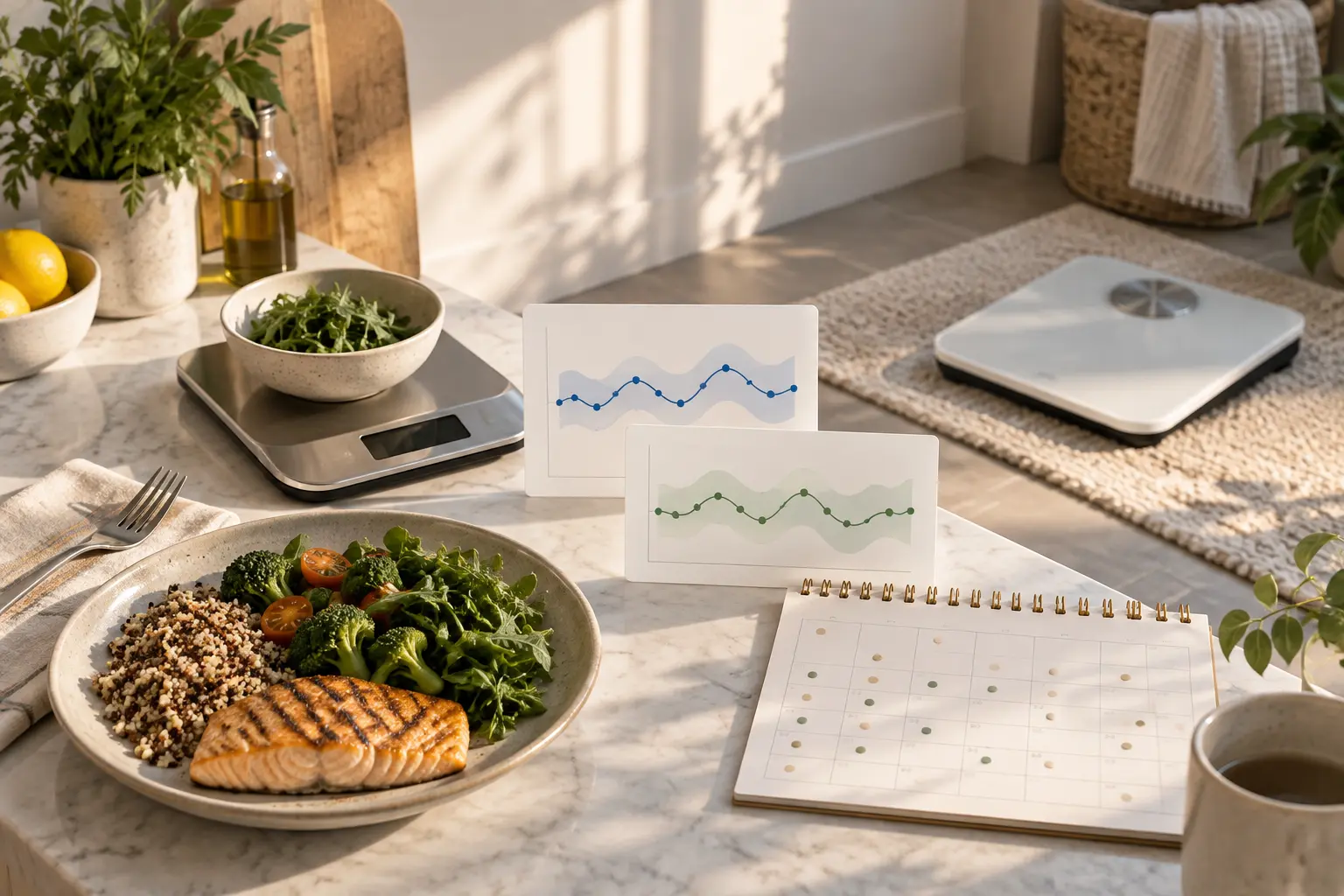
Signal can be smaller than noise
A theoretical 100–200 kcal daily gap predicts a slow average change, not a smooth daily decline. Sodium, carbohydrate, menstruation, inflammation after exercise, travel, alcohol, constipation, and later meals can move scale weight in either direction. The smaller the signal, the longer the observation usually needs to be.
This also means a scale cannot validate the exact calorie gap. Weight may fall faster at first through water or stay level while tissue changes slowly.
Where estimates go wrong

Example: an invisible two-week trend
Maya expects a slow loss but weighs after two salty dinners and an unfamiliar strength program. Her two-week average is flat. She keeps meals and movement stable, standardizes morning measurements, and waits two more weeks. The four-week average and waist now show a modest change. The initial data were insufficient, not proof that only severe restriction works.
Use a four-week decision system
- Define the plan. Record the intended average intake, ordinary movement range, training, and whether any days are deliberately at maintenance.
- Standardize the outcome. When weighing is appropriate, use comparable morning conditions and weekly averages. Measure waist at the same landmark every two to four weeks.
- Record the largest modifiers. Note restaurant meals, alcohol, travel, menstrual timing, hard training, constipation, illness, and major sodium or carbohydrate changes.
- Measure execution. Separate a calculated target from the intake and activity that actually occurred.
- Review health and function. Include hunger, sleep, mood, training, concentration, digestion, and symptoms.
- Change one variable. Continue, adjust, pause, or seek qualified help based on the complete record.
Do not react to one low or high reading. Water, glycogen, digestive contents, and measurement error can be larger than a small weekly tissue change. A plan needs enough time and consistent observations to reveal its signal.
Use neutral language. “Two unplanned restaurant meals” helps identify an input; “failed the diet” does not. If detailed tracking triggers anxiety, compulsive checking, restriction, or bingeing, use a simpler meal structure and seek eating-disorder-informed support.
Calculate the whole interval
A daily target is not the result. Add the full week or dieting block, including maintenance days, drinks, cooking fats, snacks, and changes in movement. Planned maintenance temporarily reduces the cumulative deficit by design; it does not erase earlier fat loss. A refeed or diet break becomes surplus only when intake exceeds current expenditure.
Calculator estimates contain error. Energy needs change with body mass and activity, food labels and portions are imperfect, and people often move less when tired. Treat the calculated gap as a hypothesis tested by a multiweek trend, not as proof that the body must show a specific number on schedule.
Set continue, adjust, and stop rules
People who are pregnant or breastfeeding, adolescents, frail older adults, have an eating-disorder history, use glucose-lowering medicines, or manage significant disease need individualized guidance. A cosmetic deadline is not a reason to ignore safety.
Turn the concept into a repeatable week
Choose a review day when no new restriction is added. Compare the latest seven-day average with previous averages, then add waist, completed behaviors, hunger, sleep, and training. If a maintenance day, refeed, alcohol occasion, or hard workout occurred, note it without deleting the data. The point is to understand the pattern, not to obtain a perfect-looking graph.
Separate planning from prediction
When the audit finds inconsistency, repair that first. Examples include measuring cooking oil for one week, defining restaurant frequency, restoring a step baseline, protecting sleep, or planning alcohol-free social options. When execution is consistent but the outcome remains flat, recalculate maintenance for current body size and make one modest adjustment. Avoid changing food, cardio, fasting, and supplements simultaneously.
Protect the maintenance skill
Consistency makes the next decision easier to defend.
Where Fat Burn Active fits
Fat Burn Active is optional. It cannot measure a small deficit, make an aggressive deficit safe, preserve a planned gap during maintenance, or remove calories and impaired judgment associated with alcohol. Alertness, warmth, sweating, or short-term appetite change does not prove finished-product fat loss.
Do not use stimulants to compensate for drinking, overeating, or a maintenance day. Count caffeine from all sources and review sleep, anxiety, blood pressure, heart rhythm, medicines, and other supplements. Alcohol and stimulant combinations can also make subjective alertness a poor guide to impairment.
A supplement is not required to benefit from Can a Calorie Deficit Be Too Small to Measure?. If your foundations are already in place, use the independent Fat Burn Active review to judge whether the formula has a useful optional role. If it fits your expectations and stimulant tolerance, check current product details and ordering terms. We may receive a commission.
A slow trend needs a longer observation window
A theoretical 100-kcal daily gap would imply slow tissue change under ideal arithmetic. Ordinary day-to-day weight variation can be much larger, and food and expenditure estimates are uncertain. That makes a two-week flat-looking chart compatible with several possibilities: a real small deficit hidden by water, no deficit at all, or a shifting activity pattern. It is not a reason to make a large immediate cut. First ask whether the question can be answered with the available time and measurement consistency.
Pick a repeatable weigh-in routine if weighing is appropriate, then compare weekly averages across several weeks rather than single mornings. Log material changes such as travel, a salty meal, hard exercise, menstruation, illness, or constipation. These notes do not “correct” the scale mathematically, but they explain why one week can be noisy. A waist measurement or how a consistent garment fits may add context without claiming exact body-fat change.
Before changing the target, inspect the inputs with the greatest practical uncertainty. Cooking oil, drinks, weekends, portion estimates, and a drop in ordinary steps can erase a small planned gap. An experiment with one measurable adjustment is easier to interpret than simultaneously cutting food, adding workouts, and buying a supplement. Keep the trial long enough to observe a trend and retain adequate nutrition.
If weight remains stable after a credible observation period and the goal still calls for loss, make a modest change in intake or movement that you can sustain. If fatigue, excessive hunger, or distress rises, the proposed deficit may be a poor fit even when the math suggests it is small. A clinician or dietitian can help where medical conditions or medicines affect the plan. The measurement problem is not solved by a fat burner; it is solved by clearer inputs, time, and a decision rule.
Frequently asked questions
Is a 100-calorie deficit useless?
No, but it is easy to estimate incorrectly and slow to distinguish from noise.
Should I weigh daily?
Only if it is psychologically appropriate; consistent weekly measurements can also work.
When should I adjust?
After several consistent weeks and an audit of execution, not after one reading.
Sources
- NIDDK Body Weight Planner
- NIDDK: Choosing a Safe Program
- Dynamic Energy Balance Model
- CDC: Losing Weight
- Weight Variability Review
Sources reviewed September 17, 2026. This article is general educational information, not medical advice, diagnosis, or treatment.