
Fullness is a process, not an instant switch
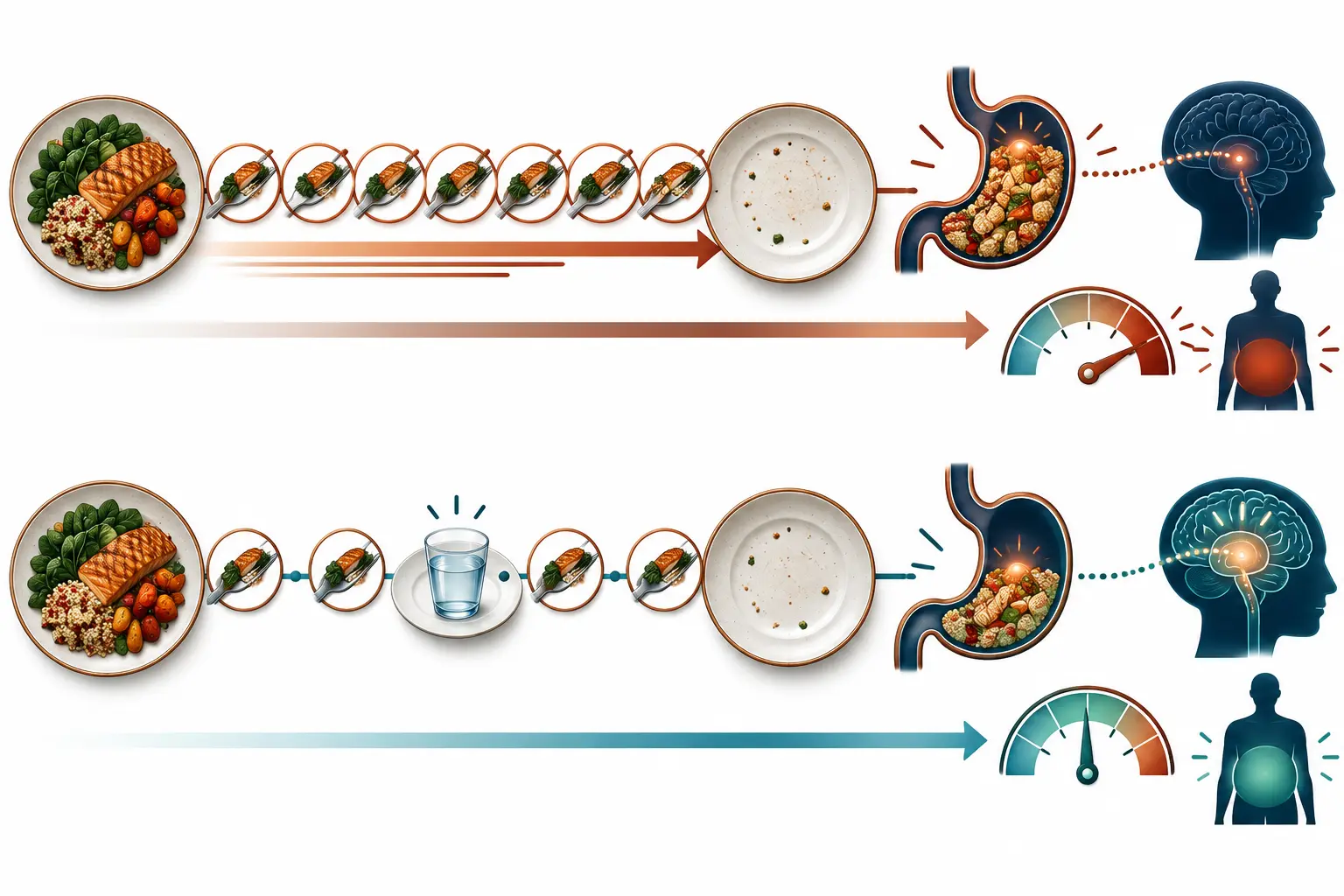
Satiation is the process that ends a meal; satiety is the reduction in hunger afterward. Taste exposure, chewing, stomach expansion, nutrient sensing, gut-brain signaling, expectations, and attention unfold over time. Fast eating can outpace some of these inputs and reduce the opportunity to notice that the meal is becoming sufficient.
No single “20-minute hormone” explains every meal. Signals begin before, during, and after eating, and their timing differs. The practical lesson is simply that stopping information is easier to use when food is not disappearing at maximum speed.
What eating-rate research can and cannot prove
Experimental and observational studies generally associate slower eating with lower energy intake, and controlled comparisons often find a modest reduction within a meal. However, methods vary: researchers manipulate bite size, utensils, pauses, texture, instructions, or oral processing. A laboratory lunch cannot predict long-term weight loss by itself.
People may compensate later, and naturally slow eaters differ from fast eaters in other ways. Use eating rate as one adjustable behavior inside an adequate diet, not as a claim that any food becomes low calorie when chewed slowly.
Texture and form can set the speed
Soft, bite-sized, low-fiber foods and caloric drinks can be consumed quickly. Intact fruit, vegetables, legumes, whole grains, and many protein foods may require more chewing and handling. This does not make every processed food harmful or every crunchy food filling; energy density and portion still count.
Modify the meal rather than relying only on self-control. Choose a bowl instead of a bag, whole fruit instead of juice where appropriate, cutlery instead of eating by hand when it slows the specific food, and a seated surface instead of eating while driving.
The plate-pause-decide protocol
- Plate: place the intended first portion on a plate or in a bowl and put packages away.
- Start: take the first five bites without a screen and notice taste and texture.
- Pace: set utensils down periodically or take a sip of water; do not count every chew.
- Pause: halfway through, wait one minute and rate hunger, enjoyment, and comfortable fullness.
- Decide: finish, stop, or take a planned second portion after another short pause.
Practice with one repeat meal for a week. Consistency matters more than making one dinner unusually slow.
Example: lunch lasts seven minutes
Marcus eats at his desk from a large takeout container and finishes in seven minutes. He first sets a timer to force twenty chews, but the ritual is distracting. Instead, he plates part of the meal, keeps the rest out of reach, closes email for the first five minutes, and pauses before seconds.
He notices that some days he wants the remainder and eats it without guilt; other days the pause is enough. The intervention creates a decision point. It does not assume that slower eating cancels the meal's calories.
Adapt the method to real constraints
Short breaks, caregiving, dental problems, swallowing difficulty, gastrointestinal symptoms, sensory needs, and cultural meal styles can affect pace. Do not force prolonged chewing when it causes pain or fatigue. Persistent coughing, choking, food sticking, or unexplained weight loss requires clinical assessment.
For a ten-minute work break, simplify the food and remove the biggest distraction rather than demanding a thirty-minute meal. A planned snack may prevent arriving at lunch so ravenous that any pacing strategy becomes unrealistic.
Measure the behavior without obsession
Record meal start and finish once or twice, not forever. Also note whether you were seated, used a screen, began extremely hungry, took seconds, and felt comfortably satisfied fifteen minutes later. These observations identify the strongest lever without turning every bite into data.
Stop tracking pace if it increases anxiety or rigid rituals. People with an eating-disorder history should use individualized support. The desired result is a calmer, more observable meal—not a performance score.
Review the result without creating another rigid rule
Pacing should preserve enjoyment and social connection. Conversation naturally creates pauses, while scrolling can divide attention without reliably slowing intake. Music, a calm setting, and serving food in courses may help some people. Choose one environmental feature that is practical rather than layering rules around utensil placement, chew counts, bite size, and a timer.
Compare like with like. Soup, salad, a sandwich, and a smoothie have different textures and natural speeds, so a universal minutes-per-meal target is misleading. Track the same lunch on several days and ask whether the pause changes seconds or post-meal comfort. If no meaningful outcome changes, do not keep a cumbersome ritual merely because slow eating is considered virtuous.
Eating rate can also be a signal. Suddenly eating much faster may reflect skipped meals, stress, an overly aggressive deficit, or too little time. Fixing the upstream cause may be more effective than concentrating harder at the table.
One useful target is simply “slower than my baseline.” Add two natural pauses or extend a familiar seven-minute lunch to ten or twelve minutes, then observe comfort. Small changes are easier to retain than doubling meal duration overnight. If the first portion is too small, slowing down may only prolong hunger; correct adequacy before judging the technique. If seconds remain desirable after the pause, serve them deliberately and continue eating. The protocol supports an informed choice rather than making the first plate an inflexible limit.
Where Fat Burn Active fits
Fat Burn Active is optional and cannot repair a meal pattern that repeatedly leaves you hungry. A stimulant sensation or temporary appetite change is not proof of fat loss, and ingredient studies do not establish the effect of a finished multi-ingredient product. Protect food quality, sleep, movement, and an appropriate calorie target first. Never use a capsule to postpone food when genuine hunger is repeatedly disrupting the plan.
Once the practical steps in How Fast Eating Changes Fullness Signals are working, decide whether an optional supplement adds enough value. Start with the Fat Burn Active review; if the formula and limitations are acceptable, see current availability and official ordering details. We may receive a commission.
Frequently asked questions
Should hunger be eliminated during weight loss?
No. Mild hunger before a meal can be normal. The concern is persistent, intense, or disruptive hunger that repeatedly defeats the plan or accompanies dizziness, weakness, loss-of-control eating, or inadequate nutrition.
Does one difficult day prove the schedule is wrong?
No. Compare several ordinary days and include sleep, activity, meal composition, stress, and menstrual-cycle context where relevant.
Should I copy another person's meal times?
Not automatically. Work hours, medication, training, culture, family meals, and appetite differ. Test a schedule against your complete day.
When is professional help appropriate?
Seek qualified help for recurrent binge episodes, purging, severe restriction, fainting, rapid unexplained appetite change, pregnancy-specific needs, diabetes medication questions, or a distressing relationship with food.
Sources
- Eating Rate and Energy Intake Meta-Analysis
- Eating Slowly and Satiety Hormones
- NIH Ultra-Processed Diet Trial
- CDC: Healthy Eating for a Healthy Weight
Sources reviewed September 14, 2026. This article is general educational information, not medical advice, diagnosis, or treatment.