Educational information only; individual health decisions may require professional guidance.
The finish line is a transition, not an off switch
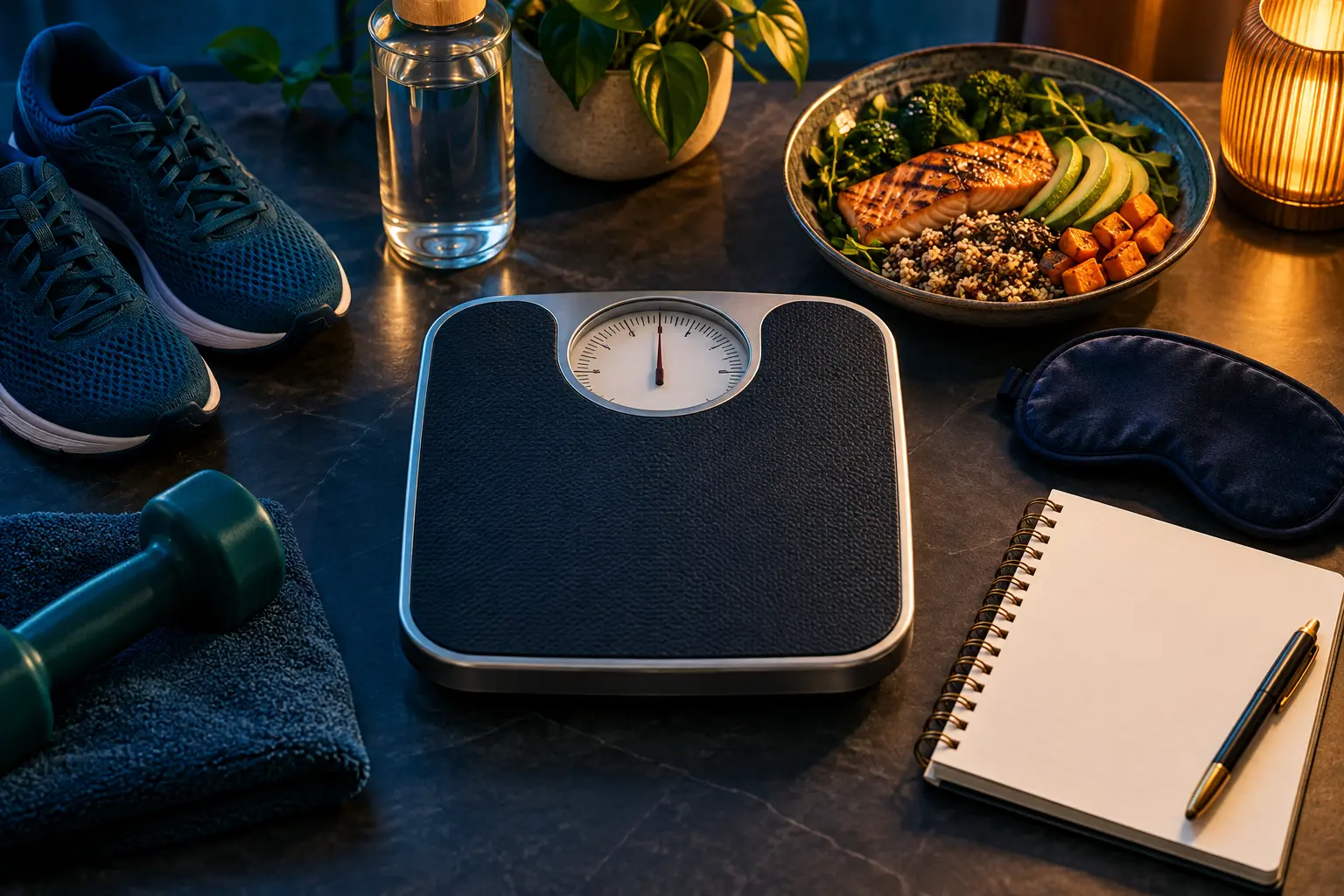
When a diet ends, people often expect to return to every old routine while keeping the new weight. That can be frustrating because the habits that supported change still matter. CDC guidance notes that people who maintain weight loss commonly continue a realistic eating pattern, activity and monitoring. A review of weight-control registries found that physical activity, dietary choices and self-monitoring were commonly reported, but registry participants are a selected group; their exact habits are not mandatory prescriptions for everyone.
This updated page covers the overall maintenance system. The 90-day plan offers an implementation schedule, while the weighing guide focuses on one tool.
Keep a satisfying food pattern
A maintenance pattern needs enough food for daily life and a structure that limits accidental drift. Keep useful meals you enjoy, adequate protein and fiber, and an approach to snacks and eating out that does not depend on rigid perfection. NIDDK recommends choosing a healthy eating plan you can continue over time. A return to old portions may gradually change energy balance, but counting every bite forever is not the only response. Some people use meal templates, shopping routines or periodic check-ins.
Compare a normal workweek with travel or holiday weeks. If the plan survives only on perfectly controlled days, change the plan. A meal that fits cultural preferences and a real budget is more durable than an impressive menu you cannot repeat.
Protect movement and recovery
Regular activity supports health and can help with weight maintenance. Choose walking, cycling, strength work or accessible alternatives that fit your body. If an old commute or job supplied movement that has vanished, replace one realistic opportunity rather than demanding an exhausting daily workout. CDC guidance emphasizes physical activity alongside nutrition. The movement audit can reveal where a schedule change removed ordinary activity.
Sleep and stress also matter for how a routine feels. They are not excuses for every scale change, but ignoring them can make eating and movement harder. If fatigue persists, investigate it rather than trying to compensate with stronger restriction.

Use a range and a response rule
Body weight fluctuates with fluid, meals and timing. Choose a personal monitoring method you can tolerate and review trends, not isolated readings. A working maintenance range is a decision aid, not a medical threshold or a promise that every day will be inside it. If the trend rises over several weeks, review portions, activity, sleep and medicines before changing the plan. CDC suggests monitoring food, activity and weight in a way that reveals patterns.
The maintenance weighing guide helps choose a frequency. If weight tracking causes distress, discuss alternatives with a professional. The goal is an early useful signal, not lifelong surveillance.
Expect life to change the routine
A new job, injury, caregiving or travel can alter meals and movement. Write a backup version for those weeks: two simple meals you can assemble quickly and one movement option that fits the new schedule. Review after the disruption rather than labeling it failure. If weight has risen, respond to the underlying change. A strict rule that worked only during a quiet month is not a durable maintenance strategy.
You may also need medical help with weight management. NIDDK describes behavioral treatment and other options that depend on individual health. A clinician can help when weight trends, medicines or symptoms make self-management difficult.
Do not make a supplement the foundation
NIH ODS reports that many weight-loss supplements have limited evidence and potential harms. A product cannot replace a maintenance routine or reliably prevent regain. Fat Burn Active needs finished-formula evidence and a current-label review; a claim about an ingredient does not prove maintenance benefit. If you independently consider it, see the full review and discuss relevant medicines or health conditions with a clinician.
The useful purchase decision may be to buy nothing. Put the available effort into meals, movement, sleep and a review plan. Those are the elements you can inspect when circumstances change.
Make the system simple enough to keep
Choose a regular shopping cue, a few reliable meals, suitable activity and a brief trend review. Add a written response for a genuine upward trend: revisit routines, make one modest adjustment and review again later. Do not respond to a single high weigh-in with fasting or extra exercise. The habit transition guide explains why losing-weight behaviors may need to be adapted rather than abandoned.
If the system demands more time or attention than you can give, simplify. Successful maintenance usually resembles an ordinary life you can live, with small corrections when necessary, rather than another short, intense project.
A weekly maintenance example
Suppose your ordinary week includes two meals you cook at home, a packed lunch on workdays and walking after two evening meals. You go away for three days and those cues disappear. Rather than trying to compensate during the trip, choose one accessible meal option and a comfortable walk when conditions allow. After returning, buy the familiar lunch ingredients and resume your routine. A weekly check may show a temporary higher number after restaurant food; give the trend time to settle. If several weeks keep rising, examine the change in portions, snacks or movement and make one small adjustment. This is a response protocol, not a demand to measure every meal. The same system can accommodate a new job or a different living situation.
Maintenance does not require your body to stay frozen at the lowest weight ever recorded. Consider whether the habits support energy, social life and health. If a strict range makes you anxious, discuss another way to monitor with a clinician. Keep a practical meal and movement routine while using health markers and longer observations to guide adjustments. Registry studies describe what selected people report doing; they do not give a personal formula. Your system should be safe to repeat on a boring Tuesday and flexible enough to survive an exceptional week. That is a more useful test than whether you can follow it for one perfectly organized weekend.
Choose a sustainable next step
Check the current package, ingredients, serving directions, your other caffeine sources, and relevant health conditions. For an evidence-based starting point, read the full Fat Burn Active review. If this product still fits your circumstances, you can inspect its current offer. We may earn a commission if you buy through that link. Choosing no supplement is equally reasonable when the evidence or safety questions do not support a purchase.
Frequently asked questions
Do I need to diet forever?
No. Keep a sustainable eating and activity structure and review trends without permanent extreme restriction.
Is one higher weigh-in regain?
No. Look at the longer pattern and context.
Can a supplement maintain lost weight?
No supplement should be assumed to replace an effective maintenance routine.
Sources
- CDC: Keeping Weight Off
- NIDDK: Eating and Activity
- NIDDK: Body Weight Planner
- Review of Weight-Control Registries
- NIDDK: Treatment Options
- NIH ODS: Weight-Loss Supplements
Reviewed against the sources listed above. Educational information only; not medical advice.