
This guide offers educational information and does not replace individual medical or exercise advice.
Observe before setting a new target
A person may exercise twice a week yet spend most workdays seated; another may move throughout the day without calling it a workout. A short audit can reveal those patterns. It does not measure exact calorie expenditure, fitness or body-fat change. For seven ordinary days, note walking, long seated periods, planned exercise and practical obstacles. The purpose is to identify one useful change, not to make every day look the same.
The step-baseline guide focuses on a device number. This page includes movement that a step counter may miss, such as cycling, strength work or accessible seated activity. Choose the method that matches your question rather than treating steps as the only kind of movement.
Keep the record short
For each day, write one line: approximate activity, long sitting blocks, how movement felt and what made it easier or harder. A phone note or paper calendar is enough. If you use a tracker, keep the same device and wear it in a similar way; differences between wrist and hip monitors can affect counts. Do not interpret a precise-looking calorie estimate as a personal laboratory measurement.
For example: “Tuesday: short walk before work; back-to-back meetings until lunch; easy cycling after dinner.” That sentence shows a possible midday gap. It does not require minute-by-minute surveillance. If tracking causes distress, skip the numbers and discuss routines in ordinary language with someone who can help.
Compare weekdays, weekends and disruptions
At the end of the week, ask whether one day is systematically different. Work-at-home days may have no commute; travel days may involve long sitting; bad weather may remove the usual walk. Do not turn unusual days into failures. The weather guide and travel-day guide offer specific fallbacks. An audit is valuable when it points to a concrete context rather than a vague demand to move more.
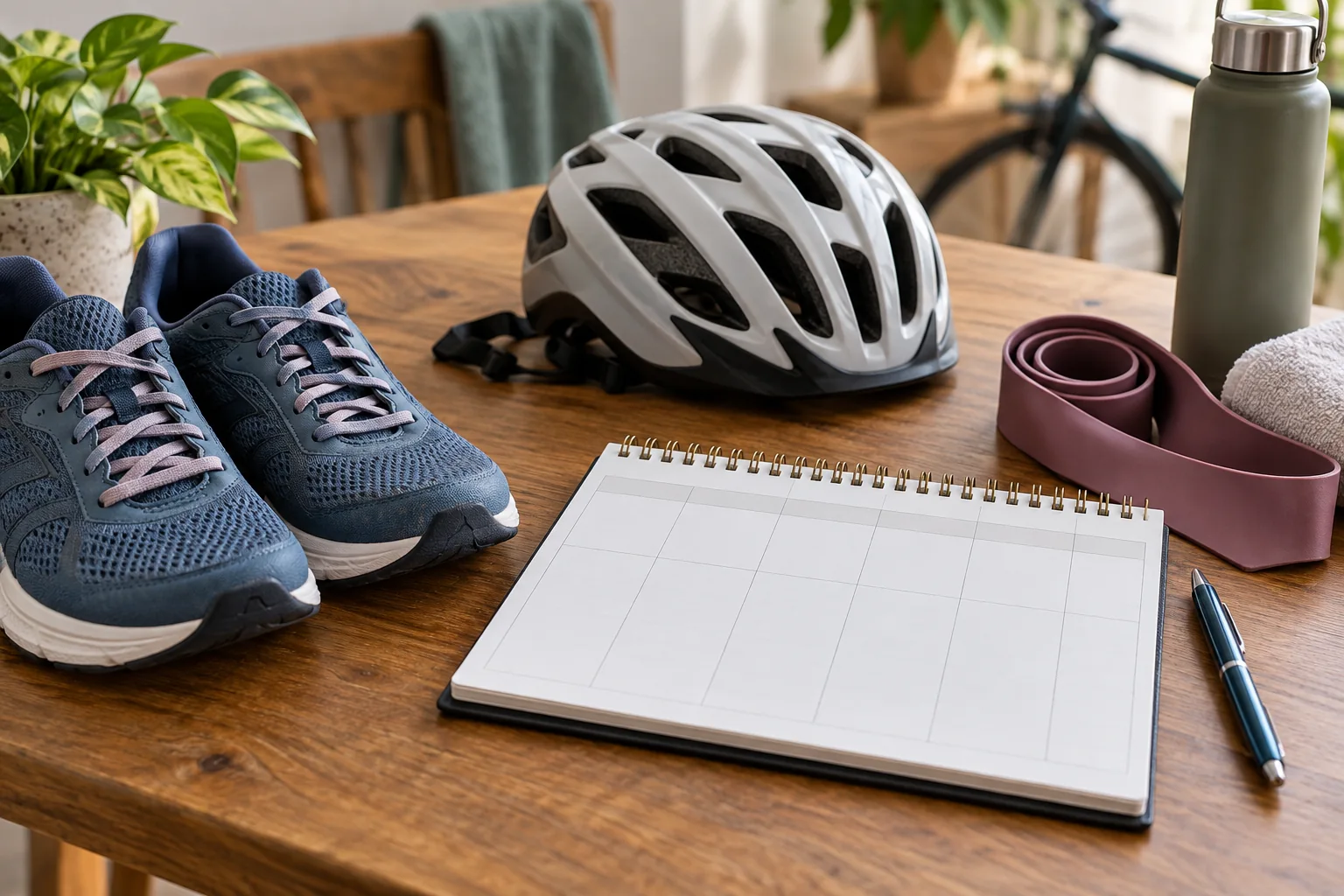
Note activities you enjoy. If a Saturday bike ride happens naturally, keep it while solving a Tuesday sitting gap separately. You do not have to redesign every day. Patterns become useful when they lead to one action.
Choose one change that fits a real cue
Maybe take a short walk after a recurring call, stand and move between two tasks, or prepare an indoor option for rainy days. If a 20-minute session is unrealistic, start smaller. CDC guidance notes that some activity is better than none and encourages gradual increases. The change should be safe for your health and easy enough to repeat. If you have pain or a condition affecting exercise, seek individual advice.
The repeatable-exercise guide explains why a small stable habit can outperform a demanding plan abandoned quickly. Write the new cue in plain language: “After my first meeting, I take a short movement break.” No elaborate scoring system is required.
Assess the outcome without pretending to prove causality
Try the change for another week. Did you remember it, did it feel safe, and did it make your day easier? A week is too short to establish a change in mortality risk or body fat. Health research supports greater regular activity at a population level, while your note helps you choose a practical path toward it. If the change did not work, adjust the cue or choose a different movement. Do not respond by doubling the target.
If an audit shows you already move regularly, celebrate the pattern rather than searching for a hidden deficit. Add strength, recovery or variety when appropriate. More is not always the next answer; sustaining what works is a legitimate goal.
Know what the audit cannot see
Step counts may miss swimming, cycling, upper-body activity and some movements at home. A diary may overlook a busy day. Mood, pain and sleep also affect how much movement feels possible. If you notice worrying symptoms during activity, seek medical guidance. A seven-day note cannot determine whether a health condition limits exercise or whether weight change is medically explained.
The exercise progress guide suggests function and comfort measures. Use the audit to plan opportunities, not to grade your worth or to calculate a precise energy balance. Once it has helped you choose a habit, you can stop recording.
A supplement does not fill a movement gap
No capsule replaces safe activity or eliminates the health concerns of prolonged sitting. NIH ODS reports limited evidence for many weight-loss supplement claims. Fat Burn Active’s ingredient list cannot establish that the whole product offsets a sedentary day. Its benefits and risks require a separate evaluation with its current label.
If you are independently researching it, see the full review. The most useful output of this audit is usually a calendar cue, an accessible route or a realistic backup. Put the action where it belongs in your week and judge it by whether you can repeat it.
A worked example of one useful finding
Imagine your notes show that Monday to Thursday include a brief commute walk, while Friday at home contains several hours of meetings and no outdoor time. Saturday includes a relaxed bike ride that your step counter barely records. The audit does not say Friday is a bad day or that Saturday was inactive. It suggests one Friday opportunity, perhaps a short walk after a recurring call, while preserving the bike ride you enjoy. If the Friday break does not happen, ask whether the cue or route was unrealistic rather than increasing the goal. You might put shoes near the door or choose an indoor backup. Once you know which change fits, stop auditing unless the week changes again. A simple pattern is the intended result, not a seven-day grading system. You can record strength, cycling or accessible seated activity in the same week; they count as movement even without a large step total. If pain or unusual fatigue makes activity hard, note that context and ask for appropriate advice. The audit works best when it respects health and real constraints instead of reducing the week to one number.
Choose the next useful step today
Check the current package, ingredients, serving directions, your other caffeine sources, and relevant health conditions. For an evidence-based starting point, read the full Fat Burn Active review. If this product still fits your circumstances, you can inspect its current offer. We may earn a commission if you buy through that link. Choosing no supplement is equally reasonable when the evidence or safety questions do not support a purchase.
Frequently asked questions
Do I need a wearable to audit movement?
No. Brief daily notes can be enough to find a repeat pattern.
Is a low-step day a failure?
No. Consider the context, other activity and the longer routine.
Can this audit measure fat loss?
No. It identifies opportunities and barriers, not body-fat change.
Practical decision checkpoint
Include ordinary activities as well as workouts: commuting, stairs, errands, standing breaks, and walks after meals. Note which days were unusual. At the end, choose one repeatable opportunity rather than copying the busiest day’s step count. A baseline is useful when it reveals the easiest sustainable change.
Sources
- CDC: Adult Activity Guidelines
- CDC: Benefits of Activity
- CDC: Adding Activity Gradually
- CDC: Wearable Step Count Differences
- NIDDK: Starting Activity
- NIH ODS: Weight-Loss Supplements
Reviewed against the sources listed above. Educational information only; not medical advice.