
This guide offers educational information and does not replace individual medical or exercise advice.
The barrier is practical, not a lack of motivation
A hot afternoon, icy sidewalk or heavy rain can change how much you move without any change in your intentions. When the usual walk disappears, ordinary errands may also involve less movement. You do not need to make up every step before bedtime. Identify which conditions make the route uncomfortable or unsafe and choose a suitable alternative. Public-health guidance encourages activity over time; it does not require the same outdoor schedule every day.
This article is about weather and activity choices. The steps without a workout guide covers everyday movement more generally. The question here is which version of the routine survives a rainy week or an unusually hot day, while respecting local warnings and your health.
Heat changes the safety calculation
The CDC advises people exercising in heat to shift activity earlier or later and stop if they feel faint or weak. Heat-related illness is a safety issue, not an opportunity to “sweat out” more body fat. Consider shade, an indoor route or a less demanding session; drink appropriately for conditions and follow local heat alerts. People taking certain medicines or managing health conditions may need individualized precautions. A walk that feels easy in cool weather may feel substantially harder in heat.
Avoid judging the value of a session by sweat or immediate scale loss. The sweating and fat loss guide explains why fluid changes are different from tissue loss. If you experience symptoms concerning for heat illness, seek appropriate medical help rather than continuing to reach a step target.
Rain and cold call for a backup route
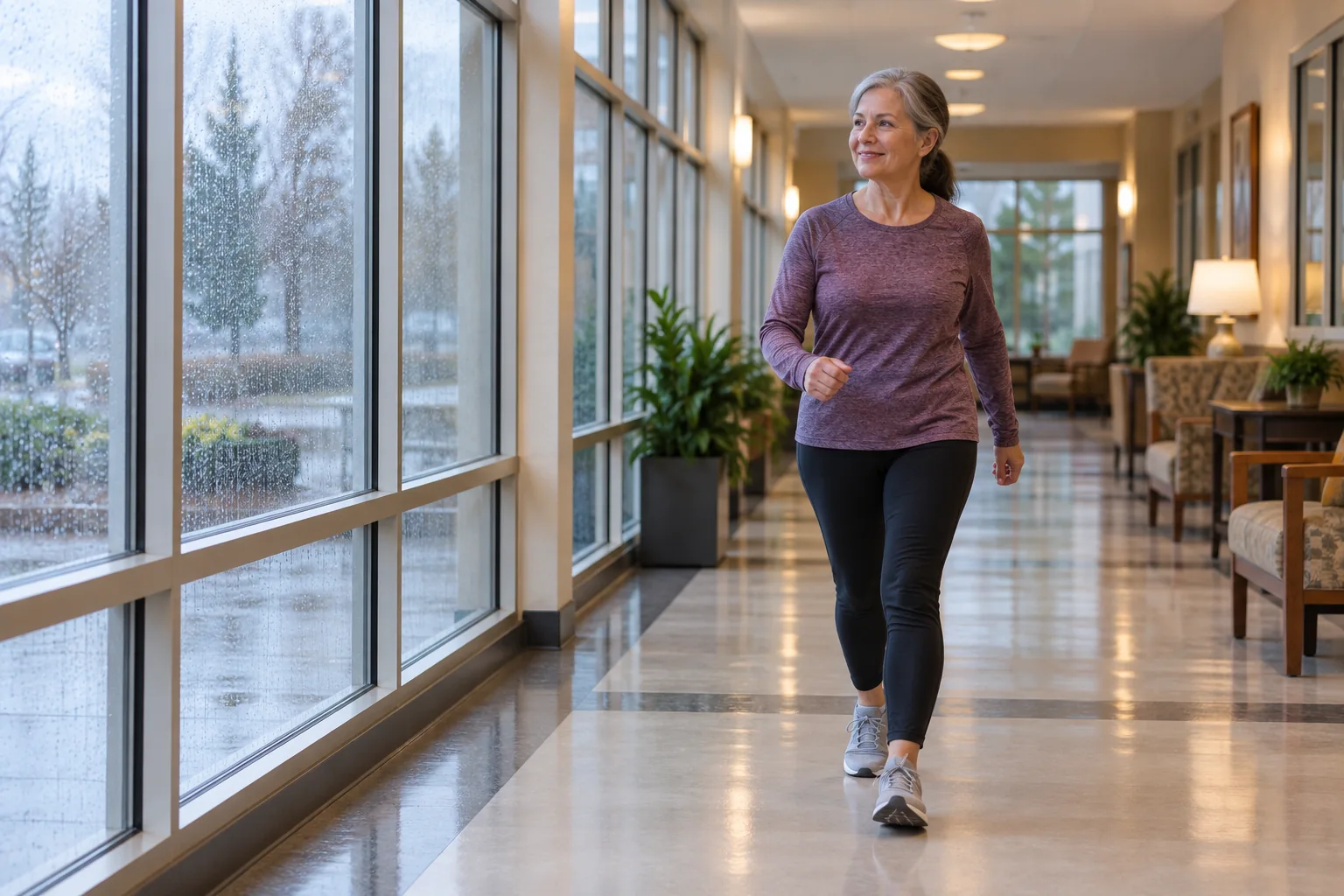
Rain itself does not prohibit walking, but slippery surfaces, poor visibility and cold exposure can make a familiar path unsuitable. An indoor hallway, accessible shopping space or short at-home movement session may work better. During extreme cold or winter storms, follow local safety guidance. The CDC advises limiting outdoor time and watching for cold-related danger in such conditions. No activity target is worth a preventable fall or illness.
Keep the backup simple: a short walk indoors or a few comfortable movements that do not require equipment. If the weather improves later, you can return to your usual route. If not, the smaller session still maintains the habit. An all-or-nothing rule turns a forecast into a week without activity.
Build a three-option weather plan
Choose a preferred outdoor activity, a shorter version and an indoor alternative. Write down what conditions trigger each option. For example, a normal neighborhood walk on mild days, a brief walk in light rain when footing is safe, and an indoor route during thunderstorms or hazardous heat. Your thresholds depend on local conditions and health. The goal is to decide before you are standing at the door negotiating with the weather.
The repeatable-exercise guide explains why a flexible routine often outlasts a more impressive one. Keep warm-up, shoes and access in mind. If indoor space is limited, even a short movement break can be better than none.
Do not repay a missed outdoor day
If several stormy days reduce your steps, avoid a single exhausting workout to compensate. CDC guidance allows activity to be spread across the week, and inactive adults can build gradually. Resume at a comfortable level as soon as conditions permit. One low day may affect a tracker graph, but it does not diagnose weight gain or a metabolic slowdown. Food intake, sleep and activity form a longer pattern.
Some people find that seasonal darkness or unpleasant weather also changes mood or sleep. Note the context rather than blaming yourself. A scheduled indoor option or an activity with a friend may help. If persistent symptoms interfere with daily life, consider professional support.
Review the week, not a perfect streak
After a week, ask how many sessions were practical, which weather problems repeated and whether your alternative felt safe. Perhaps the indoor option needs to be closer to home, or the usual walking time needs to shift. Change one part of the plan. The movement audit offers a brief way to spot patterns without forcing daily perfection. Activity is valuable even when the week does not match a clean chart.
If an activity feels uncomfortable because of pain, breathing difficulties or another symptom, seek appropriate guidance. Weather planning cannot replace an individual health assessment. A safe fallback is a feature of the program, not evidence that you were too weak to do the original workout.
A supplement does not override conditions
A fat burner cannot make extreme heat safe or turn sweat into a reliable sign of fat loss. NIH ODS describes limited evidence for many weight-loss products and notes potential risks. Fat Burn Active’s complete formula requires its own evidence and safety review; using a stimulant to push through fatigue or heat discomfort is a poor substitute for changing the plan.
The full product review is available if you independently want to evaluate it. For the next weather-disrupted day, write down the safe option you will actually use. A small workable alternative is worth more than a risky attempt to protect a streak.
A forecast-based example
Suppose Monday is pleasantly cool, Tuesday has heavy rain and Wednesday has a heat warning. On Monday you take your usual walk. On Tuesday you use a short indoor route if it is accessible. On Wednesday you move earlier only if the conditions are safe, or choose gentle indoor activity and postpone the longer outing. This is not three failures to hit the same step number; it is one routine adjusted to three real environments. Note how each option feels, especially if you have a condition affected by heat or cold. If your indoor backup feels dull, choose music, a companion or a different activity rather than abandoning it. The aim is a plan you can use the next time weather changes, without an unsafe promise to keep an identical schedule.
Choose the next useful step today
Check the current package, ingredients, serving directions, your other caffeine sources, and relevant health conditions. For an evidence-based starting point, read the full Fat Burn Active review. If this product still fits your circumstances, you can inspect its current offer. We may earn a commission if you buy through that link. Choosing no supplement is equally reasonable when the evidence or safety questions do not support a purchase.
Frequently asked questions
Should I walk outside in extreme heat to meet my goal?
No. Shift timing, reduce intensity or use an indoor option and follow safety guidance.
Does rain ruin my progress?
No. One disrupted day does not define your longer routine.
Can indoor walking count?
Yes. Movement does not require a particular outdoor route.
Practical decision checkpoint
Keep one indoor fallback for days with heat, cold, rain, or poor air quality, such as a short walk in a safe indoor space. Compare a week’s total pattern rather than judging one missed outdoor session. Adapt the setting while preserving the habit of moving.
Sources
- CDC: Exercise and Heat
- CDC: Winter Weather Safety
- CDC: Adult Activity Guidance
- CDC: Benefits of Activity
- NIDDK: Starting Physical Activity
- NIH ODS: Weight-Loss Supplements
Reviewed against the sources listed above. Educational information only; not medical advice.