This guide offers educational information and does not replace individual medical or exercise advice.
A borrowed step goal hides your starting point
If you currently walk little, 10,000 steps may be a discouraging first target. If you already walk often, that number may add nothing useful. The CDC’s adult activity guidelines are framed around aerobic time and strengthening, not a universal daily step quota. Research summarized by NIH suggests health benefits are associated with a range of step counts, including fewer than 10,000. Those are population associations, not a personal medical prescription.
This page helps establish your own baseline. The steps and weight-loss guide discusses the broader relationship with body weight; the movement audit covers non-step activity as well. Start by measuring what you actually do, not what an app awards a badge for.
Record ordinary days consistently
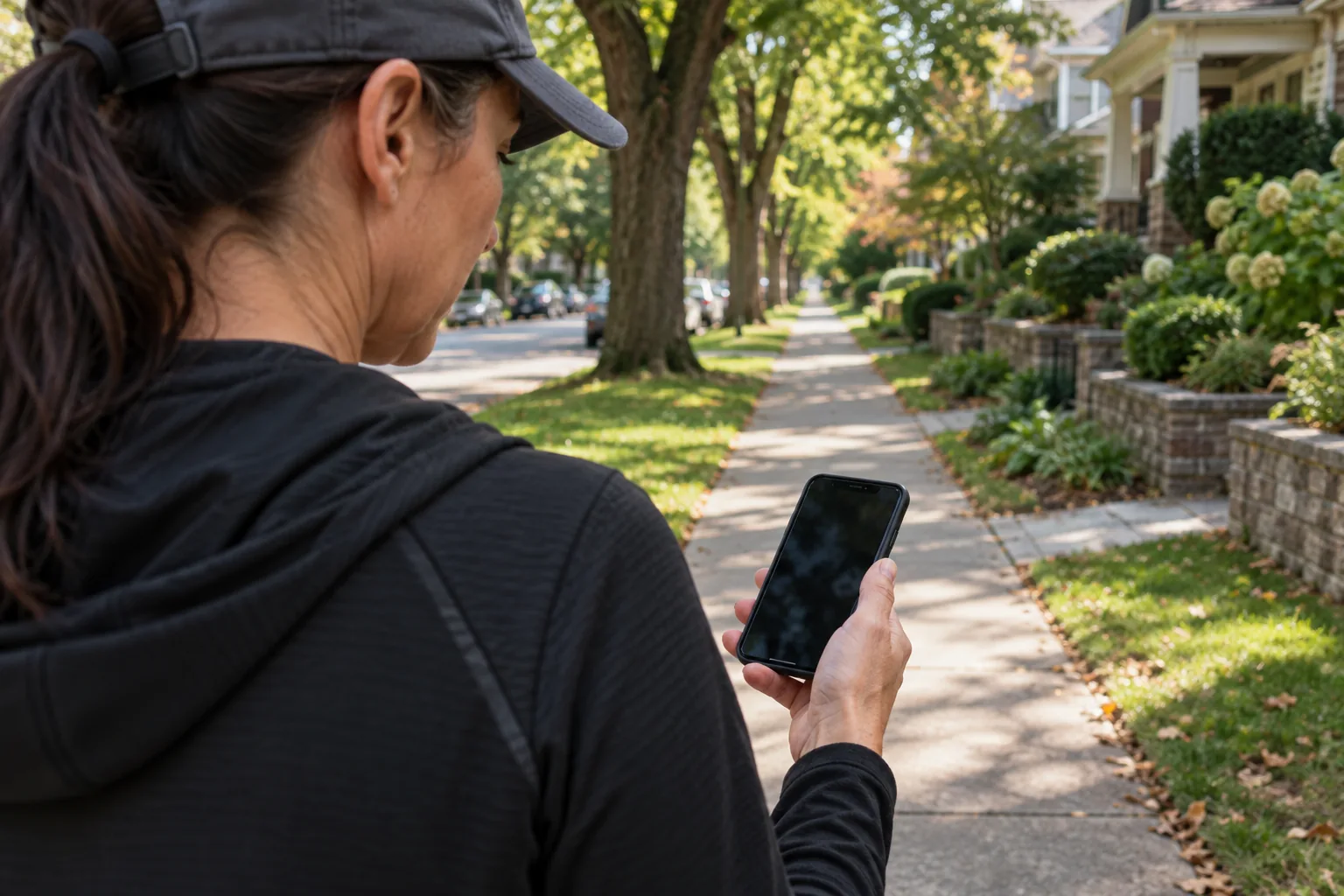
Use the same phone, pedometer or watch for several days, ideally including a typical workday and a typical non-workday. Wear or carry it in a similar way. Note when you forget it or spend time cycling or swimming that it may not capture. A CDC comparison of wrist and hip devices found differences in counts under some conditions, so do not mix devices and treat every digit as exact. An approximate range often provides a better decision aid than a falsely precise average.
Write a little context: “rainy workday,” “long commute,” or “walk with friend.” If a day is unusually active or you are ill, mark it as unusual instead of using it as your normal starting point. The goal is a useful reference for future routine days.
Make a baseline from a pattern
After a week, look at the usual range and the difference between workdays and weekends. If most weekdays cluster together but one day includes a hike, use the cluster as your reference for ordinary weekdays. You can also keep separate baselines for home-work days and days with a commute. There is no need to calculate a single perfect number. The purpose is to know what adding a short walk would mean relative to your real life.
If counting steps makes you anxious, use time walking or another movement measure instead. Someone whose mobility relies on a wheelchair or who cycles frequently needs a different baseline that respects their activities. No one is required to reduce all movement to footsteps.
Choose a modest experiment
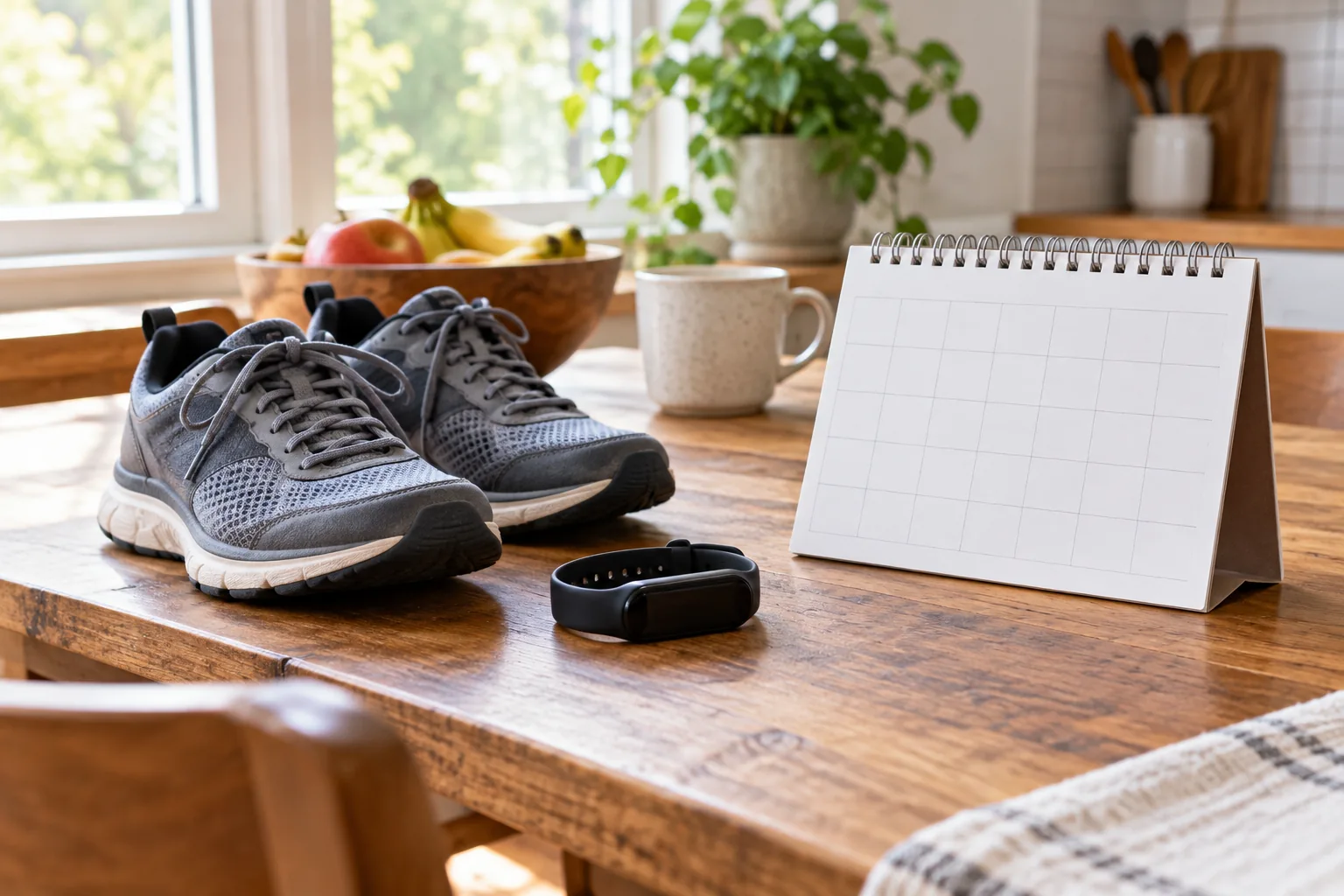
Add an accessible walk or a few brief movement breaks on the days where you see an opportunity. Do not assume a fixed increase suits every person; pain, fitness, work and time differ. If the change is comfortable for a week or two, repeat or increase it gradually. CDC guidance says some activity is better than none and recognizes that moderate activity can be accumulated across the week. Your new step total is a feedback tool, not a health guarantee.
The steps without a workout guide offers ideas. Choose the easiest route you can repeat, not a complex challenge that depends on ideal weather and spare time every evening.
Keep the count in context
Step trackers can miss activities or count extra hand movements. A lower day may reflect travel, bad weather or an important need for rest. Do not do unsafe laps at night simply to close a ring. A person with knee symptoms may do better with cycling or pool activity that a step target undervalues. The sensitive-knees guide offers alternatives.
Research linking more daily steps with health outcomes is mostly observational and cannot tell you the exact benefit of adding a particular number tomorrow. Track whether you are moving more regularly and feeling capable, not whether every day beats the last. Strength sessions and recovery still belong in an overall plan.
Review after several weeks
Compare similar days using the same device. Are ordinary weekdays slightly more active, and can you keep the change without pain or excessive scheduling? If yes, the baseline served its purpose. If not, identify whether the route, cue or target was inconvenient and modify one thing. A two-week review is a practical check, not proof of fat loss. The scale may fluctuate independently of steps.
If your device changes, establish a fresh reference rather than directly comparing numbers from different models. If the habit feels stable, you may stop daily counting and use occasional checks. A step baseline should free you to plan activity, not lock you into permanent surveillance.
Do not buy a shortcut to steps
A fat burner cannot create the health benefits of walking and cannot convert a target into a guaranteed weight-loss rate. NIH ODS cautions that many supplement claims lack strong evidence. Fat Burn Active’s complete formula has to be judged separately from an activity tracker’s readings and your individual safety context. A stimulant sensation is not an extra step count or a measure of fitness.
If you are researching the product independently, see the full review. For this task, record a representative range and choose one safe opportunity to move a little more. That is a useful starting point without a new purchase.
A range is often better than one average
Suppose your workdays usually record between 3,000 and 4,000 steps, while a weekend visit with friends reaches 9,000. A single seven-day average hides the routine difference. Keep a workday range and a weekend note, then test an extra comfortable walk on one or two workdays. If you have joint symptoms, choose a different movement instead of forcing an arbitrary increment. Do not infer a precise health benefit from the new number; population step studies do not measure your personal outcome. If a watch is left on a table during a walk, mark that day as incomplete. The baseline should describe ordinary life well enough to choose a safe experiment, not become a perfect record of every movement or every hour.
Choose the next useful step today
Check the current package, ingredients, serving directions, your other caffeine sources, and relevant health conditions. For an evidence-based starting point, read the full Fat Burn Active review. If this product still fits your circumstances, you can inspect its current offer. We may earn a commission if you buy through that link. Choosing no supplement is equally reasonable when the evidence or safety questions do not support a purchase.
Frequently asked questions
Do I need 10,000 steps daily?
No. It is not a universal first goal; start from your own routine and health context.
How many days should I track a baseline?
Several representative days, including different day types, can reveal a useful range.
Are all step counters identical?
No. Device placement and activity type can affect recorded counts.
Practical decision checkpoint
Use several ordinary days rather than choosing the most active day as your starting point. Include at least one workday and one day with a different schedule, then look at the range as well as the average. Note whether the device was carried consistently and whether pain or fatigue limited movement. A first target can be a small addition that fits existing routines, such as a short walk after one meal. Review the target after a few weeks; a step number is useful only if it helps build activity safely and consistently.
Sources
- NIH: Daily Steps and Health
- Daily Steps and Health Outcomes Review
- CDC: Wearable Step Counter Comparison
- CDC: Adult Activity Guidance
- NIDDK: Starting Activity
- NIH ODS: Weight-Loss Supplements
Reviewed against the sources listed above. Educational information only; not medical advice.