This guide offers educational information and does not replace individual exercise or medical advice.
Low impact does not mean pain free for everyone
The CDC lists walking, cycling, swimming and water exercises among joint-friendly activities for people with arthritis. “Low impact” describes how an activity loads a joint relative to high-impact exercise; it does not diagnose knee pain or guarantee that a particular knee will tolerate every motion. A bike may suit one person and irritate another depending on fit, resistance and symptoms. Water activity may feel easier but may not be available or appropriate for everyone.
This page compares knee-focused cardio choices. The existing joint-friendly weight-loss guide considers movement alongside the broader plan, and the swimming guide examines pool exercise in detail. Keep the search intents distinct rather than promising one “best” option.
Start with a comfortable walking test
Flat, even ground and a short duration may be easier than hills or long outings. Choose shoes that feel stable, move at a pace that lets you assess the knee and stop if pain is clearly worsening. NIDDK encourages people starting activity to build up slowly. If a few comfortable minutes are possible, that can be a base. If even a short walk provokes significant pain, do not keep repeating it to meet a step target; ask about another activity or a clinical assessment.
Walking is accessible for many people, but it need not be everyone’s first choice. A route with places to rest, good lighting and predictable surfaces makes the test more useful. The goal is to identify an option you could repeat safely.
Cycle with fit and resistance in mind
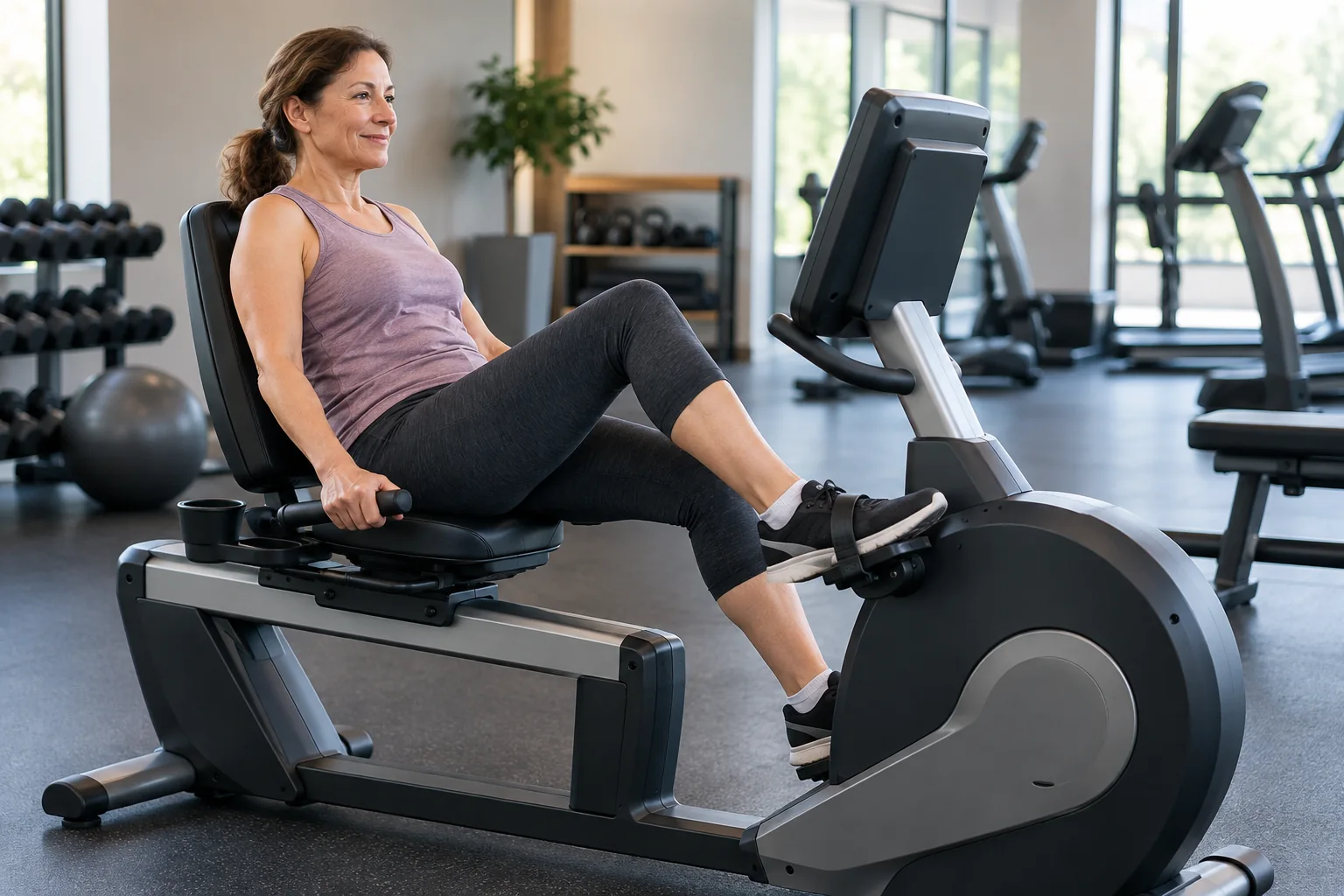
A stationary or recumbent bicycle avoids the impact of running and lets you control duration. Seat position and resistance affect how the knee feels, so begin gently and adjust if a setup causes discomfort. AAOS describes low-impact options such as stationary cycling and swimming in its discussion of certain knee pain problems; those recommendations do not substitute for evaluation of your own knee. A qualified professional can help with fit and exercise choice after injury or surgery.
Try a short, easy session rather than an ambitious high-resistance class. If pain appears during the motion, stop and seek advice rather than assuming that all discomfort is normal. A recumbent seat may feel more supported for some people, but not all machines fit everyone.
Use water if it is accessible and suitable
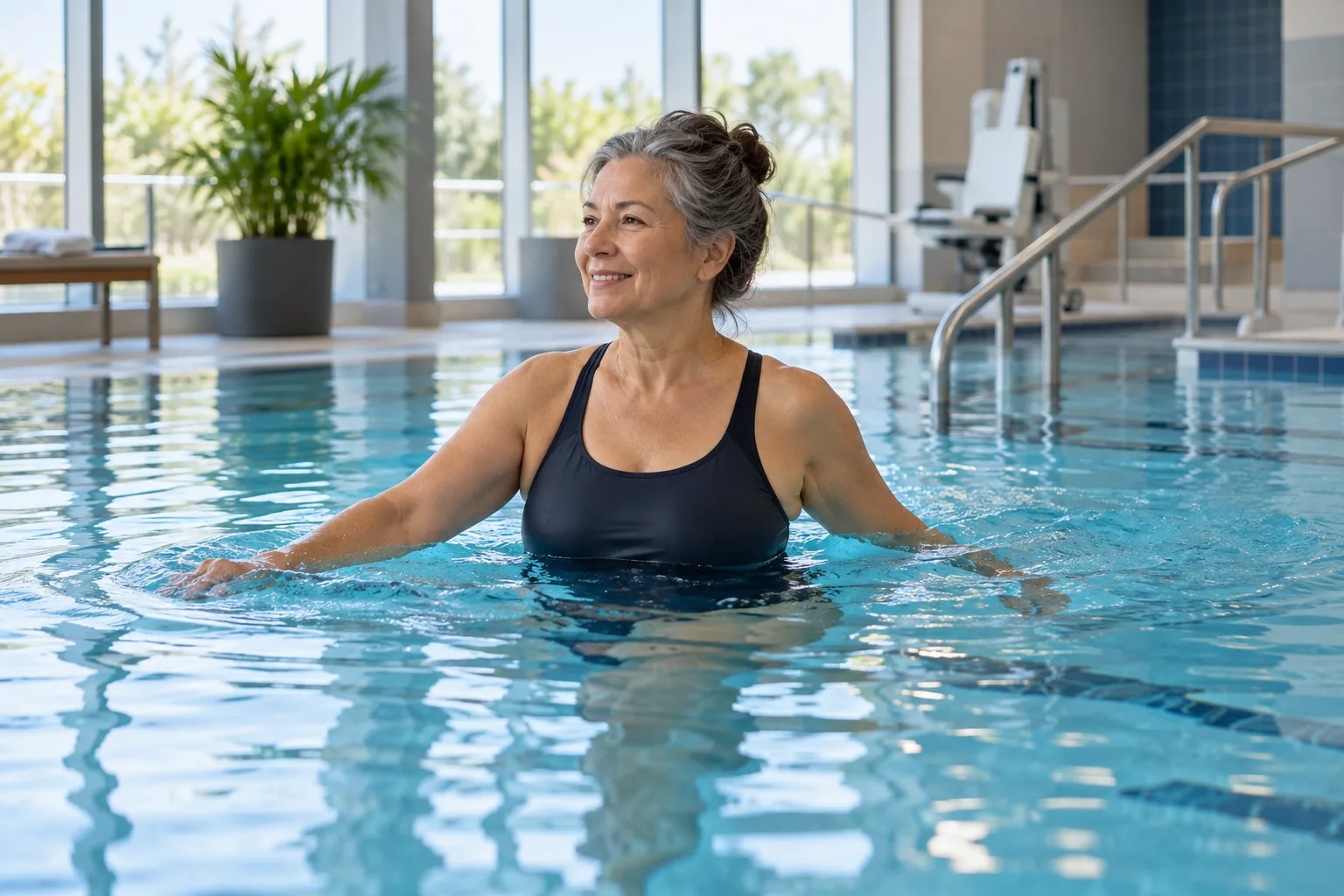
Swimming, pool walking and water exercises can reduce the sensation of weight bearing for some people. Choose a pool with safe entry and depth appropriate to your comfort. You do not need to swim laps to move in water. Water exercise still requires attention to technique, fatigue and any medical restrictions. If you are unsure after a recent injury or procedure, ask your healthcare team which motions are appropriate.
Accessibility and cost matter. A perfect pool option that requires a long journey twice a week may be less useful than a tolerable neighborhood walk or home bike. Choose the activity that protects both joint comfort and adherence. Any plan should be judged over ordinary weeks, not one unusually easy session.
Respond to the knee afterward as well
Notice the knee during activity and later that day or the next morning. Some people starting a new activity experience temporary mild soreness; growing pain, new significant swelling, a sense of giving way or inability to bear weight needs professional assessment. CDC advises people with arthritis to speak with a healthcare provider about personalized activity and symptom changes. Do not apply a universal pain-score cutoff from an online plan to an undiagnosed knee problem.
If a session repeatedly aggravates symptoms, reduce duration, change the option or get guidance. Resting from a painful movement does not mean abandoning every form of activity. A clinician or physical therapist can help distinguish a useful adjustment from a reason to stop and investigate.
Build aerobic fitness gradually
Once you find a tolerable choice, repeat short sessions and add a little time before increasing speed or resistance. Public-health guidance for adults includes 150 minutes of moderate aerobic activity weekly and two days of muscle strengthening, but a person with knee symptoms may need an individualized path. The beginner plan can provide a scheduling idea; it is not a rehabilitation prescription.
Appropriate strength work may support function around a painful knee, yet which exercises to use depends on the cause and your medical history. Ask for professional guidance where symptoms persist. Your progress may be walking or cycling comfortably for longer, not a lower weight after one week.
Do not medicate discomfort with a supplement promise
A fat burner cannot treat knee pain or make an irritating workout safe. NIH ODS cautions that weight-loss supplement evidence is limited and products can carry risks. Fat Burn Active’s ingredient claims do not establish joint protection or better knee recovery from exercise. If you are considering it for a separate weight-management reason, review its current label and the full product analysis.
The useful first step is to choose a tolerable movement and respond honestly to symptoms. The safest exercise you can repeat is more valuable than a high-calorie-burn workout you must push through pain to complete.
Compare options by the knee response
Imagine a ten-minute flat walk causes discomfort that lasts into the next day, while easy cycling feels comfortable during and after. That observation may favor the bike as your current aerobic option, although it cannot diagnose the source of pain. Try the bike at an appropriate setting on another day and keep the duration manageable. Conversely, if cycling hurts with each pedal stroke but walking on level ground feels fine, choose the walk. If both cause worsening symptoms or the knee swells, seek assessment rather than cycling through options indefinitely. One good session does not guarantee every future workout will feel the same, so include recovery and review the pattern. The goal is tolerable movement that supports health while respecting a joint that may need its own treatment plan.
Choose the next useful step today
Check the current package, ingredients, serving directions, your other caffeine sources, and relevant health conditions. For an evidence-based starting point, read the full Fat Burn Active review. If this product still fits your circumstances, you can inspect its current offer. We may earn a commission if you buy through that link. Choosing no supplement is equally reasonable when the evidence or safety questions do not support a purchase.
Frequently asked questions
Is cycling always better than walking for knee pain?
No. Comfort depends on the person, knee condition and setup.
Can I count pool walking as cardio?
Yes, it can be aerobic activity when performed at a suitable pace.
Should I ignore knee swelling after exercise?
No. New or significant swelling or worsening symptoms deserve medical advice.
Sources
- CDC: Joint-Friendly Activities
- AAOS: Low-Impact Options for Knee Pain
- AAOS: Knee Exercise Guidance
- NIDDK: Starting Activity
- CDC: Adult Activity Guidelines
- NIH ODS: Weight-Loss Supplements
Reviewed against the sources listed above. Educational information only; not medical advice.