
This guide offers educational information and does not replace individual exercise or medical advice.
Use the plan as a starting template
A beginner week should reflect what you can do now, not an imaginary future version of yourself. Public guidance recommends adults build toward 150 minutes of moderate aerobic activity and at least two days of muscle strengthening, but CDC also says some movement is better than none. You can start below those amounts. The template below illustrates how to distribute short activities; it is not a personalized exercise prescription or a promise of a particular weight-loss rate.
The repeatable-exercise guide helps select an activity. This page answers a narrower scheduling question: what could the first ordinary week look like, and how should you adjust it? Use your current baseline and health context.
A sample week with room to change
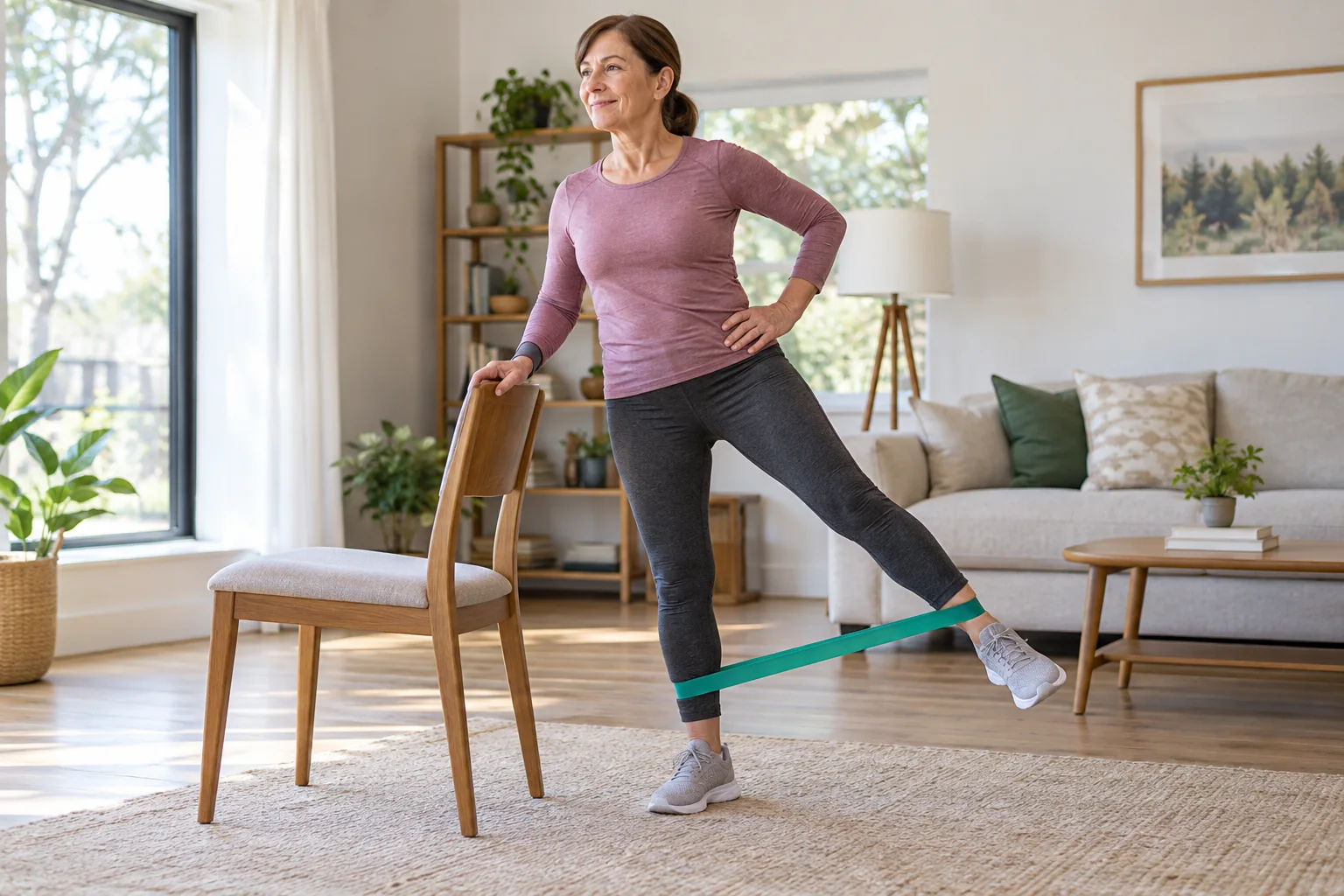
On Monday, take a comfortable walk or cycle for a short period you can tolerate. On Tuesday, try simple strength movements appropriate to your ability, perhaps with a band or chair support. Wednesday can be rest or easy movement. Thursday repeats the aerobic session. Friday offers another strength opportunity. Saturday is a flexible walk, water activity or other enjoyable movement; Sunday can be rest or gentle mobility. The exact minutes and movements depend on your starting point.
This structure is an example, not a requirement to fill every day. Someone coming from very little activity may begin with two short walks and one guided strength session. Someone with more experience can choose longer sessions. Keep the hardest activity spaced so you can recover, and adapt to work and family commitments.
Choose effort you can repeat
A comfortable pace is a valid beginning. If a short aerobic session leaves you exhausted for the next day, reduce time or effort. If it feels easy for several sessions, add a little time. NIDDK advises inactive adults to increase activity slowly and to check with a clinician when health conditions affect safe exercise. A talk test or perception of effort can help you notice how hard you are working without making a tracker’s calorie estimate your target.
Strength sessions should use movements you can perform with control. If you have an injury, a qualified professional can help adapt them. The goal is to create a pattern that survives next week, not to reach the most soreness possible after the first session.
Understand where fat loss fits
Physical activity can improve cardiovascular fitness, mood, function and health even without a calorie deficit. A body-fat reduction over time generally requires a sustainable energy imbalance; exercise alone does not guarantee it, especially if appetite or eating changes. The exercise without a deficit article separates health benefits from body-weight outcomes. Do not “eat back” an exact number from a wrist tracker as though exercise expenditure were precisely measured.
Build an adequate eating pattern alongside activity. If added exercise makes you very hungry, plan meals and recovery instead of increasing training again. A new program should make life more capable, not reduce it to a competition between calories eaten and burned.
Have a smaller version for a hard week
If the planned walk is interrupted by bad weather, do a short indoor circuit or take several brief movement breaks where possible. If work is unusually demanding, complete one short session and resume the pattern later. Do not try to make up every missed minute with one punishing weekend workout. The steps without a workout guide offers low-friction alternatives for busy days.
If knee or back symptoms appear, switch the exercise or seek advice. A plan with a fallback is stronger than a perfect calendar with no response to reality. Recording completed sessions can show continuity even when the pattern changes.
Review after two weeks
Ask whether you could complete the sessions safely, whether recovery was sufficient and whether you found a time and place that worked. Track duration or effort for one comparable activity, such as the same walking route, rather than trying to compare unrelated workouts by calories. The non-scale exercise guide suggests other signals. A weight reading in week two cannot tell you whether the program improved fitness.
If sessions felt appropriate, change just one feature next: a little more time or one additional easy session. If they felt excessive, reduce them. Long-term guidance is a direction of travel, not an entry exam. Being able to repeat the week is the first meaningful milestone.
Supplements are not a training requirement
NIH ODS finds limited evidence for many weight-loss supplement claims. A product cannot replace movement practice, muscle-strengthening work or recovery. Fat Burn Active’s formula may contain stimulant sources, so a feeling of extra energy is not a reliable measure of exercise readiness or fat loss. Check the current package and individual health context before considering any supplement.
The full review is available for a separate buying decision. For your first week, write down the activity, the day and the simplest backup. You can begin and improve without a supplement.
An adjustment when life interrupts the template
Imagine your proposed Monday walk happens, but Thursday becomes an unexpectedly long workday. Instead of doubling Saturday’s workout, take a brief movement break if available, then return to the normal schedule. If a strength session repeatedly falls on a day when you are exhausted, move it to a better time. A plan is a schedule for opportunities, not a debt ledger. Even if a week contains less activity than you intended, you have learned which slots are reliable. Another useful question is whether you ate adequately around activity and slept enough to recover. If you feel unusually sore, shorten the next session rather than increasing effort to compensate for a missed day. The best progression is modest enough that the coming week still feels possible. You can maintain a two-session baseline and add optional movement when a calmer day appears. If the template regularly leaves you sore or anxious, simplify it before deciding you need more discipline. A schedule that can bend around your real life is easier to repeat over months.
Choose the next useful step today
Check the current package, ingredients, serving directions, your other caffeine sources, and relevant health conditions. For an evidence-based starting point, read the full Fat Burn Active review. If this product still fits your circumstances, you can inspect its current offer. We may earn a commission if you buy through that link. Choosing no supplement is equally reasonable when the evidence or safety questions do not support a purchase.
Frequently asked questions
Must my first week reach 150 minutes?
No. Begin at your current level and build toward guidance gradually.
Can exercise alone guarantee fat loss?
No. Weight change depends on the broader intake and activity pattern.
What if I miss a day?
Use a smaller backup or resume your next planned session without punishment.
Sources
- CDC: Adult Activity Guidelines
- CDC: Adding Activity as an Adult
- NIDDK: Starting Physical Activity
- NIDDK: Staying Active at Any Size
- Physical Activity Guidelines Q&A
- NIH ODS: Weight-Loss Supplements
Reviewed against the sources listed above. Educational information only; not medical advice.