This guide offers educational information and does not replace individual exercise or medical advice.
Body weight answers a different question
Body weight reflects many factors, including food and water, and can change quickly without a matching change in fitness. A new walking or strength routine can bring meaningful benefits even if the number stays level. NIDDK explains that activity supports health and function at any size and even without weight loss. Decide what you want to learn about the exercise itself: can you walk farther comfortably, recover after stairs or repeat a session that used to be difficult?
This page is about exercise progress, distinct from the fat-loss measurement guide. Do not use a scale as the sole grade for a week of training. A change in function can be worth recording on its own.
Record a baseline you can repeat
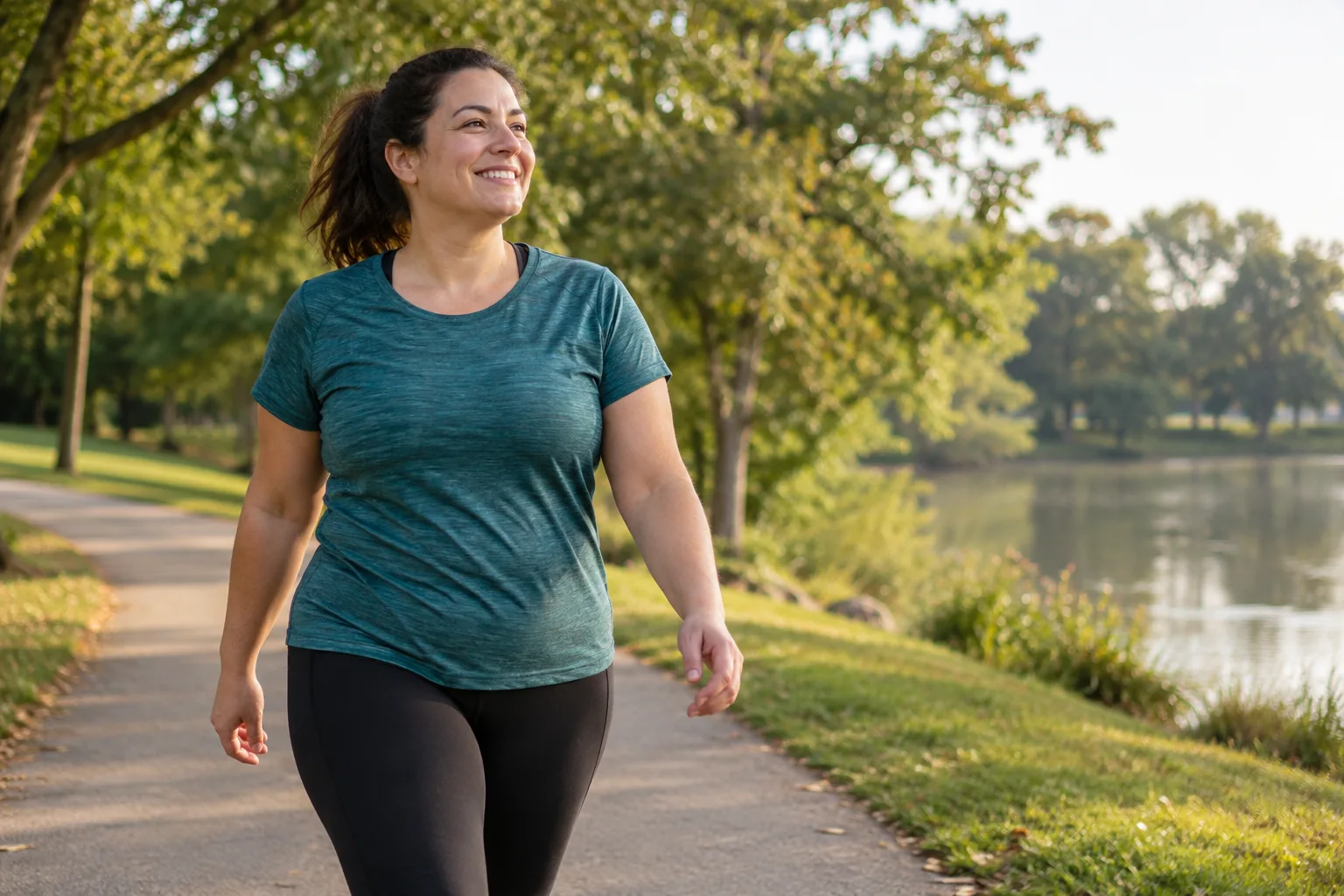
Choose an activity with similar conditions: a familiar walking route, a set of chair rises you can perform safely, or a comfortable period on a stationary bike. Note how long it takes or how hard it feels, plus any pain or unusual fatigue. Keep the method simple. A note such as “ten minutes on the flat path, could talk comfortably” may be more useful than a device reading with unclear calibration.
Do not treat a number as a challenge to beat every day. Retest after a couple of weeks, ideally when rested and under comparable conditions. Weather, surface, equipment and sleep can affect the result. One slower day is not evidence that your fitness has gone backward. Consistency makes comparison more interpretable.
Use function and recovery signals
If groceries feel easier to carry, stairs require fewer pauses or you recover more comfortably after a short walk, those are practical outcomes. CDC describes health benefits of physical activity beyond weight change. You can also track whether you completed planned sessions without worsening a joint problem. For strength, record a controlled movement or resistance level with good form rather than forcing more repetitions at any cost.
If a symptom worsens, that is important data too. A plan that produces constant pain or exhaustion needs adjustment, not a better motivational slogan. The knee-friendly cardio guide discusses symptom response in more detail. A qualified professional can help interpret concerns.

Count participation without chasing perfection
Mark the sessions you actually completed, including shorter versions. A week with two walks and a brief strength session can represent progress if you previously did none. Over time, you may add duration or variety. Avoid turning a missed day into a zero for the whole week. The repeatable-exercise guide explains why a durable routine matters.
Wearables may help with time or steps but their calorie estimates are uncertain. If a device makes you focus on compensation for food, use a simple notebook instead. The measurement should help you make a decision, not become the reason you feel forced to exercise.
Make a two-week review specific
Write one baseline measure, repeat it after two weeks and answer three questions: was the activity easier, did recovery improve, and could I perform it safely on ordinary days? If yes, consider a small increase. If not, examine sleep, schedule, pain and whether the program was too ambitious. Small fluctuations are expected. A single walk cannot diagnose a cardiovascular condition or demonstrate a body-composition change.
The beginner weekly plan shows where these observations can fit. You may choose a different measure after your activity changes. Compare like with like; a pool session and a walk cannot be reduced to one perfect score.
Keep safety ahead of a personal record
Stop and seek medical advice when exercise brings concerning symptoms such as chest pain, faintness or unusual breathlessness. NIDDK’s activity guidance includes warning signs and recommends individual advice for relevant health conditions. Progress does not require pushing through new significant pain. If a clinician has prescribed exercise limits or rehabilitation targets, those take precedence over a generic website example.
You can celebrate comfort, competence and regularity without increasing intensity every session. An easier walk is a good outcome when it means you can return tomorrow. The measure should reflect a healthier life, not demand that each week outperform the previous one.
Keep a supplement out of the scorecard
A fat burner that makes you feel more alert cannot establish improved endurance, strength or body-fat loss. NIH ODS cautions that evidence for many weight-loss supplements is weak. Fat Burn Active’s finished formula and safety questions need separate consideration; exercise progress is better judged by comparable movement and function, not a stimulant sensation after a dose.
If you independently want to evaluate the product, the full review is available. For today, choose one simple activity measure and keep it long enough to see a meaningful trend. You need no purchase to recognize real progress.
An example of a useful note
Suppose you walked a level loop for twelve comfortable minutes at the start of the month. Three weeks later, you complete the same loop without needing the earlier rest stop and still feel fine the next day. That is meaningful evidence about your walking capacity, although it does not quantify fat loss or diagnose heart health. Record the route, general conditions and perceived effort rather than converting the walk into a calorie number. If the weather is very hot or you slept poorly, do not treat a slower day as regression. You might also find that you now choose the stairs more readily or can carry groceries without stopping. Those observations can guide the next small increase. Keep the record brief enough that it supports the activity instead of becoming another demanding daily task. You do not need a new personal record each time. Some weeks maintaining the same walk while sleeping better or managing knee discomfort is progress in itself. If the route becomes easy, choose one modest change: a little more distance, a steadier pace, or another comfortable day. Recheck only after enough repetition to notice a pattern.
Choose the next useful step today
Check the current package, ingredients, serving directions, your other caffeine sources, and relevant health conditions. For an evidence-based starting point, read the full Fat Burn Active review. If this product still fits your circumstances, you can inspect its current offer. We may earn a commission if you buy through that link. Choosing no supplement is equally reasonable when the evidence or safety questions do not support a purchase.
Frequently asked questions
Can fitness improve without weight loss?
Yes. Activity can improve function and health even if weight remains stable.
How often should I retest a route?
A couple of weeks under similar conditions can be useful; daily records are unnecessary.
Should I count exercise calories?
They are uncertain and are usually a poorer progress measure than time, comfort or function.
Practical decision checkpoint
Log a repeatable benchmark, such as walking time on the same route, repetitions at a given effort, or recovery after a familiar session. Compare similar conditions. Improvement in capacity can be meaningful even while body weight fluctuates for reasons unrelated to fat change.
Sources
- NIDDK: Staying Active at Any Size
- CDC: Adult Activity Guidelines
- CDC: Activity Benefits
- NIDDK: Starting Physical Activity
- NIDDK: Increasing Activity Gradually
- NIH ODS: Weight-Loss Supplements
Reviewed against the sources listed above. Educational information only; not medical advice.