This guide offers educational information and does not replace individual exercise or medical advice.
There is no fitness entrance requirement
A person with a higher body weight may face equipment that does not fit, self-consciousness in a gym or a history of painful exercise. Those barriers are real, but none means activity has to wait until a particular number appears on the scale. NIDDK’s Staying Active at Any Size guide explains that movement can bring health benefits even without weight loss. Begin with a choice that meets your current ability, not a program designed for someone who already trains regularly.
This page focuses on comfort and access. The joint-friendly strategies page covers a wider set of weight-management considerations. You deserve a movement plan that treats your current body as a starting point rather than a problem to be corrected before you are allowed to begin.
Check your starting conditions
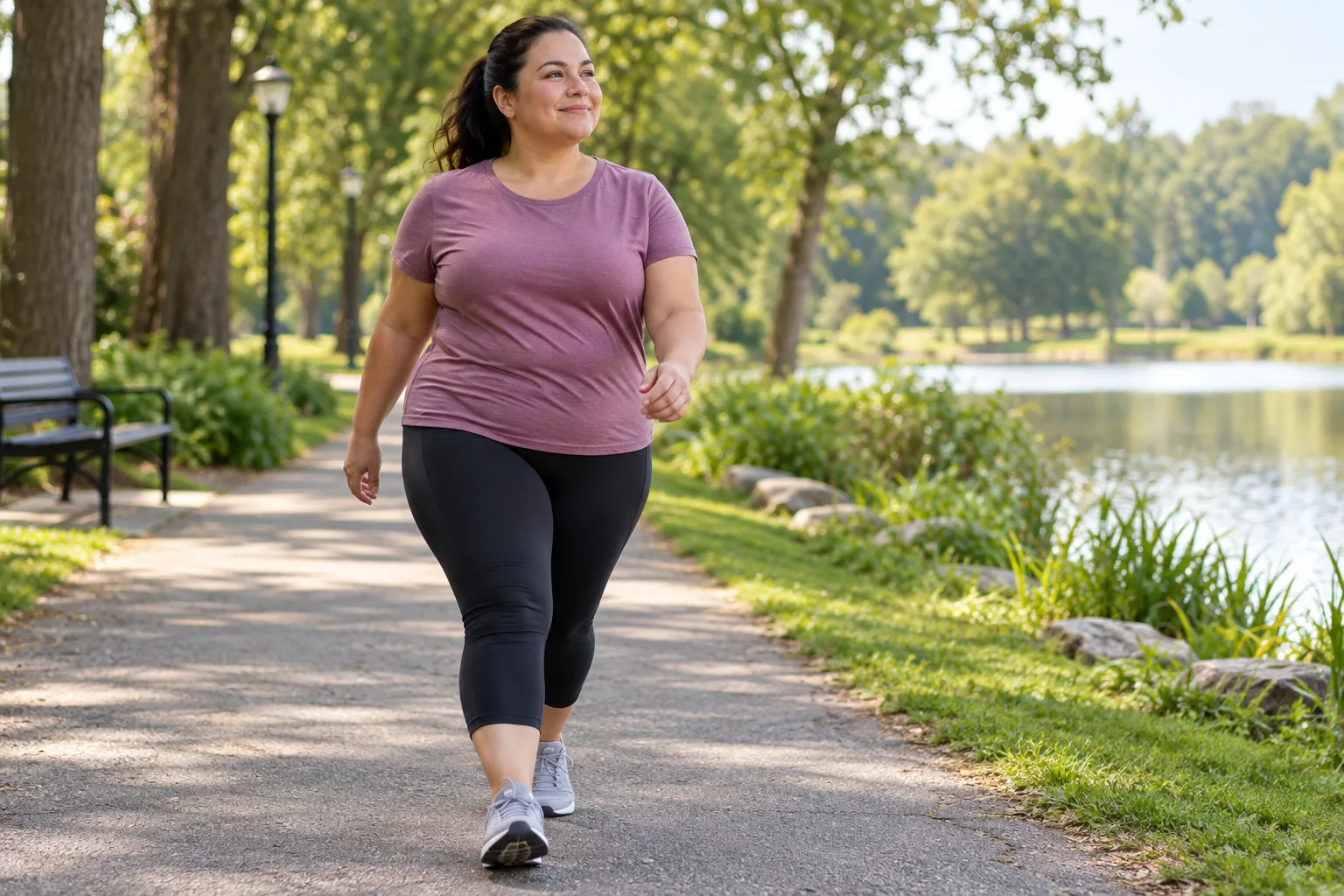
Consider what you can currently do without unusual pain or breathlessness. A short flat walk, water exercise, stationary cycling, chair-supported movement or simple strength exercise can be options. There is no universal first-session duration. If you have heart disease, diabetes, high blood pressure, an injury or symptoms that raise concern, NIDDK advises discussing appropriate activity with a healthcare professional. That discussion should help you start safely, not automatically bar you from movement.
Choose supportive footwear and clothing that allows comfortable motion. If a machine or chair has a published weight rating, check that it is suitable before use. An accessible route and a convenient bathroom or rest point can matter as much as the exercise type. Practical details determine whether you will return.
Make the first session easy enough to repeat
The first day is for learning what feels comfortable. Walk to the corner and back, try a few minutes of cycling or move in water if you have access. If the session is easy, that is useful information; add more slowly across the following weeks. CDC guidance says some activity is better than none and encourages inactive adults to build toward broader recommendations. Starting at the public-health target immediately is unnecessary.
Use a pace at which you can pay attention to your breathing and joint comfort. Stop if you develop warning symptoms, and seek timely help when appropriate. NIDDK lists safety warnings in its guide, but an article cannot determine your personal medical limits. Recovery is part of planning, especially after an unfamiliar activity.
Give joints more than one option
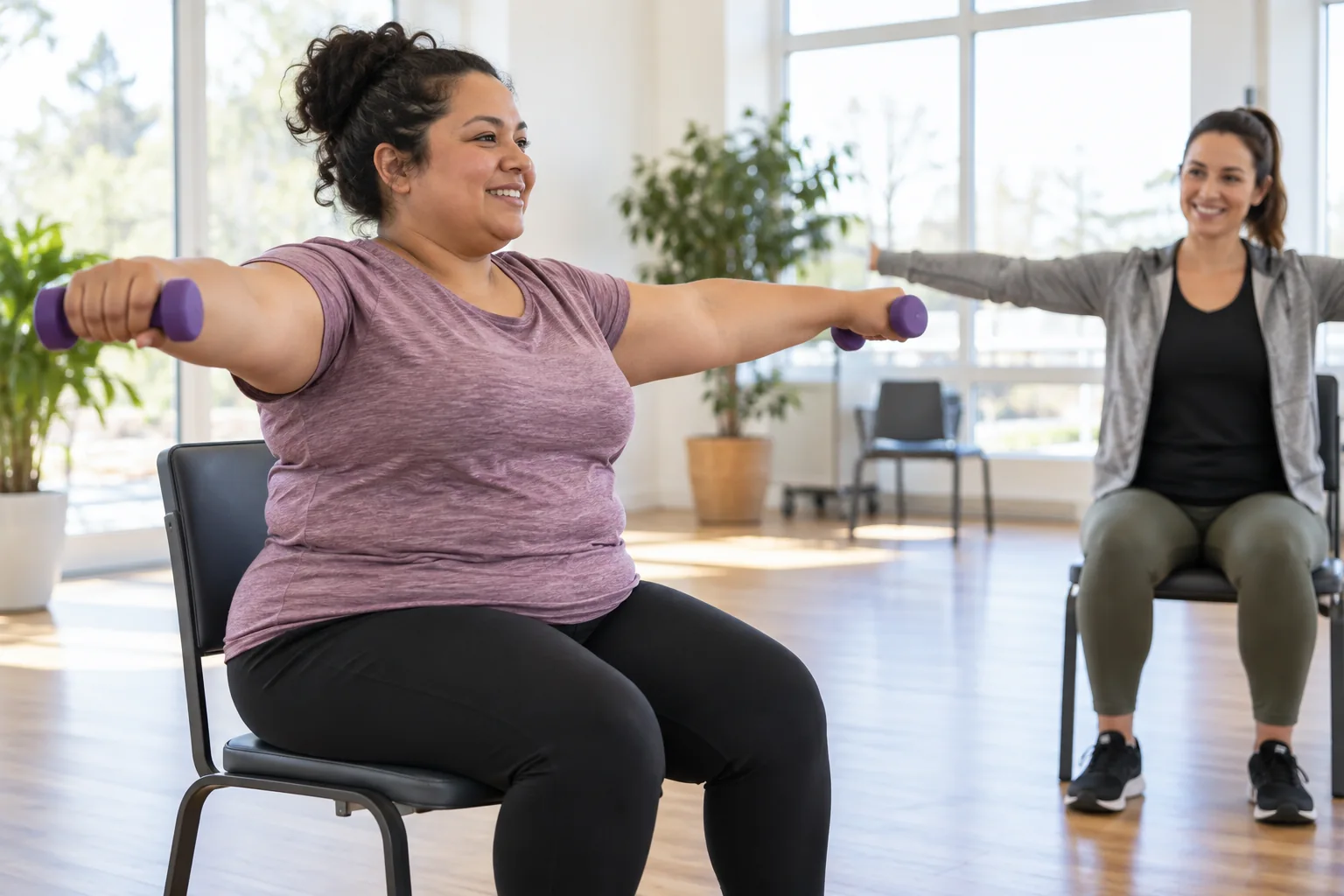
If walking is uncomfortable, consider an appropriately adjusted bike, swimming or water exercise. These are possibilities, not guaranteed solutions for every joint condition. The sensitive-knees cardio guide compares options and signs to reassess. A chair-supported strength routine may also fit some people, provided the movements are safe for their health needs.
Pain that grows with activity or persists afterward is information to change the plan. Do not treat pain as evidence of effort or a requirement for weight loss. A physical therapist can help assess movement and equipment if you need individualized modifications. Staying active and protecting function are compatible goals.
Plan for access, not motivation alone
A gym can be welcoming or difficult depending on machines, staff, cost and privacy. You can ask about equipment fit or try a quieter time, but home and outdoor options are also legitimate. A friend may make a short walk more enjoyable; an indoor fallback may help when weather changes. Choose a time you actually control. If work schedules shift, define a smaller version of the routine for busy days.
The steps without a workout guide offers another path for adding movement. A larger body does not obligate you to make every activity a formal workout. Everyday motion counts and can be a sustainable foundation.
Notice progress the scale does not show
You may walk a little farther, recover faster, feel steadier on stairs or become more comfortable with a familiar movement. Those changes matter even if the scale fluctuates or stays level. Write down one measure related to your chosen activity: time walked at a comfortable pace, number of sessions completed or ability to perform a household task. Avoid comparing your starting point with someone else’s highlight video.
The non-scale exercise progress guide explains how to review such measures. If an activity becomes painful, change it. Progress does not require pushing through warning signs. A repeatable routine is more useful than a single strenuous day followed by a week of avoidance.
Do not rely on a “fat burner” for permission to move
A supplement cannot make unsuitable equipment safe or replace medical advice on activity. NIH ODS reports limited evidence for many weight-loss product claims. A stimulant sensation can be confused with readiness to push harder and may carry individual risks. Fat Burn Active’s current formula and cautions need separate evaluation; none demonstrates that exercise at a higher body weight requires a capsule.
If you independently want to assess that product, use the full review. First make an activity plan you can access comfortably, perhaps with professional support. Starting where you are is already a valid beginning.
A first week without a performance test
Suppose you currently take short walks for errands but have never followed a workout calendar. In your first week, you might repeat a comfortable flat route twice, add a few minutes of chair-supported movement on another day, and leave space to rest. Note whether your shoes, route and chosen time worked. If the route hurts, change the activity or ask for support; if it is comfortable, repeat before adding more. This is a way to learn what your body tolerates, not a medical prescription. A person with limited mobility could choose a different movement with a professional’s help. Do not judge the week by calories burned or compare your time with another person’s. The useful outcome is knowing what you can safely and realistically do again next week under ordinary conditions.
Choose the next useful step today
Check the current package, ingredients, serving directions, your other caffeine sources, and relevant health conditions. For an evidence-based starting point, read the full Fat Burn Active review. If this product still fits your circumstances, you can inspect its current offer. We may earn a commission if you buy through that link. Choosing no supplement is equally reasonable when the evidence or safety questions do not support a purchase.
Frequently asked questions
Do I have to lose weight before exercise?
No. Suitable movement can benefit health at any body weight.
What if walking hurts?
Consider other appropriate activities and ask a clinician or therapist about persistent or worsening pain.
Should I begin at 150 minutes a week?
No. That is a longer-term guideline; inactive adults can start smaller and increase gradually.
Practical decision checkpoint
Begin with an activity that feels tolerable and can be repeated, then increase duration or intensity gradually. Track joint comfort and recovery as well as effort. A smaller starting dose that fits the body and schedule is more useful than an ambitious plan that leaves pain or exhaustion.
Sources
- NIDDK: Staying Active at Any Size
- NIDDK: Starting Activity
- NIDDK: Keeping Moving
- CDC: Adult Activity Guidelines
- CDC: Joint-Friendly Activities
- NIH ODS: Weight-Loss Supplements
Reviewed against the sources listed above. Educational information only; not medical advice.