
The burn-more response can intensify the pain cycle
Joint pain reduces movement, which can prompt a harsher exercise target to “make up” for fewer calories burned. A flare then disrupts activity, sleep, shopping, and cooking, making the entire plan harder. The solution is not inactivity, but matching load to capacity and letting nutrition carry an appropriate share of weight-loss work.
Not all joint pain has the same cause. New injury, inflammatory disease, instability, swelling, locking, or pain after surgery needs individualized assessment. Generic low-impact lists cannot diagnose what a joint can safely tolerate.
Build a joint-friendly movement menu
Equipment is optional. A sturdy chair, wall, resistance band, pool, or pedal device may improve access, but technique and suitability matter more than novelty.
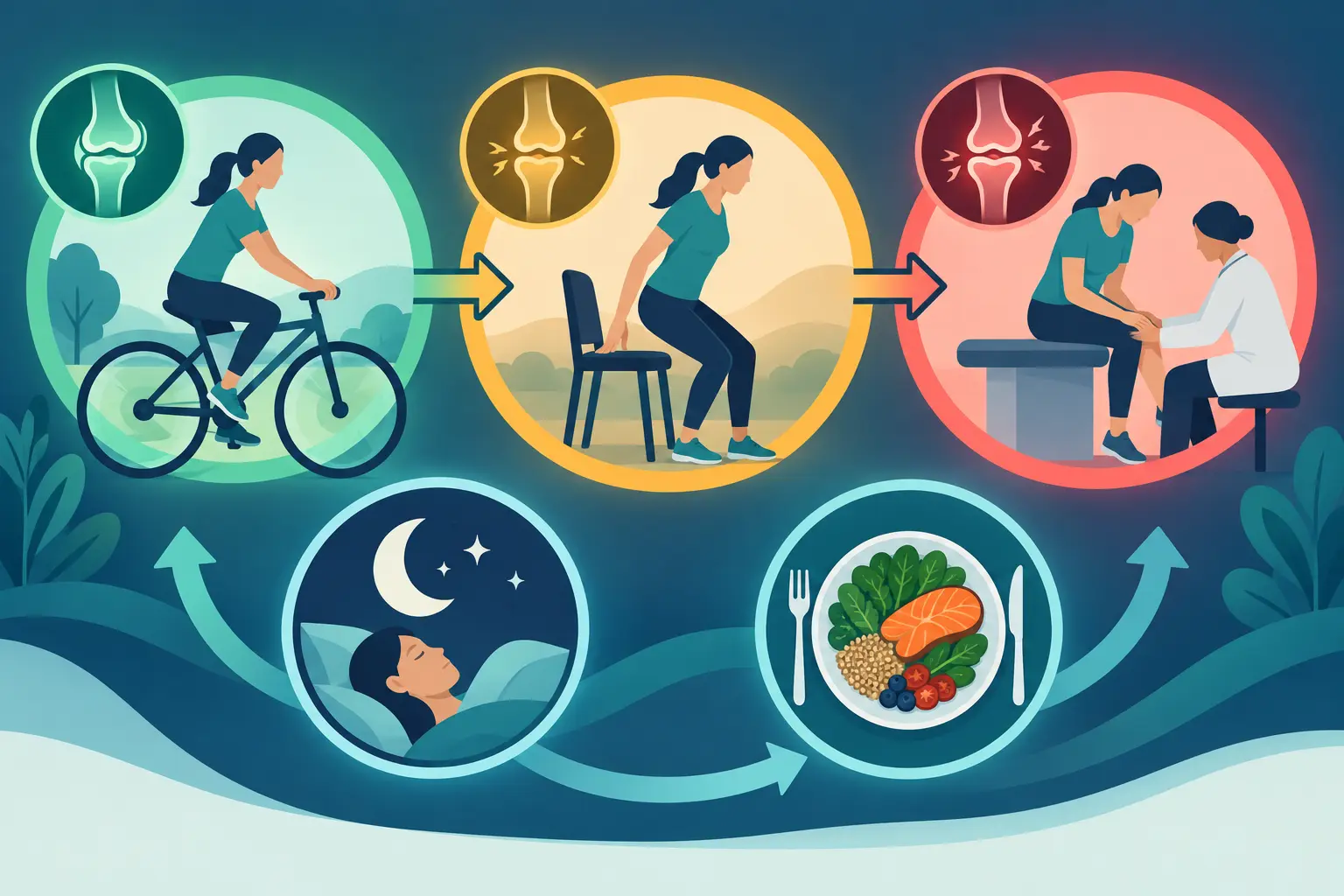
Use a symptom traffic-light system
Green: expected muscular effort, stable joint symptoms, and recovery by the next planned session. Continue. Amber: symptoms rise, movement changes, or recovery takes longer than expected. Reduce range, resistance, speed, or duration and review the pattern. Red: acute injury, major swelling, locking, giving way, inability to bear usual load, fever with a hot joint, chest pain, fainting, or severe breathlessness. Stop and obtain appropriate care.
A clinician may set different symptom rules. Write them down so frustration during a session does not redefine safety.
Create a deficit without demanding extra impact
Build meals around protein and high-fiber foods, use vegetables or fruit for volume, measure oils and sauces, and plan liquid calories. Keep the deficit modest enough to support rehabilitation and strength work. Aggressive restriction may reduce training quality and makes preserving muscle harder.
Track weekly averages rather than expecting the scale to reflect each workout. New strength training and inflammation from an unfamiliar session can temporarily change water weight. Pain medicines, reduced sleep, and less incidental movement also affect the pattern.
Example: replacing punishment with progression
Priya's knees hurt after she restarts jogging. Instead of abandoning movement, she uses a stationary bike for twelve comfortable minutes, twice-weekly supported strength work prescribed by her therapist, and five-minute walking breaks on good days. She increases only one bike session by two minutes the next week.
Her food plan changes one predictable source of excess energy: restaurant lunches become a packed protein-and-vegetable bowl four days weekly. Progress no longer depends on enduring knee pain.
A practical seven-day template
Schedule two nonconsecutive strength sessions, two or three low-impact aerobic sessions, and small daily movement bouts. Place the easiest session after the hardest workday and keep at least one recovery option, such as a shorter range-of-motion routine. Record activity type, duration, joint response during the session, response later that day, and next-morning function.
Review after two weeks. If symptoms are stable, progress one variable by a small amount. If symptoms repeatedly enter amber, change the mode or obtain professional guidance. If food adherence is strong but weight is unchanged, verify portions and wait for a meaningful trend before adding impact or slashing calories.
Make the system work on an imperfect week
Separate joint load from cardiovascular effort. Water exercise, cycling, and some seated circuits can raise breathing and heart rate while reducing impact, although every option still needs personal screening. Strength work can begin with isometric holds, reduced range, support, or lighter resistance when advised. Progress is the gradual expansion of tolerated capacity, not the ability to copy a generic workout.
Warm up with several minutes of easy movement and practice the intended range before adding load. Footwear, surface, bike setup, pool access, and chair height can change symptoms. These details are not minor when they determine whether the same movement is repeatable. A physical therapist can help distinguish useful modification from compensation that shifts stress elsewhere.
Coordinate food and recovery. Place enough protein across meals, include varied nutrient-dense foods, and avoid using pain as a reason to skip meals until evening. Protect sleep opportunity and schedule harder sessions away from the most physically demanding work or caregiving days. If an exercise causes repeated night pain or next-day functional decline, the weekly dose may exceed current recovery capacity.
Review the trend rather than one flare. Note which movement, range, duration, surface, and resistance preceded symptoms. If the pattern is predictable, modify that variable. If it is unexplained, progressive, or accompanied by swelling, instability, heat, fever, or loss of function, obtain clinical assessment. A weight-loss target never justifies training through a red-flag change.
The final weekly checkpoint
Choose the next session from the response to the previous one, not from guilt about calories. Stable function and predictable recovery earn progression; worsening mechanics, swelling, or prolonged pain call for modification or assessment.
Where a supplement fits—and where it does not
A supplement cannot create time, restore mobility, repair a joint, lower grocery prices, or make a household cooperate. The useful sequence is to build the smallest workable food and activity system first, observe it for at least two ordinary weeks, and identify the remaining problem. Only then is there a defined job to evaluate.
If you are considering Fat Burn Active, read our evidence and safety review and compare the current label with your medicines, health conditions, sleep, anxiety, blood pressure, and total caffeine. The formula contains stimulants, so it is not a neutral add-on. A clinician or pharmacist should review suitability when mobility limits, pain, chronic conditions, or medicines are involved.
Do not use Fat Burn Active to push through symptoms related to Joint-Friendly Weight-Loss Strategies. Review its product-specific safety considerations and discuss relevant conditions or medicines with a qualified professional before considering purchase.
Frequently asked questions
How quickly should weight change?
There is no required weekly result. A gradual trend that preserves energy, nutrition, function, and adherence is more useful than forcing a rapid target. Early scale movement can include water and digestive contents.
Do I have to exercise to lose weight?
Exercise is valuable for health and function, but food intake can be adjusted when activity is limited. The plan should not punish someone for movements they cannot perform.
What if the plan works only on perfect weeks?
Redesign it. A durable system needs a minimum version for pain flares, busy evenings, low-energy days, and unexpected costs.
When should I ask for professional help?
Seek individualized care for unexplained weight change, severe or worsening pain, fainting, chest symptoms, breathing difficulty, eating-disorder concerns, or conditions and medicines that affect nutrition or activity.
Sources
- CDC: Physical Activity and Arthritis
- American College of Rheumatology: Osteoarthritis Guideline
- Physical Activity Guidelines for Americans
- NIDDK: Health Risks of Overweight and Obesity
Sources reviewed September 14, 2026. This article is general educational information, not medical advice, diagnosis, or treatment.