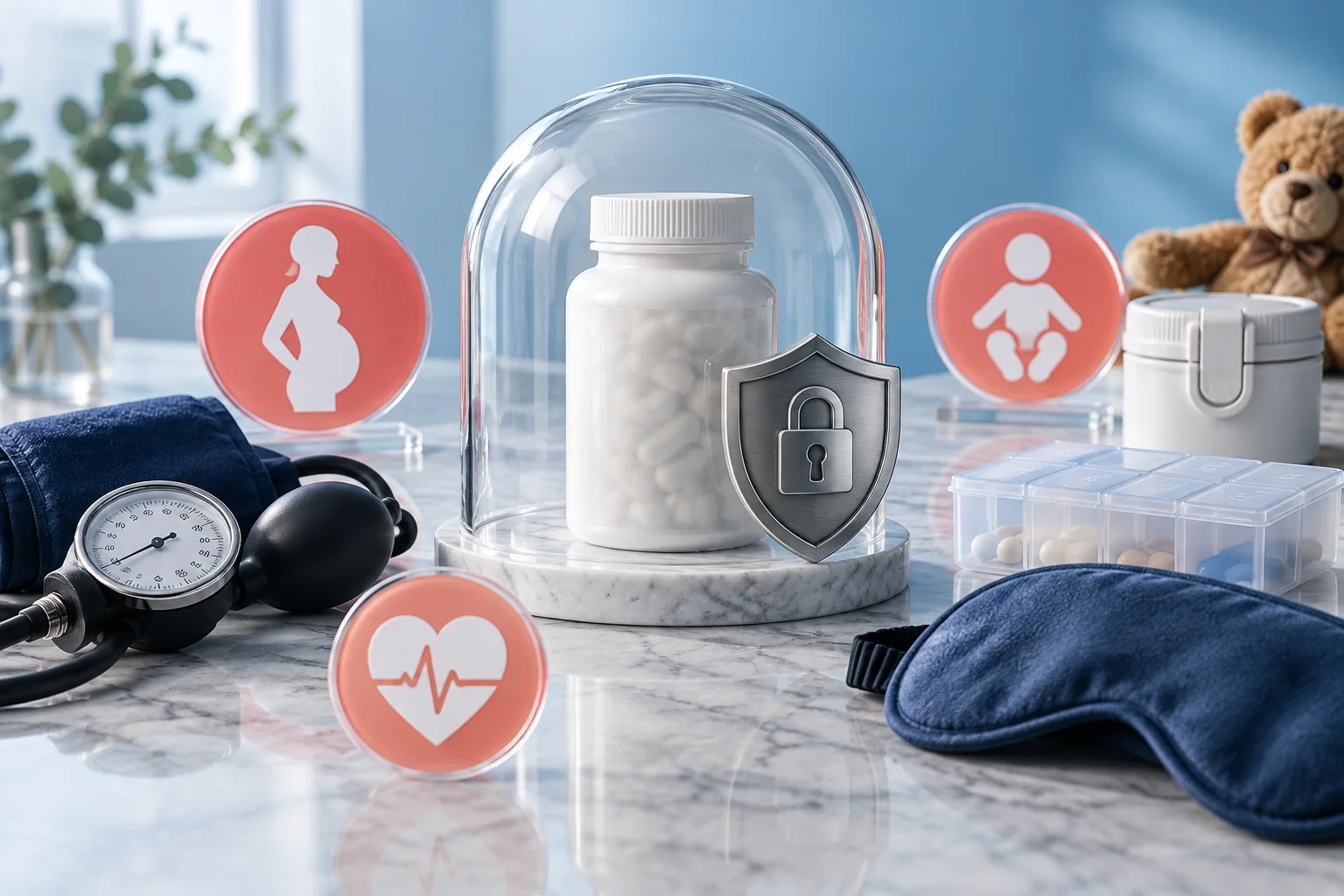
People excluded by the official cautions
These are not optional suggestions to overcome by starting with one capsule. When a label says not to use a product in a particular context, the appropriate default is avoidance.
Who needs professional review before considering it
A clinician or pharmacist should review the actual label when medicines or significant conditions are involved. Caffeine and synephrine raise cardiovascular and stimulation questions; concentrated green tea raises liver-related questions; piperine can alter drug handling; coleus may be relevant to blood pressure or bleeding; and several ingredients may affect gastrointestinal tolerance.
Particular caution is reasonable with hypertension, arrhythmia, panic or severe anxiety, chronic insomnia, glaucoma, liver or kidney disease, seizure history, diabetes treatment, anticoagulant or antiplatelet therapy, and planned surgery. This list is not exhaustive and does not diagnose an interaction. Bring the current bottle and a complete list of prescriptions, over-the-counter medicines, drinks, and supplements.
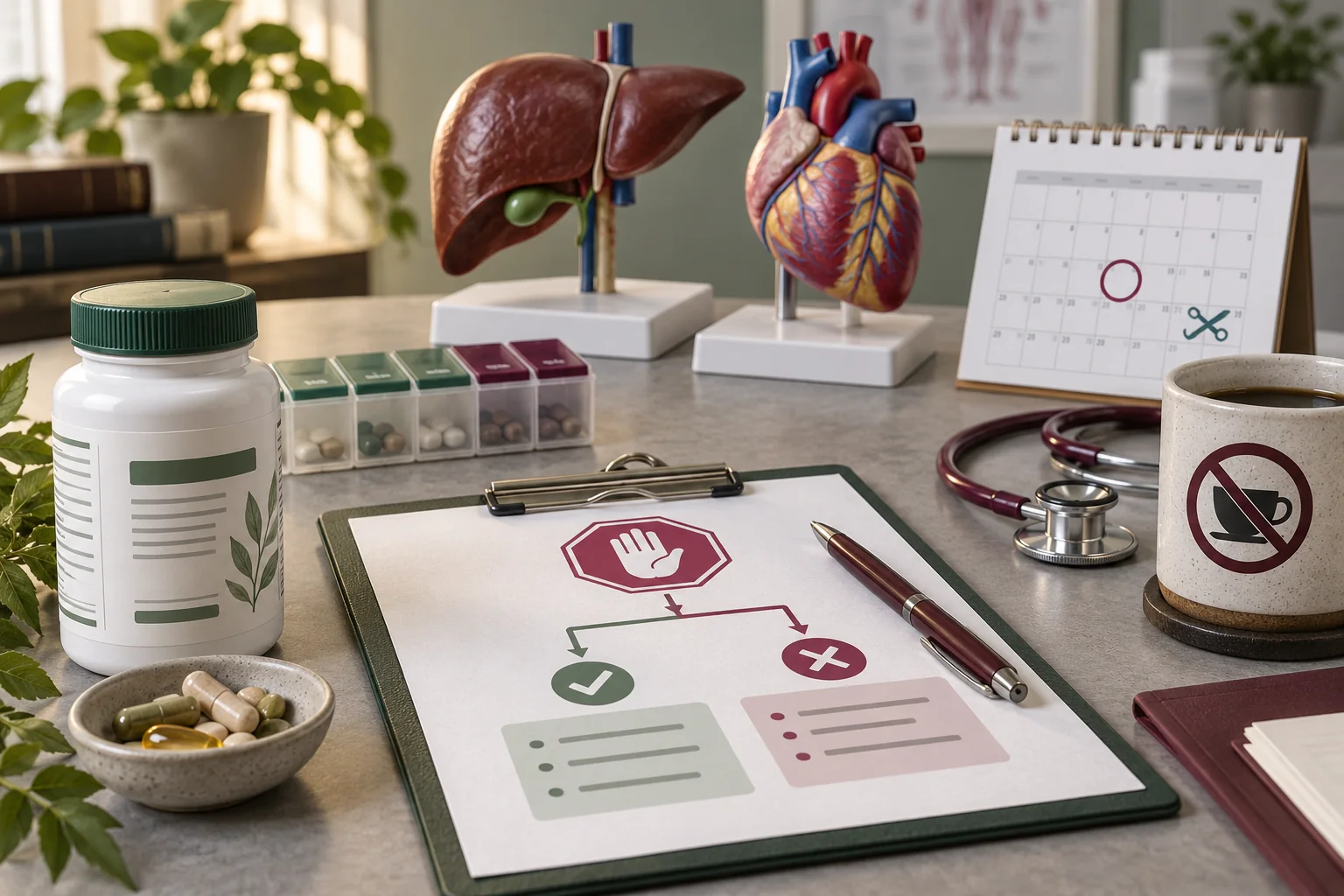
When the goal itself makes the product a poor fit
Someone seeking a caffeine-free or non-stimulant aid should choose another category. A late-day trainee who prioritizes sleep may find the stimulant timing incompatible even without a formal contraindication. A person already using coffee, energy drinks, pre-workout, or stimulant medication may be unable to follow the official no-combination caution.
Fat Burn Active is also a poor fit when the expectation is rapid, effortless, or localized fat loss. It cannot target belly fat, replace nutrition and activity, or guarantee that ingredient mechanisms translate into meaningful results. If the buyer cannot define a measurable job for the supplement, the risk and cost are difficult to justify.
Eating-disorder history and aggressive dieting
People with a current or previous eating disorder, recurrent binge–restrict cycles, compulsive exercise, or intense fear around food should not self-direct stimulant weight-loss supplementation. Appetite suppression, frequent weighing, and “fat burner” messaging can reinforce harmful behaviors even when no acute medical reaction occurs.
Seek care from an appropriately qualified professional rather than using the product to compensate for meals or accelerate an extreme deficit. Dizziness, faintness, menstrual disruption, persistent cold, severe fatigue, or loss of control around food are reasons to reassess the overall plan, not signals to add stimulation.
The stop-or-check decision gate
- Stop: an official contraindication applies, the person is under 18, pregnant, or breastfeeding.
- Stop: other caffeine or similar stimulants cannot be removed from the same day.
- Check professionally: medicines, surgery, or a relevant health condition is present.
- Check the bottle: formula, directions, warnings, batch, or seller information differs from the saved page.
- Skip: total exposure remains unclear or the expected benefit does not justify uncertainty.
“Natural,” a customer review, or prior tolerance of coffee does not override these gates. Coffee experience cannot predict response to a combination containing caffeine, guarana, green tea, synephrine, phenylcapsaicin, and piperine.
Use a one-page evidence and exposure worksheet
Begin with a dated copy of the official table and create one row for every ingredient. Record the extract or chemical form, amount in the recommended two-capsule day, standardization, calculated active yield, proposed purpose, closest relevant human evidence, material adverse effects, interaction questions, and what remains unknown. This prevents a familiar ingredient name from carrying a stronger conclusion than its actual form and dose support.
Use separate columns for four evidence objects. A manufacturer claim describes what the seller says. Ingredient evidence concerns one material tested on its own. Combination evidence concerns a defined group of ingredients. Finished-product evidence concerns the exact formula sold under the current name. Do not promote an ingredient study into a product result, and do not add small effects together unless the complete combination was tested.
Next, create an exposure ledger. Calculate standardized yields only when both mass and percentage are available. Keep known caffeine, unresolved botanical caffeine, and non-caffeine stimulant-like compounds on separate lines. Add coffee, tea, energy drinks, pre-workout, medicines, and other supplements. Record timing because a total taken early and the same total taken near bedtime do not create the same sleep question.
Finally, define the decision before starting: the outcome to track, the observation period, which other variables will remain stable, and the stopping rules. Scale weight alone is noisy, so combine an appropriate multi-week trend with waist, sleep, appetite, training, blood pressure when relevant, and adverse effects. Stop rather than escalating when the intended benefit is absent, the product disrupts sleep or normal eating, or concerning symptoms appear. This worksheet cannot prove personal safety, but it makes uncertainty visible and gives a clinician or pharmacist a usable record when professional review is needed.
What to verify on the delivered bottle
The official page provides a formula table for a recommended daily allowance of two capsules, directions, cautions, manufacturer, origin, net weight, and storage instructions. That is materially better than a front-label ingredient list, but online information can change. Save the dated page, then compare it with every panel on the delivered container before opening it.
Check the serving size, ingredient forms and amounts, other ingredients, warnings, batch number, best-before date, manufacturer, and country of origin. Ask for clarification when the bottle and website disagree. A current certificate of analysis or credible independent certification can add information about identity or contaminants within its testing scope; neither automatically proves weight loss.
Keep product facts, manufacturer claims, ingredient studies, and finished-product evidence in separate columns. The official page describes several benefits, but we did not identify an independent controlled trial of the exact marketed Fat Burn Active formula. A testimonial cannot close that evidence gap.
A practical decision before purchase
The correct conversion is sometimes a non-purchase. Use the offer only after every official caution and personal safety question is cleared; otherwise compare a different category or skip supplementation.
No supplement is necessary for losing body fat, and Fat Burn Active cannot replace a sustainable calorie deficit, adequate nutrition, activity, sleep, or appropriate medical care. If the disclosed formula fits your goal and risk profile, you have reviewed medicines and conditions, and you accept the remaining evidence limits, confirm the current price and terms on the official website. We may receive a commission at no additional cost to you. The commercial relationship does not alter the analysis, and results are not guaranteed.
Frequently asked questions
Can people with high blood pressure take Fat Burn Active?
The official page says not to use it with cardiovascular disease. Hypertension and treatment require individualized professional review.
Can pregnant people take it?
No. The official page says it is not suitable during pregnancy or lactation.
Can teenagers use it?
No. The official page says it is not suitable for children; this site does not recommend weight-loss stimulants for minors.
Sources
- Fat Burn Active official formula and cautions
- FDA: Dietary Supplements
- FDA: How Much Caffeine Is Too Much?
- NCCIH: Green Tea
- NCCIH: Bitter Orange
Sources reviewed September 13, 2026. This article is general educational information, not medical advice, diagnosis, or treatment.