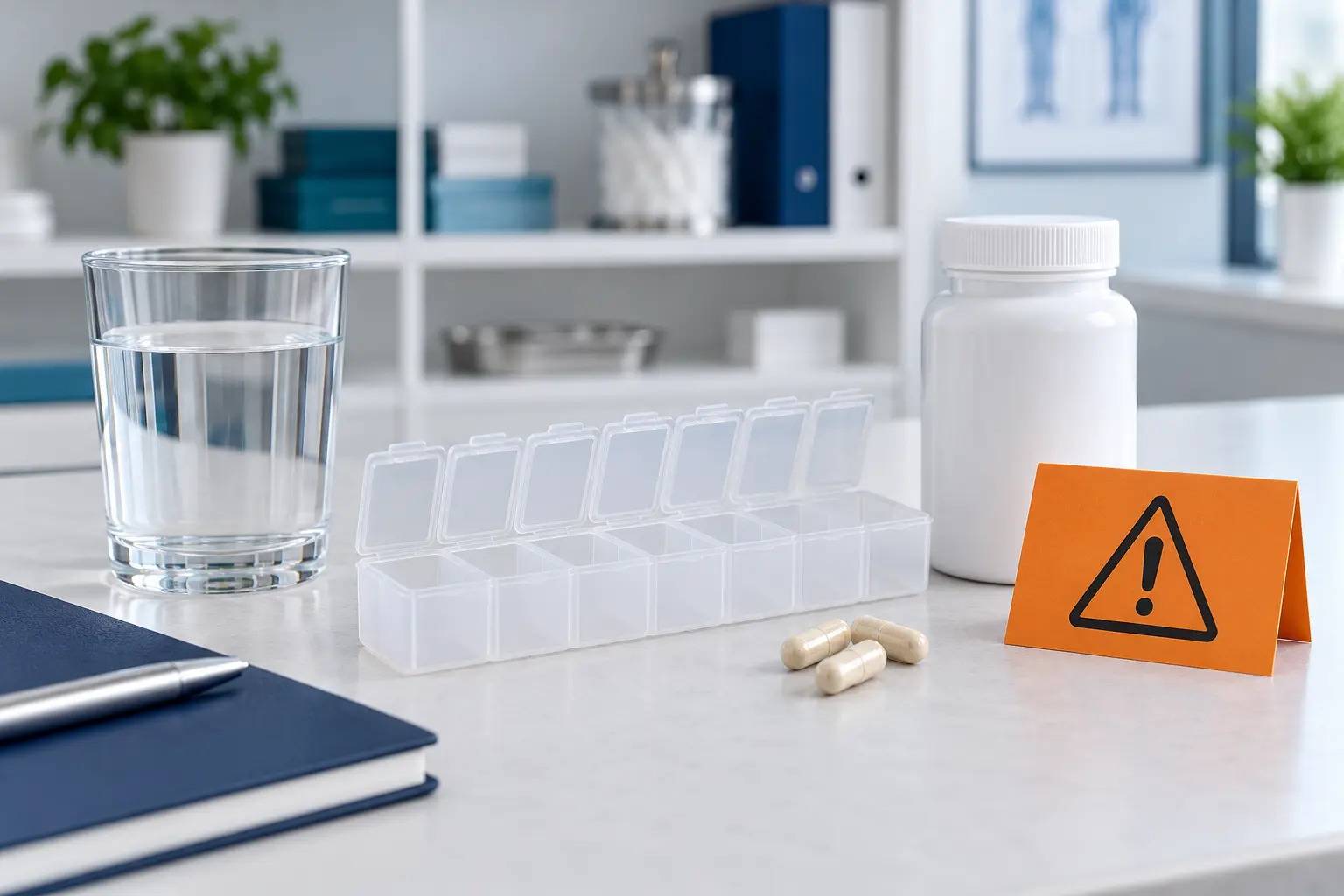
Why the category deserves a strict safety gate
Weight-loss products may combine stimulants, concentrated botanical extracts, laxative or diuretic ingredients, fiber, minerals, and compounds marketed for appetite or absorption. Each can create different risks, and combinations may not have been studied as a finished formula. A history of tolerating coffee does not prove tolerance of a multi-ingredient stimulant blend.
Risk can also come from what is missing: hidden doses, undeclared pharmaceutical ingredients, inaccurate labels, unclear sellers, or instructions that encourage multiple daily servings. Rapid-loss and disease-treatment claims are not reassuring; they are reasons for greater skepticism and regulatory checking.
Total stimulant exposure matters more than the front label
Add caffeine from the supplement, coffee, tea, energy drinks, pre-workout formulas, other supplements, and medicines. Botanical sources such as guarana or yerba mate still contribute. Stimulants can affect sleep, anxiety, tremor, heart rate, blood pressure, headache, gastrointestinal symptoms, and dependence or withdrawal patterns.
People with cardiovascular disease, arrhythmia, uncontrolled blood pressure, anxiety or panic disorders, bipolar disorder, glaucoma, seizures, pregnancy, breastfeeding, or stimulant-sensitive symptoms need individualized decisions. Taking a stimulant late enough to impair sleep can undermine appetite control, training recovery, and daily movement.
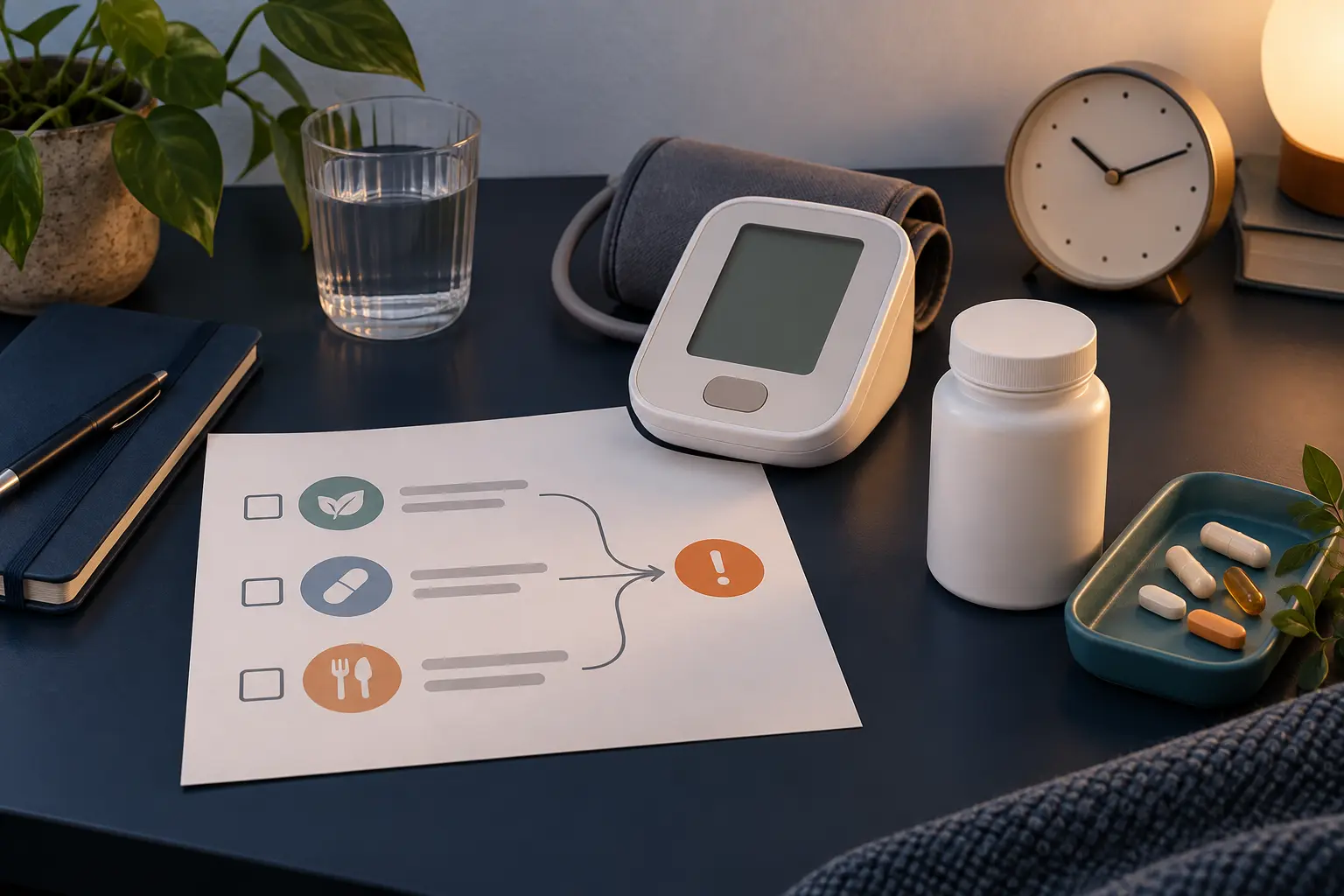
Use a pharmacist-led interaction check
Bring the complete current label—not only the product name—to a pharmacist or clinician. Interactions depend on ingredients and doses and may involve prescription medicines, over-the-counter products, alcohol, caffeine, and other supplements. Relevant categories can include blood-pressure and heart medicines, diabetes medicines, antidepressants and other psychiatric drugs, anticoagulants, thyroid treatment, seizure medicines, and products used around surgery.
Do not stop a prescribed medicine to accommodate a supplement. Do not assume spacing doses prevents every interaction. Pregnancy, breastfeeding, trying to conceive, and fertility treatment are reasons to avoid casual experimentation and involve the clinician responsible for care.
Product quality and adulteration are separate from ingredient theory
A formula can look plausible on paper and still be poorly manufactured, contaminated, counterfeit, or adulterated. Buy only through a traceable seller; check seals, lot information, expiration, storage, responsible company, and whether the label matches the current official version. Avoid marketplace listings with altered packaging or unusually low prices.
Independent quality certification can support identity and contaminant testing, but it does not prove effectiveness or suitability. Check FDA recalls, warning letters, and health-fraud notices. In the United States, dietary supplements are not FDA-approved for safety and effectiveness before marketing.
Know the stop signs before the first dose
Report suspected serious supplement reactions through the appropriate FDA safety-reporting route and keep the container and label available for clinicians.
Reject dehydration and compensation strategies
A lower scale number after sweating, diarrhea, laxative use, diuresis, or restricted fluid is not equivalent to body-fat loss. These methods can disturb electrolytes, blood pressure, kidney function, exercise tolerance, and medication safety. A supplement should never be used to compensate for a meal or justify fasting and punishment exercise.
People with eating-disorder history, binge–restrict cycles, compulsive exercise, or intense fear around food need support that protects nutrition and mental health. Appetite suppression is not automatically beneficial when it reinforces harmful restriction.
If the product clears the gate, design a cautious trial
- Verify the full label, seller, lot, directions, and expiration.
- Review medicines, conditions, pregnancy status, allergies, and stimulant intake.
- Choose one product only; do not start a stack.
- Do not exceed directions or combine with extra stimulants.
- Record baseline sleep, blood pressure when appropriate, symptoms, appetite, and weight trend.
- Define stop signs and a review date before beginning.
- Keep food, activity, and sleep reasonably stable so the result is interpretable.
Even a well-designed personal trial cannot prove the product works for others, and absence of immediate symptoms does not establish long-term safety.
When skipping is the evidence-based result
Skip when the label hides doses, total stimulant exposure cannot be calculated, the merchant is unclear, claims imply disease treatment or guaranteed rapid loss, the product conflicts with medical advice, or the cost displaces essentials. Also skip when the intended outcome can be addressed more directly with meal structure, sleep treatment, activity, or clinical care.
Safety is not a hurdle added after the sales decision. It is part of product quality. A product that cannot be assessed should not receive the benefit of the doubt merely because it is popular or available without a prescription.
Create a decision record before checkout
Save the dated label, seller, serving directions, daily cost, and the claims that influenced you. Beside each claim, write the closest supporting evidence and whether it concerns a mechanism, one ingredient, the complete formula, or the sold product. Record missing amounts and unresolved interactions as unknowns. This prevents a polished product page from quietly replacing facts you could not verify.
Define the outcome you will measure, the baseline period, how long the trial can reasonably run, and the conditions that mean stop. Include sleep, appetite, mood, digestion, blood pressure or heart rate when relevant, weekly average weight, waist trend, and adherence to the underlying plan. Do not introduce several supplements or major diet changes at the same time.
At the review date, compare the full pattern—not only the most favorable number. A small scale change accompanied by insomnia, anxiety, inadequate eating, or higher cost may not be a useful result. No clear benefit is valid information. Do not double the dose, extend use indefinitely, or reinterpret side effects as proof the product is powerful.
Where Fat Burn Active fits
Fat Burn Active is an optional commercial product, not a required part of weight management. Ingredient-level research does not establish that the finished formula produces the same outcome, especially when exact amounts, forms, standardization, total daily exposure, or product-level trials cannot be confirmed. A noticeable stimulant sensation is not evidence of body-fat loss.
Start with the label, dose, stimulant overlap, and personal health context. When the information needed to assess a risk is missing, treat that as a reason to pause, not as proof of safety. Our product review discusses one formula's disclosed facts and gaps; it cannot replace individualized medical advice.
Reassess the decision whenever the formula, medicine list, health status, seller, or directions change.
Frequently asked questions
Are natural supplements safer?
No. Natural origin does not establish dose, purity, interaction profile, or suitability.
Can I combine two weight-loss supplements?
Stacking increases exposure and interaction uncertainty. Do not combine products without qualified review.
Does no immediate side effect mean safe?
No. Some harms develop later, and individual risk depends on health context and product quality.
Sources
- FDA: Questions and Answers on Dietary Supplements
- NIH ODS: Dietary Supplements for Weight Loss
- FDA: Health Fraud Product Database
- FDA: Reporting Serious Problems
Evidence reviewed September 9, 2026. Educational information only; not medical advice.