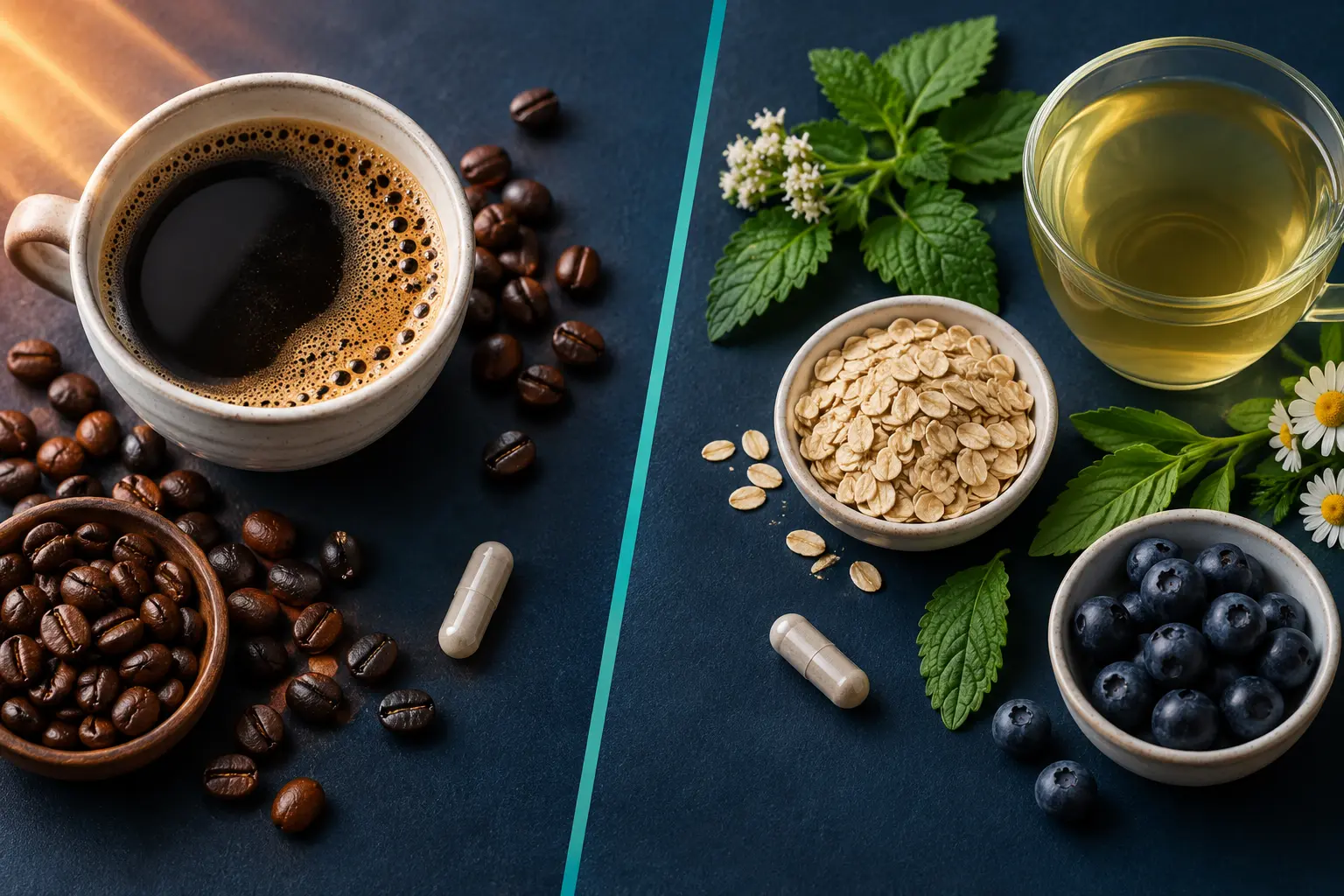
The useful difference is exposure—not marketing tone
Stimulant formulas commonly include caffeine or caffeine-contributing botanicals and may create noticeable sensations. Non-stimulant formulas avoid those ingredients but are not automatically inert. Fiber can affect gastrointestinal tolerance and medicine timing; concentrated extracts may affect the liver or interact with medicines; “hormone” or “metabolism” blends may still make unsupported claims.
Do not classify a product from the front label alone. “Energy,” “thermogenic,” coffee, tea, guarana, yerba mate, and kola nut can signal stimulant exposure. A product described as caffeine-free may contain other stimulating compounds. The complete Supplement Facts panel and directions determine the comparison.
Compare the categories across the outcomes that matter

What stimulant formulas can and cannot do
Caffeine can increase alertness and may acutely affect energy expenditure or appetite, but the size and persistence of weight effects are limited and variable. Tolerance can reduce perceived effects. Poor sleep, anxiety, appetite rebound, or reduced recovery may offset the intended benefit.
Total exposure must include coffee, tea, energy drinks, pre-workout products, medicines, and botanical caffeine sources. A blend that hides individual amounts prevents a precise ledger. More stimulation is not stronger evidence, and a racing heart or sweating is not a marker of fat oxidation sufficient to change long-term body fat.
What non-stimulant formulas can and cannot do
Non-stimulant is useful when caffeine avoidance is a genuine constraint, but it does not identify a single mechanism. A viscous fiber product, micronutrient, botanical extract, or combination blend requires different evidence. Correcting a diagnosed deficiency is not the same claim as causing weight loss in a replete population.
Some products may support fullness or replace a higher-calorie choice, yet the practical effect depends on dose, timing, water intake, tolerance, and whether energy intake changes. Concentrated extracts can still have adverse effects or interactions. “Gentle” and “natural” are marketing descriptions, not safety conclusions.
Choose by constraint and evidence
The no-product choice belongs in every comparison. If a planned snack, sleep intervention, walking routine, or medical review addresses the bottleneck better, category selection is unnecessary.
Use the same evidence ladder for both
- Verify the exact current formula and daily directions.
- Identify the proposed mechanism for each active ingredient.
- Match human evidence by form, dose, population, duration, and meaningful outcome.
- Look for research on the exact combination or finished product.
- Separate acute appetite, alertness, or thermogenesis from sustained body-fat change.
- Review adverse events, interactions, funding, and attrition.
- Classify unknown dose relevance as cannot determine.
Do not reward a non-stimulant blend for being complex or a stimulant blend for being noticeable. Evidence distance remains the same.
How to compare a personal trial without fooling yourself
Start only one product after the safety gate. Define the outcome, baseline, trial duration, and stopping rule before the first dose. Record sleep, appetite, mood, gastrointestinal symptoms, heart rate or blood pressure when appropriate, weekly average weight, waist trend, and adherence to the underlying plan.
Keep caffeine and major diet or activity changes stable enough to interpret the result. If a stimulant makes you feel energetic but sleep and next-day movement worsen, the full pattern matters. If a non-stimulant causes fullness but also persistent gastrointestinal distress, tolerability is part of effectiveness.
A decision table for the final comparison
Choose a limited trial only when the formula is transparent, dose-relevant evidence supports the defined goal, the product fits the safety context, and the cost is acceptable. Pause when total stimulant exposure, extract details, interaction risk, or merchant identity is unknown. Skip when the product promises effortless or guaranteed loss, implies disease treatment, or encourages stacking and dose escalation.
Recheck the label before repurchase because formulas and directions can change. A previous conclusion should not be copied to a new version of the product.
Create a decision record before checkout
Save the dated label, seller, serving directions, daily cost, and the claims that influenced you. Beside each claim, write the closest supporting evidence and whether it concerns a mechanism, one ingredient, the complete formula, or the sold product. Record missing amounts and unresolved interactions as unknowns. This prevents a polished product page from quietly replacing facts you could not verify.
Define the outcome you will measure, the baseline period, how long the trial can reasonably run, and the conditions that mean stop. Include sleep, appetite, mood, digestion, blood pressure or heart rate when relevant, weekly average weight, waist trend, and adherence to the underlying plan. Do not introduce several supplements or major diet changes at the same time.
At the review date, compare the full pattern—not only the most favorable number. A small scale change accompanied by insomnia, anxiety, inadequate eating, or higher cost may not be a useful result. No clear benefit is valid information. Do not double the dose, extend use indefinitely, or reinterpret side effects as proof the product is powerful.
Where Fat Burn Active fits
Fat Burn Active is an optional commercial product, not a required part of weight management. Ingredient-level research does not establish that the finished formula produces the same outcome, especially when exact amounts, forms, standardization, total daily exposure, or product-level trials cannot be confirmed. A noticeable stimulant sensation is not evidence of body-fat loss.
Fat Burn Active is relevant to Stimulant vs Non-Stimulant Weight-Loss Supplements because its official listing identifies standardized plant extracts, caffeine sources, vitamins, and zinc in one formula. First read our independent review. If the formula, stimulant profile, evidence limits, and warnings fit your situation, check the current formula and purchase options on the official Fat Burn Active website. We may receive a commission at no additional cost.
The comparison should also include opportunity cost. Money spent on a weakly supported blend cannot fund satisfying food, appropriate footwear, professional advice, or another tool that may address the actual bottleneck more directly. That trade-off belongs in the decision.
Frequently asked questions
Are non-stimulants automatically safer?
No. Safety depends on ingredients, doses, quality, interactions, and the person using them.
Is feeling energy proof the stimulant works?
No. Alertness is an acute effect and cannot demonstrate sustained fat loss.
Can I use both types together?
Combining products increases uncertainty and may duplicate ingredients. Do not stack without qualified review.
Sources
- NIH ODS: Dietary Supplements for Weight Loss
- FDA: Spilling the Beans—Caffeine
- FDA: Questions and Answers on Dietary Supplements
- NCCIH: Using Dietary Supplements Wisely
Evidence reviewed September 9, 2026. Educational information only; not medical advice.