What is a stimulant fat burner?
A stimulant fat burner is a weight-loss supplement containing one or more ingredients that stimulate the central nervous system or produce stimulant-like effects. Caffeine is the most common. It may appear directly as caffeine anhydrous or indirectly through guarana, green tea, green coffee, kola nut, or yerba maté. Some formulas also include bitter orange standardized for synephrine or other botanicals promoted for energy and thermogenesis.
The category overlaps with pre-workouts, energy supplements, appetite suppressants, and thermogenic fat burners. That overlap creates the main consumer problem: a person can stack several products without realizing they share similar active effects.
How stimulant fat burners are supposed to work
Do stimulant fat burners actually cause weight loss?
Caffeine has better evidence for short-term physiological effects than most ingredients sold as fat burners. NIH summaries note that caffeine can increase energy expenditure and fat oxidation and may produce a small effect on weight or weight gain. Regular use, however, leads to tolerance that can reduce its influence over time.
A 2019 systematic review and meta-analysis reported reductions in weight, BMI, and fat mass associated with caffeine intake, but studies differed in population, intervention, duration, and design. That does not prove that every multi-ingredient stimulant blend works, nor does it establish a large effect for a specific bottle.
The honest answer is conditional: a stimulant may provide a small, temporary advantage for some users, yet the product still has to beat four filters—dose-matched evidence, finished-formula relevance, personal tolerability, and an effect large enough to justify cost and risk.
Hidden and overlapping stimulant sources
The ingredient panel may not present caffeine as one obvious number. Guarana, green tea, green coffee, kola nut, and yerba maté can contribute caffeine. Bitter orange contributes synephrine, which is evaluated separately but can add stimulant-like concerns, especially in combinations.
Outside the bottle, coffee, tea, energy drinks, pre-workout powders, caffeine tablets, chocolate, some bars, and certain over-the-counter medicines may add to exposure. The FDA emphasizes counting caffeine from all dietary sources because the body handles naturally occurring and added caffeine in the same way.
Is 400 mg of caffeine a safe limit?
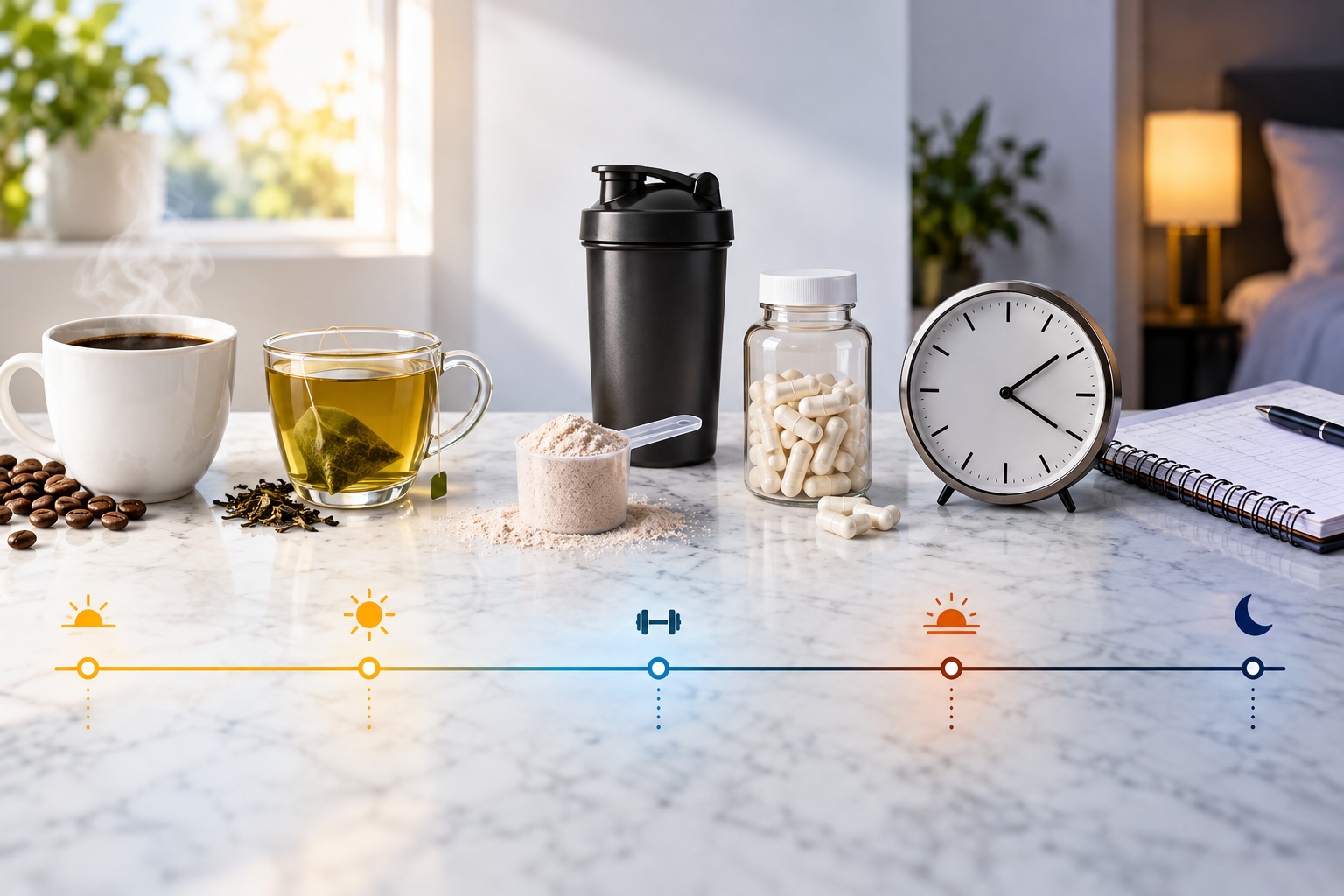
The FDA cites 400 mg per day as an amount not generally associated with negative effects for most adults. It is not a target, a personalized limit, or proof that a multi-stimulant formula is safe. Sensitivity varies with medications, health conditions, pregnancy, body size, habitual intake, genetics, and the speed at which caffeine is eliminated.
Some people experience insomnia, anxiety, jitters, headache, nausea, increased heart rate, palpitations, or blood-pressure changes at lower intakes. The correct evaluation therefore combines the label total with the individual response and medical context.
Tolerance, escalation, and the sleep loop
A new stimulant may feel powerful during the first few uses. As tolerance develops, the noticeable effect can fade. Increasing the dose to recreate that feeling raises exposure without demonstrating that weight loss will improve.
The more damaging pattern is a self-reinforcing loop: late or excessive stimulation disrupts sleep; poor sleep increases fatigue; the user adds more caffeine; appetite and training consistency become harder to manage; then the weak result is blamed on an insufficient dose. The solution is not automatically a stronger formula.
Who should avoid or professionally review stimulant formulas?
People who are pregnant or breastfeeding, under 18, preparing for surgery, taking prescription or over-the-counter medicines, or living with heart disease, arrhythmias, high blood pressure, anxiety, sleep disorders, diabetes, glaucoma, liver disease, kidney disease, or strong stimulant sensitivity should obtain individualized professional advice before use. This is not an exhaustive interaction list.
Stop using the product and seek medical care or advice if a bad reaction occurs. Chest pain, trouble breathing, fainting, facial or throat swelling, seizure, severe confusion, stroke-like symptoms, or a dangerous-feeling irregular heartbeat require emergency help. See our complete fat burner side-effects guide.
How to evaluate a stimulant fat burner
- Require full disclosure. Verify amounts per serving, maximum daily use, total caffeine, botanical standardization, and warnings.
- Complete the ledger. Add known caffeine and preserve a separate unresolved-exposure flag.
- Match studies precisely. Compare ingredient form, dose, population, duration, outcome, and whether the complete formula was tested.
- Check real-world fit. Consider timing, sleep, anxiety, blood pressure, medicines, training schedule, and previous reactions.
- Reject sensation-based claims. “Feel it working” cannot substitute for controlled body-composition evidence.
- Compare net value. Judge any benefit after subtracting cost, uncertainty, side effects, sleep disruption, and tolerance.
A real formula example: Fat Burn Active
Fat Burn Active’s official page names caffeine anhydrous, guarana standardized for caffeine, green tea extract, and bitter orange standardized for synephrine. However, the public information we reviewed did not provide exact ingredient amounts or total caffeine. That means the stimulant ledger cannot be completed and dose relevance cannot be established.
This does not prove the product is ineffective or unsafe. It creates a transparency ceiling: we can identify relevant stimulant sources, but we cannot responsibly calculate exposure, predict tolerability, or assign a confident product rating. Read the complete Fat Burn Active review for the full evidence audit.
Frequently asked questions
Are stimulant fat burners stronger than non-stimulant products?
They often feel stronger because stimulation is noticeable. That does not establish greater or more durable fat loss.
Can I take a stimulant fat burner with coffee?
Only after every caffeine and stimulant-like source is known and personal risk is assessed. Combining products can increase adverse effects.
Does guarana count as caffeine?
Guarana naturally contains caffeine. The extract amount and caffeine standardization are needed to estimate its contribution.
Should I cycle stimulant fat burners?
Cycling is sometimes marketed as a solution to tolerance, but it does not establish effectiveness or suitability. Do not use cycling to justify repeated exposure after adverse effects.
Are stimulant-free fat burners automatically safer?
No. Removing stimulants may reduce some risks, but other ingredients can still cause side effects, interactions, or product-quality concerns.
Product decision
Where Fat Burn Active fits
Fat Burn Active lists several stimulant or stimulant-adjacent ingredients, but the previously reviewed public information did not establish the exact daily caffeine total. Verify the current label before deciding.
Confirm the current Supplement Facts, directions, price, shipping and return terms on the official merchant page. If key information is missing or the formula does not fit, do not buy.
Review Fat Burn Active, then official details. Affiliate.
Affiliate disclosure: Active Body Hub may earn a commission at no additional cost to you. The relationship does not change our evidence or safety conclusions.
Sources
- NIH Office of Dietary Supplements: Dietary Supplements for Weight Loss
- FDA: How Much Caffeine Is Too Much?
- Systematic review and meta-analysis: caffeine intake and weight loss
- Research review and trial context for multi-ingredient thermogenic supplements
Evidence reviewed September 6, 2026. Educational information only; not medical advice.