Separate sweat, calorie use, and fat loss
Heat, humidity, clothing, airflow, acclimatization, genetics, body size, medicines, hydration, and workout intensity all affect sweating. More sweat does not rank workouts by effectiveness.
Why the scale drops after a sweaty session
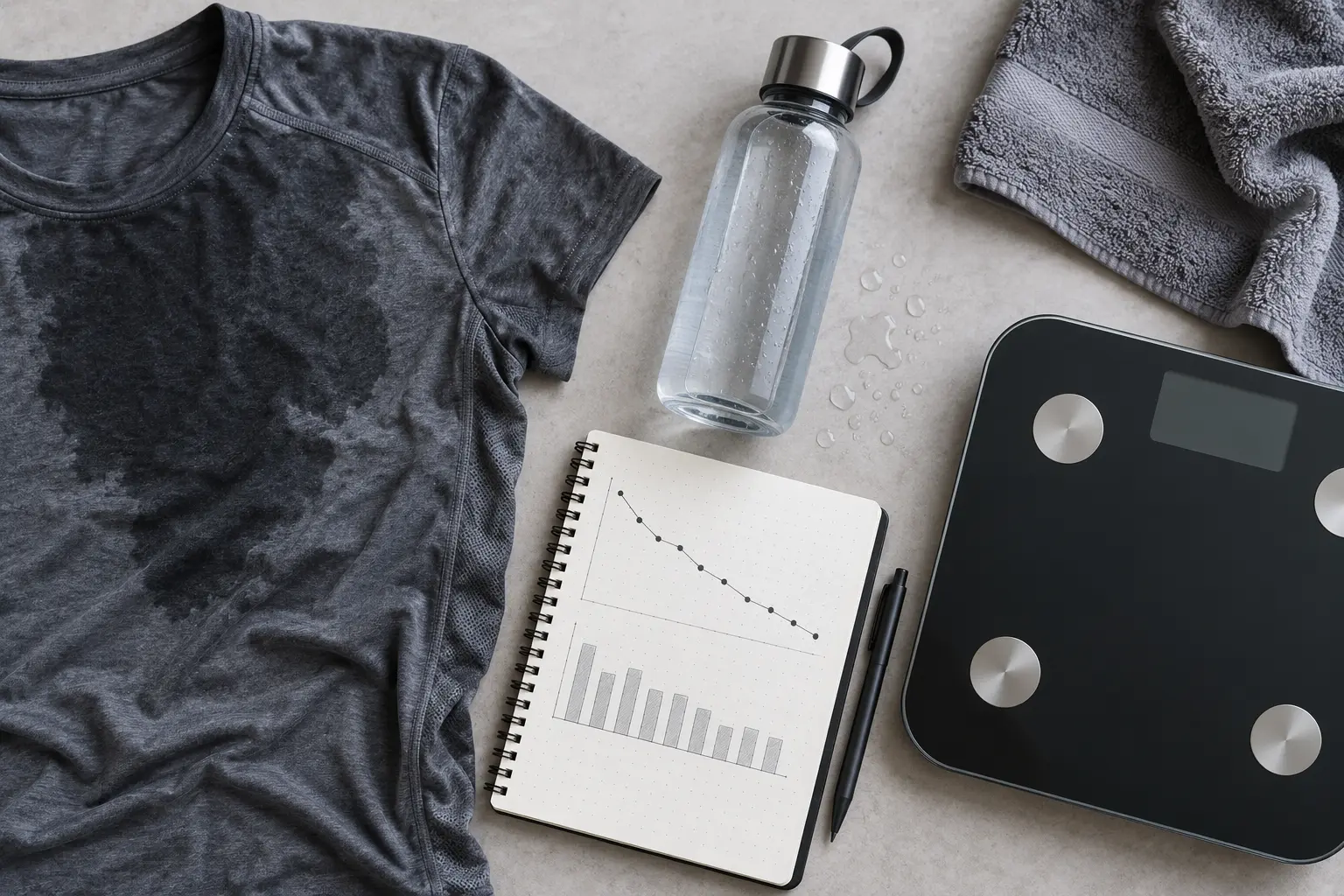
A kilogram of immediate weight loss cannot represent a kilogram of fat burned during an ordinary workout. The rapid change is mostly water leaving through sweat and breathing, plus smaller shifts in bladder and digestive contents. Drinking and eating restore much of it.
Pre- and post-session weight can help estimate fluid loss for endurance or hot-weather planning. It should not be recorded as a body-fat result. Deliberately restricting fluids, using sweat suits, or extending sauna time can impair performance and increase heat-illness risk.
What makes sweating useful information
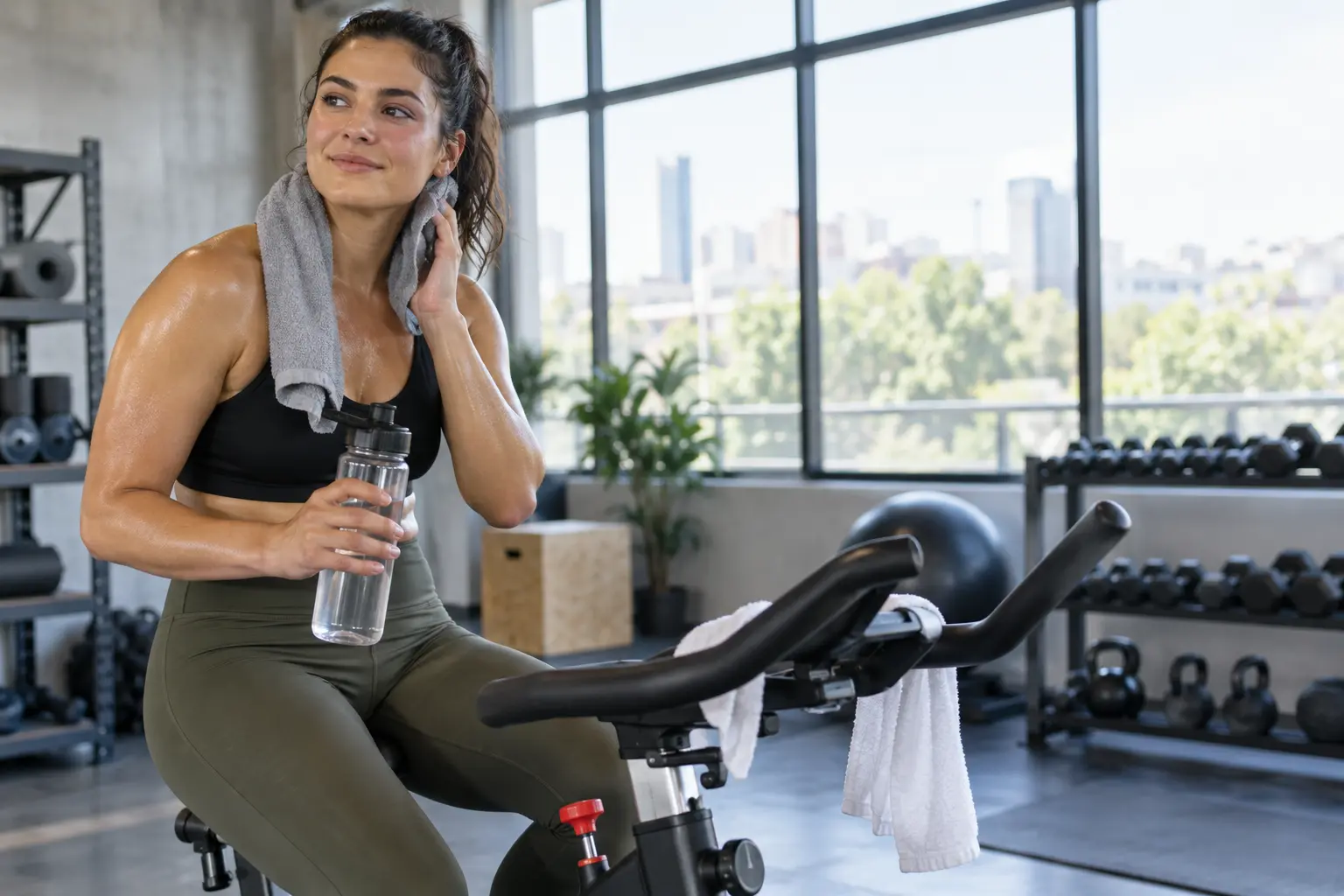
Sweat can tell you about cooling and hydration demands. For a long session, weigh under similar conditions, account for fluid consumed and urine produced, and treat the result as an approximate sweat-rate estimate. Needs vary, so avoid copying another person’s electrolyte plan.
For fat-loss tracking, weigh after waking under comparable conditions and use a seven-day average. Add waist measurements every two to four weeks, performance, steps, and adherence. This separates a useful training session from the misleading demand that every workout look dramatic.
Example: two workouts, different shirts
Jordan walks briskly outdoors on a cool morning and finishes almost dry. The same route on a humid afternoon leaves a soaked shirt and a lower immediate scale reading. The second session did not automatically use more stored fat; evaporation was less efficient and cooling required more sweat. The training value belongs to the work and repeatability, not the wetness of the clothing.
A practical evidence-checking system
- Name the observation. Separate warmth, sweat, a scale change, waist change, energy expenditure, fat oxidation, and fat mass. They are not interchangeable outcomes.
- Check the time scale. Minutes of heat production cannot be projected into months of weight loss without evidence.
- Find the comparison. Ask what happened versus placebo, neutral temperature, the same workout, or the person’s own standardized baseline.
- Use absolute effects. A large percentage increase from a small baseline may still have little practical importance.
- Look for compensation. Hunger, sleep disruption, fatigue, lower spontaneous movement, and adaptation can offset a short metabolic change.
- Track the outcome that matters. Use multiweek average weight, a consistent waist measure, fitness, symptoms, and execution—not intensity of sensation.
Run one change at a time for long enough to interpret it. Keep ordinary meals, fluids, sleep, and movement reasonably stable. Record unusual heat, alcohol, illness, travel, menstrual changes, hard training, and constipation because they can alter measurements without matching fat change.
A useful experiment has a stop rule. End deliberate heat or cold exposure for dizziness, confusion, weakness, chest pain, fainting, severe headache, unusual shortness of breath, or persistent palpitations. People with cardiovascular, neurological, endocrine, kidney, pregnancy-related, or temperature-regulation concerns need individualized clinical advice.
Build a measurement dashboard
Choose one primary outcome and a few supporting measures. If the goal is fat loss, use a four-week trend in standardized morning weight plus a waist measurement taken every two to four weeks. Supporting measures can include meal-plan completion, steps, resistance sessions, sleep opportunity, hunger, and adverse symptoms. Sweat, warmth, tingling, and a single post-workout weight are context, not verdicts.
Use the same scale on a hard surface, similar clothing, and the same waist landmark. Do not tighten the tape to manufacture progress. Photos are optional and should use similar distance, posture, and lighting. If tracking worsens anxiety or restrictive behavior, reduce its frequency and seek appropriate support.
Read research without turning a mechanism into a promise
Start with the population: healthy young adults, people with obesity, trained athletes, animals, or cultured cells. Identify the intervention, dose, temperature, duration, and comparator. Then find the endpoint. Gene expression, tissue temperature, oxygen use, appetite rating, and kilograms of fat are different answers.
Check uncertainty, withdrawals, adverse events, funding, and whether the difference is clinically useful. A statistically significant laboratory signal may be too small or brief to matter. A tightly controlled chamber, cooling suit, scan, or biopsy does not prove that an uncontrolled home routine or retail supplement produces the same effect.
Choose the safer lever first
For most people, dependable levers remain a manageable calorie deficit, adequate nutrition, progressive activity, resistance training, sleep, and an environment that reduces repeated high-effort decisions. These actions also support fitness, strength, blood pressure, glucose control, mobility, and confidence.
Do not add extreme heat, cold, dehydration, or stimulant stacking to make a routine feel powerful. More discomfort does not strengthen evidence. If weight and waist remain unchanged across several documented weeks, audit intake, portions, weekends, movement, sleep, medicines, and health context. Change one plausible variable and set the next review date.
Use a simple decision rule at the review. Continue when the relevant trend improves and the routine remains tolerable. Adjust when execution is consistent but the intended outcome is absent. Stop when harms, cost, or complexity exceed the benefit. Seek professional assessment when symptoms, medicines, rapid unexplained change, disordered eating, or an underlying condition could alter interpretation. This prevents a dramatic sensation from overriding a quieter but more informative record.
Finally, distinguish “possible” from “useful.” Human physiology can produce heat through several pathways, and adipose tissue is biologically active. That does not mean every pathway is large enough, durable enough, or safe enough to become a practical weight-loss intervention. The correct conclusion can be scientifically interesting but clinically modest.
Where Fat Burn Active fits
Fat Burn Active is optional. Its stimulant and botanical ingredients may create alertness, warmth, sweating, or a temporary change in appetite, but those sensations do not demonstrate that the finished product reduces fat mass. Evidence for a mechanism or isolated ingredient cannot establish the effect of the complete formula at the sold dose.
Do not use a thermogenic supplement to chase sweat, heat, dehydration, or a lower post-workout scale reading. Count caffeine from every source and review sleep, anxiety, blood pressure, heart rhythm, medicines, and other supplements. Never combine it with deliberate overheating or use more than the current label directs.
A supplement is not required to benefit from Does Sweating Burn Fat?. If your foundations are already in place, use the independent Fat Burn Active review to judge whether the formula has a useful optional role. If it fits your expectations and stimulant tolerance, check current product details and ordering terms. We may receive a commission.
Frequently asked questions
Does sweating more burn more calories?
Not reliably. Sweat rate and energy expenditure are different measurements.
Is sauna weight loss fat?
The rapid change is primarily fluid and returns with rehydration.
Can exercise still burn fat if I barely sweat?
Yes. Sweat volume does not determine whether exercise uses energy.
Should I replace every gram lost?
Needs depend on the session and person; individualized guidance is useful for long or hot exercise.
Sources
- CDC: Heat and Athletes
- ACSM: Hydration and Electrolytes
- NATA Fluid Replacement Position Statement
- NIDDK Body Weight Planner
- NIH ODS: Weight-Loss Supplements
Sources reviewed September 17, 2026. This article is general educational information, not medical advice, diagnosis, or treatment.