Educational guidance only; concerning symptoms or disordered eating deserve individualized care.
The post-trip number is not a verdict
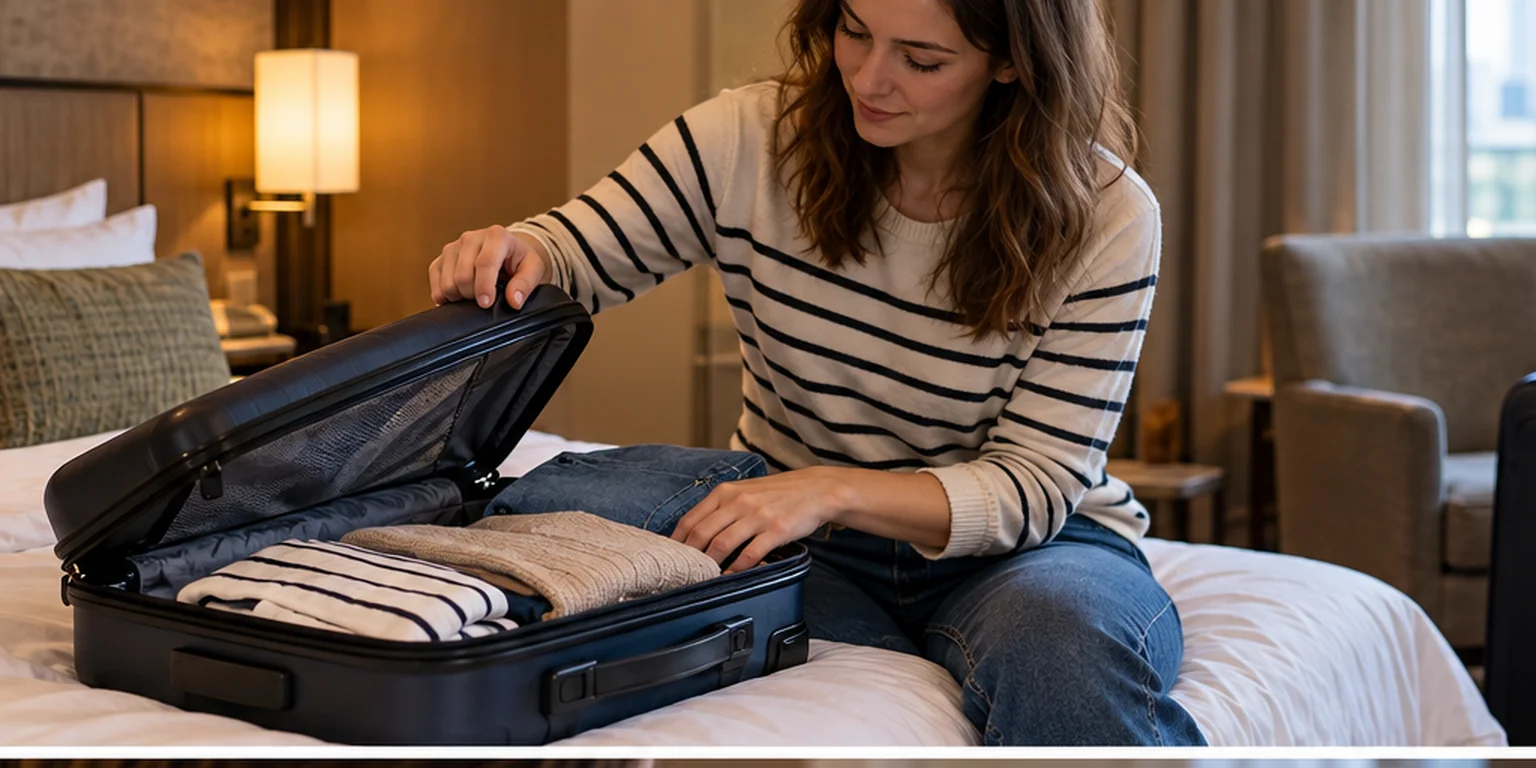
A trip compresses unusual meals, sitting, walking, sleep and schedules into a few days. A scale reading right after returning captures all of that context, not only body fat. Cleveland Clinic notes that higher-sodium or higher-carbohydrate meals can temporarily raise body weight through water changes. That does not prove every post-trip increase is fluid; more energy intake can also matter. A single reading cannot separate the possibilities.
This page is about interpreting progress data. The business-travel guide covers habits during a longer work trip; the travel-day activity guide covers movement in transit.
Food and fluid can shift together
Restaurant portions, salty dishes and unfamiliar meal times may change water balance and the amount of food still being digested. Glycogen stores also change alongside water when carbohydrate intake changes. Research on glycogen explains why short-term body weight can rise as stores replenish. None of this gives a reliable formula for how much of one person's trip weight is water. Avoid calculating a precise fat gain or loss from two scale readings.
If you have marked swelling or other concerning symptoms, do not assume travel meals are the whole explanation. Seek medical evaluation when appropriate. A progress log is not a diagnostic tool.
Time zones and scales add noise
A hotel scale may differ from the one at home, and a weigh-in after a late flight may occur at a different biological time and after different fluid or food intake. Treat that measurement as a travel-context note rather than extending a precise graph with incomparable data. CDC travel guidance explains that jet lag can disrupt sleep and cause stomach problems; those changes can affect routine without telling you the direction of fat change.
Use the same home scale and usual conditions when you resume. Do not force a morning weigh-in after a sleepless overnight journey just to protect a streak.
Step totals and workouts also change meaning
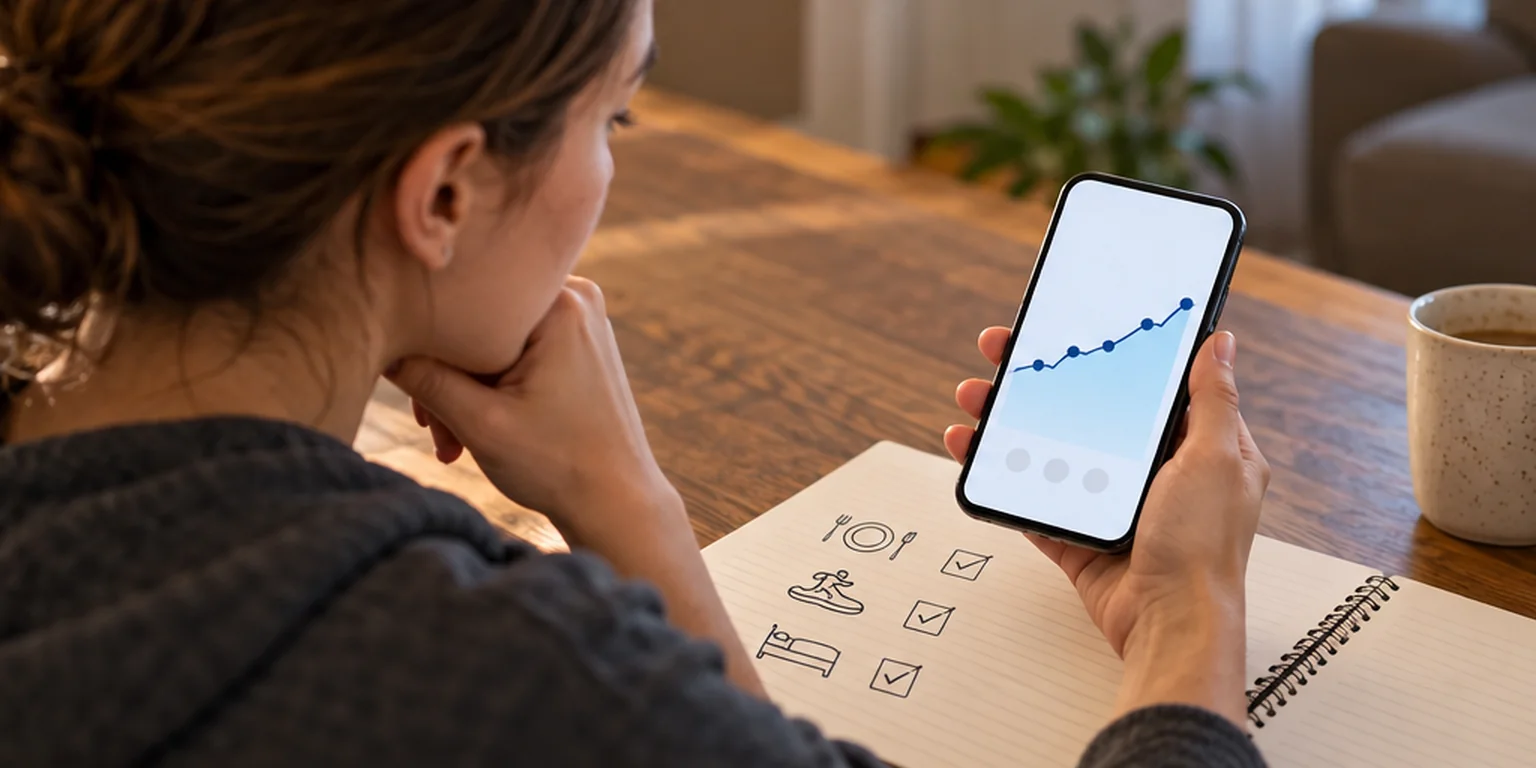
Airport walks may increase steps, while long flights and drives reduce ordinary movement. A step counter may miss swimming, cycling or strength work done away from home. A high travel step total does not automatically offset larger meals; a low one does not erase fitness. The movement audit helps capture activity that a single number misses.
If travel involves prolonged sitting, follow travel safety guidance and move when possible. Do not turn mobility advice into a calorie debt you must repay with a late-night workout.
Read the record in three windows
Look at the routine before travel, the travel period and several ordinary days afterward. Label the trip clearly. Compare home readings with home readings rather than mixing devices. Resume meals and activity that normally serve you; after a few days, review a longer trend. If weight remains higher over subsequent weeks, examine the overall pattern rather than assuming it is all water or all fat.
The trend-chart guide explains smoothing noisy readings. A separate travel annotation may be more informative than trying to fit a straight line through the trip.
Do not compensate for the data
Dehydrating yourself to lower the scale, skipping meals or forcing exhausting exercise can create risk while doing nothing to clarify the trend. Return to normal hydration, nourishing meals, sleep opportunity and suitable movement. If the trip repeatedly disrupts your plan, build a realistic travel routine next time. If you are ill or have symptoms, prioritize care.
One weekend does not need an elaborate investigation. Use the record only when it helps you make a sensible decision about the longer pattern.
No product can explain a post-trip jump
NIH ODS describes uncertain benefits and possible harms for many weight-loss supplements. A fat burner cannot identify the cause of a post-travel scale change or replace a return to ordinary routines. Fat Burn Active's ingredient evidence cannot prove an effect on travel-related water changes. If independently considering the product, see the full review and current label.
The practical next step is to label the trip, take the next comparable readings at home and postpone judgment until the longer trend is clear. A calm interpretation is more useful than a dramatic correction.
A return-home example
Imagine a three-day trip with a long flight, later dinners and more restaurant meals than usual. Your first home weigh-in is higher and your tracker shows fewer steps during the flight day. Neither observation alone quantifies fat gain. Mark the trip on the graph, resume your regular breakfast and movement routine, and compare a few subsequent home measurements under similar conditions. Some of the change may settle as fluid and digestion normalize; if a higher trend remains over several weeks, consider whether trip habits persisted or your ordinary intake changed. Do not assume a specific amount of the change is temporary without observing it. One higher number deserves context rather than punishment.
If you travel frequently, separate trip weeks from ordinary weeks in your notes. The comparison may reveal a useful pattern, such as relying on late restaurant dinners because meetings end after your usual meal time. A practical response could be a planned meal earlier, not a stricter calorie goal for every home day. Another traveler might walk more on trips than at home; the activity data should reflect that rather than fitting a predetermined story. Sleep and time-zone changes can alter how you feel, and illness after travel deserves appropriate care.
For those who dislike weighing away from home, there is no requirement to do it. A home baseline before departure and a later home trend can answer the question more consistently. Be careful with visual “before and after vacation” comparisons too: light, posture and bloating can create dramatic-looking differences unrelated to lasting tissue change. Make the next decision only when comparable information is available. Ordinary routines provide the most useful comparison.
Choose a useful next step
Check the current package, ingredients, serving directions, your other caffeine sources, and relevant health conditions. For an evidence-based starting point, read the full Fat Burn Active review. If this product still fits your circumstances, you can inspect its current offer. We may earn a commission if you buy through that link. Choosing no supplement is equally reasonable when the evidence or safety questions do not support a purchase.
Frequently asked questions
Does a higher weigh-in after travel always mean fat gain?
No. Food, fluid and timing can change the reading; longer trends provide context.
Should I skip weighing on a trip?
You can, especially when scales or schedules differ. Resume comparable readings at home.
How quickly should the number normalize?
There is no universal timeline; review subsequent ordinary days and seek care for concerning symptoms.
Practical decision checkpoint
Treat a travel week as a change in measurement conditions. Record the time of weigh-in, sleep, meal schedule, restaurant frequency, long periods of sitting, and whether the same scale was available. Compare several ordinary days after returning with the pre-trip trend rather than declaring success or failure from the first number at home. If tracking was impractical, keep one or two portable routines, such as a planned breakfast and a short walk. The aim is to re-establish a useful baseline, not to compensate for every travel meal.
Sources
- Cleveland Clinic: Weight Fluctuations
- Glycogen and Associated Water Review
- CDC Travelers Health: Jet Lag
- CDC Yellow Book: Travel and Immobility
- Study: Short-Term Weight Changes
- NIH ODS: Weight-Loss Supplements
Reviewed against the sources listed above. Educational information only; not medical advice.