
Change training priorities during the deficit
What to adjust when performance falls
One weak session can reflect sleep, stress, hydration, menstrual timing, equipment, or normal variation. A repeated decline across similar sessions is more informative. First verify the deficit and recovery, then consider reducing accessory sets, failure training, conditioning, or weekly frequency while retaining the main strength stimulus.
Do not assume that muscle is being lost because the scale falls quickly for several days; water and glycogen also change. Use strength trends, waist, photos taken consistently, and body-composition measurements with their known limitations.
Example: maintain quality, reduce noise
Marcus adds five cardio sessions to four lifting days while reducing meals. His main lifts fall and he sits more after work. He removes two conditioning sessions, reduces accessory volume, restores a planned recovery meal, and keeps three focused strength days. The program becomes less dramatic but more repeatable.
He also standardizes his main exercises for four weeks instead of changing them daily. That makes repetitions, load, technique, and effort comparable. When a lift holds steady while body weight trends downward, he treats that as useful evidence of retention rather than demanding a personal record from every session.
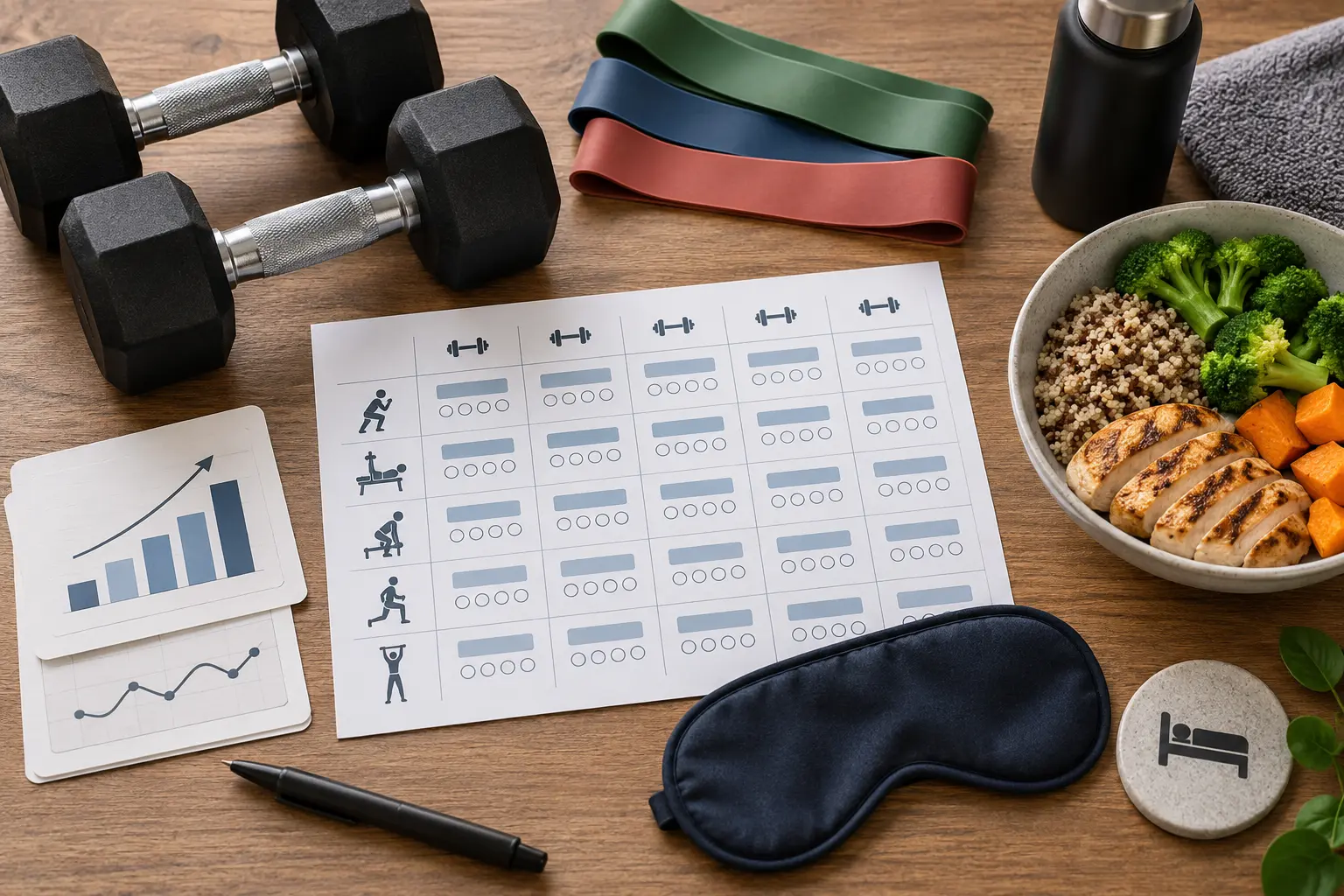
Use a four-week training and recovery audit
Use a four-week training-and-recovery audit instead of judging progress from one hard session or one scale reading.
- Define the training job. Record the movement, sets, repetitions, load, proximity to failure, duration, and weekly frequency. “I exercised” is too vague to manage.
- Track performance. Use repeatable indicators such as load, repetitions, pace, technique, range of motion, or perceived effort. Exercise calories are a separate estimate.
- Track recovery. Note sleep opportunity, soreness, joint pain, motivation, resting symptoms, appetite, and readiness for the next session.
- Track the diet context. Record protein distribution, meal timing, carbohydrate availability, hydration, and whether the intended deficit has become more aggressive than planned.
- Review trends. Compare weekly average weight, waist, training performance, ordinary movement, and adherence across several weeks before changing calories or adding workouts.
A successful fat-loss plan should not demand constantly rising training volume while food, sleep, and performance deteriorate. The goal is enough stimulus to preserve function and muscle, enough recovery to repeat it, and a deficit modest enough to support the process.
Know when the template stops
New chest pain, fainting, severe shortness of breath, a sustained irregular heartbeat, dark urine after extreme exercise, marked weakness, acute injury, or severe mental-health symptoms requires prompt assessment. Persistent fatigue or performance loss can also reflect illness, anemia, thyroid problems, infection, medicine effects, inadequate energy availability, depression, or sleep disorders. A training log cannot diagnose those conditions.
Build a repeatable training week
Build a minimum effective week before adding more. Choose two or more suitable strength sessions covering major movement patterns, retain ordinary walking or aerobic work that you can recover from, and place demanding sessions where sleep and meals are most reliable. Beginners may improve with modest volume; experienced trainees may need to reduce volume while maintaining useful intensity during a deficit.
Use progression conditionally. Add load or repetitions when technique, symptoms, and recovery support it. Hold steady when performance is stable but life stress is high. Reduce sets, intensity, or frequency temporarily when several recovery indicators deteriorate. A deload is a planned adjustment, not proof that the program failed.
Separate a rest day from inactivity
A rest day means no demanding training for the tissues or systems being recovered. It may include normal living, an easy walk, mobility work, or rehabilitation when appropriate. It does not require cutting food aggressively, earning meals, or completing a disguised high-intensity workout.
At the weekly review, change one major lever. If weight and waist trends are appropriate but strength is slipping, examine recovery and deficit size before adding cardio. If performance is stable but weight trends do not match the goal, audit intake and daily movement. If pain or systemic symptoms persist, pause the experiment and seek qualified care.
Treat exercise calories as estimates
Exercise energy expenditure depends on body mass, fitness, movement economy, activity type, speed, grade, resistance, duration, environmental conditions, and the energy cost after the session. Watches and machines estimate from incomplete inputs; laboratory indirect calorimetry is more controlled but still answers a defined measurement question rather than predicting every free-living day.
Distinguish active calories from total calories. Some displays include the energy that would have been expended at rest during the same time; others report only an activity increment. Maintenance calculators may already include normal weekly training. Adding every displayed exercise calorie to the food budget can therefore create double counting.
Use estimates without pretending they are measurements
Track duration, distance, pace, incline, load, repetitions, and heart-rate response when those metrics are useful and safe. Treat the calorie field as a rough device-specific trend, not a precise food allowance. Do not apply one universal correction percentage: error can change with activity, intensity, device, algorithm, and person.
For weight management, calibrate the complete eating-and-activity plan against several weeks of weight and waist trends, performance, hunger, and recovery. Exceptional endurance events may require deliberate fueling, but that decision should reflect the session and individual needs rather than automatic watch-to-food-app arithmetic.
Where Fat Burn Active fits
Fat Burn Active is optional. It cannot replace resistance training, dietary protein, sleep, rest days, rehabilitation, or medical evaluation. It also cannot prove that a displayed calorie number is accurate or turn excessive training into a larger sustainable deficit. Warmth, sweating, stimulation, or suppressed appetite is not evidence of preserved muscle.
Before considering it, review the current label, total caffeine from every source, medicines, blood pressure, heart rhythm, anxiety, sleep, hydration, and the reason for use. A stimulant can mask fatigue, worsen sleep, or encourage an extra session when recovery is already inadequate. Never use extra capsules to compensate for food or a missed workout.
Treat Fat Burn Active as an optional addition, not a substitute for Strength Training During a Calorie Deficit. Review its listed ingredients and limitations in our product analysis. If the evidence, warnings, and cost fit your decision, verify the current formula and purchase options. We may earn a commission.
Frequently asked questions
Can I gain strength in a deficit?
Some people can, especially newer trainees, but the size and duration of the deficit, training history, sleep, and program matter.
Should I reduce the weight I lift?
Not automatically. Adjust only when technique, symptoms, or repeated performance trends justify it.
Does lifting slow scale loss?
Training-related water and glycogen can obscure short-term scale change without stopping fat loss.
Sources
- Physical Activity Guidelines for Americans
- Resistance exercise during dietary weight loss meta-analysis
- Resistance training and body composition meta-analysis
- Energy deficiency and resistance-training outcomes
- NIDDK: Safe Weight-Loss Programs
Sources reviewed September 17, 2026. This article is general educational information, not medical advice, diagnosis, or treatment.