
The clock is only one variable
Run a matched-session experiment
Repeat a familiar session at the same intensity on several evenings. Record finish time, caffeine, shower, food, estimated sleep onset, awakenings, morning alertness, and performance. Then move only the finish time or intensity. Do not compare a gentle walk with a new interval workout and attribute everything to the clock.
If late training is the only workable option, shorten the hardest portion, avoid unneeded stimulants, use a calm cooldown, and prepare post-workout food in advance. A session that consistently costs sleep may be moved, modified, or replaced.
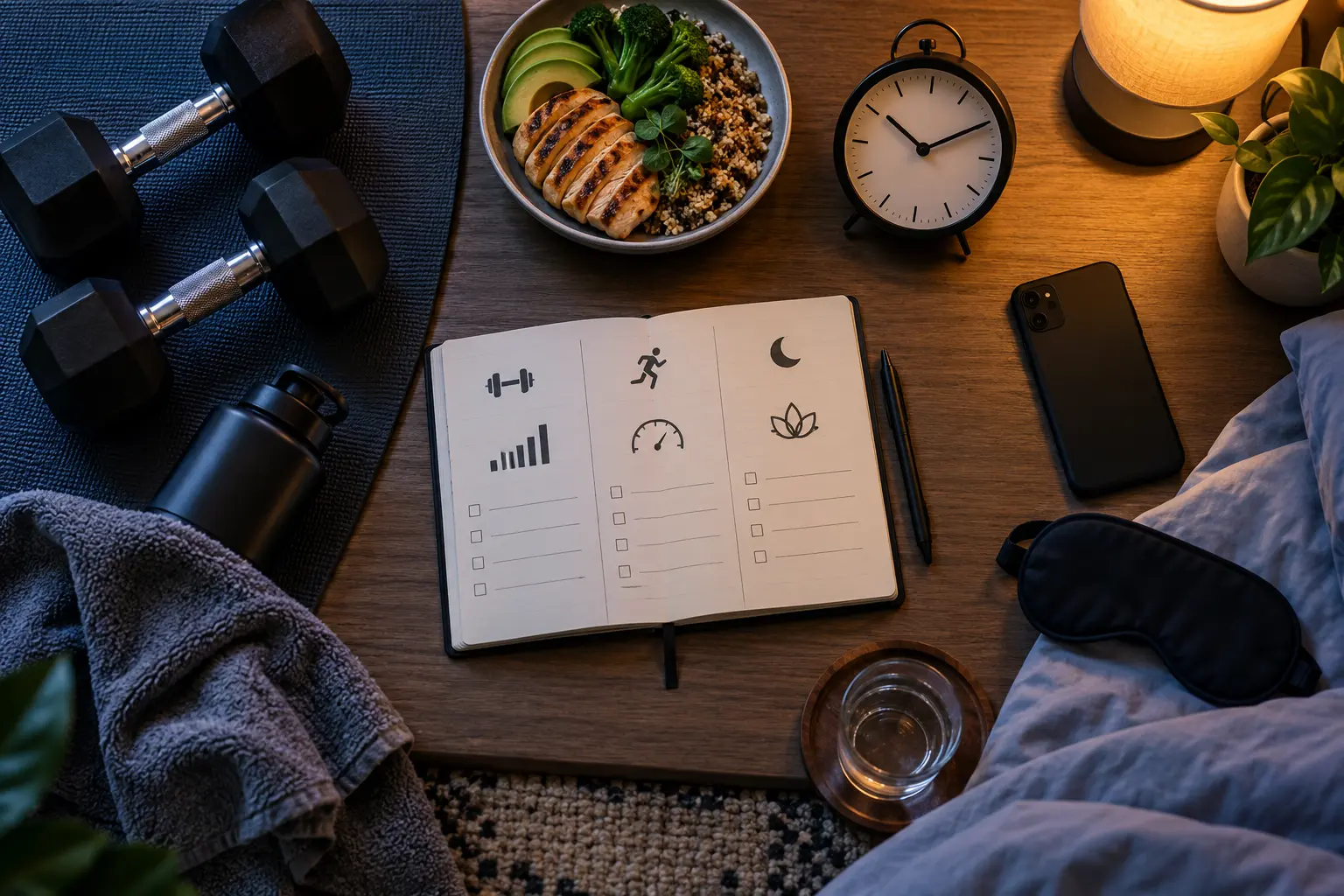
Run a two-week sleep and recovery audit
Use a two-week sleep-and-recovery audit before changing the diet or training plan.
- Set the question. Choose one outcome: evening eating, bedtime consistency, next-day movement, training recovery, or morning resting heart rate.
- Record the context. Note sleep opportunity, wake time, caffeine and alcohol timing, exercise end time and intensity, evening meals, stress, illness, medicines, and unusual heat or travel.
- Standardize one measurement. Use the same device and conditions. Compare weekly patterns rather than reacting to one night or one heart-rate value.
- Change one lever. Move caffeine earlier, finish a hard session sooner, prepare a planned snack, shorten screen use, or reduce training load. Keep other major variables reasonably steady.
- Review function. Compare hunger, cravings, alertness, mood, performance, ordinary movement, symptoms, and weight trend. A useful change should improve the complete day, not only one dashboard score.
Two weeks cannot diagnose a sleep disorder or prove causality, but it can expose repeatable friction. Persistent insomnia, loud snoring with breathing pauses, severe daytime sleepiness, or unexplained recovery decline deserves clinical assessment rather than another lifestyle experiment.
Build a minimum evening system
Build the evening backward from a realistic wake time. Protect enough time in bed, then create a short sequence that works on busy days: finish the final substantial meal, prepare tomorrow's first meal or snack, complete necessary tasks, dim stimulation, and use a repeatable pre-sleep cue. The routine should reduce decisions, not become another perfection test.
If the routine repeatedly fails, simplify it to two anchors. For example, close the kitchen after a planned snack and place the phone outside the bed. Add refinements only after the minimum version survives weekends, stress, and travel.
Interpret a pattern without overreacting
Separate the behavior from the outcome. Completing a bedtime routine does not guarantee immediate sleep, and achieving a step target does not prove recovery. Record what you controlled—meal timing, exercise dose, caffeine cutoff, wind-down, and measurement conditions—then observe sleep, appetite, movement, performance, and symptoms without grading yourself.
Use a personal baseline rather than a universal perfect value. Compare workdays with similar workdays and training days with similar training days. Weekends, travel, menstrual-cycle changes, hot weather, alcohol, illness, and a new medicine can shift several signals together. Mark those exposures instead of deleting an inconvenient result.
A three-level response plan
Do not make five corrections at once. Changing bedtime, calories, training, caffeine, and supplements together may improve the next day but hides the cause. Choose the safest high-probability lever, define when it will be reviewed, and keep a fallback for difficult evenings.
Measure the cost of the solution
A routine is not sustainable if it requires declining every social event, training while ill, suppressing normal hunger, or checking a device throughout the night. The solution should preserve flexibility and improve daytime function. If tracking itself increases anxiety or compulsive behavior, reduce the measurement frequency or stop it. For shift workers, caregivers, parents of young children, and people with chronic illness, the best plan may focus on protecting opportunities rather than producing a textbook schedule.
At the end of two weeks, keep only the steps that clearly reduced friction. A shorter routine performed consistently is more useful than a complicated protocol abandoned after three days.
Know when the signal needs medical context
Fatigue is nonspecific. It can reflect insufficient sleep, an aggressive calorie deficit, excessive training, anemia, thyroid disease, infection, depression, sleep apnea, pregnancy, medicine effects, dehydration, or another condition. A lower step count or higher morning pulse cannot identify the cause.
Seek urgent care for chest pain, fainting, severe or unusual breathlessness, a sustained irregular heartbeat, new neurological symptoms, or a very abnormal pulse with symptoms. Stop exercise during acute illness or concerning symptoms. People with known cardiovascular disease, rhythm disorders, pregnancy, significant sleep disorders, or clinician-directed restrictions need individualized advice.
Where Fat Burn Active fits
Fat Burn Active is optional and cannot replace sleep opportunity, treatment of a sleep disorder, adequate nutrition, recovery, or a suitable training schedule. Stimulation can temporarily mask fatigue while delaying sleep, raising perceived alertness, or changing resting heart rate. That can make the original problem harder to interpret.
Before considering it, review the current label, total caffeine from coffee, tea, energy drinks and medicines, timing, blood pressure, heart rhythm, anxiety, hydration, and sleep. Do not use extra capsules to compensate for a poor night, cravings, low steps, or a missed workout.
Treat Fat Burn Active as an optional addition, not a substitute for Training Late at Night: Does It Affect Sleep?. Review its listed ingredients and limitations in our product analysis. If the evidence, warnings, and cost fit your decision, verify the current formula and purchase options. We may earn a commission.
Frequently asked questions
How late is too late?
There is no universal cutoff; test intensity, finish time, and sleep response.
Is walking before bed harmful?
Easy walking is usually different from vigorous training and may be well tolerated.
Should I use pre-workout at night?
Review total stimulant dose and timing because it can independently disrupt sleep.
Sources
- Evening exercise and sleep systematic review
- Exercise before bedtime meta-analysis
- CDC: About Sleep
- NHLBI: Healthy Sleep Habits
- Physical Activity Guidelines for Americans
Sources reviewed September 17, 2026. This article is general educational information, not medical advice, diagnosis, or treatment.