
The challenge is biological and environmental
Night work conflicts with the body's circadian timing and often shortens or fragments sleep. Food choices are also shaped by limited overnight options, stress, boredom, vending machines, and shared treats. These pressures can increase intake while fatigue reduces movement. They are not a character flaw.
Generic advice to “never eat at night” is unusable for someone awake and working for eight to twelve hours. The better question is how to distribute adequate nutrition across the waking period while limiting large, heavy meals near intended sleep. Evidence on an ideal clock time for every shift worker remains incomplete, so consistency and tolerance matter.
Protect the daytime sleep opportunity first
Set a repeatable sleep window and work backward. Use a dark, cool, quiet room, silence notifications, and tell household members when sleep is protected. Sunglasses on the commute home may help some workers reduce morning light, while bright light early in the shift can support alertness; individual needs and safety matter.
Caffeine can remain active long after the buzz fades. Set a cutoff at least six hours before planned sleep, and consider longer for high doses or strong sensitivity. Do not use caffeine late in the shift to compensate for chronic sleep loss. If sleepiness makes driving unsafe, do not drive; use a safer transport or fatigue plan.
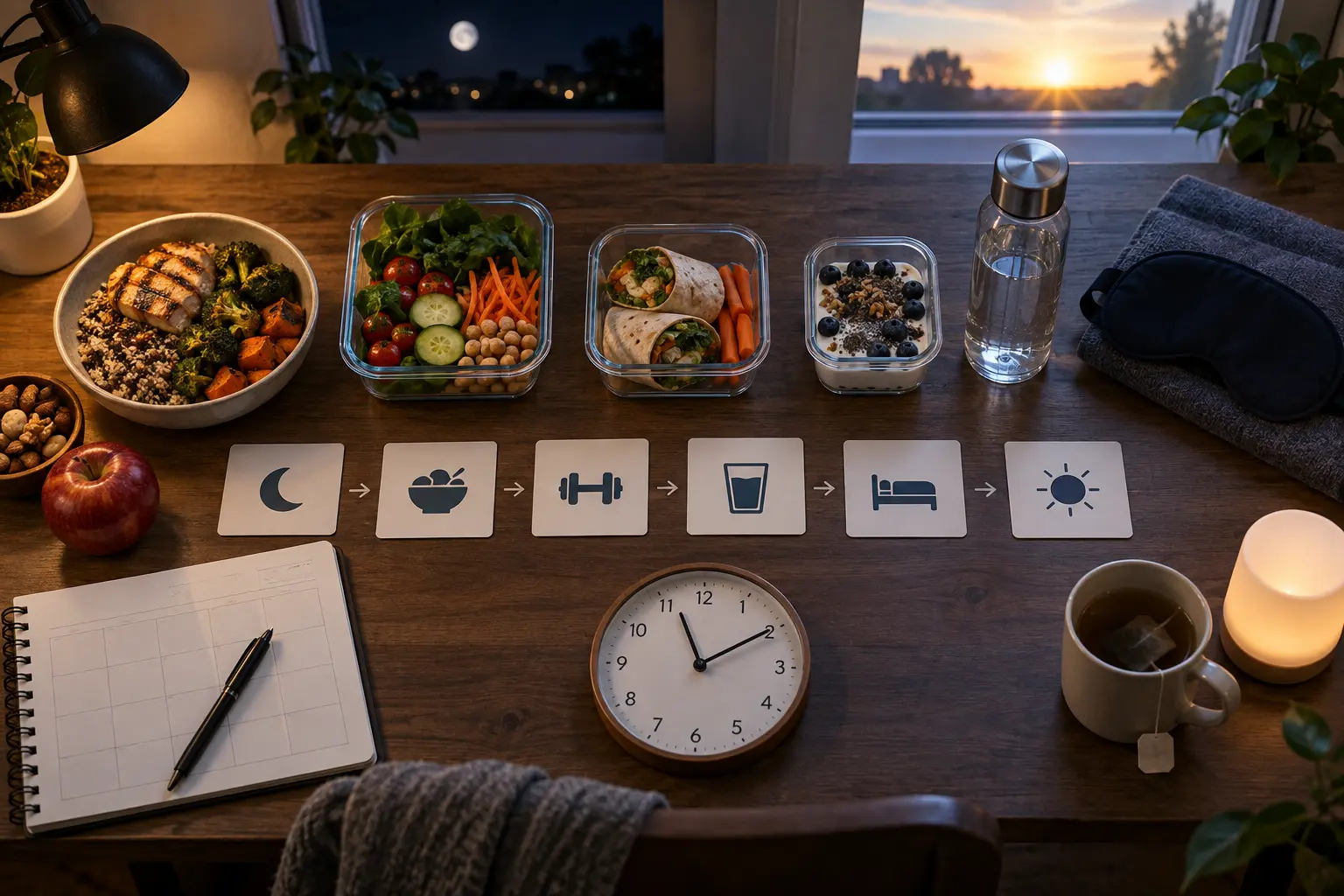
Build a shift meal map
Eat a balanced meal before work or early in the shift when appetite and digestion are comfortable. Pack another meal with protein, vegetables or fruit, and a fiber-rich carbohydrate. Add one defined snack such as yogurt and fruit, eggs and whole-grain crackers, or hummus and vegetables. Water should be easy to reach.
The CDC's NIOSH guidance for night workers favors high-quality foods and cautions that sugar-rich, low-fiber foods can increase sleepiness. It also suggests reducing food intake between midnight and 6 a.m. when feasible. Treat that as a practical experiment, not a moral rule: workers still need enough food to function safely, and medical conditions may require specific timing.
Place exercise where it supports the shift
Some people train after waking, before work; others use a brief session after the shift. The best slot is the one that does not steal sleep or leave you overstimulated. Two weekly strength sessions and accumulated moderate activity remain useful targets, but rotating schedules may require flexible days rather than a fixed Monday plan.
During work, take brief walks or mobility breaks when safety and duties permit. These can support alertness and reduce long uninterrupted sitting. They do not need to become calorie punishment for a difficult meal.
Plan for rotations and days off
Rapidly switching between daytime and nighttime schedules can make a perfect routine impossible. Keep a few stable anchors: a minimum sleep opportunity, the same packed-meal formula, a caffeine cutoff calculated from the next sleep period, and a fallback movement session. On days off, avoid treating fatigue as evidence that you need a harsher diet.
Track weekly averages across comparable rotations. Water retention, sodium, short sleep, and altered meal timing can move scale weight. If hunger, mood, or safety deteriorates, reduce the deficit and seek qualified support.
Example: a 7 p.m. to 7 a.m. shift
A worker might wake at 4:30 p.m., eat a balanced meal at 5:30, and take a packed meal and defined snack to work. A substantial meal early in the shift can reduce reliance on vending food. Later, a lighter planned option may be more comfortable than a large fried meal close to the commute home. Water stays available throughout, while caffeine is limited to the early portion of the shift and stopped according to the planned daytime bedtime.
After work, the worker uses a small meal only if hunger would interfere with sleep, then starts a dark, quiet wind-down. Strength training goes after waking on two nonconsecutive days; short work breaks supply additional movement. This is an example, not a prescription. Diabetes medicines, gastrointestinal symptoms, occupational demands, and commuting safety can require different meal timing and professional guidance.
Turn the advice into a repeatable system
Start with a seven-day observation period rather than an aggressive overhaul. Record sleep, meal opportunities, drinks, movement, hunger, and the situations in which the plan breaks. Then choose two changes that remove the most friction. Examples include packing one reliable meal, scheduling a ten-minute walk, keeping a shelf-stable backup, or protecting a consistent sleep window. A small system used on difficult days is more valuable than an ideal routine used only when life is quiet.
Review trends weekly. Use a seven-day weight average if weighing is appropriate for you, plus waist, energy, sleep, strength, and adherence. Day-to-day scale changes largely reflect water, glycogen, food in the gut, and other short-term factors. Adjust one variable at a time after two to four consistent weeks. Faster restriction can increase hunger, fatigue, and the chance of abandoning the plan.
Medical conditions, pregnancy, eating-disorder history, medicines, or persistent fatigue deserve individualized care. Seek prompt help for chest pain, fainting, severe shortness of breath, or other concerning symptoms. The goal is a routine that supports health and can survive the real schedule—not a punishment for having a demanding one.
Where an optional supplement fits
Food structure, sleep, movement, and environment do the main work. A supplement is optional and cannot compensate for missed sleep, an unsustainable deficit, or a schedule with no reliable meals. A stimulant may temporarily increase alertness but cannot replace sleep. Fat Burn Active is a poor fit close to your sleep window or alongside shift coffee, energy drinks, or stimulant medicines.
The current Fat Burn Active page lists at least 120 mg caffeine per serving from caffeine anhydrous and guarana, with additional green-tea caffeine not quantified, plus bitter-orange extract standardized to 6 mg synephrine. It directs adults to take two capsules with 300 ml water, preferably before a meal or training, not on an empty stomach, and warns against combining it with other caffeine or similar-effect sources. Those details matter particularly for shift work, travel, and sleep disruption.
A supplement is not required to benefit from Weight Loss for People Who Work Night Shifts. If your foundations are already in place, use the independent Fat Burn Active review to judge whether the formula has a useful optional role. If it fits your expectations and stimulant tolerance, check current product details and ordering terms. We may receive a commission.
Frequently asked questions
Should night workers avoid all food overnight?
No universal rule fits every shift. Plan lighter, nutritious options and ensure you can work safely without severe hunger.
When should I stop caffeine?
Count backward from daytime sleep, not midnight. At least six hours is a useful caution point, and some people need longer.
Is rotating shift work different?
Yes. Use flexible anchors around the next sleep period rather than fixed clock times.
Sources
- CDC NIOSH: Diet Suggestions for Night-Shift Nurses
- CDC: Healthy Eating for a Healthy Weight
- US Physical Activity Guidelines
- NIH ODS: Weight-Loss Supplements
- Fat Burn Active official directions
Sources reviewed September 13, 2026. This article is general educational information, not medical advice, diagnosis, or treatment.