
Separate five sources of lower expenditure
Adaptive thermogenesis is not the whole slowdown
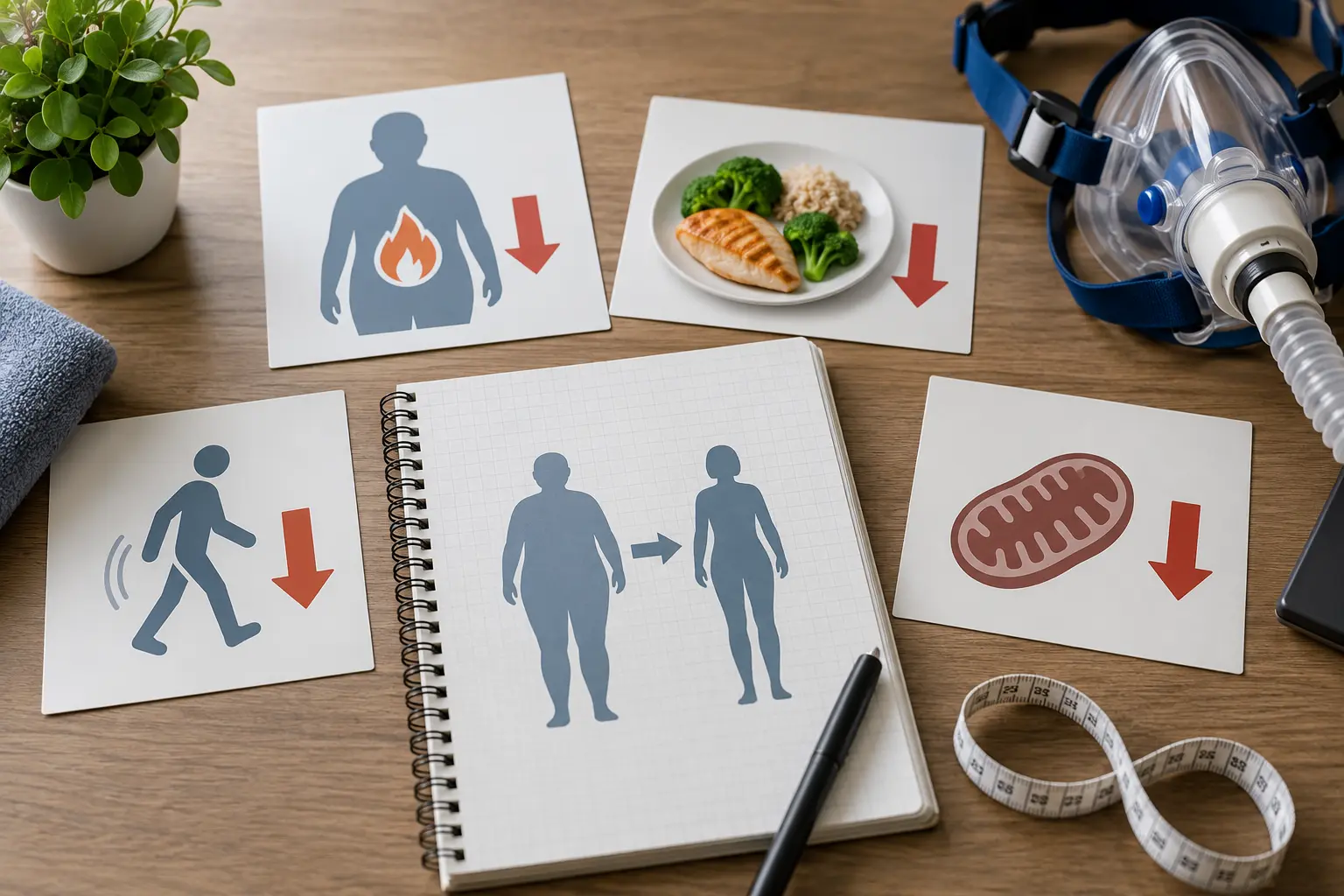
Researchers estimate adaptation by comparing measured expenditure with a predicted value. The result depends on the prediction equation, body-composition method, measurement timing, and whether someone is actively restricting or weight stable. Systematic reviews support the phenomenon but also show substantial variability and generally smaller estimates after weight stabilization.
A plateau cannot measure adaptation. Water retention, menstrual timing, constipation, portion drift, fewer steps, and an outdated maintenance estimate can produce the same visible pattern. Treat adaptation as one testable contributor, not an all-purpose diagnosis.
Respond without escalating the fight
Recalculate needs after meaningful weight change, audit portions briefly, compare current movement with the pre-diet baseline, and protect resistance training, protein, sleep, and recovery. If the plan has become aggressive, a smaller deficit or maintenance phase may improve adherence and training; it is not a guaranteed metabolic reset.
Example: Maya’s scale average is flat for three weeks. Instead of cutting dinner and adding intervals, she discovers that workday steps fell and weekend portions grew. She restores a feasible walking floor and standardizes two meals. The next review tests those changes without pretending to know her adaptation in calories.
Run a two-week everyday-activity audit
Use a two-week everyday-activity audit before changing calories or adding demanding workouts.
- Record an ordinary baseline. Note steps or active minutes, planned exercise, long sitting periods, household work, sleep, hunger, soreness, and weekly-average weight without trying to produce a perfect week.
- Choose one behavioral measure. A weekly step range, minutes outdoors, completed chores, garden sessions, or flights of stairs may be more useful than estimated calories.
- Add one repeatable opportunity. Attach it to an existing cue: a short walk after lunch, one extra stair trip, ten minutes in the garden, or a defined cleaning block.
- Protect recovery. Hold or reduce the target when pain, dizziness, illness, poor sleep, or unusually hard training changes capacity.
- Review the complete pattern. Compare movement, intake consistency, weight and waist trends, performance, hunger, and wellbeing. Do not let one number decide whether the week succeeded.
This system treats daily movement as part of life rather than punishment for eating. It also reveals compensation: a harder session can be followed by more sitting, while a modest routine may create more total movement because it is easy to repeat.
Why calorie estimates vary
Energy expenditure varies with body mass, movement economy, pace, terrain, load, task technique, fitness, pauses, temperature, and duration. The Adult Compendium of Physical Activities assigns standardized MET values to task categories, but those values describe reference activities rather than measuring an individual person.
Consumer devices add another layer of uncertainty. Wrist motion, heart rate, stride assumptions, device placement, algorithms, and the distinction between active and total calories can change the display. Household work and gardening include setup, pauses, reaching, carrying, and changing tasks, which makes one continuous calorie rate especially misleading.
Use the least fragile metric
For walking, time, route, pace, or steps from the same device can support comparison. For chores, record the completed task and active portion. For gardening, note task type, time, heat, and recovery. For stairs, record opportunities or flights only if counting remains helpful. Treat calories as a broad estimate, never a precise food credit.
Build a flexible progression
Plan with a minimum, a normal range, and an upper boundary. The minimum is the smallest useful action for a difficult day, such as one short walk or one active task. The normal range describes most weeks without demanding identical days. The upper boundary prevents enthusiasm from turning into a sudden volume increase that creates soreness, sleep disruption, or a compensatory drop in movement.
Review one question at a time. If activity fell, identify whether the barrier was schedule, fatigue, pain, weather, access, caregiving, or an unrealistic target. If activity rose but weight management did not change, examine the complete energy pattern rather than assuming the device or task failed. Appetite, portions, fluids, recovery, and reduced movement later in the day may all affect the result.
Use progression that can be reversed
Add frequency, duration, pace, incline, load, or task difficulty one at a time. Keep the change for a week or two, then assess symptoms and adherence. A useful progression has an easy exit: return to the previous level during illness, travel, poor sleep, or pain without trying to repay missed activity. This flexibility protects consistency better than a perfect streak.
Match activity to capacity and surroundings
Start below the amount that causes lingering pain or exhaustion. Stairs require balance, joint tolerance, vision, suitable footwear, a safe surface, and often a handrail. Gardening adds heat, sun, repetitive gripping, bending, lifting, tools, allergens, and uneven ground. Household tasks may involve wet floors, chemicals, loads, or awkward reaching.
Stop and seek appropriate help for chest pain, fainting, severe or unusual breathlessness, a sustained irregular heartbeat, acute injury, or neurological symptoms. People with unstable heart or lung disease, recent surgery, significant balance problems, severe joint symptoms, or clinician-directed restrictions need individualized activity advice. Modify the task, use an accessible alternative, or ask for help rather than forcing a calorie target.
Where Fat Burn Active fits
Fat Burn Active is optional and separate from the movement plan. It cannot reproduce walking, lifting, balance, muscular work, gardening skill, or the health benefits of gradually improved capacity. Warmth, sweating, stimulation, or a higher watch reading does not prove that more body fat was lost.
Before considering it, review the current label, total caffeine from coffee, tea, energy drinks and medicines, sleep, anxiety, blood pressure, heart rhythm, and the reason for use. Stimulants may make an activity feel easier while worsening sleep or masking fatigue. Never add capsules to compensate for a low-step day, a meal, or a missed workout.
A supplement is not required to benefit from Why Your Body Conserves Energy During Weight Loss. If your foundations are already in place, use the independent Fat Burn Active review to judge whether the formula has a useful optional role. If it fits your expectations and stimulant tolerance, check current product details and ordering terms. We may receive a commission.
Frequently asked questions
Is this starvation mode?
The phrase exaggerates the evidence. Expenditure can decline, but the body does not stop obeying energy balance.
Can a supplement prevent adaptation?
No supplement has been shown here to prevent all expected or adaptive reductions in expenditure.
Should I immediately eat less?
No. Confirm the trend and audit current intake, movement, recovery, and body size before changing one lever.
Sources
- Systematic review of adaptive thermogenesis
- Review of calorie restriction and human energy metabolism
- Metabolic adaptation and weight-loss maintenance
- NIDDK Body Weight Planner
- Physical Activity Guidelines for Americans
Sources reviewed September 17, 2026. This article is general educational information, not medical advice, diagnosis, or treatment.