
A better shortlist in sixty seconds
If a product promises rapid, effortless, or guaranteed loss, remove it. If the exact amounts, serving size, warnings, company identity, and return terms cannot be found, postpone the purchase. Next, define the desired function: alertness, fullness, digestive support, correction of a diagnosed deficiency, or something else. A product that cannot name the job cannot be evaluated fairly.
The broad search term often hides a more important question: is the person seeking a supplement, a prescription treatment, or help building a sustainable program? These are not interchangeable. Prescription obesity medicines require clinical assessment and should not be compared with supplements as if they were stronger versions of the same retail product.
Compare categories before brands
A category match is only the first gate. The next gates are whether the specific formula is transparent, whether evidence is relevant to the sold dose, and whether the likely benefit justifies risk and expense.
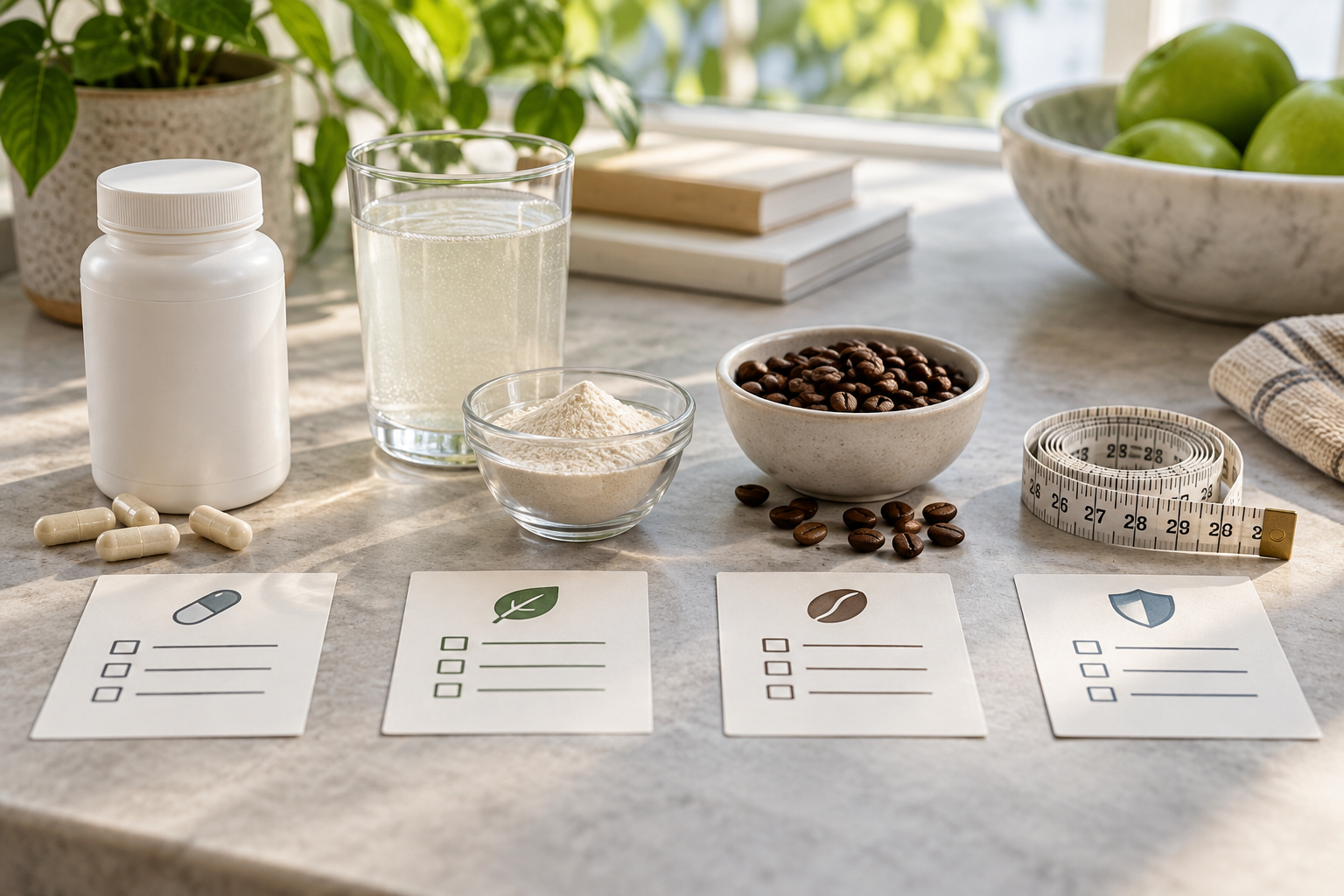
Use an evidence ladder, not an ingredient count
The weakest level is a biological story: an ingredient affects a pathway in cells or animals. Human trials of the same ingredient are more relevant, but they may use a different extract, dose, duration, or population. Trials of the finished product at the sold dose provide the closest evidence, especially when independently replicated and when adverse events are reported.
Weight-loss outcomes also need context. A small difference can be statistically significant without being meaningful to a buyer. Look for absolute changes, duration, dropout rates, funding, lifestyle support given to both groups, and whether the effect persisted after use stopped.
The label checks that matter most
- Serving size and daily maximum. These determine real exposure and bottle duration.
- Exact active amounts. Ingredient names alone do not establish dose relevance.
- All stimulant sources. Add caffeine from botanicals and beverages.
- Warnings and allergens. Check conditions, pregnancy, medicines, and excipients.
- Company and lot information. Traceability matters if a safety notice or complaint arises.
- Claims. Reject disease-treatment language and guaranteed outcomes.
Third-party testing can support identity or contamination checks, but a seal does not prove that the product causes weight loss. Quality verification and clinical effectiveness answer different questions.
Why safety belongs before conversion
The FDA does not approve dietary supplements for effectiveness before sale in the same way it approves medicines. Products marketed for weight loss are also a recurring area for notifications about hidden drug ingredients. This does not mean every supplement is adulterated; it means buyers should avoid assuming that retail availability proves safety or efficacy.
Seek qualified advice with chronic conditions, pregnancy or breastfeeding, an eating-disorder history, surgery plans, or regular medicines. Stop for concerning symptoms. A supplement that worsens sleep, anxiety, digestion, or adherence may be a poor weight-management tool even if its ingredients have a plausible mechanism.
Calculate value without being fooled by the bottle price
Start with cost per intended day, including shipping, subscription terms, and the number of servings required. Then apply an uncertainty discount: incomplete doses and absent finished-product evidence should reduce confidence, not increase willingness to pay. Bundle savings do not improve a formula.
Compare that cost with higher-confidence uses of the same budget: protein- and fiber-rich food, cooking equipment, a walking plan, resistance training access, sleep support, or professional care. This opportunity-cost comparison is information most commercial lists omit.
Where Fat Burn Active fits in this broader comparison
Fat Burn Active is a thermogenic, stimulant-oriented multi-ingredient supplement, so it addresses only one segment of the broader search. It is not a direct substitute for a fiber-focused satiety product, correction of a diagnosed deficiency, a structured behavioral program, or clinician-prescribed treatment.
Because the public information previously reviewed did not provide enough dose detail for every active ingredient and total caffeine, we cannot rank it above transparent options or declare it the best weight-loss supplement. Its proper position is a conditional match for adults seeking this specific category who verify the current label and accept the uncertainty.
Fat Burn Active decision point
Verify the current offer before deciding
Consider Fat Burn Active only if a stimulant-based thermogenic formula matches your intended job. It should not be presented as a universal solution to appetite, metabolic disease, or clinically significant obesity.
Use the official merchant page to confirm the current Supplement Facts panel, serving directions, warnings, bottle count, price, shipping, and return terms. If those details are missing or do not fit your needs, do not buy on the strength of marketing language alone.
The official Fat Burn Active page lists a multi-ingredient thermogenic formula, but the buying decision for Best Weight-Loss Supplements: Start With the Problem You Need to Solve should follow the evidence check above. Compare our independent review, then, if the product remains a reasonable fit, verify the current label, directions, and purchase options. We may receive a commission at no additional cost.
Affiliate disclosure: Active Body Hub may earn a commission if you buy through this link, at no extra cost to you. That relationship does not change our evidence or safety standards.
Choose the next step by your actual barrier
Use one barrier as the primary decision variable. A person with intense hunger after an aggressive diet needs a different response from someone who feels rested but wants a modest pre-workout lift. When several barriers coexist, prioritize health and the constraint most likely to undermine the entire plan.
Set a review date before spending money. If weight and waist trends, sleep, symptoms, and adherence do not improve over a reasonable period, reassess the diagnosis rather than automatically buying a higher dose or a second product. Stacking supplements makes cost, exposure, and attribution harder to understand.
Information gain comes from matching the intervention to the bottleneck and observing a defined outcome. This is more useful than a universal leaderboard because it can explain both why an option was selected and why it should be stopped.
Frequently asked questions
Are prescription weight-loss medicines supplements?
No. They are regulated medicines with specific indications, contraindications, and clinical supervision.
Can a supplement target belly fat?
No retail supplement has been established to selectively remove fat from one body area.
Does third-party testing prove weight loss?
No. It can support quality checks, but effectiveness requires appropriate clinical evidence.
Sources
- NIH Office of Dietary Supplements: Weight-Loss Supplements fact sheet
- FDA: Dietary Supplements—what consumers should know
- FDA: Weight-loss product notifications
- FDA: How much caffeine is too much?
- NIDDK: Choosing a safe and successful weight-loss program
Sources reviewed September 8, 2026. This article is general educational information, not medical advice, diagnosis, or treatment.