This guide concerns practical decisions about supplement use. It does not establish that a fat burner treats a medical condition or produces weight loss.
The apparent transparency contest
A competitor says “fully transparent”; another product uses a long list of recognized ingredients. Neither phrase is a useful comparison by itself. Start with the actual daily serving on the current manufacturer panel. Fat Burn Active lists separate amounts for several extracts, caffeine anhydrous, vitamins and zinc. A proprietary-blend competitor may reveal only a combined mass. That is an information difference, not a clinical verdict. The dose transparency guide explains the generic framework; this page applies it to Fat Burn Active and a hypothetical competitor, without inventing another brand's numbers.
What the current US panel discloses
At its two-capsule daily serving, the manufacturer lists 250 mg each of coleus root and green tea extracts, 200 mg guarana extract, 112 mg phenylcapsaicin preparation, 100 mg bitter orange extract, 80 mg grains of paradise, 76 mg caffeine anhydrous and 2 mg black pepper extract. It also lists vitamins and zinc and several standardization percentages. These are manufacturer-reported facts for the panel checked, not laboratory confirmation. A competing label should be checked on the same daily basis, with extract form and standardization alongside mass. Keep the screenshot and date because formulations can change.
The caffeine total has a material caveat
Guarana at 200 mg standardized to 22% caffeine implies about 44 mg caffeine, in addition to 76 mg caffeine anhydrous: about 120 mg nominally from those two declarations. The green tea extract can contain caffeine, but the complete contribution is not specified by those entries. Do not call 120 mg a verified total from all sources. A competitor stating a clearly defined all-source caffeine amount may be more transparent on this one safety-relevant point even if its ingredient list is shorter. See the stimulant comparison for a two-product daily-exposure method.
A worked three-column comparison
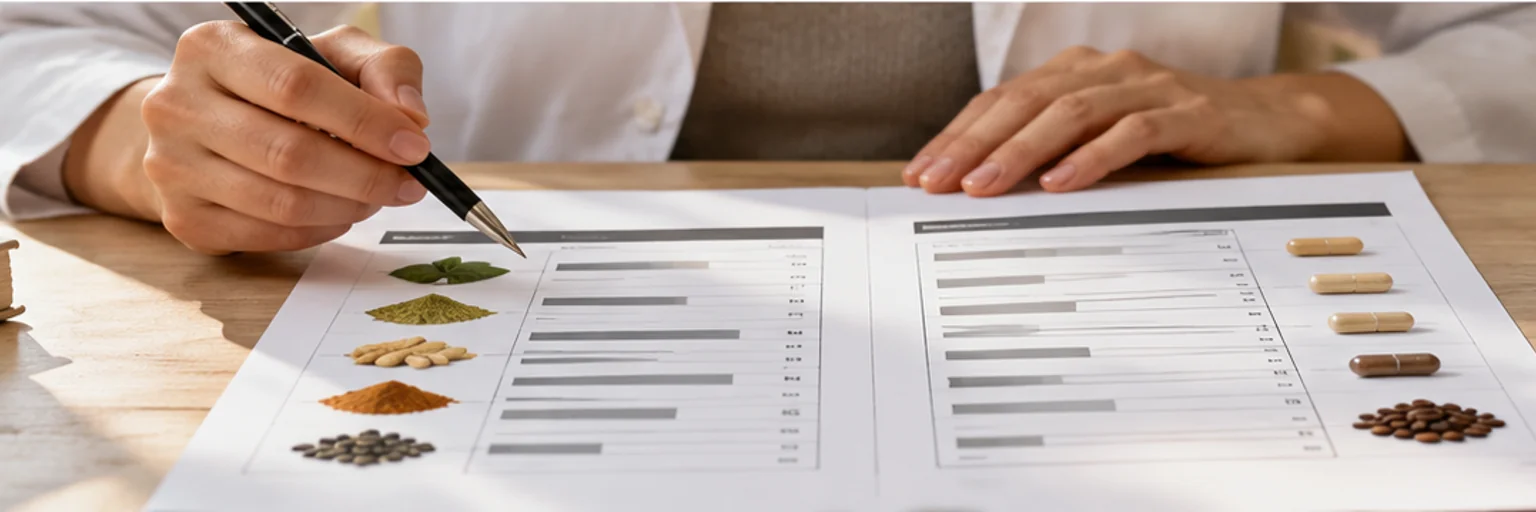
Put Fat Burn Active, candidate B and “no supplement” in three columns. For the first, enter each published amount, a question mark for residual green-tea caffeine, and the manufacturer's cautions. For B, copy the current ingredient form, daily amounts and any proprietary-blend unknowns. In the third, record no supplemental stimulant or capsule cost. Do not invent a win by filling a blank with zero. If B discloses total caffeine but hides synephrine inside a blend, neither label is perfectly transparent; state which unresolved fact matters for your own question.
Disclosure does not establish efficacy
The manufacturer may cite studies of individual standardized ingredients. Ask whether a human study actually used the marketed complete formula, at the current serving and for a meaningful long-term body-fat outcome. NIH ODS describes limitations in weight-loss supplement evidence, and FTC guidance expects health advertising claims to be backed by reliable science. A detailed Supplement Facts panel makes this comparison possible; it does not itself prove that the advertised mixture works. The evidence comparison keeps ingredient and whole-formula research distinct.
Quality verification is another column
Third-party verification may address identity, declared content or contaminants within a program's scope. It is not the same as a clinical trial and is not implied by a branded ingredient. Check whether a seal applies to the exact finished product and current version. If neither product has such verification, do not assume one is quality-tested because its page looks more polished. The independent testing guide explains the limits. Manufacturing quality, label disclosure and evidence of benefit deserve separate rows.
Safety can override a label score
Fat Burn Active's US warning cautions against other caffeine sources and excludes use for cardiovascular disease or caffeine hypersensitivity; it also has cautions regarding pregnancy and lactation. Other formulas have their own cautions. A candidate with a higher disclosure score might still be unsuitable for someone on a medicine or sensitive to stimulation. Discuss the complete panel with a clinician or pharmacist when relevant. Do not use arithmetic to talk yourself past symptoms or a label exclusion. A transparent label makes a risk easier to see, not disappear.
When Fat Burn Active may deserve a closer look
If your goal is to assess a multi-ingredient stimulant formula and the current ingredient disclosures answer most questions, the full review is a reasonable next step. Verify the package, caffeine uncertainty, evidence and purchase terms before looking at an offer. If an independently confirmed total stimulant exposure is essential, obtain clarification first. If you want no stimulant exposure, compare a truly caffeine-free category rather than pretending this product fits. A review is a bridge to a choice, not a substitute for a matched label.
Questions for both sellers
Ask for a current complete panel, the number of daily capsules, total caffeine from all sources, standardized constituent amounts, finished-batch testing scope and any human trial of the current whole formula. Save dates and exact answers. A vague response such as “clinically researched ingredients” does not tell you whether the blend itself was tested. When a competitor refuses to disclose a critical dose, mark unknown. If Fat Burn Active cannot resolve its residual caffeine question for your needs, mark that unknown too. Apply identical standards rather than favoring a brand because it has a familiar name.
Do not reward information twice
If A states an exact green-tea extract mass and standardization, those two details help calculate the nominal EGCG content; they are not two independent proofs of weight loss. Likewise, a declared caffeine source and a quality seal address different questions. Grade each candidate by disclosure completeness, relevance of human outcomes, finished-product quality information and suitability as separate dimensions. Revisit the score if the bottle changes. If both products leave material unknowns and neither has convincing evidence for your goal, the honest comparison is inconclusive. That is more useful than an artificial winner.
Compare the whole formula before deciding
Check the current package, ingredients, serving directions, your other caffeine sources, and relevant health conditions. For an evidence-based starting point, read the full Fat Burn Active review. If this product still fits your circumstances, you can inspect its current offer. We may earn a commission if you buy through that link. Choosing no supplement is equally reasonable when the evidence or safety questions do not support a purchase.
Frequently asked questions
Is Fat Burn Active fully transparent?
Many ingredient amounts are listed, but the published entries do not establish a complete independently confirmed all-source caffeine total.
Does a proprietary blend always lose?
It creates an individual-dose uncertainty; suitability and evidence still require separate review.
Can a more detailed label prove weight loss?
No. Relevant human outcome evidence is a separate requirement.
Practical decision checkpoint
For a fair comparison, collect the current labels on the same day and use the recommended daily serving for each. Record all declared active amounts, caffeine from every source when available, warnings, and total daily cost. Mark undisclosed values as unknown rather than inferring a dose from the order of ingredients. Then compare the strength of evidence for the actual products, not merely for ingredients in isolation. A transparent label helps assess a product; it cannot by itself establish that the product produces meaningful fat loss.
Sources
- Fat Burn Active US: ingredients and cautions
- NIH ODS: Weight-Loss Supplements
- FTC: Health Products Compliance Guidance
- FDA: Dietary Supplement Labels
- FDA: Caffeine from All Sources
Reviewed against the sources listed above. Educational information only; not medical advice.