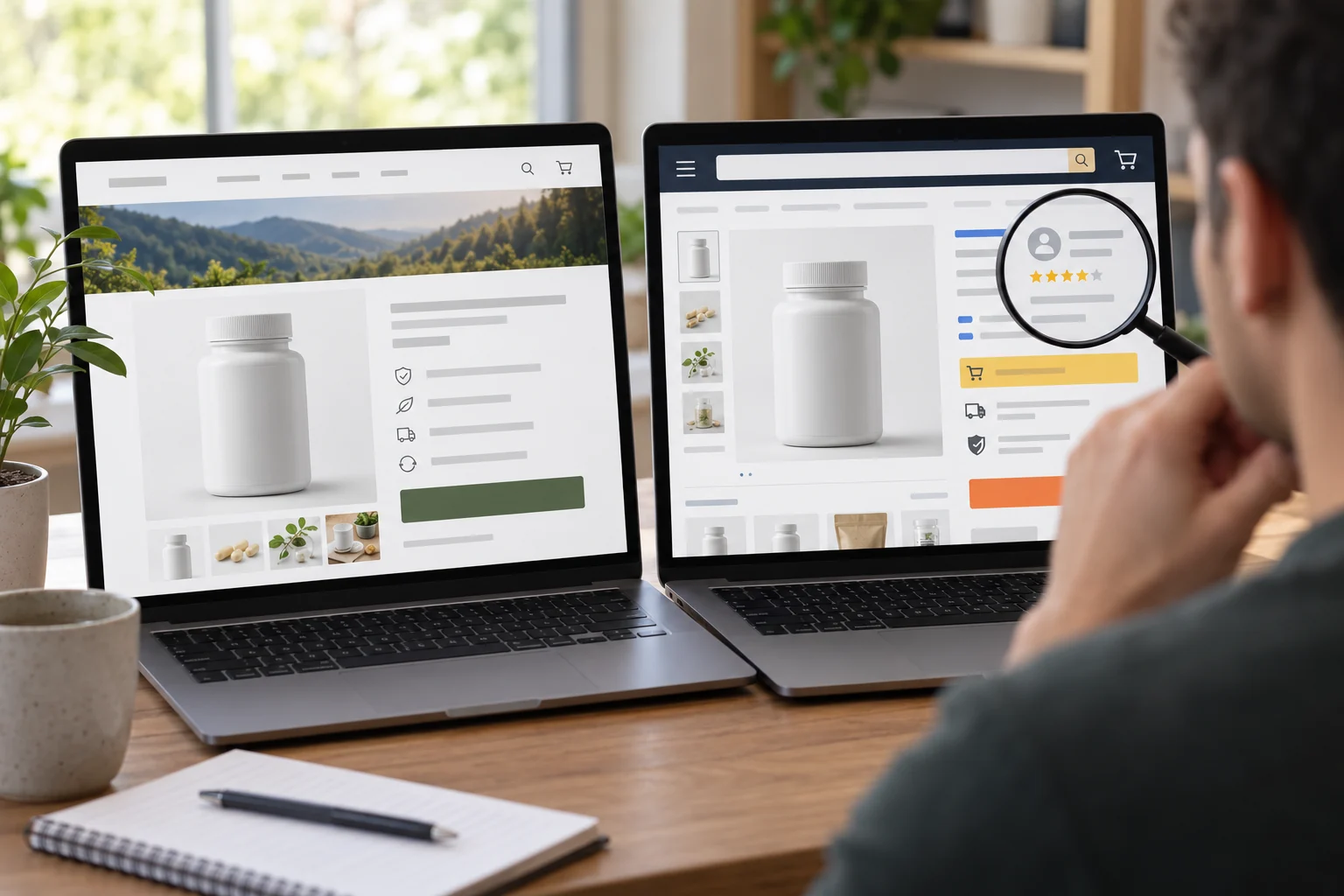
A platform is not the seller
An online marketplace can show several sellers on one product page, and the seller or fulfillment arrangement may change while the listing title stays the same. On an official brand site, confirm that the domain really belongs to the manufacturer; a sponsored ad or a similar-looking address is not proof. The practical question is: which business will supply this exact bottle, answer formula questions, and handle a problem?
Read the seller name in the active offer, not merely the product title or marketplace logo. Check the manufacturer’s authorized-seller information if available, and ask the brand to confirm a seller when uncertain. An “authorized” designation can help trace distribution but still does not prove the content of an old stock bottle or the effect of the formula. Record the seller and fulfillment details at checkout because they can differ from what you saw earlier.
Compare the actual label version
Open the complete Supplement Facts image, other ingredients, warnings, serving directions, and manufacturer contact. Compare official and marketplace listings item by item. Old product photos, copied descriptions, and mixed reviews from earlier formulas can make a listing misleading without an obvious counterfeit. If dosages, capsule counts, packaging, or names disagree, ask which version will ship and obtain a current photograph or lot information where feasible.
The FDA advises consumers who need more product-specific information than a label provides to contact the manufacturer. The NIH Dietary Supplement Label Database can help inspect labels, but a database record is not confirmation of current inventory or safety. Do not infer that a product has FDA approval because it is offered on a major site; dietary supplements generally are not FDA-approved before marketing.
Check authenticity without overclaiming certainty
Inspect the seal, lot number, expiration, container condition, and any manufacturer verification method after delivery. Contact the brand through a verified channel if the packaging looks inconsistent. Online photos and a seller badge are clues, not laboratory authentication. FTC marketplace transparency requirements address identification of certain high-volume third-party sellers; they do not certify every dietary supplement or its clinical claims.
When a listing offers a strikingly low price, an unfamiliar seller, or a vague “same as” claim, slow down. Check returns and dispute procedures before ordering. If a bottle arrives damaged, unsealed, or materially different from the stated formula, keep photographs and do not consume it while the discrepancy is unresolved. Seller accountability is part of a good purchase even if the label itself appears attractive.
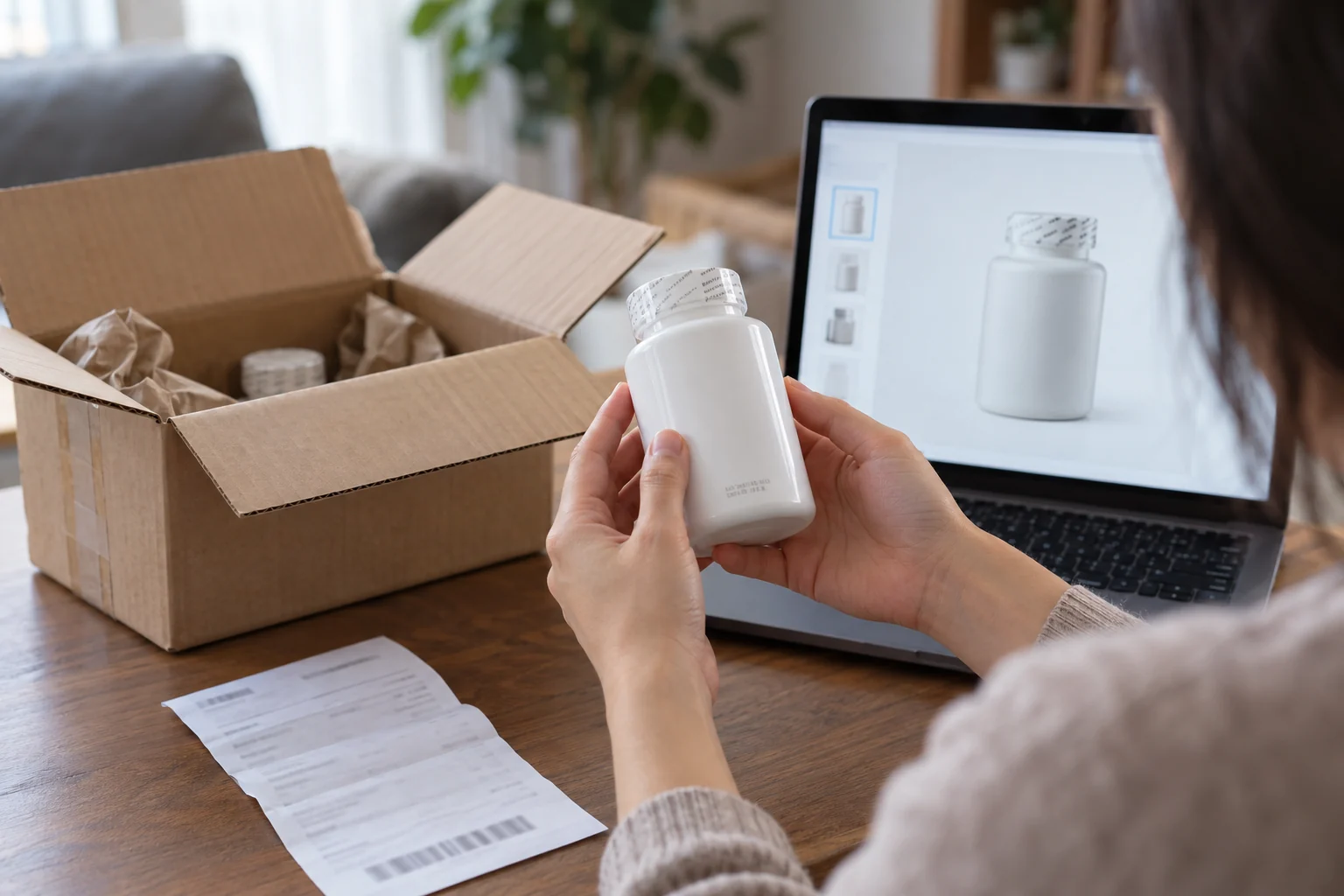
Price, delivery, and returns belong in one comparison
Calculate the delivered total after shipping, taxes, discounts, and any recurring billing. Official sites may have bundles or subscriptions; marketplaces may show faster shipping or multiple sellers. Neither option is inherently cheaper. Verify that a coupon does not silently change the order into recurring deliveries and that a “free gift” does not restrict returns.
Read who pays return postage, how opened bottles are handled, and the deadline to report a wrong or damaged item. The FTC recommends noting model or product details and shipping fees while comparison shopping. Save the listing, seller, label image, and terms for the exact order. If one channel supplies a clearer current label and reliable help at a comparable cost, that transparency may be more valuable than a small headline discount.
A five-step purchase check
First, verify the official brand domain or the marketplace’s active third-party seller. Second, compare the current complete label and daily dose with the bottle described in the offer. Third, check ingredient evidence and personal safety rather than assuming a seller’s reputation proves efficacy. Fourth, calculate the delivered cost and read renewal and return conditions. Fifth, keep order evidence and inspect the package on arrival.
| Question | Option A | Option B | Decision rule |
|---|---|---|---|
| Seller | Verify the domain owner | Identify the active seller | Do not infer from logo |
| Formula | Request current label | Match listing and received bottle | Resolve any mismatch |
| Delivery | Check seller terms | Check seller and fulfiller | Keep the order record |
| Remedy | Read refund policy | Read return and dispute policy | Compare actual protection |
Put the comparison into practice
Use a two-column record before checkout. In the official-site column, note the exact web address, product SKU or variant, label date if stated, seller’s contact channel, delivery total, and return policy. In the marketplace column, note the active seller, who fulfills the order, variant, label photos, delivery total, and dispute process. This makes it easier to see where information is missing. A large marketplace can offer buyer protections, while a brand can offer clearer formula information; neither advantage is universal.
Treat reviews about packaging carefully. A complaint about a broken seal or different label is worth checking with the seller, but a single review does not verify a counterfeit. Likewise, thousands of positive reviews cannot authenticate your particular lot. Document the physical product after delivery, then use the manufacturer’s official contact route if a lot number or package appears inconsistent.
Avoid relying on a search result marked “official” in an advertisement. Navigate from a trusted brand reference or verify the domain independently, carefully inspect the final checkout address. Impersonation sites can copy photos, descriptions, and logos. If payment instructions or contact details seem odd, stop until the seller identity is clear. The goal is not to prove every online channel unsafe; it is to make the exact transaction clearly traceable and accountable.
Finally, distinguish a dispute about delivery from a question about effectiveness. A refund, authentic bottle, or authorized seller does not establish that the formula causes weight loss. Check ingredient evidence and your own health fit with the same care whichever channel you use.
Keep the original listing and order confirmation together; they show which seller, formula, and return conditions applied to your purchase.
Verify the seller for the specific product
Our Fat Burn Active review discusses the product, but a review cannot authenticate a bottle that has not shipped. If you follow the current product offer, verify the final seller domain, complete label, checkout terms, and support contact. We may earn a commission if you purchase through that link.
Apply exactly the same checks to a marketplace listing, including its active third-party seller and the bottle delivered. A familiar logo on either channel is not sufficient evidence of authenticity or effectiveness. If the channels show conflicting formulas, pause and ask the manufacturer before ordering.
Frequently asked questions
Is a marketplace supplement automatically counterfeit?
No. The platform alone does not establish authenticity; verify the specific seller, listing, and received bottle.
Is the official website always the best price?
No. Compare delivered price, terms, and seller reliability at the time of purchase.
What if the two sites show different labels?
Ask the brand and seller which formula will ship; do not assume the newer-looking photo reflects inventory.
Sources and further reading
- FDA: Questions and Answers on Dietary Supplements
- FDA: Dietary Supplement Labeling Guide
- FTC: Online Shopping
- FTC: INFORM Consumers Act and Marketplace Sellers
- NIH ODS: Dietary Supplements, What You Need to Know
Sources reviewed September 2026. Educational information only; not medical advice. Prices in examples are hypothetical.