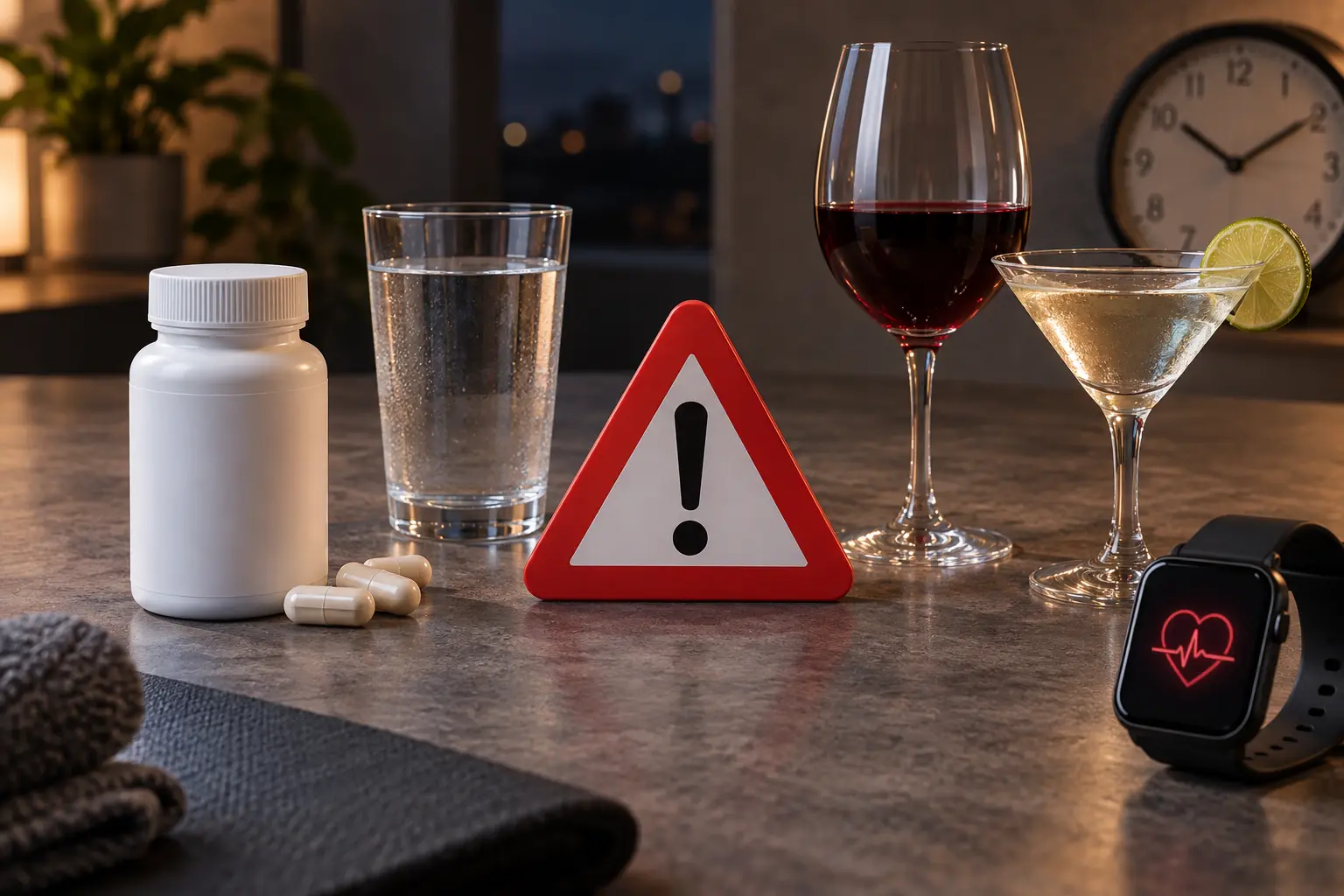
Stimulation does not sober you up
Alcohol impairs coordination, reaction time, judgment, and decision-making. Caffeine can make a person feel more awake, but it does not reduce blood alcohol concentration or restore safe driving ability. Feeling less sleepy can encourage more drinking or risk-taking.
A fat burner may contain caffeine plus other stimulating botanicals. That means the decision is not simply “coffee and one drink.” The full label, unknown botanical caffeine, medicines, serving size, and amount of alcohol all matter.
The risks overlap in the same evening
The weight question is smaller than the safety question
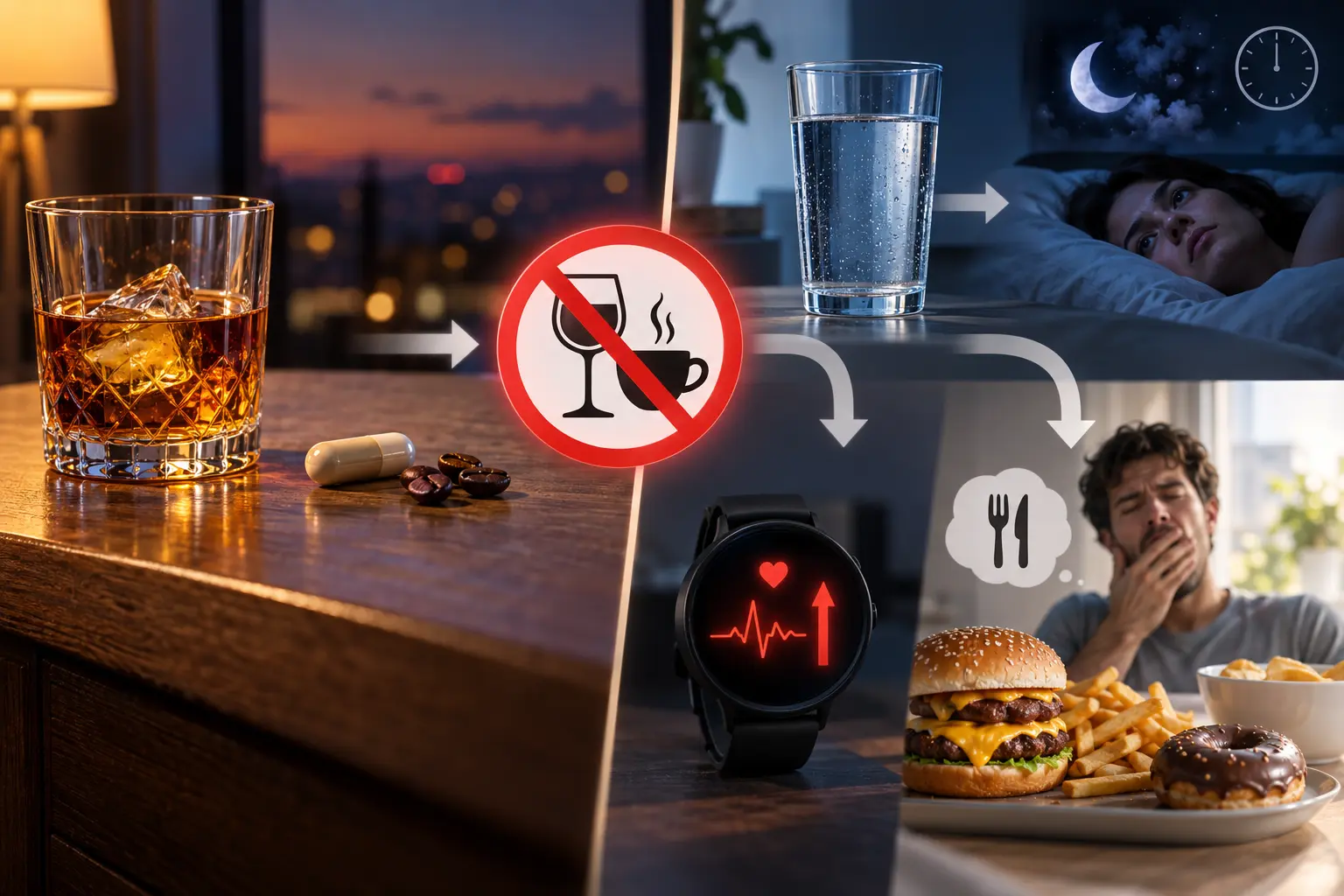
Alcohol supplies energy and can change appetite, food choices, inhibition, sleep, and next-day activity. A stimulant cannot erase those calories or restore recovery. A lower scale reading after drinking may reflect fluid loss; a higher reading may reflect sodium, carbohydrate, food mass, inflammation, and disrupted bowel patterns.
Do not respond to either number with extra capsules, fasting, dehydration, or punishing exercise. Resume normal fluids and meals, avoid driving or strenuous activity while impaired, and evaluate the longer trend.
Worked example: why ‘morning capsules, evening drinks’ is not a guarantee
A person takes Fat Burn Active at 9 a.m. and plans drinks at 7 p.m. They assume ten hours makes the combination safe. But the exact all-source caffeine is unknown, caffeine elimination varies, and other ingredients, medicines, health conditions, sleep time, and alcohol amount have not been resolved. A clock interval alone cannot certify safety.
The simpler decision is to skip the optional supplement on a drinking day. If drinking is frequent enough that this feels impractical, the priority is reviewing alcohol use and the weight-management plan—not finding a daily stacking schedule.
If you already combined them
Stop drinking and do not take more stimulant, caffeine, or fat burner. Do not drive. Stay with a responsible sober person when impairment is significant, and follow local emergency guidance. Chest pain, fainting, severe or irregular heartbeat, confusion, repeated vomiting, seizure, slow or irregular breathing, inability to wake, or blue or pale skin requires emergency help.
Do not rely on coffee, a cold shower, food, or exercise to reverse dangerous alcohol exposure. Alcohol overdose can continue to worsen after the last drink.
Use a context-first decision system
- Name the job. Write down whether the intended benefit is alertness, appetite support, training performance, or something else. “More fat burning” is too vague to evaluate.
- Read the current directions. Record the full serving, meal instructions, water, timing, warnings, and every stimulant source on the delivered label.
- Map the day. Add meals, fasting window, training, alcohol, medicines, bedtime, coffee, tea, energy drinks, and pre-workout.
- Protect the foundation. Adequate food quality, a sustainable calorie deficit, movement, training, hydration, and sleep come before a capsule.
- Choose one outcome. Decide what measurable result would make use worthwhile, and set a review date.
- Use stopping rules. Do not increase the serving to chase heat, sweat, reduced hunger, or a stronger sensation.
Keep a brief log of the serving, food, caffeine, sleep, appetite, training, and symptoms. Compare several ordinary days rather than one unusually good workout or low scale reading. Weight can move because of water, glycogen, sodium, bowel contents, and alcohol-related dehydration; those changes do not prove fat loss.
Before starting, collect a seven-day baseline without the product when practical. Use comparable morning weigh-ins, one consistent waist method, ordinary step counts, usual meals, bedtime, and training notes. During the test, keep the serving fixed and avoid introducing another supplement or a dramatic diet change. Review weekly averages and the predefined outcome, then ask whether any improvement is large enough to matter after cost, inconvenience, and adverse effects are included.
This is a decision aid, not a personal clinical trial. Self-observation cannot exclude placebo effects or prove that the capsules caused a change. It can, however, expose a product that adds no useful benefit or repeatedly worsens sleep, anxiety, digestion, pulse symptoms, or adherence. If the result is unclear at the review date, record it as unclear rather than extending use indefinitely in search of certainty.
How this applies to Fat Burn Active
The current official page recommends two capsules with 300 ml of water, preferably before a meal or training, and says not to consume the product on an empty stomach. It lists 76 mg caffeine anhydrous plus guarana standardized to about 44 mg caffeine, so the known minimum is 120 mg. Green-tea caffeine is not quantified, and the formula also contains bitter-orange extract standardized to 6 mg synephrine.
The official caution says not to combine it with other caffeine sources or ingredients with a similar effect. Coffee, caffeinated tea, energy drinks, pre-workout, some medicines, and other stimulant products therefore belong in the same exposure calculation. The known minimum is not the exact total. Check the delivered bottle and ask the manufacturer to clarify any difference from the website.
Because Fat Burn Active contains at least 120 mg of known caffeine plus unquantified green-tea caffeine and standardized synephrine, it should not be paired with alcohol. Skipping the product is safer than attempting to calculate a universal separation interval.
Use the Fat Burners and Alcohol criteria to assess Fat Burn Active rather than relying on a headline claim. Our formula evidence analysis explains the remaining uncertainty. If the product fits your needs, view current availability and ordering terms on the official website. We may earn a commission at no extra cost.
Safety is a separate gate
The official product page excludes children, pregnancy or breastfeeding, cardiovascular disease, and caffeine hypersensitivity. People with hypertension, arrhythmia, anxiety, insomnia, liver disease, an eating-disorder history, or relevant medicines should obtain individualized advice from a clinician or pharmacist before considering a stimulant formula.
Stop use and seek urgent care for chest pain, fainting, severe breathing difficulty, confusion, serious allergic symptoms, or a sustained racing or irregular heartbeat. Palpitations, tremor, repeated nausea, dizziness, severe headache, anxiety, and insomnia are adverse effects—not evidence that the product is working. Do not use a supplement to compensate for overeating, missed exercise, or alcohol.
Frequently asked questions
How many hours should separate a fat burner and alcohol?
No universal interval guarantees safety. The practical recommendation is to skip the fat burner on drinking days.
Does caffeine sober you up?
No. It may change alertness but does not reverse alcohol impairment or lower blood alcohol concentration.
Can a fat burner offset alcohol calories?
No. It cannot erase intake or restore sleep, judgment, or recovery.
What symptoms need emergency help?
Chest pain, fainting, seizure, severe confusion, inability to wake, repeated vomiting, abnormal breathing, or a sustained racing or irregular heartbeat need urgent assessment.
Sources
- Fat Burn Active official directions and cautions
- NIH ODS: Dietary Supplements for Weight Loss
- FDA: How Much Caffeine Is Too Much?
- NIAAA: Understanding the Dangers of Alcohol Overdose
- NIAAA: Alcohol's Effects on Health
Sources reviewed September 16, 2026. This article is general educational information, not medical advice, diagnosis, or treatment.