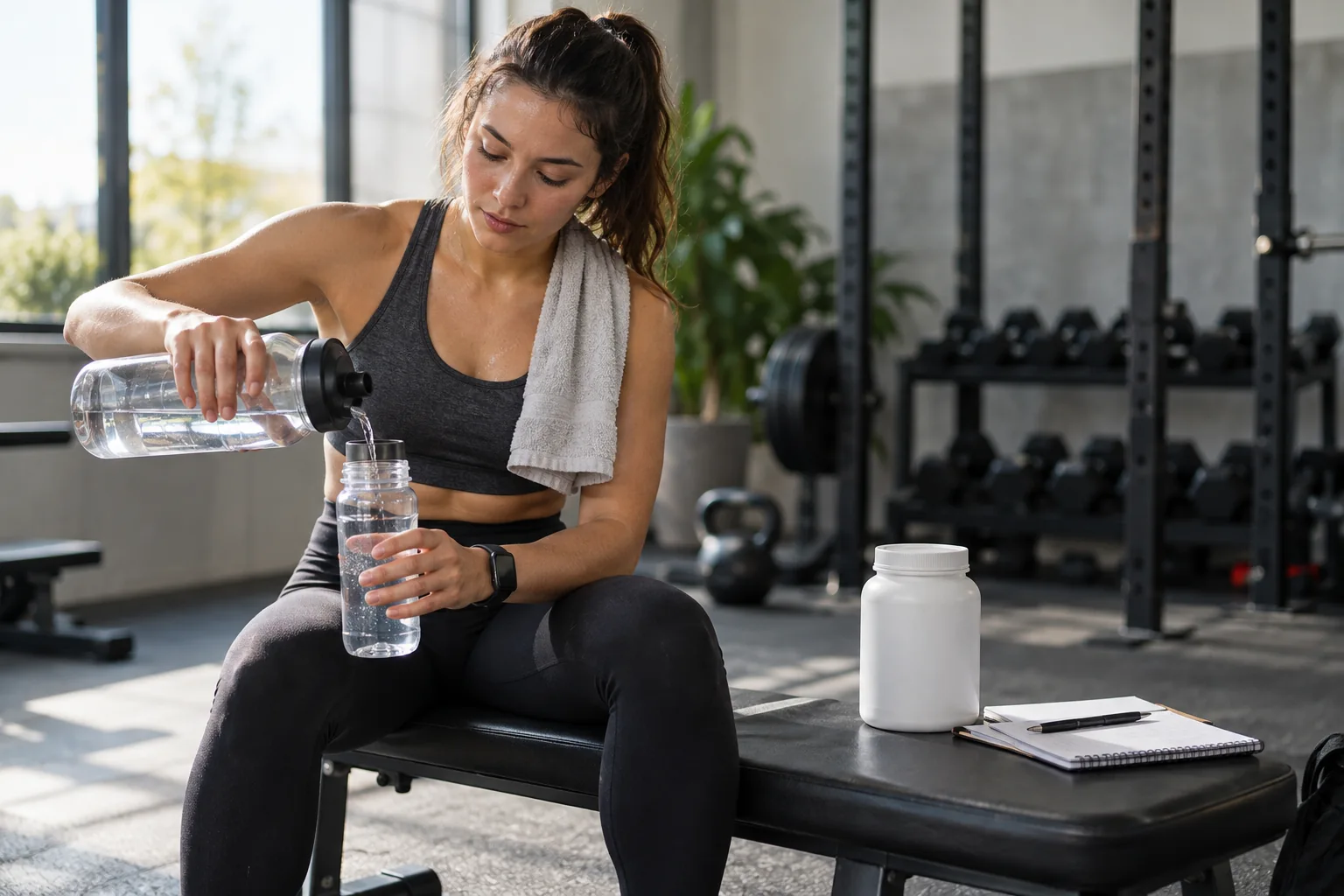
This guide concerns practical decisions about supplement use. It does not establish that a fat burner treats a medical condition or produces weight loss.
The concern behind the claim
People often notice thirst or a changing scale number after starting a stimulant supplement and conclude that it must be stripping water from the body. That conclusion skips several possible explanations: a longer workout, a hotter day, less drinking, different meal sodium, or normal day-to-day fluctuations. An initial drop in scale weight after heavy sweating is fluid loss, not evidence that stored body fat vanished. Equally, feeling energized does not tell you whether you are hydrated.
The NIH Office of Dietary Supplements notes that caffeine consumed during exercise does not cause the extra urine or sweat losses that would impair fluid balance in the exercise studies it reviews. This does not prove every multi-ingredient fat burner is risk-free, or that every person should use caffeine. It means the simple slogan “caffeine equals dehydration” is too blunt. The question worth solving is whether your intake, activity, environment, and symptoms add up to a sensible fluid balance.
Start with the actual conditions
A practical check begins before a capsule: What is the temperature and humidity? Will you be exercising or working outside? How long will you be active, and can you obtain water and cooling? The CDC says people exercising in hot weather are more likely to become dehydrated or develop heat illness. Heat changes the decision even if you have used the same supplement on cooler days. Sweat rates vary widely; a copied universal water target is a poor substitute for adapting to conditions.
Take a filled water bottle and plan places to refill it. Drink regularly rather than waiting for severe thirst during hot exercise. Afterward, eat and drink normally, allowing for sweat loss. For prolonged exertion or heavy sweating, ask whether food and electrolytes are relevant; do not assume a sugary sports drink or an electrolyte powder is always necessary. Avoid forcing unusually large volumes of plain water, because more is not always better. This is a fluid strategy, not a way to make an unsuitable stimulant safe.
Read the label without losing the total
Fat Burn Active, for example, lists caffeine anhydrous and guarana extract on its US manufacturer page. The disclosed 76 mg caffeine anhydrous plus 200 mg guarana at 22% caffeine implies about 120 mg nominal caffeine per two capsules before any residual caffeine from its green tea extract, which is not quantified there. That is a label calculation, not an independent laboratory result or a confirmed all-source total. Another fat burner may disclose far less information, so examine the bottle in hand and the recommended serving.
Add coffee, tea, energy drinks, and pre-workout products to your daily caffeine review. The FDA advises considering caffeine from all sources, and individual sensitivity varies. An apparently manageable supplement amount can be less manageable alongside a large coffee or disrupted sleep. This is particularly relevant if you feel palpitations, anxiety, dizziness, or gastrointestinal upset. The caffeine and guarana breakdown shows how to avoid double-counting while recognizing unknowns.
Recognize warning signs rather than guessing
Dark urine, marked thirst, fatigue, headache, and lightheadedness can suggest inadequate fluid intake, although none diagnoses a cause alone. Heat exhaustion may include heavy sweating, weakness, nausea, or faintness. If you have concerning symptoms, stop exertion, move to a cooler place, and seek appropriate medical care. Confusion, collapse, or very high body temperature is an emergency; do not keep exercising or attempt to fix it with a supplement. Use local emergency services if symptoms are severe.
Do not dismiss symptoms as “the fat burner working.” Stimulant effects can overlap with feelings that warrant a closer look, and a person with heart, kidney, or other medical conditions may need individualized fluid and activity advice. Nor should you assume that every headache after a capsule is dehydration; sleep loss, caffeine effects, heat exposure, and other causes are possible. If symptoms recur after a product, stop using it and discuss the pattern and full ingredient panel with a qualified clinician.
A usable before-during-after routine
Before activity, assess weather, access to shade and water, how you slept, and whether you already had caffeine. During activity, take breaks, drink, and reduce intensity if conditions become difficult. Afterward, prioritize cooling, food, fluids, and recovery rather than celebrating a lower number on the scale. If you are training long enough to sweat heavily, learn from your own conditions and plan the next session instead of treating any single weigh-in as a perfect measure of hydration.
Separate the habit from the pill. A supplement cannot replace drinking water, adjusting activity, or treating a heat-related problem. On a normal indoor day, there is no reason to drink excessive amounts merely because a bottle says “thermogenic.” On an unusually hot day, your plan may need to change even if the label directions have not. Read the fat-burner overview for broader efficacy context before using hydration as an argument to buy or avoid a particular product.
What this means for a buying decision
Ask whether the product has a transparent stimulant amount, whether its directions suit your usual routine, and whether you can maintain sensible hydration without adding unnecessary complexity. Fat Burn Active’s published label provides several amounts, but this review cannot establish that its complete formula causes weight loss or that it is suitable for your health conditions. The manufacturer warns against combining it with other caffeine sources and advises against use in some groups. A different product may carry different cautions; always check the current package.
If you mainly want an easy hydration habit, spend first on a routine you can repeat: water access, planned breaks, and suitable activity. If you want to assess a fat burner for a separate reason, examine its evidence and complete label after solving the basic fluid question. A supplement purchase is optional. The answer is neither “every fat burner dehydrates you” nor “water no longer matters”; it is a context-specific decision.
Compare the whole formula before deciding
When heat, heavy sweating, illness, or a stimulant product complicates fluid needs, prioritize the immediate situation and the warning signs described above. A rapid drop on the scale can reflect fluid change, not fat loss. Reconsider the product only after symptoms settle and the full ingredient list has been reviewed with appropriate professional advice.
Frequently asked questions
Does caffeine always dehydrate you during a workout?
No. Exercise research reviewed by NIH ODS does not support a harmful diuretic effect under the studied conditions.
Will a lower scale number after sweating mean fat loss?
No. Rapid change after heavy sweating can reflect water loss and should not be treated as proof of fat loss.
Should I drink as much water as possible?
No. Match intake to activity and conditions; unusually excessive plain water can also cause problems.
Sources
- NIH ODS: Weight-Loss Supplements
- NIH ODS: Exercise and Athletic Performance
- CDC: Heat and Athletes
- FDA: Caffeine from All Sources
- Fat Burn Active US label and cautions
Reviewed against the sources listed above. Educational information only; not medical advice.