
This guide concerns practical decisions about supplement use. It does not establish that a fat burner treats a medical condition or produces weight loss.
Why a trip can change a familiar routine
At home, you may know exactly when you eat, train, drink coffee, and sleep. A long travel day can shift all four. A missed meal followed by an extra energy drink and a late arrival creates a different setting from your normal morning routine, even if the supplement bottle is unchanged. Fat burners are optional; there is no evidence that a skipped capsule during a trip destroys weight-loss progress. The useful question is whether taking it adds a genuine benefit under today’s circumstances.
CDC travel guidance explains that jet lag management depends on sleep timing, light exposure, and sometimes the timing of caffeine. A late stimulant may make the local bedtime harder, and poor sleep may complicate appetite and activity decisions the next day. Avoid treating a capsule as a substitute for a travel schedule. Our business-travel weight guide addresses food and movement; this page concentrates on whether a stimulant supplement fits safely around those changes.
Read the bottle and the full caffeine day
The FDA recommends counting all caffeine sources, including coffee, tea, energy drinks, medicines, and supplements. Airport coffee and convenience-store drinks can make the total less obvious than it is at home. The Fat Burn Active US page discloses 76 mg caffeine anhydrous and 200 mg guarana at 22% caffeine per two capsules, equivalent to about 120 mg nominal caffeine from those disclosed sources. Its green tea extract may contribute an amount not stated on that page. This is label arithmetic rather than an independently verified all-source dose.
The manufacturer warns against other caffeine sources and advises not taking it on an empty stomach. A travel day with an early departure and no breakfast may conflict with those directions. Do not double the serving to cover a missed day or combine it with a pre-workout after an overnight flight. A product used in a comfortable home routine is not automatically suitable when medication, sleep, meals, and temperatures differ. Check the current bottle because formulations and directions can change.
A time-zone decision, not a clock trick
When crossing time zones, start with when you expect to sleep locally, not with the hour printed on your watch at home. CDC guidance on jet lag notes the role of properly timed light, sleep, and caffeine; it does not endorse fat burners as jet-lag treatment. A stimulant taken close to desired sleep can create another obstacle to recovery. Caffeine effects vary across people, so a universal “last safe hour” would be misleading. If arrival is late and sleep is the priority, skipping an optional stimulant may be the simplest plan.
Short trips can be different from permanent schedule changes: you may not fully shift your body clock for a brief visit. Build meals, water access, and a realistic activity goal around the trip you actually have. The sleep and weight guide explains why sleep deserves attention beyond supplement timing. The presence of a fat-burner bottle should not dictate your sleep schedule.
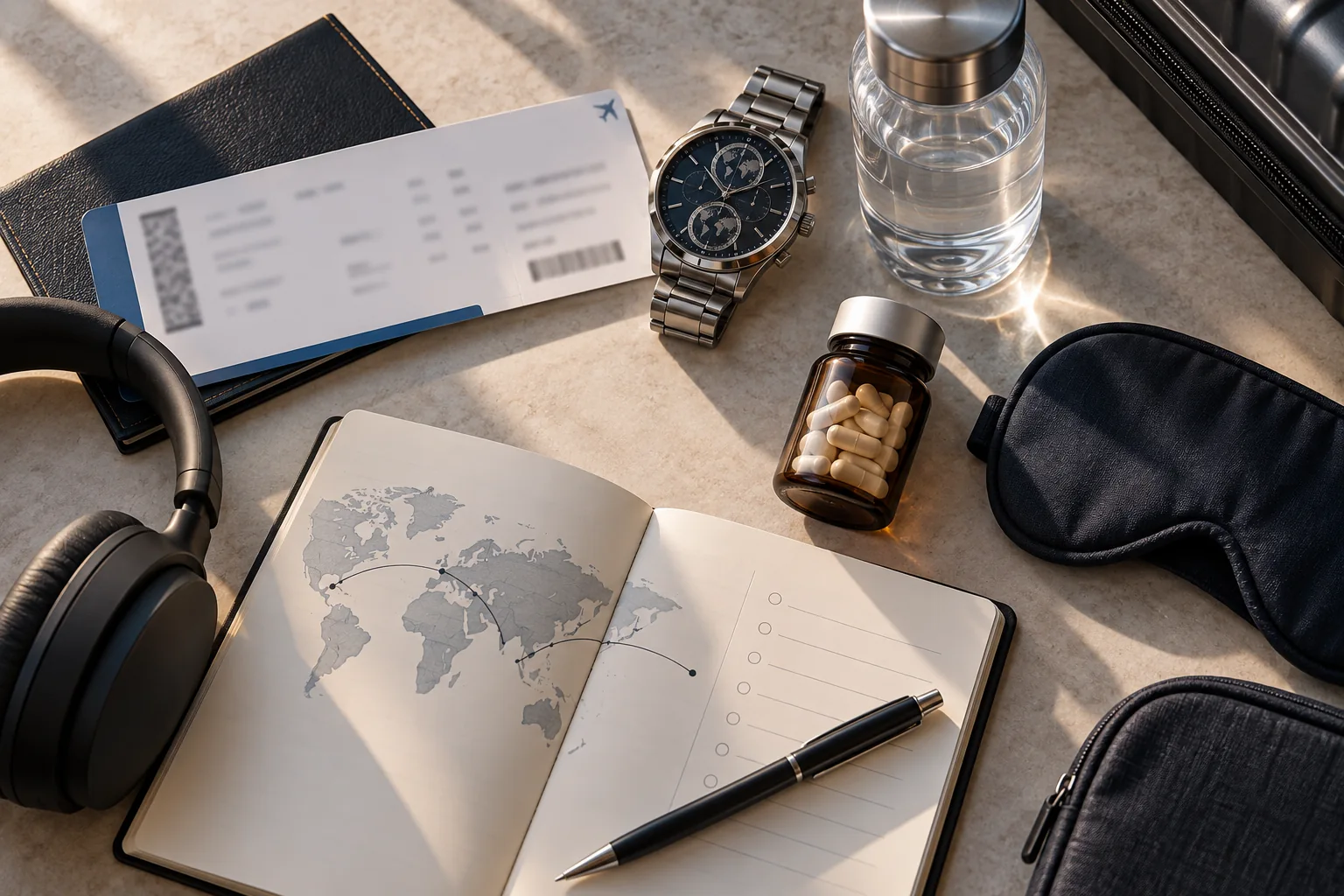
Travel heat, illness, and medicines
A destination can be much hotter or more humid than home. The CDC Yellow Book warns that travelers who are not acclimatized to heat face additional risk during strenuous activity; inadequate fluid replacement is an important contributor. Plan shade, water, and lower exertion before considering a stimulant. If you have vomiting, diarrhea, fever, or another illness, focus on recovery and medical advice as appropriate rather than an optional product. A scale change during travel may reflect salt, water, and transit routines rather than fat gain or loss.
Some supplements may interact with medicines. The FDA advises discussing dietary supplements and medications with a health professional because interactions can alter how a drug is handled. Carry a readable ingredient label if you need to ask a pharmacist or clinician a question. Rules for transporting supplements vary by location and carrier, so verify current travel requirements directly rather than relying on generic internet advice. None of these checks proves that a specific formula is unsafe; they show why a travel day deserves a fresh decision.
A simple pack-or-skip checklist
Before departure, ask five things: Do I know the current serving and every stimulant source? Will I be eating according to the label directions? Can I protect the sleep period at my destination? Will I have water and cooling during any outdoor activity? Do my medicines or health conditions call for professional input? If any answer is uncertain, there is little reason to force a supplement into the itinerary. Taking a break from an optional fat burner is a valid answer.
If you choose to pack it, keep it in its labeled container where possible, follow the current directions, and avoid adding other stimulants. This checklist is a way to reduce preventable confusion, not proof of efficacy. A fat burner is not necessary to walk at an airport, eat a normal meal, or resume your usual routine after travel. The trip can be successful without maintaining a capsule schedule to the minute.
What would justify a product decision?
A good evidence case would involve a controlled study of the finished product at its actual daily serving and show a meaningful outcome over enough time, with safety reporting. A manufacturer’s explanation of ingredient mechanisms, or a short caffeine experiment, cannot establish that carrying this specific mixture on a plane helps with weight management. NIH ODS finds limited support for many weight-loss supplements and warns that mixtures are particularly hard to evaluate from their components.
If, after your travel plan is settled, you still want to compare products, read the complete Fat Burn Active review and compare the current package with the online formula. Pay attention to warnings and your personal context. The best choice may be to wait until ordinary routines return, to choose another approach, or to use no supplement at all.
Compare the whole formula before deciding
Travel changes sleep, meals, hydration, and activity, making a new supplement a poor experiment during an already unusual day. Keep the full label available if a symptom occurs, and review medicines and stimulant sources before use. A normal travel routine with food, water, and rest is a more useful first step than trying to offset schedule disruption with a fat burner.
Frequently asked questions
Should I take double after missing a travel-day dose?
No. Do not exceed product directions to compensate for a missed optional serving.
Does a fat burner prevent jet lag?
No. Sleep, light exposure, and carefully timed caffeine are separate travel considerations.
Can I carry any supplement to any country?
Do not assume so. Check current destination and carrier rules for the exact product.
Sources
- CDC Yellow Book: Jet Lag Disorder
- CDC Yellow Book: Heat in Travelers
- FDA: Medicines and Supplement Interactions
- FDA: Caffeine from All Sources
- NIH ODS: Weight-Loss Supplements
- Fat Burn Active US label and warnings
Reviewed against the sources listed above. Educational information only; not medical advice.