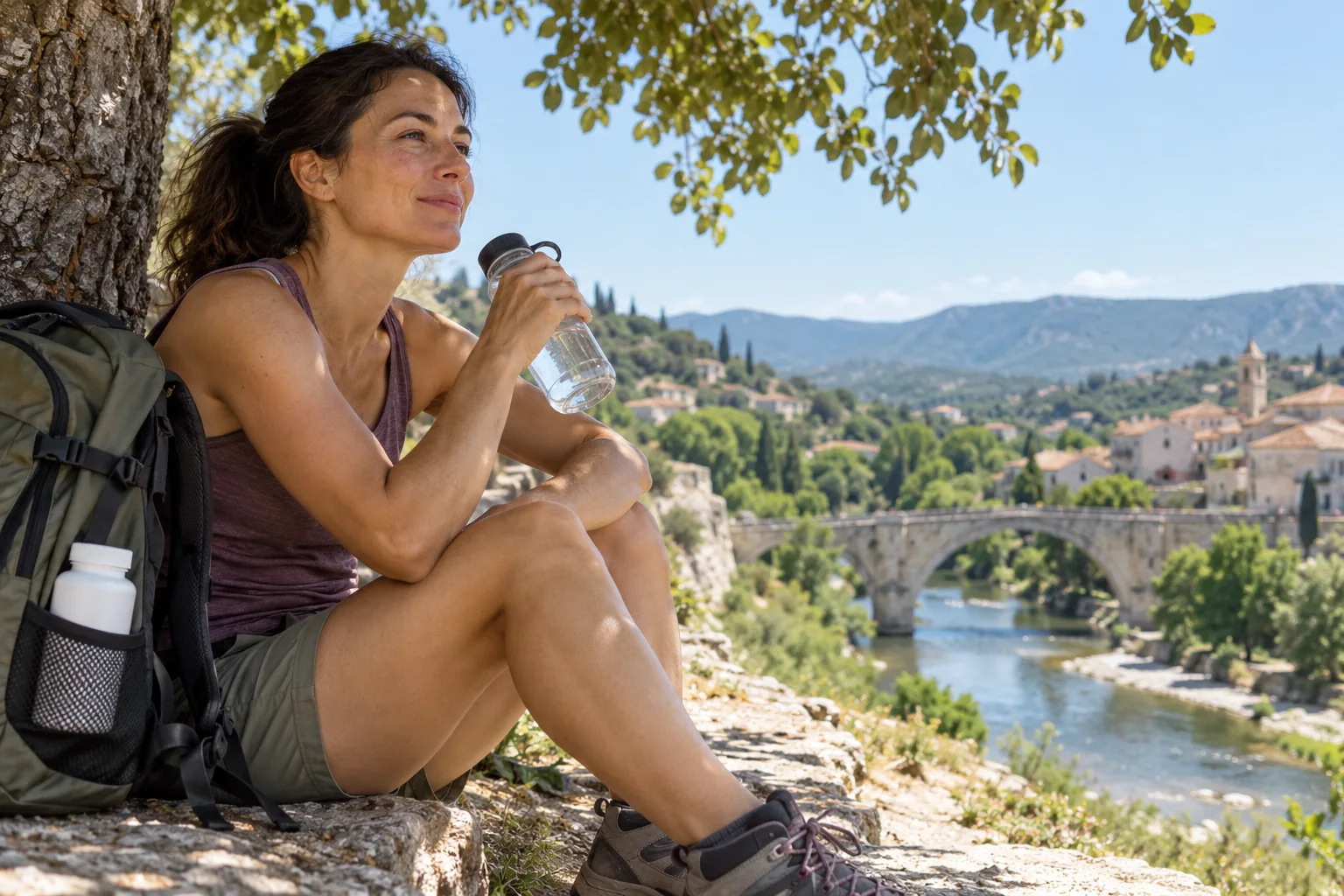
This guide concerns practical decisions about supplement use. It does not establish that a fat burner treats a medical condition or produces weight loss.
Why the heat changes the question
The word “thermogenic” can make a product seem especially suitable for a summer cut. It describes a proposed metabolic effect, not a useful way to handle environmental heat. The CDC notes that exercise on hot days increases the likelihood of dehydration and heat illness. A warm, humid day can make your usual walk or workout feel much harder even if you have not changed a capsule. Heat risk depends on exertion, acclimatization, clothing, medical conditions, and opportunities to cool down.
Do not turn a small laboratory change in energy expenditure into a claim that you should train harder in the sun. Weight change over weeks depends on more than fuel use during one session. The first decision on a hot day is whether the activity should move indoors, shift to a cooler time, shorten, or be skipped. A supplement does not earn priority over those practical choices. See our hydration guide for a separate discussion of caffeine and fluid balance.
What caffeine does and does not prove
Caffeine does not inevitably dehydrate exercisers in the research summarized by NIH ODS, so a blanket claim that every caffeinated supplement causes heat stroke is misleading. Yet this does not establish that a stimulant blend is a good idea for every person in extreme heat. Caffeine may cause jitteriness, palpitations, sleep disturbance, or other unwanted effects in susceptible people, and product labels may contain multiple sources. A difficult workout can become harder to interpret when heat discomfort and stimulant effects occur together.
The FDA advises counting caffeine from coffee, energy drinks, supplements, and medicines together. Fat Burn Active’s US page, for instance, lists guarana and caffeine anhydrous, plus green tea extract; its disclosed guarana standardization and anhydrous caffeine imply about 120 mg nominal caffeine before residual green-tea caffeine. That number is an estimate from the published panel, not a complete independently measured total. There is no sound basis for doubling a serving because you expect to sweat more or for treating a thermogenic sensation as proof of fat loss.
Make a heat-first plan
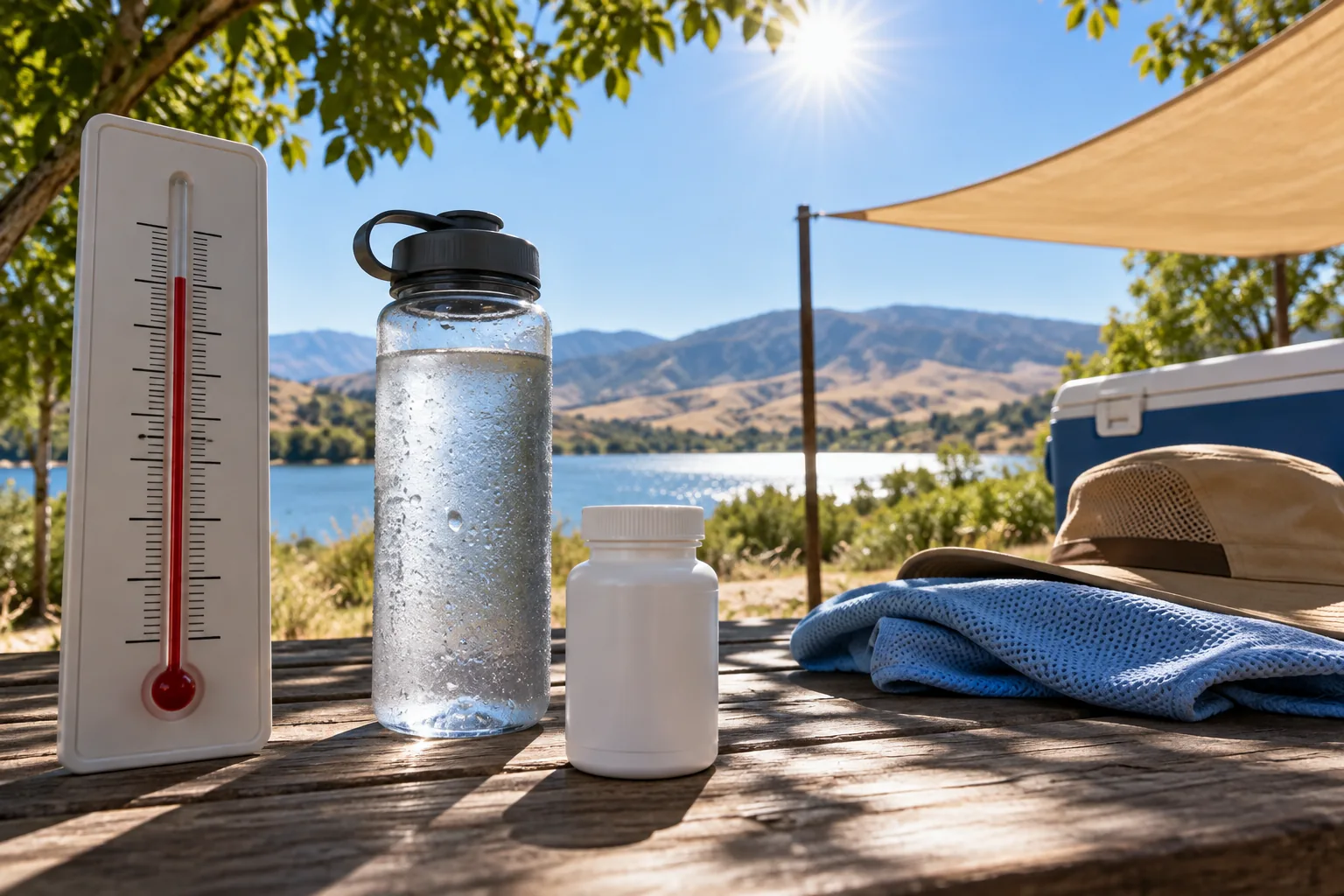
Check the forecast and how you actually feel. Bring drinking water, identify shade or an indoor alternative, and shorten or lower the intensity of activity if conditions warrant. The CDC advises people exercising in heat to drink more than usual and not wait until thirst becomes intense. Acclimatization takes time; a person arriving from a cooler climate should not expect identical tolerance on day one. If you have no reliable access to water or cooling, postpone the session rather than trying to push through with a capsule.
If activity extends for a long period with heavy sweat losses, ordinary meals and sometimes electrolyte replacement may be relevant, depending on circumstances. This is not a prescription for a fixed volume or salt dose. People with conditions affecting fluid or electrolyte management should use individualized advice. Avoid the opposite extreme of drinking very large amounts of plain water without regard to need. A usable plan fits the weather, workload, duration, and person.
Recognize when to stop
Heat exhaustion can include dizziness, headache, weakness, nausea, and heavy sweating. Move to a cooler place, reduce exertion, and get appropriate help if symptoms do not improve. Confusion, collapse, or severe illness during heat exposure requires urgent medical attention. Do not interpret feeling unusually hot, faint, or ill as a desirable sign that a fat burner is “working.” This is a safety decision that outranks a planned workout or supplement schedule.
Some medications and health conditions increase heat vulnerability. The CDC specifically identifies cardiovascular disease and certain medications as concerns during hot weather. A clinician or pharmacist can review your medicines and the complete supplement label if you are unsure. The manufacturer’s own cautions for Fat Burn Active exclude people with cardiovascular conditions and caffeine hypersensitivity; those product warnings do not disappear when the temperature rises. When in doubt, protect the person before the training plan.
Distinguish summer goals from marketing
A seller may show someone sweating after a capsule and imply a direct reduction of body fat. Sweat primarily helps regulate temperature and its amount changes with the environment. A lower immediate post-workout weight can reflect water loss. Neither sweating nor acute fat oxidation establishes a meaningful sustained difference in adipose tissue. The NIH ODS weight-loss supplement review also emphasizes the limited evidence for many products and the difficulty of evaluating mixtures.
An honest comparison would ask whether a controlled study tested the same finished formula, serving, heat conditions, and meaningful body-weight outcome. A short exercise experiment on isolated caffeine cannot answer all of those questions. For the buyer, the decision can be much simpler: would the day be better served by a cooler route, shorter session, or rest? A product is optional, while avoiding heat illness is not. The full product review covers the formula evidence separately.
If you still consider a product
Read the current package, not only a retailer claim. Note every stimulant source and relevant warnings. Do not combine the serving with pre-workout or extra caffeine against the manufacturer’s directions. Decide in advance which symptoms would make you stop and whether the session can be done safely without the product. If heat is already making activity difficult, postponing use is a reasonable choice; there is no need to “make up” a missed serving later.
For most readers, the practical next step is to improve the activity environment first. Cooling and regular fluid access help address the actual hot-day problem, whereas a stimulant supplement has not been shown to solve it. If you remain interested in Fat Burn Active on suitable days, review the complete label and discuss health concerns with a professional. Keep a purchase separate from your heat-safety decision.
Compare the whole formula before deciding
On a hot day, adjust activity, shade, rest, and access to fluids first. A stimulant product should not be used to push through warning signs. If dizziness, confusion, weakness, or other concerning symptoms appear, follow the safety steps above and seek appropriate care. Revisit supplement use only when the heat exposure and ingredient risks can be assessed separately.
Frequently asked questions
Do thermogenic supplements protect against heat illness?
No. Their proposed metabolic effects do not replace cooling, fluids, acclimatization, and activity adjustments.
Does caffeine always dehydrate someone in heat?
No. Exercise evidence does not support that blanket claim, but a caffeinated blend can still be unsuitable for a particular person.
Should I train harder if I feel warmer after a capsule?
No. Feeling hot is not proof of extra body-fat loss; reduce exertion and attend to symptoms.
Sources
- CDC: Heat and Athletes
- CDC: About Heat and Health
- NIH ODS: Exercise Supplements and Hydration
- FDA: Caffeine Guidance
- NIH ODS: Weight-Loss Supplements
- Fat Burn Active US label
Reviewed against the sources listed above. Educational information only; not medical advice.