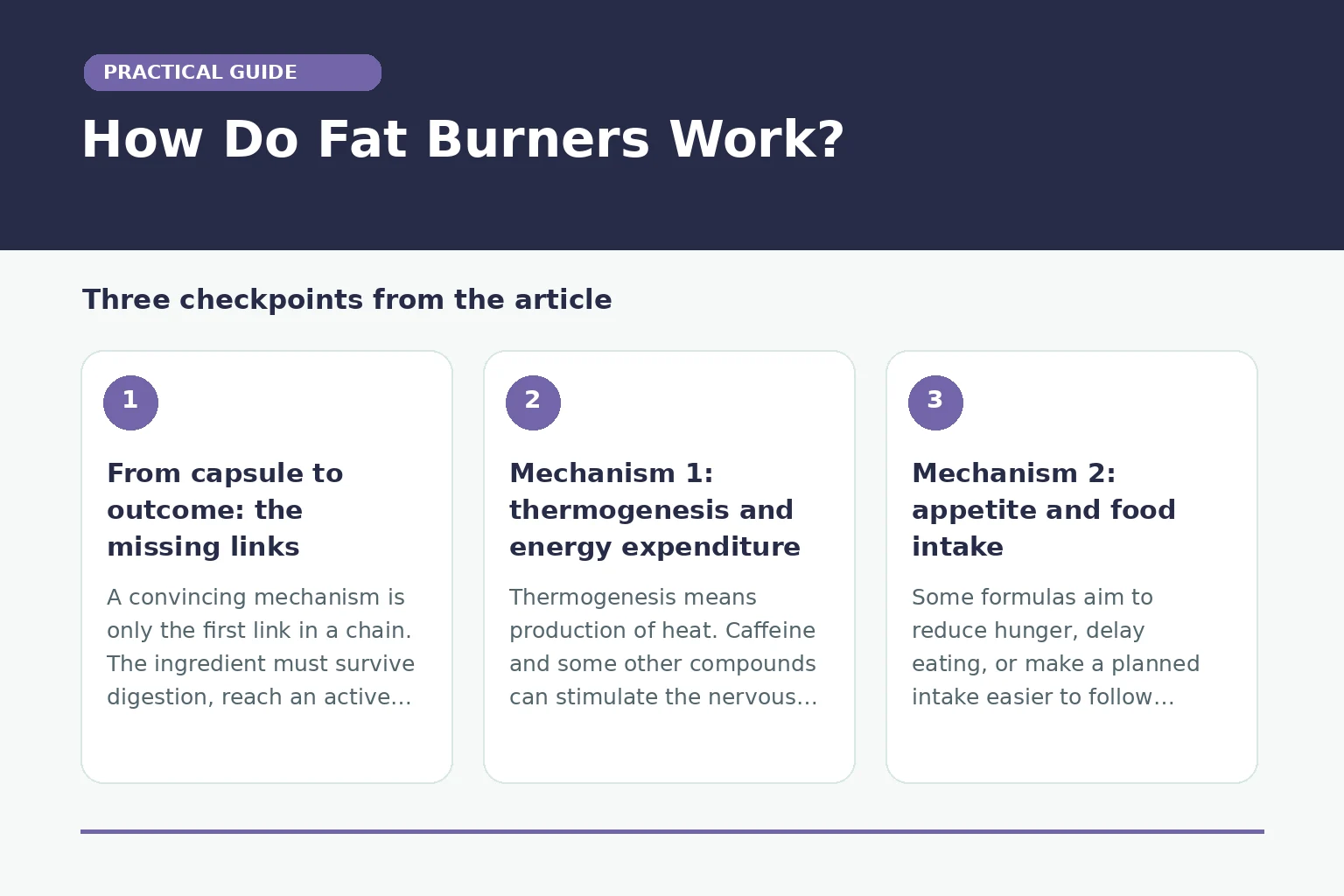
From capsule to outcome: the missing links
A convincing mechanism is only the first link in a chain. The ingredient must survive digestion, reach an active amount, change a relevant process, maintain that effect with repeated use, and produce a meaningful difference in body composition without causing compensatory eating, reduced movement, poor sleep, or unacceptable adverse effects.
Marketing often jumps from the first link to the last. A study may show a small increase in energy expenditure for a few hours, while the advertisement implies substantial fat loss over months. Those claims are not interchangeable. The correct outcome for a weight-loss claim is a controlled, adequately long human study measuring weight or fat, preferably on the finished product.
Fat burners also differ from prescription anti-obesity medicines. Medicines are evaluated and authorized for specific indications; an over-the-counter dietary supplement is not an approved obesity treatment simply because both appear in the same search results.
Mechanism 1: thermogenesis and energy expenditure
Thermogenesis means production of heat. Caffeine and some other compounds can stimulate the nervous system and temporarily increase energy expenditure. This may be measurable in a laboratory, but the size is often modest relative to daily intake and varies with dose, body size, habitual caffeine use, and individual response.
Feeling warm or sweaty does not measure fat loss. Sweat mainly reflects cooling and fluid loss; the scale can fall temporarily when water is lost and return after rehydration. A stimulant can also disturb sleep or increase anxiety. If worse sleep changes hunger, food choices, recovery, or movement, the net real-world outcome may differ from the acute metabolic reading.
Tolerance further complicates the story. A person who regularly consumes caffeine may experience less noticeable stimulation than a new user. Increasing the dose to chase the original sensation raises exposure; it does not establish greater long-term benefit.

Mechanism 2: appetite and food intake
Some formulas aim to reduce hunger, delay eating, or make a planned intake easier to follow. Caffeine can affect appetite inconsistently; fibers may increase fullness when provided in effective amounts with appropriate fluid; botanicals often have limited or mixed evidence. The relevant question is not whether appetite changes once, but whether average energy intake becomes lower without nutritional compromise or rebound eating.
Appetite suppression can also mask an overly restrictive plan. Skipping food early in the day may lead to intense evening hunger for some people. Someone with a current or past eating disorder should seek qualified guidance rather than using a stimulant to override hunger signals. A supplement is not a treatment for binge eating or emotional distress.
Mechanism 3: reducing nutrient absorption
Products may claim to bind dietary fat or carbohydrate, inhibit digestive enzymes, or reduce absorption. Even when an ingredient affects a laboratory marker, the amount used, meal composition, gastrointestinal tolerance, and clinical outcome matter. “Carb blocker” does not mean a meal's energy disappears.
Interfering with digestion can produce gas, cramping, diarrhea, or changes in bowel habits. It may also interact with medicines or affect nutrient handling. Prescription products that alter absorption have specific dosing, evidence, contraindications, and monitoring; a supplement with similar marketing language should not be assumed equivalent.
Mechanism 4: fat oxidation is not necessarily fat loss
Fat oxidation describes the use of fatty acids as fuel at a particular time. Exercise intensity, recent meals, glycogen, training status, and hormones influence which fuels are being used. Increasing the percentage of energy coming from fat during a short test does not guarantee that total body fat will decline.
The body continuously stores and releases fuel. What matters for fat loss is the net balance across the day and over longer periods. A person can oxidize more fat during a fasted workout and later replace that energy through food. Conversely, someone can burn more carbohydrate during exercise and still lose fat if the longer energy balance supports it.
Mechanisms that create false signals of success
Products relying on dehydration or laxation can be harmful. Do not use a rapid scale drop as proof of fat loss.
How to test whether the mechanism becomes a result
- Match the ingredient. Confirm the same form or standardized extract used in research.
- Match the dose. Compare the disclosed daily amount, not the total weight of a proprietary blend.
- Match the outcome. Prefer weight, waist, or body-fat outcomes over acute heat or oxidation.
- Match the duration. A two-hour test cannot establish a six-month result.
- Match the population. Findings in trained young adults may not transfer to an older person with hypertension.
- Look for the finished formula. Ingredient studies cannot prove that a branded mixture is effective.
- Count harms and dropouts. Benefit is not meaningful without tolerability and safety context.
Why the body and behavior may compensate
If a product raises expenditure slightly, increased hunger or reduced spontaneous movement can offset part of that effect. If a stimulant improves one workout but reduces sleep, later performance and appetite control may worsen. Compensation is not guaranteed, but it is one reason an acute mechanism should not be projected mechanically into long-term loss.
Weight loss itself also changes requirements. A smaller body generally uses less energy, and appetite or adaptive responses may make the original deficit harder to maintain. No supplement permanently freezes energy needs. Continued progress requires reassessing the whole pattern rather than escalating capsules.
Mechanism predicts some safety questions
Stimulants raise questions about blood pressure, heart rhythm, anxiety, sleep, and combined caffeine. Absorption-focused ingredients raise gastrointestinal and medicine-timing questions. Concentrated botanical extracts may create risks not associated with ordinary food amounts. Multi-ingredient blends make attribution and interaction review harder.
Discuss use with a clinician or pharmacist if you take medicines or have cardiovascular, liver, kidney, endocrine, psychiatric, or metabolic conditions. Avoid casual use during pregnancy or breastfeeding and in minors. Seek urgent care for chest pain, fainting, severe palpitations, breathing difficulty, or a serious allergic reaction. FDA's tainted-product notifications show why purchase source and label transparency matter.
Applying the mechanism test to Fat Burn Active
Begin with the current official label: list each ingredient, form, amount per daily serving, and total caffeine. Then map every proposed benefit to the kind of human evidence that would be needed. A caffeine-related thermogenic study supports only a limited caffeine conclusion; it does not prove the complete Fat Burn Active formula causes meaningful fat loss.
Use the How Do Fat Burners Work? criteria to assess Fat Burn Active rather than relying on a headline claim. Our formula evidence analysis explains the remaining uncertainty. If the product fits your needs, view current availability and ordering terms on the official website. We may earn a commission at no extra cost.
Frequently asked questions
Do thermogenic sensations mean the product is working?
No. Warmth, sweating, or stimulation can occur without a meaningful change in body fat. Measure the intended outcome over an appropriate period.
Can a product make the body burn only fat?
No. Fuel use changes continuously with meals, activity, and physiology. No capsule selectively removes fat from a chosen area.
Does higher fat oxidation during exercise mean faster fat loss?
Not necessarily. Net energy and fat balance over days and weeks matter more than the fuel mix during one session.
Why can results fade?
Tolerance, compensation, changing energy needs, inconsistent use, side effects, and an unsustainable diet can all affect the real-world outcome.
Sources
- NIH ODS: Dietary Supplements for Weight Loss
- FDA: Dietary Supplements
- FDA: Weight-Loss Product Notifications
- NIDDK: Eating and Physical Activity
Sources reviewed September 8, 2026. This article is general educational information, not medical advice, diagnosis, or treatment.