Search by source, not only by caffeine
Review caffeine anhydrous, coffee and green-coffee extracts, green and black tea, guarana, yerba mate, kola nut, cocoa, bitter orange or p-synephrine, yohimbe or yohimbine, and stimulant-like research chemicals. Inclusion here is a screening flag, not a claim that every source has equal potency.
Extract weight is not caffeine weight. Calculate caffeine from an extract only when the label gives caffeine directly or provides both extract mass and a credible standardization.
Make a timed stimulant ledger
List coffee, tea, energy products, pre-workout, fat burners, alertness products, and relevant medicines. Record milligrams, time, and unknown botanical contributions. Review the largest single window as well as the day.
Words such as natural, clean energy, caffeine-free, and non-stimulant require verification against the complete formula. Do not use symptoms as a dose meter.
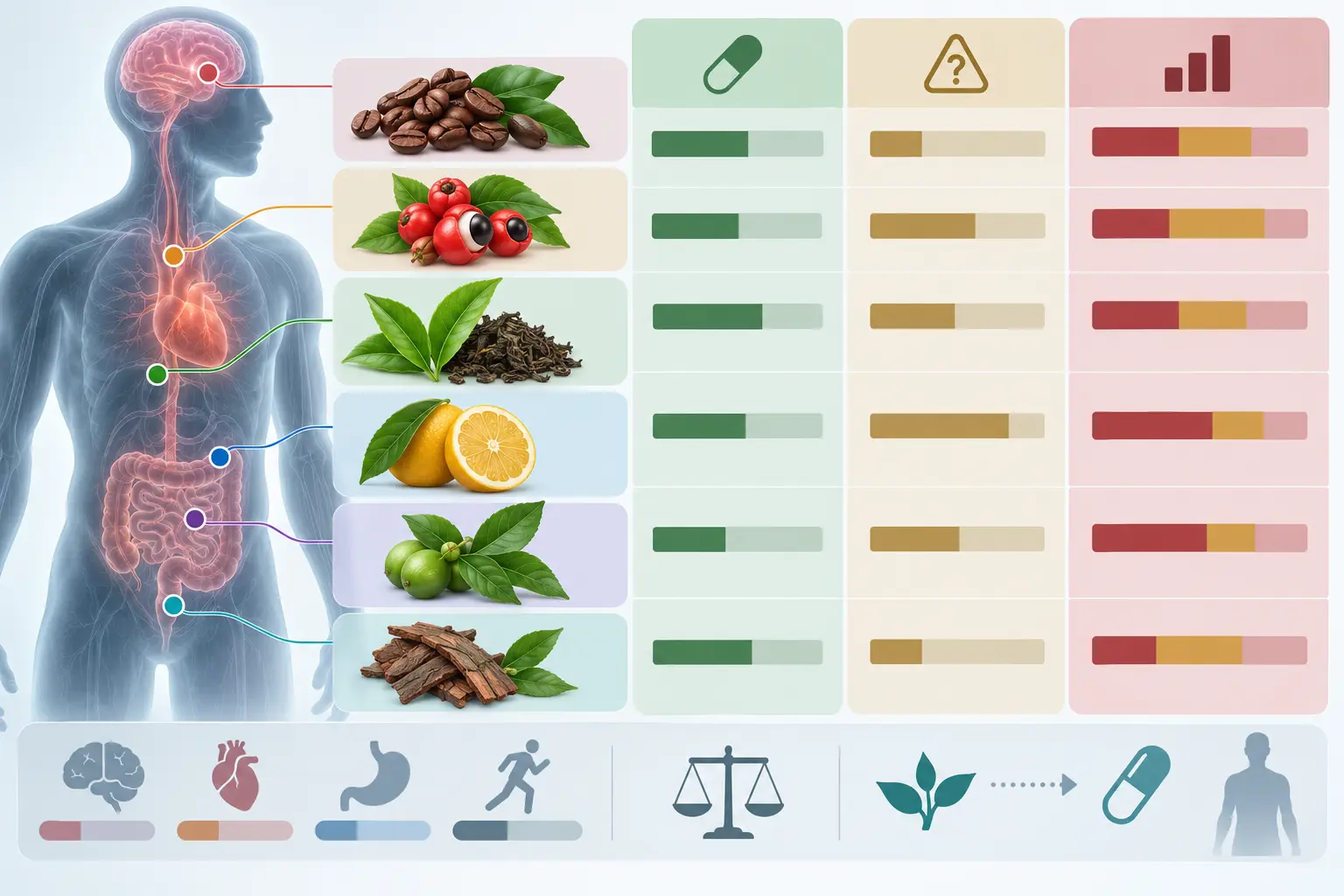
Use a document-first verification workflow
- Save the evidence. Photograph every side of the bottle and outer box before purchase and again when it arrives.
- Separate panels. Transcribe Supplement Facts, directions, warnings, other ingredients, company identity, lot code, expiry, and origin statements into different fields.
- Calculate, do not infer. Convert per-serving amounts into the maximum labeled daily exposure and mark every undisclosed value unknown.
- Check current records. Use the manufacturer, regulator, certification body, and independent testing organization rather than a marketplace summary.
- Resolve contradictions. Ask the company for a written answer tied to the exact SKU and lot; keep the reply.
- Decide before use. Define what missing information would make you decline the product.
A polished label can be compliant yet still provide too little information for a confident personal decision. Transparency supports evaluation; it does not prove effectiveness, purity, safety, or a meaningful weight-loss result.
Build one product evidence card
Record product name, package size, serving unit, serving size, servings per container, minimum and maximum directions, amounts per serving, maximum amounts per day, botanical standardization, proprietary blends, stimulant sources, excipients, capsule material, allergens, warnings, company role, manufacturing claim, lot, expiry, storage, and contact channel. Add the date because formulas and pages change.
For each statement assign a status: label-confirmed, manufacturer-confirmed, independently verified, regulator-confirmed, or unknown. “Made in,” “manufactured for,” “distributed by,” “formulated in,” and a postal address are different statements. Likewise, an ingredient appearing in a study does not prove the sold formula contains the studied dose.
Worked example: attractive front, incomplete decision
A bottle promotes a botanical complex and “clean capsules.” The facts panel gives amounts per two capsules, while directions allow two capsules twice daily. Guarana appears inside a blend, the shell is described only as “vegetable,” and the US address belongs to a distributor. The shopper cannot use the per-serving column as the daily dose, assume guarana contributes zero caffeine, identify the capsule polymer, or infer US manufacture.
The correct record doubles disclosed amounts for maximum daily use, marks botanical caffeine and shell composition unknown, separates distributor location from factory location, and requests the specification and allergen statement. Unknown does not mean dangerous; it means the claim cannot yet support the decision.
Know what the label cannot establish
A label is not a laboratory report. Identity, potency, microbial limits, heavy metals, solvents, and other quality questions require appropriate testing tied to the lot. A generic certificate, marketing seal, or facility photograph may not establish that the purchased batch was tested. Verify the certificate issuer, product or lot identifier, methods, dates, limits, results, and whether the report covers finished product or only raw material.
Regulatory registration is not premarket approval of weight-loss effectiveness. Good manufacturing requirements concern production controls, not proof that the formula causes fat loss. Keep the evidence categories separate so a quality claim cannot silently become an efficacy claim.
Turn facts into a personal safety check
Compare the full record with medicines, conditions, allergies, pregnancy or breastfeeding, age, stimulant tolerance, sleep, digestion, religious or dietary requirements, and total exposure from other products. Ask a clinician or pharmacist when uncertainty could change safety. Do not stack supplements while investigating a reaction.
Stop and seek appropriate care for chest pain, fainting, severe breathing difficulty, a serious allergic reaction, severe or persistent abdominal pain, repeated vomiting, confusion, or a sustained racing or irregular heartbeat. Insomnia, anxiety, palpitations, headache, nausea, rash, and bowel changes are adverse effects—not confirmation that a product is working.
Where Fat Burn Active fits
Fat Burn Active information identifies direct and botanical stimulant sources; the decision requires current amounts and total daily exposure rather than the front-label category.
Fat Burn Active is optional and not required for fat loss. Read our independent Fat Burn Active review and apply the same label checks. Ingredient presence does not prove a relevant dose or finished-product outcome.
Use the How to Identify Every Stimulant on a Label criteria to assess Fat Burn Active rather than relying on a headline claim. Our formula evidence analysis explains the remaining uncertainty. If the product fits your needs, view current availability and ordering terms on the official website. We may earn a commission at no extra cost.
Worked example: when one number is not the total
Suppose a serving lists 100 milligrams of caffeine anhydrous, 200 milligrams of guarana extract without a caffeine standardization, green tea extract standardized only for catechins, and bitter orange standardized for p-synephrine. The defensible record is 100 milligrams of disclosed caffeine plus unknown caffeine from guarana and possibly tea, alongside a separately disclosed or calculable p-synephrine amount. It is not scientifically sound to call the total 100 milligrams, nor to treat the full botanical weights as caffeine.
If two servings are allowed, duplicate every disclosed figure and every unknown. Then add coffee, tea, energy drinks, pre-workout, chocolate, and relevant medicines by time. A morning total and an afternoon total show clustering that a single daily number hides.
Use a name–source–amount matrix
Do not assume an ingredient is harmless because it is unfamiliar or plant-derived. Search authoritative ingredient information, and have a pharmacist review the full list when medicines or cardiovascular, anxiety, sleep, pregnancy, or other health concerns apply. Chest pain, fainting, severe palpitations, or breathing difficulty require urgent medical assessment, not another label calculation.
Repeat the inventory whenever a formula or routine changes. Compare the bottle with the manufacturer’s current page, but keep a dated label photograph as the primary record for what you actually own. If a proprietary blend combines several possible stimulants, the blend weight is not a usable stimulant total. Record the uncertainty and avoid stacking while seeking clarification.
Frequently asked questions
Does guarana count as caffeine?
It can contribute caffeine, but the amount needs disclosure or valid standardization.
Does caffeine-free mean stimulant-free?
Not automatically; inspect every active ingredient.
Should unknown botanical caffeine be entered as zero?
No. Keep the total explicitly incomplete.
Sources
- FDA: How Much Caffeine Is Too Much?
- NIH ODS: Weight-Loss Supplements
- EFSA: Safety of Caffeine
- NCCIH: Bitter Orange
Sources reviewed September 14, 2026. This article is general educational information, not medical advice, diagnosis, or treatment.