First confirm which synephrine the label means
Bitter orange, usually Citrus aurantium, can be standardized for p-synephrine. This should not be casually equated with m-synephrine, also called phenylephrine, or with ephedrine. Similar-sounding compounds, plant extracts, and drug ingredients are not interchangeable.
A useful label identifies the botanical species and plant part, extract amount, p-synephrine percentage or milligrams, serving size, maximum servings, and every caffeine source. “Bitter orange complex” without those facts prevents dose matching. “Ephedra-free” describes an absence; it does not prove safety or effectiveness.
Why manufacturers combine them
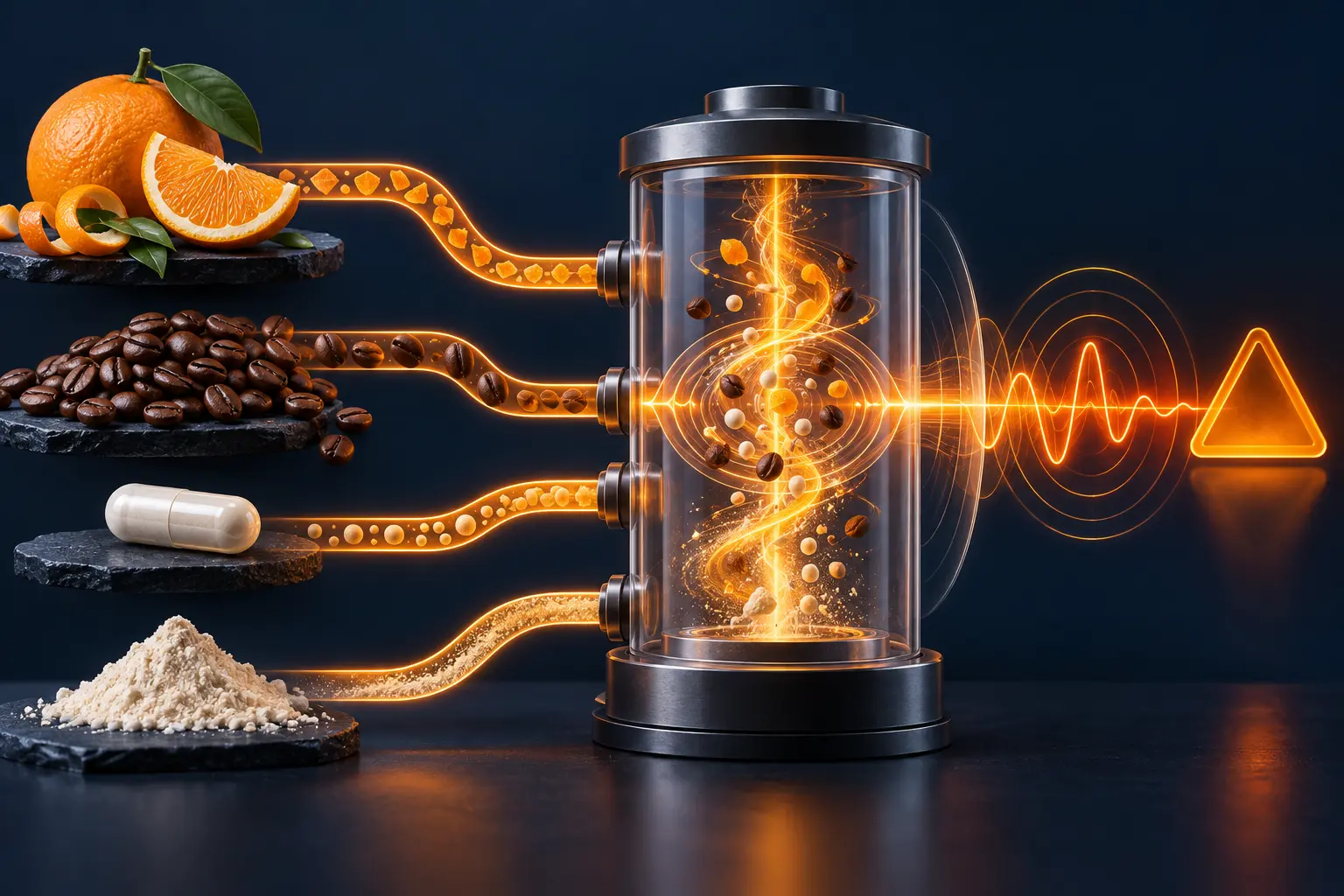
Caffeine is used for alertness and acute effects on exercise or energy expenditure. P-synephrine is marketed for adrenergic or thermogenic effects. Combining two mechanisms creates a persuasive story, but biological plausibility does not establish a meaningful change in weight, fat mass, or appetite.
Studies may test p-synephrine alone, caffeine alone, a defined combination, or a multi-ingredient product. Those are four different evidence objects. A favorable result for one cannot validate the others without matching dose, population, duration, and outcome.
Read conflicting evidence without choosing a slogan
Reviews differ in their interpretation of cardiovascular risk, partly because studies are often small, short, and conducted in selected healthy adults, while case reports frequently involve multi-ingredient products and cannot isolate one cause. Absence of serious events in a small trial is not proof that rare harm cannot occur. A case report signals concern but cannot quantify incidence.
The honest conclusion is conditional: evidence does not support a guaranteed meaningful fat-loss benefit, and the combination creates uncertainty important to people with hypertension, arrhythmia, anxiety, stimulant sensitivity, or interacting medicines. Marketing should not erase that uncertainty.
A combination-specific audit
- Calculate p-synephrine per serving from the extract mass and standardization, or use the disclosed milligrams.
- Total caffeine from anhydrous caffeine, coffee, tea, guarana, mate, kola, drinks, and medicines.
- List yohimbe, theacrine, higenamine, decongestants, stimulant prescriptions, and other activating ingredients separately.
- Record whether the evidence tested the exact combination and dose.
- Review blood pressure, heart rhythm, sleep, anxiety, exercise conditions, heat, and hydration.
- Reject proprietary blends that prevent the calculation.
Worked label: two disclosed numbers are not the whole answer
A formula lists 300 mg bitter orange extract standardized to 6% p-synephrine and 150 mg caffeine. That implies 18 mg p-synephrine and 150 mg disclosed caffeine per serving. If two servings are permitted, the product provides 36 mg p-synephrine and 300 mg caffeine before coffee or pre-workout.
Now inspect guarana or tea extracts, other stimulants, the dose timing, and whether “150 mg caffeine” means all sources. Compare the exact combination with research rather than citing a study of p-synephrine alone. If the user has high blood pressure or takes stimulant or cardiovascular medicine, the label belongs with a clinician or pharmacist—not in an online “safe dose” calculator.
Separate exposure evidence from weight-loss evidence
Caffeine exposure answers how much stimulant reaches the day. It does not answer whether a product causes meaningful fat loss. Caffeine can affect alertness and may produce short-term changes in energy expenditure or fat oxidation, but acute measurements, ingredient trials, and trials of a finished multi-ingredient formula sit on different evidence levels. Do not transfer a finding from isolated caffeine to guarana, green tea extract, a caffeine–synephrine blend, or a branded bottle without matching the dose and formula.
The practical outcome also includes compensation. A stimulating product may improve one workout yet delay sleep, increase next-day hunger, or encourage stacking. Record the intended job, measurable benefit, adverse effects, timing, and cost. A strong sensation is an exposure clue—not proof that body fat is changing.
Plan a short, interpretable review rather than indefinite use. Keep food, other caffeine, sleep opportunity, and training reasonably stable; record the label and baseline before starting; then compare the outcome that motivated the purchase. Stop when adverse effects appear or the defined benefit does not. A personal record cannot prove causation or rule out uncommon harm, but it prevents a changing routine from being mistaken for product evidence.
Use a label-first decision sequence
- Photograph the complete label. Capture serving size, maximum servings, active and other ingredients, directions, and warnings.
- List every caffeine-bearing name. Include caffeine anhydrous, coffee and tea extracts, guarana, yerba mate, kola nut, cocoa, energy products, and medicines.
- Convert everything to milligrams of caffeine. An extract’s weight is not automatically its caffeine weight. Use only a disclosed caffeine amount or a calculation supported by both extract mass and standardization.
- Add by serving and by day. Include repeat servings and the time each source is used.
- Flag uncertainty. Do not replace an undisclosed value with an optimistic estimate.
- Review personal risk. Consider sleep, pregnancy, conditions, medicines, stimulant tolerance, and prior reactions.
The FDA says 400 mg per day is an amount not generally associated with negative effects for most adults. It is not a target, a guarantee of safety, or an appropriate limit for every person. A lower amount can cause adverse effects, especially when taken quickly or late. Reassess the total whenever a serving, product, medicine, or daily routine changes.
How this applies to Fat Burn Active
If Fat Burn Active combines bitter orange or p-synephrine with caffeine, require exact amounts for both and count every outside stimulant. A thermogenic category label cannot substitute for combination-specific evidence and personal safety review.
Fat Burn Active is relevant to Synephrine and Caffeine Combinations because its official listing identifies standardized plant extracts, caffeine sources, vitamins, and zinc in one formula. First read our independent review. If the formula, stimulant profile, evidence limits, and warnings fit your situation, check the current formula and purchase options on the official Fat Burn Active website. We may receive a commission at no additional cost.
When to stop rather than recalculate
Stop the product and seek urgent care for chest pain, fainting, severe shortness of breath, confusion, seizure, a sustained racing or irregular heartbeat, or a serious allergic reaction. Insomnia, tremor, anxiety, nausea, vomiting, headache, and palpitations are adverse effects, not evidence that the dose is effective. Do not induce vomiting or improvise treatment after a suspected overdose; contact local emergency or poison services.
People who are pregnant or breastfeeding, under 18, sensitive to stimulants, have an eating-disorder history, or manage cardiovascular, liver, kidney, endocrine, psychiatric, or sleep conditions need individualized advice. Ask a clinician or pharmacist to review stimulant medicines, decongestants, antidepressants, blood-pressure medicines, diabetes medicines, and concentrated botanicals. Never use bulk pure caffeine powder for home dosing.
Frequently asked questions
Is synephrine the same as ephedrine?
No. They are distinct compounds; “ephedra-free” does not establish safety.
Does combining synephrine and caffeine burn more fat?
A stronger mechanism story or sensation does not prove a meaningful finished-product fat-loss outcome.
Who should be especially cautious?
People with cardiovascular conditions, high blood pressure, anxiety, stimulant sensitivity, pregnancy, or interacting medicines need individualized advice.
Sources
- NIH ODS: Dietary Supplements for Weight Loss
- NCCIH: Bitter Orange
- Operation Supplement Safety: Synephrine
- Systematic Review: Safety and Efficacy of Citrus aurantium
Sources reviewed September 8, 2026. This article is general educational information, not medical advice, diagnosis, or treatment.