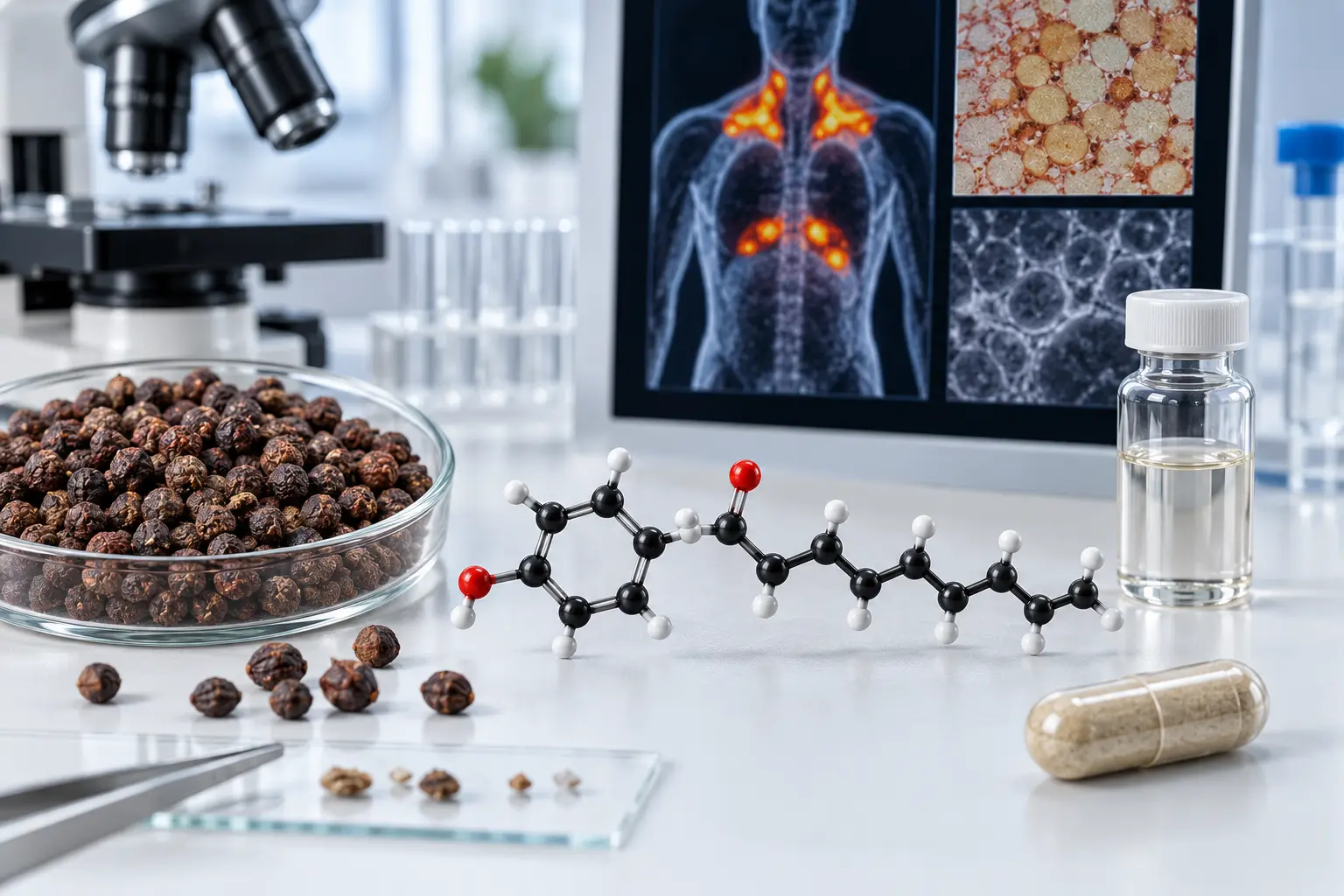
Separate compound from botanical
6-Paradol is a pungent phenolic compound found in grains of paradise and related ginger-family chemistry. A whole extract may also contain gingerols, shogaols, fats, and other constituents. Standardization to 6-paradol improves dose description but does not prove that 6-paradol alone caused the complete effect.
A purified compound, a standardized extract, and seed powder require separate evidence rows. Labels that use these names interchangeably block accurate interpretation.
The strongest isolated-compound mechanism is preclinical
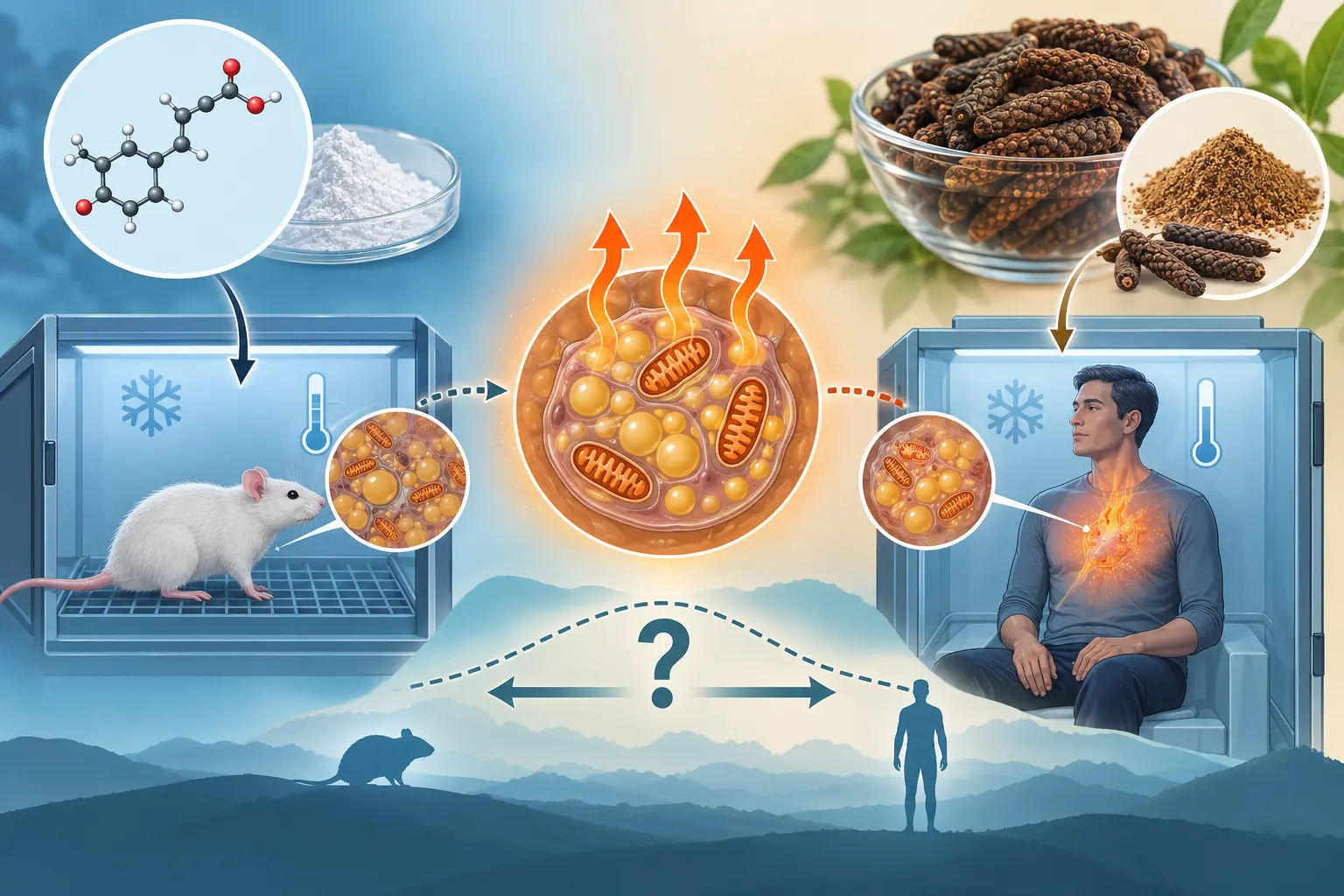
Rodent work reports sympathetic activity and brown-adipose thermogenesis after grains-of-paradise extract or isolated 6-paradol. Other animal research reports changes in weight gain, fat depots, or metabolic gene expression. These findings can guide hypotheses and dose exploration.
They cannot establish human effectiveness, a consumer dose, or long-term safety. Species metabolism, administration route, controlled feeding, and relative exposure can differ greatly from supplement use.
Human extract data do not close the isolation gap
Human trials of grains-of-paradise extract sometimes disclose a measured 6-paradol amount and report expenditure or body-fat outcomes. That makes 6-paradol relevant to characterization, but the intervention remains a mixture. Other constituents or interactions may contribute.
Require a purified-6-paradol randomized trial before making an isolated-compound weight claim. Until then, say exactly what was tested and avoid “clinically proven 6-paradol.”
Example: standardization becomes attribution
An extract provides 5 mg 6-paradol and a small human trial reports a thermogenic response. A seller launches a purified 5 mg 6-paradol capsule and cites the trial as an exact dose match. The milligrams match, but the intervention matrix does not.
The buyer records the evidence as indirect and asks for research on the isolated sold material. Chemical precision cannot repair a missing clinical comparison.
Use an evidence ladder, not an ingredient-name shortcut
- Identity. Confirm the species or chemical, extract, standardization, active amount, serving, and maximum day.
- Mechanism. Cell, receptor, or animal findings explain what researchers might test; they do not establish weight loss in people.
- Acute human response. A short change in heat production, respiratory quotient, appetite rating, or energy expenditure is still not a multi-week body-composition result.
- Clinical outcome. Prefer randomized trials reporting body weight, waist, or fat mass for a relevant duration and population.
- Finished product. Require evidence on the sold combination before assigning an ingredient result to the bottle.
Record funding, sample size, dropouts, comparator, co-interventions, adverse events, and whether the result was prespecified. Statistical significance does not answer whether the average difference is large enough to matter.
Run a label-to-study match
Copy the complete Supplement Facts panel and calculate daily exposure. “Pepper extract,” “thermogenic matrix,” or a proprietary-blend total cannot be matched to a trial using a defined compound. Check whether the paper tested food, a purified ingredient, a whole botanical extract, or a multi-ingredient formula. These are separate evidence objects.
Then compare dose, duration, population, fed or fasted conditions, caffeine and exercise. Mark every mismatch rather than averaging them away. A transparent label makes review possible; it does not prove effectiveness, purity, or safety. Third-party quality testing can support identity and contamination control but cannot validate a weight-loss claim.
Use a four-week decision system
Week 0: define one job and establish baseline weight averages, waist, diet adherence, activity, sleep, appetite, and digestion. Weeks 1–2: if professional review permits use, change only the supplement and follow the labeled dose. Weeks 3–4: compare the predefined outcome with baseline, including side effects and cost. Decision: stop when benefit is unclear, too small, or offset by discomfort, sleep loss, anxiety, palpitations, or worse adherence.
A personal trial cannot establish causation or detect uncommon harm. Do not escalate the dose to chase warmth, sweating, or the first-day sensation. Stop and seek appropriate help for chest pain, fainting, severe palpitations, breathing difficulty, a serious allergic reaction, persistent vomiting, or severe abdominal pain.
Make the result auditable
Before day one, write a one-sentence prediction: what should change, by how much, and by what date? Use a seven-day morning-weight average rather than a single reading, and measure waist at the same landmark, time, posture, and breathing phase. Record calories or the same structured meal plan, steps, planned training, sleep duration, caffeine, alcohol, menstrual-cycle context when relevant, bowel changes, and every missed serving. A simple daily note is more useful than a complicated dashboard that is abandoned.
Choose one primary outcome and two guardrails. For example, the primary outcome could be waist change after four weeks; the guardrails could be sleep quality and digestive comfort. Predetermine a minimum useful difference that justifies the price and inconvenience. Compare averages only after enough consistent observations, and do not interpret a hot meal, one energetic workout, or an overnight scale drop as confirmation.
If food intake, activity, or another supplement changes midway, mark the trial as confounded instead of crediting the thermogenic. Repeat only if doing so is safe and genuinely useful. Keep the package, lot number, label photograph, dates, dose, and any adverse-event notes. This system cannot turn a self-test into clinical evidence, but it can prevent memory, expectation, and normal water fluctuation from becoming a false success story.
Where Fat Burn Active fits
Neither purified 6-paradol nor a grains-of-paradise standardization is identified in the currently available Fat Burn Active information. Those studies should not be transferred to it.
Fat Burn Active is optional and not required for fat loss. Ingredient plausibility cannot substitute for finished-product evidence, a complete dose match, or a sustainable calorie deficit. Sensation, sweating, appetite suppression, and short-term water change do not prove meaningful fat loss.
The official Fat Burn Active page lists a multi-ingredient thermogenic formula, but the buying decision for 6-Paradol and Thermogenesis should follow the evidence check above. Compare our independent review, then, if the product remains a reasonable fit, verify the current label, directions, and purchase options. We may receive a commission at no additional cost.
Safety boundaries
Ask a clinician or pharmacist before using concentrated thermogenic ingredients if you are pregnant or breastfeeding, under 18, have an eating-disorder history, reflux or gastrointestinal disease, high blood pressure, heart-rhythm disease, anxiety, glaucoma, liver or kidney disease, diabetes, or take medicines. Do not stack fat burners, exceed directions, or combine a formula casually with pre-workout and energy drinks.
Food-level use and concentrated extracts are not interchangeable. Novel compounds and proprietary standardized extracts may have conditions of use that do not apply to every market or formulation. Regulatory authorization under specified conditions is not proof of weight-management efficacy and is not a personal medical clearance.
Frequently asked questions
Is 6-paradol the same as grains of paradise?
No. It is one constituent; the botanical contains a mixture of compounds.
Has isolated 6-paradol been proven for human weight loss?
No robust direct human evidence establishes that claim.
Does brown-fat activation guarantee weight loss?
No. A mechanistic response does not determine long-term energy balance or body weight.
Sources
- 6-Paradol and grains-of-paradise thermogenesis in rats
- 6-Paradol anti-obesity study in mice
- Grains-of-paradise extract human expenditure trial
- Aframomum extract randomized human trial
Sources reviewed September 14, 2026. This article is general educational information, not medical advice, diagnosis, or treatment.