Confirm the compound before judging the claim
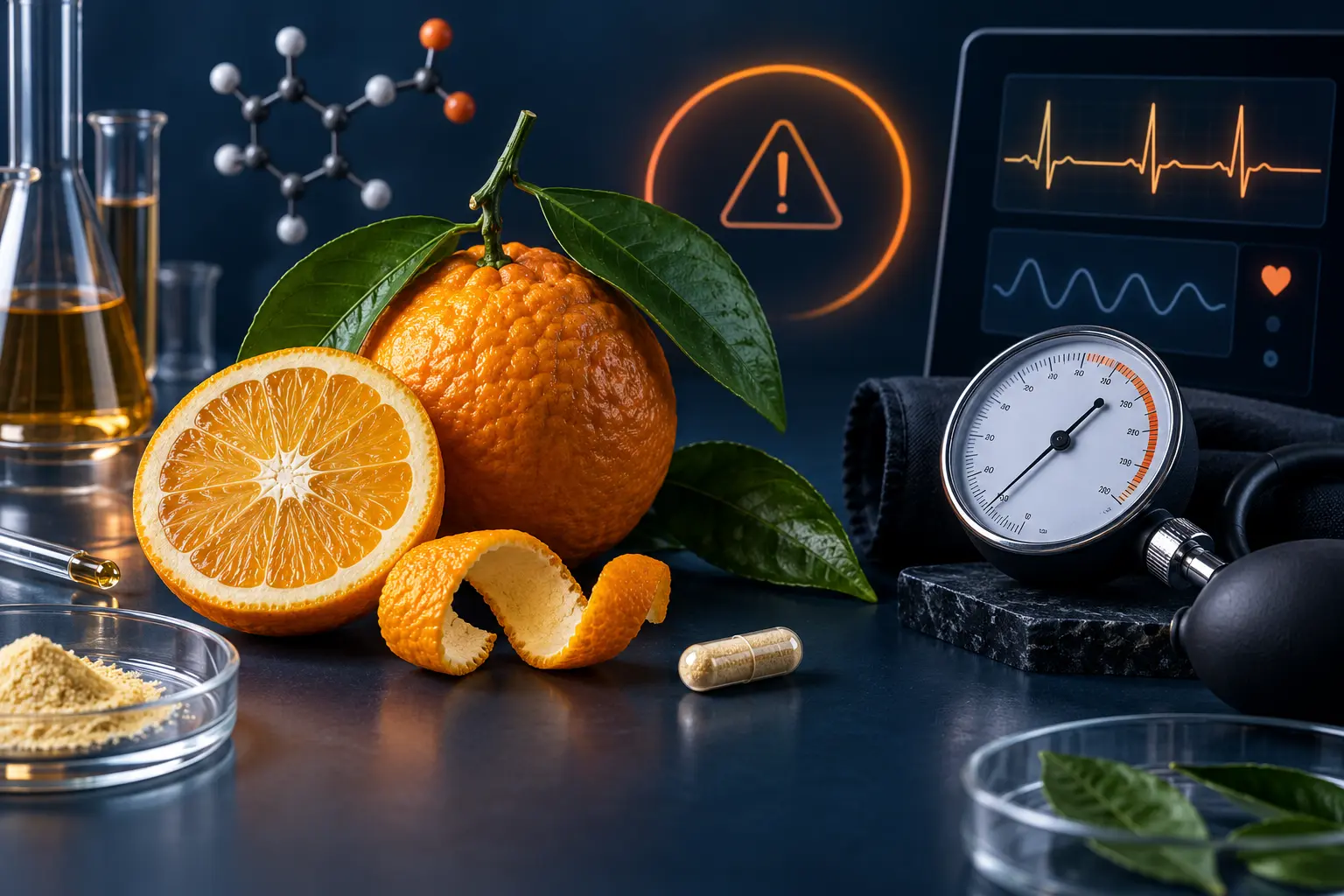
Bitter orange usually refers to Citrus aurantium extract. A useful label identifies species, plant part, extract amount, and p-synephrine standardization or milligrams. P-synephrine should not be confused with m-synephrine, also called phenylephrine, or with ephedrine.
If 300 mg of extract is standardized to 6% p-synephrine, the calculated dose is 18 mg per serving. An undisclosed blend blocks that calculation. “Ephedra-free” states what is absent; it does not prove that the replacement is effective or appropriate.
What the newer synthesis of human studies found
A 2022 systematic review and meta-analysis included 18 controlled trials involving 341 adults. It found no significant benefit for weight or body composition and reported increases in systolic and diastolic blood pressure with longer administration. Study sizes and formulations limit certainty, but the findings do not support a confident weight-loss promise.
Older favorable reviews often included small, short studies and combination products. A multi-ingredient result cannot identify p-synephrine as the active cause. Acute exercise studies of fat oxidation answer a narrower question than months-long fat loss.

Caffeine changes the question
Bitter orange often appears with caffeine, guarana, tea extracts, yohimbe, or pre-workout ingredients. Combining stimulants can change heart rate, blood pressure, anxiety, sleep, and subjective intensity. The exact combination requires its own evidence; separate ingredient papers cannot be stacked into a product trial.
Calculate p-synephrine and caffeine independently, then review the full mixture and outside sources. Case reports cannot quantify incidence or always isolate a cause, while a small trial without serious events cannot rule out uncommon harm. Both limitations should remain visible.
A decision rule stronger than “thermogenic”
Reject a formula when p-synephrine amount, total caffeine, maximum daily serving, or warnings are hidden. For a transparent product, ask whether a comparable randomized trial measured weight or fat mass, whether the average effect was meaningful, and whether blood pressure and adverse events were assessed for a relevant duration.
People with hypertension, arrhythmia, cardiovascular disease, anxiety, stimulant sensitivity, pregnancy, or interacting medicines should not self-experiment based on an online dosage table. A pharmacist or clinician can review the actual label and health context.
How to read the evidence without overclaiming
Start with the outcome. A laboratory mechanism, a higher blood concentration, a change in fat oxidation, and a lower body-fat measurement are not interchangeable results. The strongest answer to a weight-loss question comes from randomized human trials that measure body weight or body composition for long enough to matter. Short experiments can explain physiology, but they cannot by themselves predict a visible or durable change.
Next match the evidence object. Research on a purified ingredient does not prove a botanical extract with a different composition, and neither proves a multi-ingredient branded formula. Check the form, daily amount, treatment length, population, diet and activity instructions, habitual stimulant use, attrition, adverse events, and funding. If any of those differ materially, lower confidence rather than filling the gap with marketing.
Finally consider effect size and uncertainty, not just statistical significance. A small average difference may be irrelevant to one person and can disappear when sleep, appetite, activity, or tolerance changes. No ingredient in this guide replaces a sustainable energy deficit, adequate protein and fiber, movement, sleep, or medical treatment when it is indicated.
A practical, safety-first decision process
- Define the job. Choose one observable purpose—such as earlier-workout alertness—not a vague promise to “boost metabolism.”
- Verify the label. Record the exact ingredient form, milligrams per serving, standardization, maximum servings, caffeine from all sources, and warnings.
- Check the evidence match. Prefer human outcome research using a comparable form and dose. Do not substitute an animal study or an acute mechanism.
- Set a baseline. Record sleep, appetite, blood pressure when relevant, food pattern, activity, body-weight trend, and any symptoms before changing one variable.
- Use the minimum interpretable exposure. Avoid stacking products, escalating to chase a sensation, or starting during another major diet or training change.
- Review and stop. Compare the predefined outcome and adverse effects after a fixed period. Stop if the intended benefit is absent or the cost and harms outweigh it.
This process cannot eliminate uncommon risk or prove causation in one person. It does prevent normal fluctuation, caffeine withdrawal, a harder workout, or a concurrent calorie change from being credited automatically to the supplement.
Put a small ingredient effect in real-world context
Even a genuine physiological effect operates inside a much larger system. Food portions, liquid calories, weekend intake, daily movement, training recovery, sleep, medicines, and changing body size can each outweigh a small supplement-related change. This is why an ingredient should not be used to “cancel” an unmeasured diet or to justify a more aggressive deficit.
Use comparable observations. Weigh under similar conditions and interpret a rolling trend rather than one morning. If waist measurements are used, repeat the same landmark and technique. Keep a brief note of menstrual-cycle phase, unusually salty meals, travel, constipation, soreness, and alcohol when they explain water shifts. Do not change the dose in response to a single scale reading.
A fair value check includes more than the bottle price: calculate cost per fully disclosed daily serving, the duration tested, the size of the plausible benefit, and the cost of side effects or lost sleep. If the label prevents a dose calculation, the evidence does not match, or the outcome cannot be measured, choosing no supplement is a complete and reasonable decision.
How this applies to Fat Burn Active
Fat Burn Active lists bitter orange standardized to 6% synephrine, but without extract milligrams the p-synephrine dose cannot be calculated or matched to evidence.
Fat Burn Active is relevant to Bitter Orange and Synephrine for Weight Loss because its official listing identifies standardized plant extracts, caffeine sources, vitamins, and zinc in one formula. First read our independent review. If the formula, stimulant profile, evidence limits, and warnings fit your situation, check the current formula and purchase options on the official Fat Burn Active website. We may receive a commission at no additional cost.
Safety boundaries and reasons to stop
Stop use and seek urgent care for chest pain, fainting, severe shortness of breath, confusion, seizure, a sustained racing or irregular heartbeat, or signs of a serious allergic reaction. New insomnia, tremor, anxiety, headache, nausea, vomiting, abdominal pain, palpitations, or a meaningful blood-pressure change are adverse effects—not proof that a thermogenic dose is working.
Pregnancy or breastfeeding, age under 18, stimulant sensitivity, eating-disorder history, surgery, and cardiovascular, liver, kidney, endocrine, psychiatric, or sleep conditions require extra caution or avoidance. Ask a clinician or pharmacist about stimulant medicines, decongestants, antidepressants, blood-pressure or diabetes drugs, anticoagulants, and concentrated botanicals. Report suspected supplement harm through the appropriate national system and keep the bottle and lot number.
Frequently asked questions
Is bitter orange proven for weight loss?
No. The current human evidence does not establish meaningful weight or body-composition benefit.
Is p-synephrine the same as ephedrine?
No. They are distinct compounds, and “ephedra-free” does not establish safety.
Can I combine it with caffeine?
The combination adds uncertainty and stimulant exposure; exact doses and personal cardiovascular risk require review.
Sources
- NCCIH: Bitter Orange
- 2022 Systematic Review and Meta-analysis
- NIH ODS: Weight-Loss Supplements
- Operation Supplement Safety: Synephrine
Sources reviewed September 8, 2026. This article is general educational information, not medical advice, diagnosis, or treatment.