The short answer
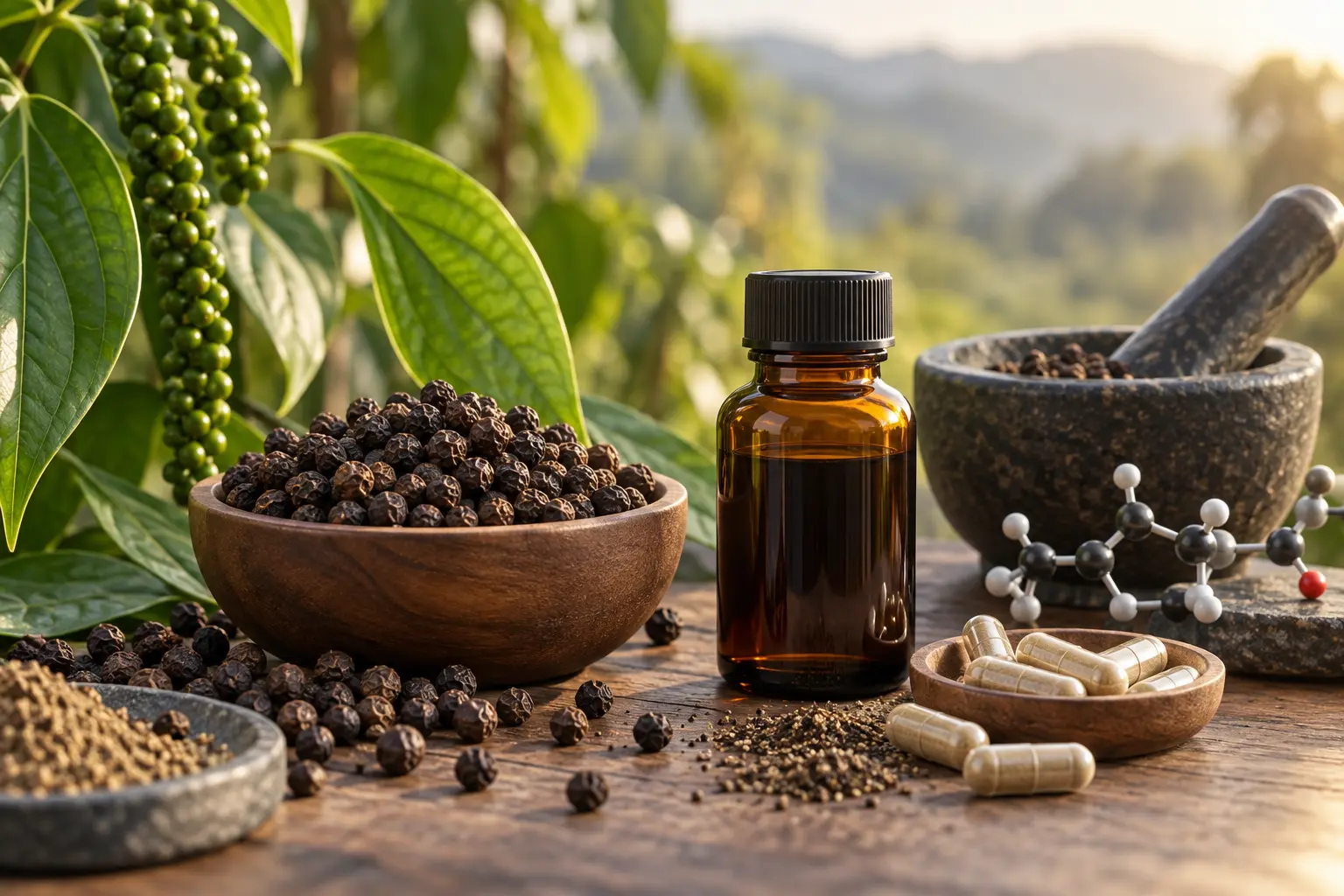
Piperine is the best-known constituent of black pepper extract and is commonly added to supplements as a bioavailability enhancer. That role does not prove that piperine directly causes meaningful weight loss, and changing absorption can also create interaction concerns.
This page evaluates piperine as an ingredient: extract identity, standardization, absorption claims, direct weight-loss evidence, gastrointestinal tolerance, and medicine interactions.
What the mechanism can—and cannot—show
Piperine can influence intestinal transport and drug-metabolizing pathways in experimental and pharmacokinetic research. It has increased exposure to specific compounds such as curcumin under defined study conditions. That cannot be generalized to every nutrient, every dose, or a better clinical result from a multi-ingredient fat burner.
A biochemical pathway can make a hypothesis plausible. It cannot substitute for randomized human trials measuring weight, waist, fat mass, or another outcome buyers actually care about. Ingredient evidence also cannot be transferred automatically to a proprietary blend or finished formula.

What human evidence says
Much of the obesity-related research is preclinical. Human pharmacokinetic studies support selected absorption interactions, but they are not body-weight trials. A bottle that contains piperine alongside several actives still needs finished-product evidence before claiming that increased exposure improves fat loss or safety.
Start with the absolute between-group difference, not a percentage quoted from the supplement group alone. Check confidence intervals, sample size, dropout, background diet and activity, adverse events, funding, and whether the exact outcome was selected before analysis. One positive endpoint among many can be a chance finding.
A five-step label audit
- Identify black pepper extract and the stated piperine percentage.
- Calculate piperine milligrams per full daily serving.
- Ask which specific co-ingredient and human study support an absorption claim.
- Do not assume more absorption means more benefit or better safety.
- Review medicines with a pharmacist because altered exposure can matter.
If any required amount is hidden, record it as unknown—not zero and not “probably similar” to a trial. A certificate or trademark can support identity and manufacturing questions, but it does not prove meaningful weight loss.
Worked example
A formula contains 5 mg piperine and says it “boosts every ingredient.” The claim is too broad. Evidence that piperine changed curcumin exposure at a particular dose does not establish the same magnitude for caffeine, botanicals, minerals, or the formula’s weight-loss result.
This method prevents four common errors: turning a mechanism into an outcome, treating an ingredient trial as formula evidence, confusing statistical significance with practical importance, and assuming a stronger sensation means greater fat loss.
Set a realistic decision threshold
Before buying, write the intended benefit, the minimum change that would justify cost, the evaluation period, and stopping rules. Use a rolling weight trend, consistently measured waist, body-composition data only when the method is sufficiently reliable, and notes on adherence and adverse effects.
Do not change the diet, training plan, sleep schedule, and several supplements at once. If the trend changes, too many simultaneous variables make the cause unknowable. A null result is useful information; it does not justify escalating beyond the label.
Safety, interactions, and product quality
“Natural” and “non-stimulant” do not mean interaction-free. Botanical extracts and bioavailability enhancers can alter drug exposure or affect blood pressure, digestion, bleeding, or other systems. Risk depends on the full formula, dose, medicines, conditions, pregnancy, surgery, and individual sensitivity.
Choose a complete Supplement Facts panel, lot number, contact information, clear warnings, and independent quality verification where available. Quality testing can support identity and contamination control; it cannot establish efficacy. Stop a suspected product and seek appropriate care for a significant reaction.
Related Active Body Hub guides
Next read BioPerine in weight-loss supplements, extract ratios versus active percentages, and what other ingredients tell you.
Also see mechanism versus measurable outcome and why exact ingredient amounts matter.
Where Fat Burn Active fits
The same rules apply to Fat Burn Active. The presence of a familiar botanical, absorption enhancer, or fat-metabolism ingredient does not prove that the finished formula produces meaningful weight loss. Assess disclosed daily amounts, stimulant exposure, contraindications, and direct product-level evidence.
Use the Black Pepper Extract and Piperine criteria to assess Fat Burn Active rather than relying on a headline claim. Our formula evidence analysis explains the remaining uncertainty. If the product fits your needs, view current availability and ordering terms on the official website. We may earn a commission at no extra cost.
Piperine, pepper extract, and the claim on the bottle
Piperine is a constituent of black pepper; “black pepper extract” is a preparation that may be standardized to a particular piperine percentage. Whole pepper as food, an unspecified extract, and a branded standardized extract should not be treated as identical doses. Read the ingredient line and the amount per daily serving. If the percentage is supplied, calculate the approximate piperine amount; if not, the exposure cannot be determined from the name alone.
The proposed absorption mechanism is often the selling point. To evaluate it, specify the co-administered compound and the study's dose, timing, participants, and measured blood levels. Even a demonstrated change in absorption is not the same as better appetite control or body-fat loss. It may also complicate interpretation when medicines or other supplements are used. A person taking prescriptions should discuss a concentrated piperine product with a clinician or pharmacist rather than assuming a spice-derived extract is interaction-free.
Look for direct human weight outcomes if the product claims that piperine itself burns fat. Cell, animal, or short biomarker findings can suggest hypotheses but do not establish a useful effect in ordinary buyers. Also distinguish studies of piperine alone from studies that combine it with caffeine, capsaicin, or a diet program. The most favorable result from a combination cannot be allocated to black pepper without a design that separates the components.
In a multi-ingredient label audit, give piperine a role: possible formulation modifier, potential exposure question, and a reason to check interactions. Do not count it as an extra independently proven fat-loss active merely because it appears in a long ingredient list. If two competing bottles differ mainly in black-pepper wording, use dose transparency, verified outcomes, safety, and price to make the decision rather than a “bioavailability” slogan.
Frequently asked questions
Does a mechanism prove this ingredient burns body fat?
No. A pathway or laboratory effect must be confirmed by relevant human outcomes at the same ingredient and dose.
Is a standardized extract automatically effective?
No. Standardization improves dose clarity and repeatability. Efficacy still depends on adequate clinical evidence and a product that matches it.
Can ingredient evidence validate a multi-ingredient formula?
Only indirectly. Different doses, extracts, combinations, and tolerability can change the result. Direct finished-product trials provide stronger formula-level evidence.
How long should I test it?
Do not invent a duration from marketing. Use the label, relevant trial period, professional advice, a predefined review date, and immediate stopping rules for adverse effects.
Keep a one-page evidence note with the exact label, dose, trial population, comparator, outcome, absolute effect, uncertainty, adverse events, funding, and unresolved question. It makes later product claims easier to test against what the research actually showed.
Sources
- Review: Black pepper and intestinal absorption
- Human study: Piperine and curcumin bioavailability
- Human pharmacokinetic study of piperine and carbamazepine
- Piperine review
- 2024 piperine interaction model
- FDA: Questions and Answers on Dietary Supplements
Evidence reviewed September 16, 2026. Educational information only; not medical advice.