Why the word natural can distort the decision
“Natural” feels familiar, gentle, and compatible with health. That emotional shortcut is useful to marketers because it can make a botanical formula seem safer than a stimulant even when the plant naturally contains stimulants. It can also hide the difference between eating a food, drinking an infusion, and swallowing a concentrated extract.
The practical risk is twofold. People may expect a large result from a small or uncertain effect, then delay higher-impact changes. They may also combine several plant products without counting shared caffeine or reviewing medicine interactions. The correct question is not whether an ingredient came from nature, but what form, amount, evidence, and safety profile the finished product provides.
What counts as a natural fat burner?
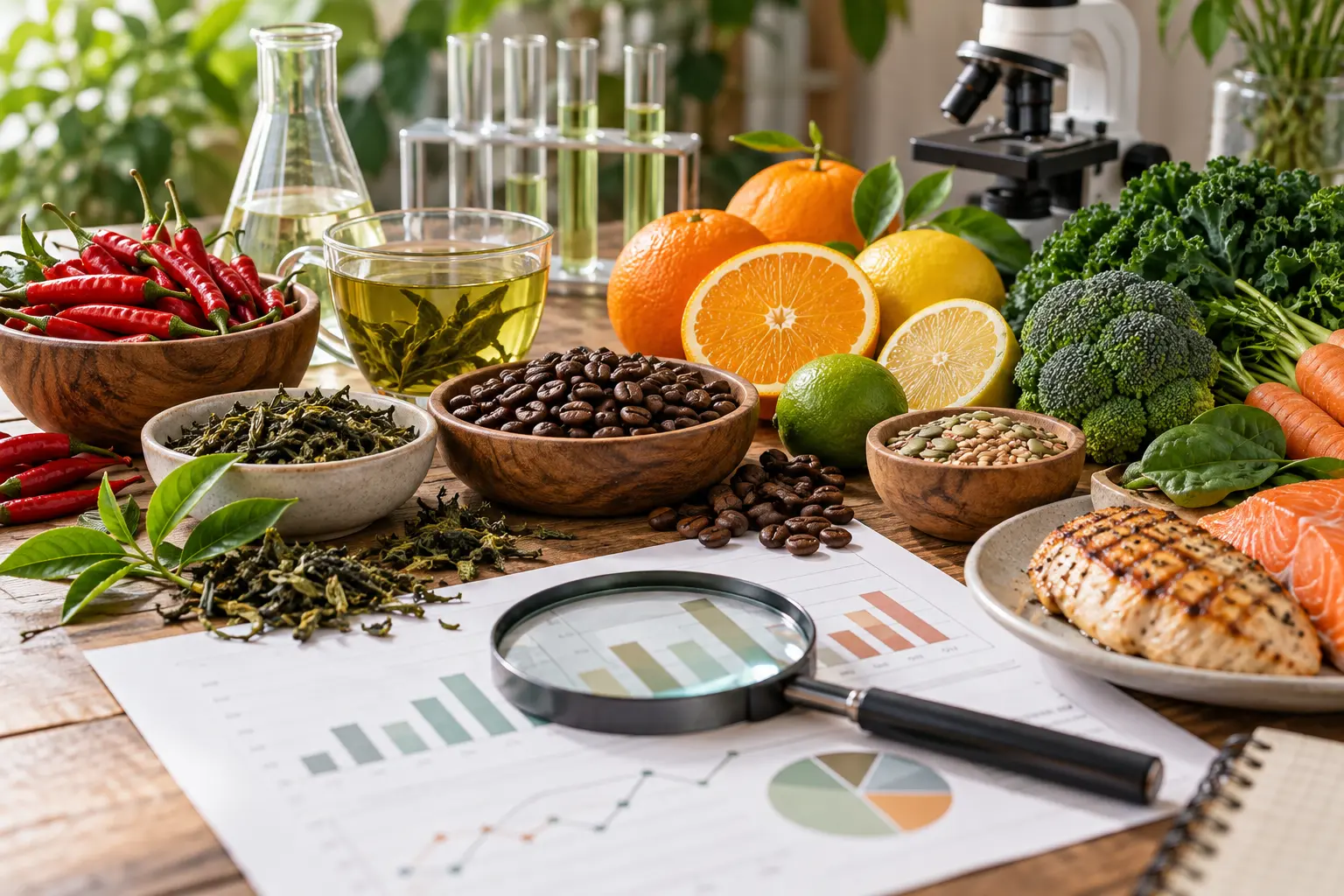
The phrase has no single clinical definition. It may refer to ordinary foods such as chili peppers, protein-rich meals, coffee, and tea; isolated nutrients such as carnitine or chromium; soluble fibers; or concentrated extracts from green tea, coffee beans, herbs, and spices. These categories should not be treated as equivalent.
Whole foods can support a dietary pattern through protein, fiber, volume, and nutrient density. A capsule usually isolates a constituent and sells it for a narrow effect. Even when both share a plant name, their dose and risk can differ substantially. Classify the item before assessing the claim.
Food-based options: useful without the fat-burning story
Protein-rich foods tend to be filling and require more energy to digest than fat, while fiber-rich vegetables, fruit, legumes, and whole grains can add volume and support fullness. These properties may help someone maintain an appropriate intake. They do not make calories disappear or target abdominal fat.
Capsaicin and related compounds make chili peppers feel hot and may slightly affect thermogenesis or appetite in some studies. The practical effect is unlikely to compensate for a consistently excessive intake. Use spices because they improve enjoyable, satisfying meals—not as a dose-escalation challenge.
Food is often the safer starting point because it contributes nutrition and makes the mechanism part of a repeatable meal. It can still require adaptation for allergies, gastrointestinal conditions, kidney disease, diabetes treatment, or other individual needs.
Coffee, tea, caffeine, and green tea extract
Caffeine can increase alertness and temporarily raise energy expenditure. Coffee and tea also contain other compounds, but adding sugar, cream, or syrups changes the drink's energy content. A stronger sensation does not prove greater fat loss, and regular use can reduce the noticeable stimulant effect.
Green tea extract is not simply brewed tea in a capsule. Extracts can concentrate catechins and caffeine. NIH's Office of Dietary Supplements describes any weight-loss effect from green tea as small, while concentrated green tea extracts have been associated with adverse effects including liver injury in some people. Form, dose, food timing, and individual risk matter.
Calculate total caffeine from every source and consider sleep. A modest acute expenditure effect can be undermined if late stimulation worsens sleep, hunger, recovery, or blood-pressure control.
Fiber supplements and appetite
Viscous soluble fibers may increase fullness or slow gastric emptying, but effects differ by fiber type and dose. A tiny quantity placed near the end of a blend should not be assumed equivalent to a studied stand-alone dose. Fiber is not a stimulant and does not directly burn stored fat.
Increase supplemental fiber gradually and use it with appropriate fluid according to directions. Gas, bloating, constipation, or diarrhea can occur. Fiber can affect the timing or absorption of medicines, so a pharmacist can advise on spacing. People with swallowing or intestinal problems need professional guidance rather than experimentation.
Carnitine, chromium, green coffee, and other popular ingredients
Do not add the best result from each ingredient study and call the sum a product prediction. The ingredients can use different populations, doses, durations, and outcomes, and the combination may never have been tested.
How to grade a natural claim
- Identify the exact plant part, extract, standardization, and daily dose.
- Prefer randomized human trials over cells, animals, or biochemical theory.
- Match the research outcome to the claim: acute heat is not long-term fat loss.
- Check duration, participant characteristics, comparison group, adverse events, and funding.
- Look for evidence on the complete formula, not only its most recognizable ingredient.
- Decide whether the average effect would matter enough to justify cost and risk.
When product amounts are missing, evidence matching stops. “Contains researched ingredients” cannot solve a dose problem.
Natural does not mean interaction-free
Botanicals can affect enzymes, blood pressure, heart rhythm, blood glucose, sedation, stimulation, or medicine absorption. Consult a clinician or pharmacist if you use medicines or manage cardiovascular, liver, kidney, endocrine, psychiatric, or gastrointestinal conditions. Avoid self-directed weight-loss supplements during pregnancy, breastfeeding, childhood, or adolescence.
Choose a traceable manufacturer and verify genuine independent certification where available. Quality testing can support identity and contamination control, but it cannot prove weight loss. FDA's notifications about tainted weight-loss products are a reminder that an herbal label is not a guarantee of contents.
Stop use and seek appropriate care for chest pain, fainting, serious palpitations, breathing difficulty, severe allergic symptoms, jaundice, dark urine, or severe persistent gastrointestinal problems.
A natural-first plan that has more impact
Start with repeatable meals: an appropriate protein source, fiber-rich plants, a satisfying carbohydrate when suitable, and measured energy-dense additions. Use coffee or tea only if tolerated and early enough not to damage sleep. Add walking and resistance training compatible with health and recovery.
Track weekly averages, waist, hunger, sleep, and execution. If progress stalls, audit portions, drinks, weekends, and movement before adding an extract. This approach uses natural foods for nutrition and adherence instead of pretending one ingredient overrides the larger pattern.
Is Fat Burn Active a natural fat burner?
A product can contain plant-derived ingredients and still require the same dose, safety, and evidence review as any supplement. Our Fat Burn Active review separates ingredient research from evidence on the complete product and notes uncertainties rather than treating “natural” as proof.
Fat Burn Active is relevant to Natural Fat Burners: What the Evidence Really Shows because its official listing identifies standardized plant extracts, caffeine sources, vitamins, and zinc in one formula. First read our independent review. If the formula, stimulant profile, evidence limits, and warnings fit your situation, check the current formula and purchase options on the official Fat Burn Active website. We may receive a commission at no additional cost.
Frequently asked questions
What is the strongest natural fat burner?
Strength is not a useful selection goal. Greater stimulation or concentration can increase risk without producing meaningful long-term fat loss.
Is green tea extract the same as green tea?
No. Extracts can deliver concentrated constituents and may have a different safety profile from brewed tea.
Can food burn belly fat?
No food selectively removes fat from one area. Meals can support fullness, nutrition, training, and an overall energy deficit.
Are stimulant-free botanicals automatically safe?
No. Non-stimulant ingredients can still cause adverse effects, interact with medicines, or lack adequate evidence.
Sources
- NIH ODS: Dietary Supplements for Weight Loss
- NCCIH: Green Tea
- FDA: Dietary Supplements
- NIDDK: Eating and Physical Activity
Sources reviewed September 8, 2026. This article is general educational information, not medical advice, diagnosis, or treatment.