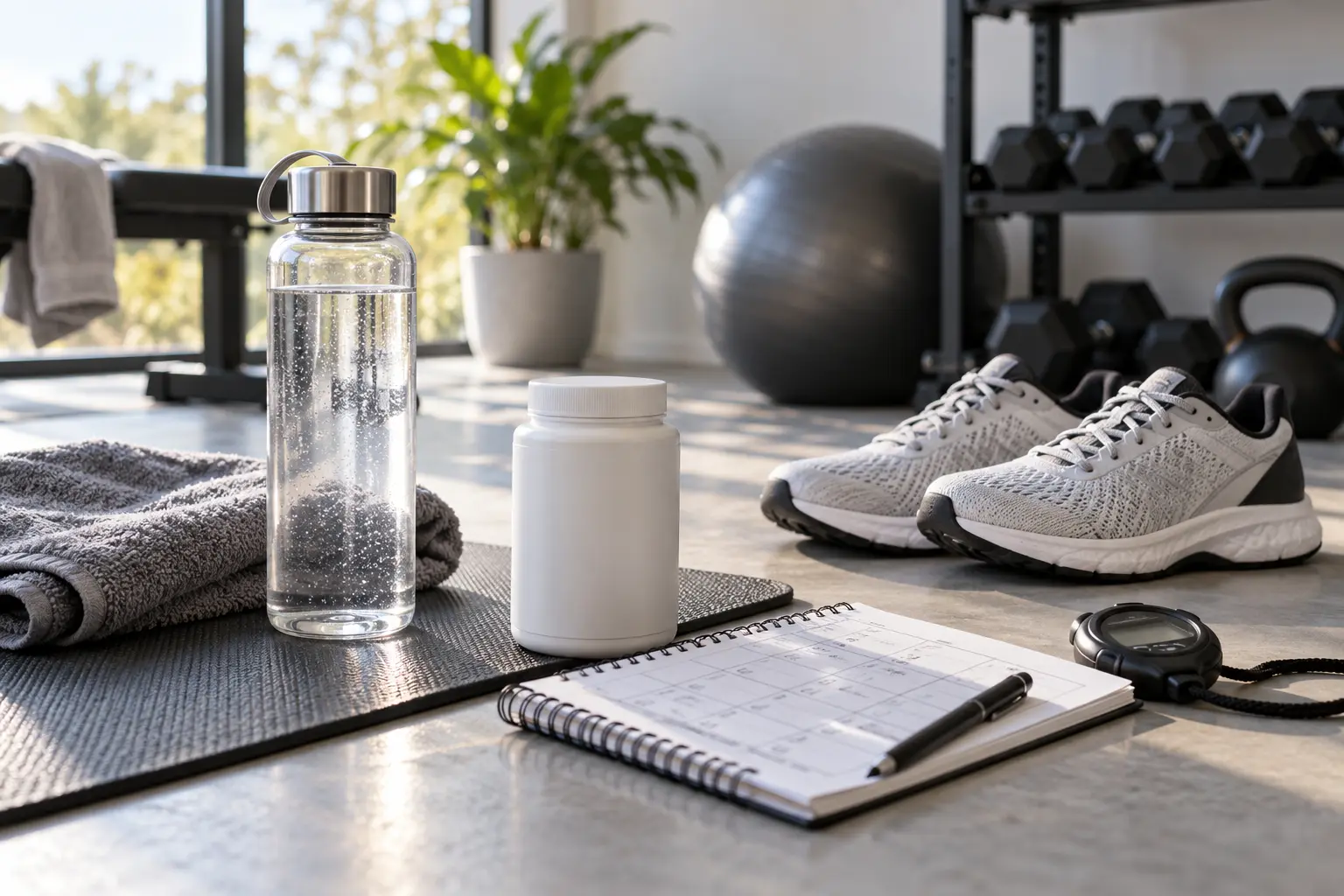
Separate three different outcomes
Marketing often collapses all four into “burn more fat.” A responsible decision keeps them separate.
Why 60 minutes appears so often
The ISSN position stand reports that 60 minutes before exercise is the most common timing in caffeine research, while optimal timing depends on the caffeine source and delivery form. That is a research convention, not a universal instruction for every capsule blend.
Use the product label as the boundary. If a formula includes extended-release ingredients, a different delivery format, or a meal requirement, copying a caffeine-study protocol may be inappropriate. Do not open capsules, divide unscored products, or change serving size to mimic a study.
The performance–sleep tradeoff
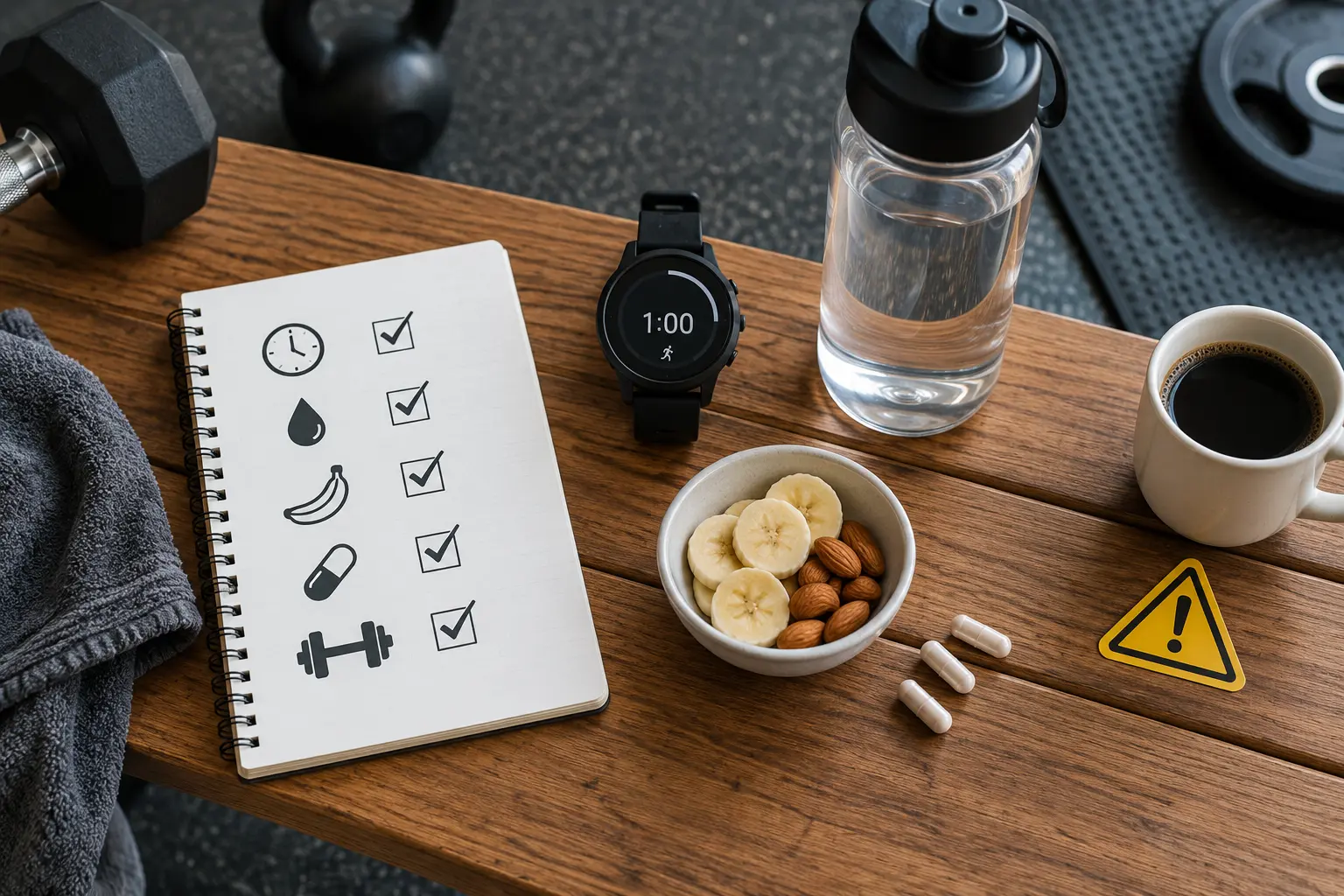
An evening workout creates the clearest conflict. A stimulant might improve perceived energy while delaying sleep or reducing sleep depth. Poor recovery can impair the next session, increase hunger, and make daily movement feel harder. The net effect may be worse even if the late workout felt sharper.
For late training, consider a non-stimulant routine: a normal pre-exercise meal or snack, hydration, a longer warm-up, brighter training environment, and an earlier session when possible. A supplement is not worth sacrificing the behavior that supports recovery every night.
Do not stack it with pre-workout
Pre-workout products may contain caffeine, guarana, tea extracts, synephrine-like compounds, or other stimulants. Coffee and energy drinks add to the same total. Count milligrams from all sources and keep unknown botanical caffeine visible as unknown.
Fat Burn Active's current formula provides at least 120 mg caffeine from anhydrous caffeine and guarana, before unquantified green-tea caffeine. Its official caution says not to combine it with other caffeine sources or similar-effect ingredients. That makes stimulant pre-workout a poor pairing.
A six-question pre-training check
- Does the delivered label allow pre-exercise use?
- Have you eaten as directed and used the required water?
- What is the total caffeine from every source today?
- How many hours remain before intended sleep?
- Are medicines, cardiovascular issues, anxiety, pregnancy, or sensitivity relevant?
- Would the workout still happen without the supplement?
If the final answer is no, first build a training routine that does not depend on stimulation. The supplement should support an established plan, not become permission to train through exhaustion.
A worked decision for morning and evening training
For a 9 a.m. session, an adult who has already reviewed health risks could eat a familiar breakfast, take only the label serving with water, exclude coffee and pre-workout, and observe both training and the rest of the day. The useful comparison is not how much the person sweats. It is whether perceived effort, completed work, stomach comfort, anxiety, heart-rate response and later sleep differ from comparable sessions.
For a 7:30 p.m. session before an 11 p.m. bedtime, the same plan has a different risk balance. The serving would be close to sleep, and the product's exact total caffeine is unresolved. Moving it earlier may separate it from the workout; skipping it may be the cleaner choice. A meal, hydration, music, brighter light, a progressive warm-up and a realistic session can support training without stimulant exposure.
If exercise performance improves but bedtime drifts, sleep shortens, and next-day movement falls, the apparent benefit is incomplete. Conversely, if no measurable training benefit appears, increasing the dose is not a valid experiment. Preserve the recommended serving and decide whether the product adds enough practical value to justify cost and uncertainty.
Build a timing routine you can actually evaluate
Write down the product, serving, every caffeine source, meal time, training time, bedtime, medicines, and the reason for taking the supplement. Then choose one consistent schedule for at least several comparable days. Record sleep onset, awakenings, morning alertness, appetite, stomach symptoms, training quality, resting heart rate or blood pressure when clinically appropriate, and any adverse effects. A warmer feeling, more sweat, or a stronger buzz is not proof of more fat loss.
Change only one timing variable at a time. If you move the serving earlier while also cutting coffee, changing meals, and adding exercise, you cannot tell which change improved sleep or comfort. Use a predefined stopping rule: stop and seek appropriate advice for chest pain, fainting, severe palpitations, marked shortness of breath, or other concerning symptoms. Persistent insomnia, anxiety, nausea, tremor, or headache also deserves action rather than dose escalation.
The outcome that matters is whether the complete plan remains sustainable. A supplement that makes one workout feel easier but damages sleep, increases next-day hunger, or encourages higher stimulant intake may work against the larger goal.
How this applies to Fat Burn Active
The current official page directs adults to take two capsules with 300 ml of water, preferably before a meal or training, and specifically says not to consume the product on an empty stomach. It lists 76 mg caffeine anhydrous and guarana standardized to an estimated 44 mg caffeine, so the known minimum is 120 mg per serving. Green-tea caffeine is not quantified, and the formula also supplies bitter-orange extract standardized to 6 mg synephrine.
The manufacturer cautions against use with other caffeine sources or ingredients with a similar effect. That makes a coffee, energy drink, caffeinated medicine, or pre-workout part of the same timing decision—not an unrelated beverage. Follow the delivered label if it differs from the website and ask the manufacturer to clarify the all-source caffeine total.
Fat Burn Active may suit an adult who intentionally wants a stimulant-containing pre-training option and can follow its food and caffeine cautions. It is not necessary for exercise or fat loss.
The official Fat Burn Active page lists a multi-ingredient thermogenic formula, but the buying decision for Should You Take a Fat Burner Before Exercise? should follow the evidence check above. Compare our independent review, then, if the product remains a reasonable fit, verify the current label, directions, and purchase options. We may receive a commission at no additional cost.
Frequently asked questions
Must a fat burner be taken before exercise?
No. Follow the product label; pre-exercise use is not required to lose body fat.
Does sweating more mean more fat loss?
No. Sweat mainly reflects fluid and temperature regulation.
Can I combine it with pre-workout?
Fat Burn Active cautions against other caffeine sources or similar-effect ingredients.
Sources
- Fat Burn Active official formula and directions
- ISSN position stand on caffeine and exercise
- FDA: How Much Caffeine Is Too Much?
- NIH ODS: Weight-Loss Supplements
- Dose and timing effects of caffeine on sleep
Sources reviewed September 13, 2026. This article is general educational information, not medical advice, diagnosis, or treatment.